
Reviewed · CITY TOURS
Cremona: City of art and music in Italian
Cremona’s main square gives you a lot in a small space: a fresco-filled cathedral, a soaring brick bell tower, an octagonal baptistery, and grand civic buildings. This 1.5-hour walk is a quick way to understand why the city is known for both sacred art and fine violin-making.
I like the tour’s compact route and its access to the Cathedral and City Hall interiors. I also like that it connects the city’s medieval monuments with Cremonese lutherie, rather than treating the historic center as a string of pretty façades. The main consideration is language: the live guide speaks Italian, and the Town Hall is closed on Sundays and festive days.
In This Review
- Key points to know before booking
- Starting at Cremona’s tourist office
- Cremona Cathedral and its 16th-century frescoes
- The medieval square and Cremona’s brick landmarks
- Inside the Palazzo Comunale
- A Roman road beneath the medieval story
- Cremonese lutherie and the sound of the city
- What the $17 price really covers
- Who will get the most from this short walk
- Practical planning for your visit
- Should you book the Cremona city walk?
- FAQ
- Where does the tour start?
- Where does the tour end?
- How long does the walking tour last?
- What language is the guided tour in?
- Is the tour wheelchair accessible?
- Is entry to Cremona Cathedral included?
- Is entry to the Town Hall included?
- Can I enter the Torrazzo during this tour?
- Can I enter the Baptistery during this tour?
- What is included in the price?
Key points to know before booking
- The Cathedral is the artistic high point: Enter to see major 16th-century frescoes in a church often called the Sistine Chapel of the Po Valley.
- The route stays in Cremona’s center: You begin and end at the Infopoint Cremona, with no transport needed during the tour.
- Several landmarks are exterior visits: The Baptistery, Torrazzo, and Loggia dei Militi are viewed from outside.
- Town Hall access depends on the day: The Palazzo Comunale is open Monday through Saturday and closed Sundays and festive days.
- Lutherie gives the walk its local character: You learn about Cremona’s UNESCO-recognized violin-making tradition.
- The price is modest: At $17 per person, the tour offers a useful introduction if you want context before exploring on your own.
Starting at Cremona’s tourist office
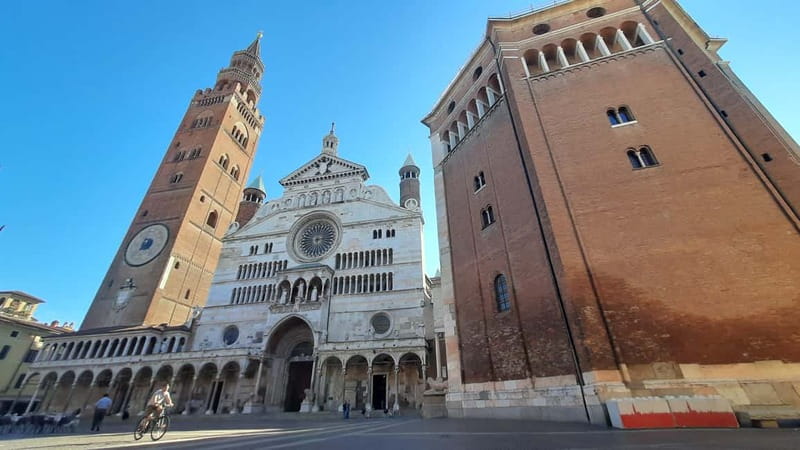
The walk begins at the Cremona tourist office, called the Infopoint Cremona, and returns there at the end. That simple arrangement makes the tour easy to fit into a day of sightseeing. You do not need to work out a separate meeting point in a distant neighborhood, and you can continue your own visit from the same central area afterward.
The tour lasts 1.5 hours. That is long enough for a guided introduction but short enough to leave room for lunch, a museum, or a separate visit to the Torrazzo. The pace should suit you if you want the major sights explained without giving up half a day.
The guide language is Italian. If you understand Italian, you will get the full benefit of the historical and artistic commentary. If you do not, check the available language information carefully before booking, since the supplied details list Italian only.
A few more Milan trips worth weighing up
- Milan: City Sightseeing Hop-On Hop-Off Bus with Audio Guide
★ 4.0 · 6,256 reviews - Transfer Milan City Centre – Bergamo Airport
★ 4.5 · 975 reviews - Milan: The Milan Pass City Card
★ 4.0 · 655 reviews
Cremona Cathedral and its 16th-century frescoes
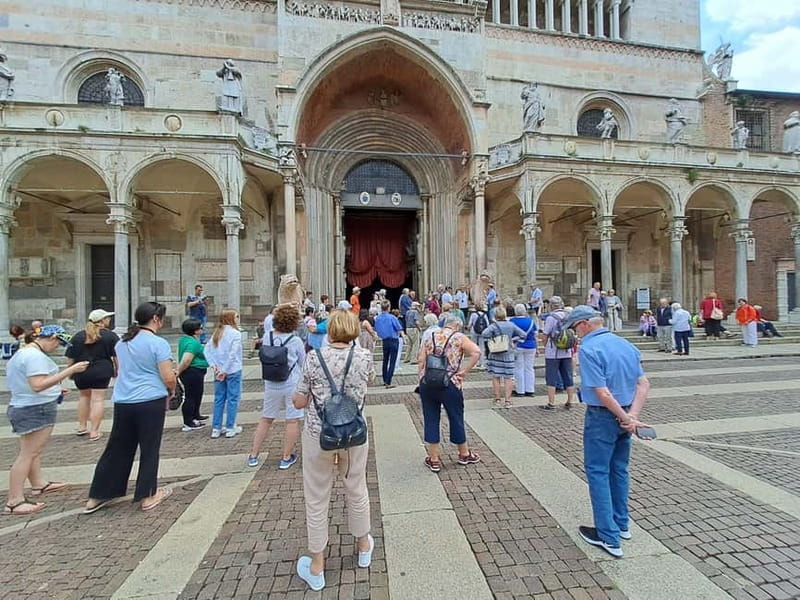
The first major stop is Cremona Cathedral, facing the city’s grand medieval square. You go inside with the guide, which matters here. The exterior gives you the scale of the complex, but the interior is where the artistic story takes over.
The cathedral is known as the Sistine Chapel of the Po Valley because of its 16th-century frescoes. That comparison sets high expectations, but it points you toward the right feature: this is not simply a cool, shadowy church to glance into before moving on. The painted decoration is a central reason for the visit.
I like that the guide places the cathedral within the wider setting of the square. You see the church together with the Baptistery, Torrazzo, Town Hall, and Loggia dei Militi, so the buildings read as parts of one medieval civic and religious center.
Allow yourself time to look upward and across the painted surfaces. A guided explanation can help you notice details that are easy to miss when you enter alone, especially if you are trying to take photos, check opening hours, and keep moving at the same time.
The cathedral visit is also the part most likely to appeal to art-focused visitors. If you are mainly interested in music, the later discussion of violin-making will be important, but the frescoes give the tour its strongest visual experience.
The medieval square and Cremona’s brick landmarks
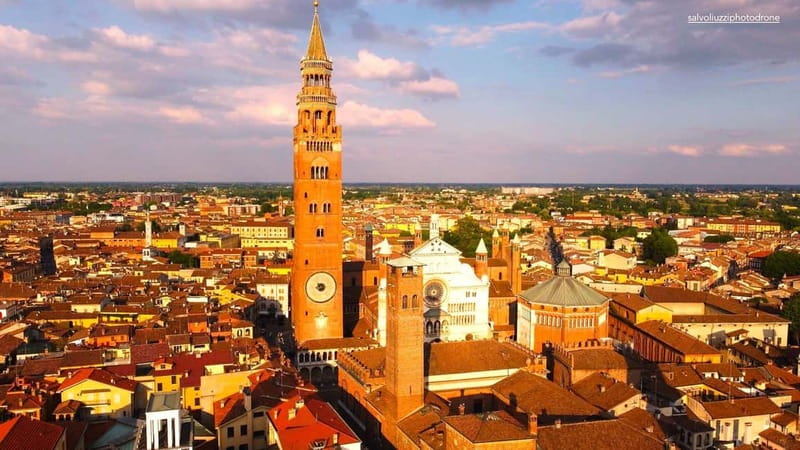
Outside the Cathedral, the guide turns your attention to the other buildings around the square. The Baptistery has an unusual octagonal shape, making it easy to recognize even among the larger monuments.
The Torrazzo rises beside the cathedral and is described as the tallest brick bell tower in Europe. On this tour, you view it from outside rather than taking part in a tower climb. That distinction matters. You get the best basic understanding of its scale and place in the skyline, but you should not book this walk expecting panoramic views from the top.
The Torrazzo also has a vertical museum, the Museo Verticale del Torrazzo di Cremona. The walking tour includes a photo stop at the Torrazzo area, not a separate visit to that museum. If the tower interests you, you may want to plan additional time after the guided walk, subject to its own opening arrangements.
The Loggia dei Militi is another exterior stop. Its position near the square helps show how public and religious power shared the same urban stage. The guide’s value here is less about entering a building and more about helping you read the square as a whole.
This sequence works well because Cremona’s key sights stand close together. You spend less time walking between attractions and more time seeing the relationship among them. The tradeoff is that the route can feel like an overview if you want a very detailed visit to each monument.
Inside the Palazzo Comunale
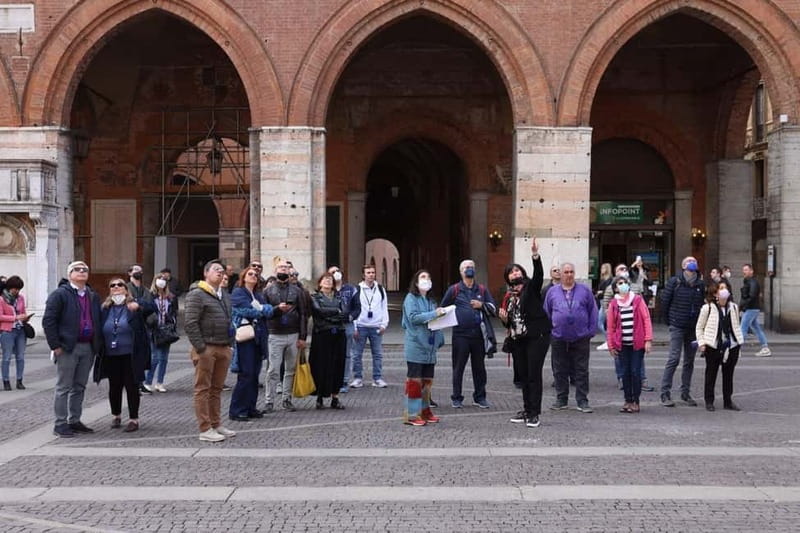
The tour continues into Cremona’s Town Hall, also called the Palazzo Comunale. The visit includes its monumental rooms, giving you a look at the civic side of the city after the religious and artistic focus of the cathedral.
This is a useful contrast. The Cathedral shows how faith and painted decoration shaped Cremona’s public image. The Town Hall shows how the city presented its political and administrative life. Seeing both interiors in one short walk gives the tour a wider frame than a church visit alone.
Pay close attention to the operating days. The Town Hall is open Monday through Saturday and closed on Sundays and festive days. If you book for a Sunday or public holiday, the exterior part of the stop may still fit the route, but the interior visit will not be available.
Because the walk is only 1.5 hours, the time inside the monumental halls will be limited. You are getting an introduction, not a long museum-style inspection. That is a fair exchange at this price, especially if your goal is to learn what deserves a longer return visit.
A different sort of day out, same corner of Lombardy:
- Milan: Cathedral and Duomo’s Terraces Entrance Ticket
★ 4.6 · 61,054 reviews - From Milan: Como & Bellagio with Private Lake Como Cruise
★ 4.6 · 9,788 reviews - Milan Cathedral: Duomo Terraces Ticket (No Church Access)
★ 4.6 · 6,111 reviews - Milan: Milan Cathedral Direct Entrance – Terrace Excluded
★ 4.5 · 5,782 reviews
A Roman road beneath the medieval story
The route also reaches a Roman road dating from the 1st century BC. This detail gives the walk a needed change of scale. The Cathedral and Town Hall belong to the city you can see above ground, while the Roman road points to an older Cremona beneath the medieval center.
I like this part because it prevents the tour from becoming only a parade of famous buildings. You get a brief sense of the city’s earlier layers and how long this central area has been used. The supplied details do not specify how much of the road is visible or whether it is an archaeological site you enter, so treat it as a guided point of interest rather than a separate underground attraction.
For visitors who enjoy urban history, this stop can be especially helpful. It shows that Cremona’s story did not begin with the cathedral or the violin. The city’s modern identity rests on several periods placed close together.
Cremonese lutherie and the sound of the city
The most distinctive subject on the walk is Cremonese lutherie, the local craft of making string instruments. The tradition is recognized by UNESCO as Intangible Cultural Heritage, and the guide explains its place in the city’s history and identity.
This discussion adds something you cannot get from photographing the square. Cremona is not only a city with old buildings. It is also a place where a specialized craft continues to shape how the city is understood.
The tour does not include a stated workshop visit, violin-making demonstration, or instrument museum admission. Instead, you receive an introduction to the tradition while walking through the historic center. If you want to see instruments or learn about workshop techniques in depth, you will need to arrange a separate activity.
Still, the topic is a strong reason to choose this particular walk over a generic city-center tour. The guide links monuments, local customs, and artistic work in one narrative. A short mention of lutherie can also help you decide how to spend the rest of your time in Cremona.
What the $17 price really covers
At $17 per person, this is an inexpensive way to get guided access to two important interiors and a clear orientation to the center. The price is strongest when you use the tour as a first look at Cremona, then return independently to the places that catch your interest.
You are paying for a live Italian-speaking guide, a guided walk, entry into the Cathedral, and entry into the City Hall when it is open. The Baptistery, Torrazzo, and Loggia dei Militi are exterior viewing stops, so there are no tower or museum experiences included in this price.
That makes the value easy to judge. Book it if you want historical and artistic context without committing to a long tour. Skip it if you prefer to explore silently at your own pace, need an English-language guide, or mainly want to climb the Torrazzo.
The tour also offers free cancellation up to 24 hours before the start time and a reserve-now, pay-later option. Those terms are useful if your Lombardy plans are still shifting, but you should still check the exact start time and availability before building the rest of your day around it.
Who will get the most from this short walk
I would recommend this experience to first-time visitors who want to understand Cremona’s central monuments quickly. It also fits well for anyone making a short stop in the city and wanting a guided route rather than piecing together the square alone.
Art lovers will appreciate the Cathedral’s frescoes. Architecture fans will enjoy the compact group of medieval buildings, especially the octagonal Baptistery and enormous brick Torrazzo. Music enthusiasts will value the explanation of violin-making, even though the tour does not include a workshop or instrument collection.
Families and older visitors may appreciate the 1.5-hour length and the fact that the route begins and ends at the same central office. The activity is listed as wheelchair accessible, which is important for planning, though the information provided does not describe the exact surfaces or access arrangements at every monument.
This is less suitable if you want a private tour, a long museum visit, or detailed access to every landmark. It is also not the right choice if you need commentary in a language other than Italian.
Practical planning for your visit
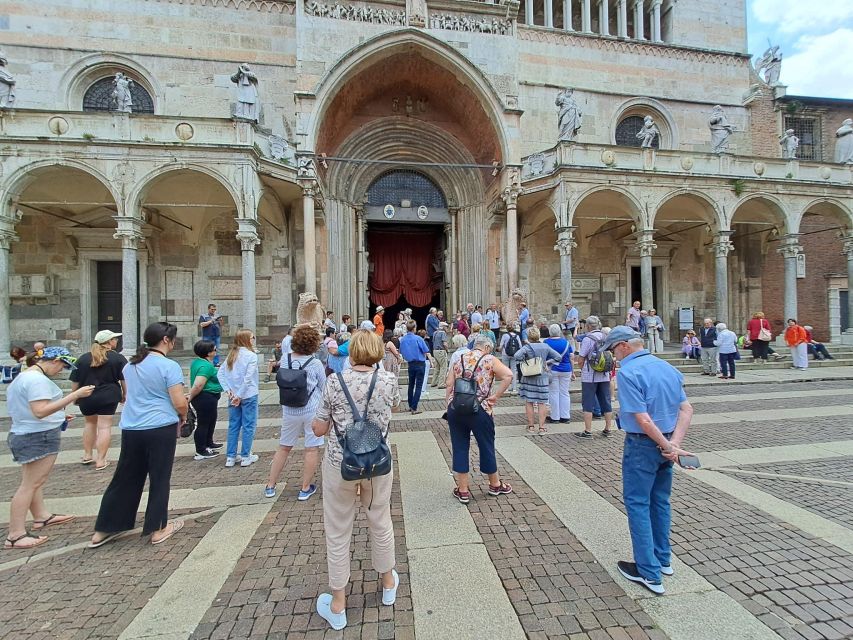
Check the departure time before booking, since starting times vary by availability. Arrive at the Cremona tourist office with enough time to find the meeting point and settle in before the walk begins.
If the interior of the Town Hall matters to you, choose a Monday through Saturday date that is not a festive day. On Sundays and festive days, plan for the Town Hall to be closed. The Cathedral visit remains a central part of the experience, but the exact access to any religious building can depend on local conditions.
Wear comfortable footwear for the walking route. The supplied information does not give a group size or detailed distance, so I would not assume a private or highly personalized format. Expect a shared guided walk through the historic center.
Bring your own plan for after the tour. The activity ends back at the Infopoint, leaving you well placed to continue exploring, revisit the square, or investigate the Torrazzo’s separate vertical museum if it is open.
Should you book the Cremona city walk?
Book this tour if you want a short, low-cost introduction to Cremona that covers the Cathedral, Town Hall, medieval square, Roman remains, and violin-making tradition. The strongest features are the interior visits and the way the guide connects the city’s art with its musical craft.
Think twice if your Italian is limited, since the live commentary is listed only in Italian. Also pass if your top priority is going inside the Baptistery, climbing the Torrazzo, or visiting a violin workshop, because those experiences are not included.
For most visitors with 1.5 hours to spare, $17 is a sensible price for orientation and context. Pick a weekday or Saturday if the Town Hall matters to you, and treat the walk as a well-priced starting point rather than a complete visit to every attraction in Cremona.
FAQ
Where does the tour start?
The tour starts at the Cremona tourist office, called the Infopoint Cremona, or Infopoint Cremona Ufficio Informazioni.
Where does the tour end?
The activity ends back at the same meeting point, the Cremona tourist office.
How long does the walking tour last?
The tour lasts 1.5 hours. Starting times depend on availability.
What language is the guided tour in?
The live tour guide speaks Italian.
Is the tour wheelchair accessible?
Yes, the activity is listed as wheelchair accessible.
Is entry to Cremona Cathedral included?
Yes, the guided tour includes a visit to the interior of Cremona Cathedral.
Is entry to the Town Hall included?
Yes, the tour includes the interior of the Town Hall when it is open. The Town Hall is closed on Sundays and festive days.
Can I enter the Torrazzo during this tour?
The tour includes an outside view and photo stop at the Torrazzo. Entry to the tower is not listed as part of the activity.
Can I enter the Baptistery during this tour?
The Baptistery is included as an exterior photo stop. Interior entry is not listed.
What is included in the price?
The $17 price includes the guided walking tour, entry to the Cathedral, entry to the City Hall when open, and information about Cremonese violin-making, a UNESCO Intangible Cultural Heritage tradition.
Just added around Milan
- Milan: Food Tour with Pasta, Pizza, Cannoli, and Tiramisu!★ 4.3 · 3 reviews
- Varenna Walking Tour and Cooking Class★ 5.0 · 3 reviews
- 1-Day Personal Fashion Styling Course for Women★ 5.0 · 3 reviews
- Milan: 4-Hour Art and History Private Walking Tour★ 5.0 · 3 reviews
- Private Wine Tasting in Bellagio with Chef Luigi Gandola★ 5.0 · 3 reviews
- Walking Tour in Lake Como with Lierna Cooking Class★ 5.0 · 3 reviews
- Mantova: Private Walking Tour★ 4.3 · 3 reviews
- Wine and Food tasting PRIVATE Guided Tour★ 5.0 · 3 reviews
City Tours, compared.
City Sightseeing Hop-On Hop-Off Bus with Audio Guide
Read our review →
Guided Duomo, Last Supper and City Centre Tour
Read our review →
Venice Day Trip from Milan with Guided City Tour
Read our review →
Best of City Walking Tour with Last Supper Tickets
Read our review →
eBike City Tour Guided by an iPad and a Tour Leader
Read our review →
Browse the lists this tour appears in