
Reviewed · CITY TOURS
Cremona: City of art and music
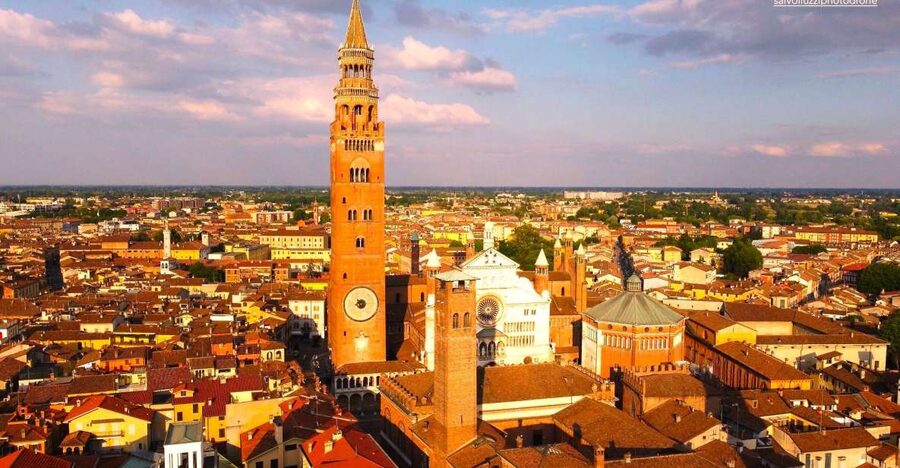
Cremona’s greatest surprise is how much fits into its central square. In 90 minutes, you see a cathedral filled with 16th-century frescoes, Europe’s tallest brick bell tower from outside, an octagonal Baptistery, grand civic rooms, and a slice of Roman road. The cathedral and Town Hall interiors give this short walk real substance.
I like the tight route and the focus on things you might miss while wandering alone. I also like that the guide connects the city’s monuments with Cremonese violin making, a UNESCO Intangible Cultural Heritage. The main consideration is time: 1.5 hours is enough for an introduction, but not enough for a slow museum visit or a climb up the Torrazzo.
- A compact medieval square: The Cathedral, Baptistery, Torrazzo, Town Hall, and Loggia dei Militi sit close together.
- Two interior visits: The tour enters both Cremona Cathedral and the Palazzo Comunale, or Town Hall.
- Frescoes worth seeing: The Cathedral is known as the Sistine Chapel of the Po Valley because of its 16th-century paintings.
- A Roman layer underfoot: You’ll see part of a road built in the 1st century BC.
- Music with local roots: The guide explains Cremona’s long violin-making tradition, recognized by UNESCO.
- Simple city-center logistics: The walk begins and ends at the Cremona tourist office and is wheelchair accessible.
In This Review
- Why Cremona Works So Well in 90 Minutes
- Starting at the Cremona Tourist Office
- The Cathedral Square and Cremona’s Brick Skyline
- Inside the Cathedral’s 16th-Century Frescoes
- The Town Hall’s Monumental Rooms
- A Roman Road Beneath the Medieval City
- Cremona’s Violin-Making Tradition
- What the $35 Price Really Buys
- Who Will Get the Most From This Walk
- Booking Tips and Small Practical Details
- Should You Book the Cremona City of Art and Music Tour?
- FAQ
- Where does the tour begin?
- Where does the tour finish?
- How long does the experience last?
- What languages are available?
- Does the tour enter Cremona Cathedral?
- Does the tour enter the Town Hall?
- Can I enter the Torrazzo during this tour?
- Can I enter the Baptistery during this tour?
- Is the tour wheelchair accessible?
- What is included in the price?
- Are food, drinks, or transportation included?
- Can I cancel for a refund?
Why Cremona Works So Well in 90 Minutes
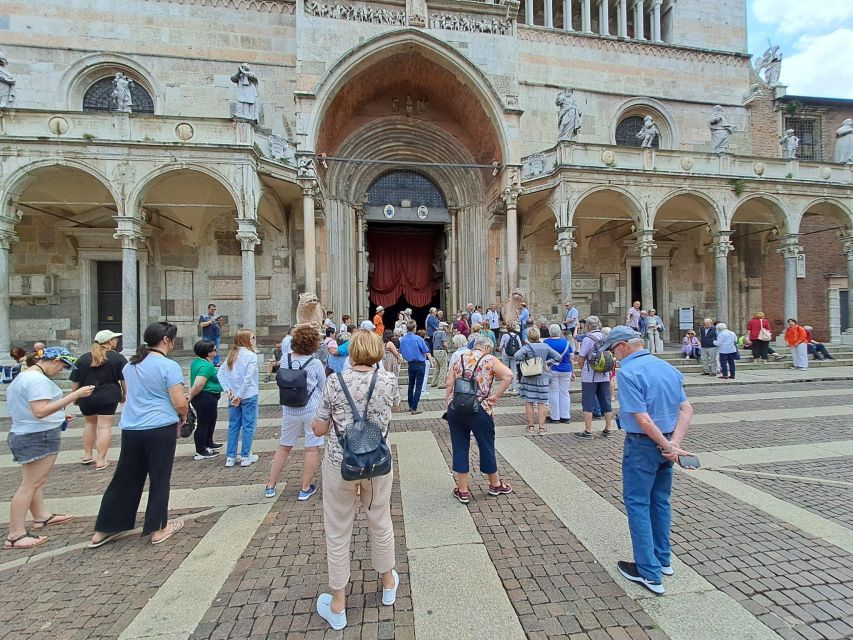
Cremona is a good city for a guided introduction because its main sights are gathered in a compact historic center. You do not spend most of the tour walking from one distant monument to another. Instead, the route quickly brings you into the city’s grand medieval heart, where the Cathedral, Baptistery, Torrazzo, Town Hall, and Loggia dei Militi face one another.
That compact layout matters. If you have only part of a day in Cremona, you can learn the basic shape of the city without giving up hours to a large museum or a long bus ride. The tour begins and ends at the Infopoint Cremona, so you finish where you started rather than being left across town.
The pace is brisk but sensible. Thirty minutes are devoted to the Cathedral, and another 20 minutes to the Town Hall. The remaining time covers the exterior monuments, the Roman road, and Cremona’s violin-making tradition. I would treat this as a city orientation with meaningful interior access, not as an exhaustive art tour.
Starting at the Cremona Tourist Office
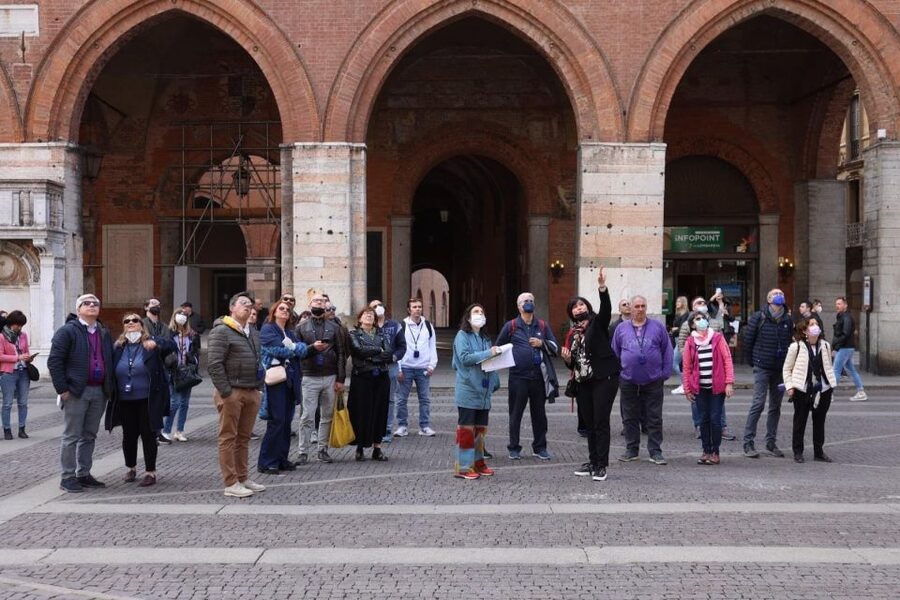
Meet at the Cremona tourist office, called the Infopoint Cremona, in the city center. This is a practical meeting place because the tour does not require a separate transfer or complicated local transportation. You arrive, meet the live guide, and begin on foot.
The available tour languages are English and French. If you book a French-language departure, the guide may be Elena, who conducted a recent 90-minute visit in fluent French and kept precisely to the advertised timing. Her role is especially useful if you want more than monument names and dates. The tour is built around explanation, not simply pointing out buildings as the group passes.
You should allow the full 1.5 hours. The timing is precise enough that arriving late could mean missing the opening explanation or the first stop. Since food, drinks, and transportation to and from the activity are not included, plan any café stop before or after the walk.
A few more Milan trips worth weighing up
- Milan: City Sightseeing Hop-On Hop-Off Bus with Audio Guide
★ 4.0 · 6,256 reviews - Transfer Milan City Centre – Bergamo Airport
★ 4.5 · 975 reviews - Milan: The Milan Pass City Card
★ 4.0 · 655 reviews
The Cathedral Square and Cremona’s Brick Skyline
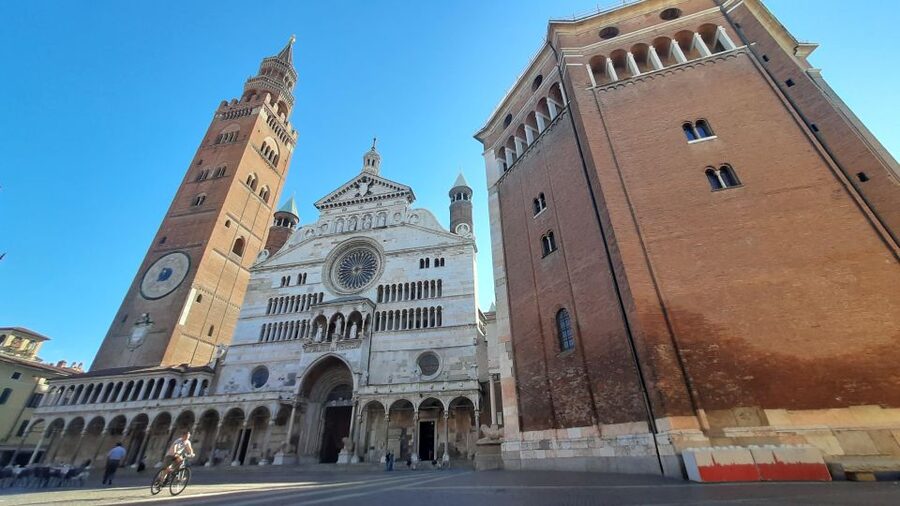
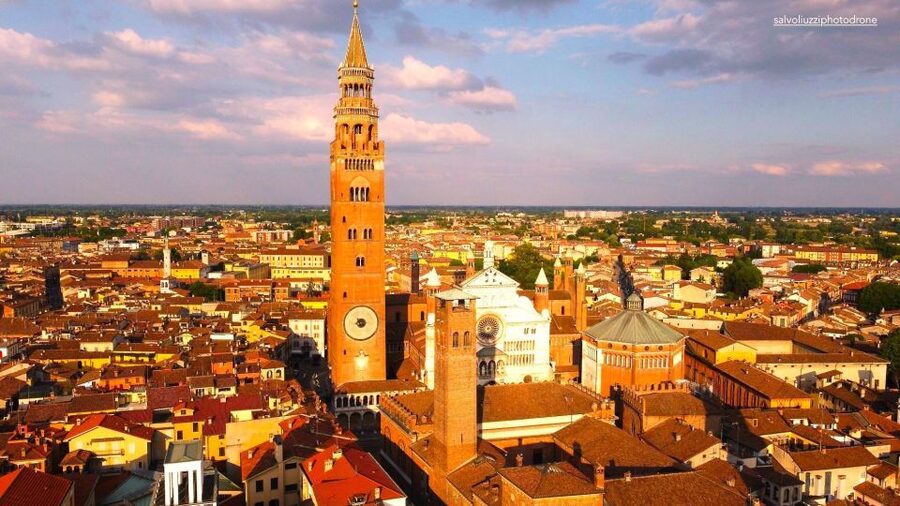
The first major focus is the medieval square around the Cathedral. This is the part of Cremona that gives the city its memorable profile: the Cathedral, the octagonal Baptistery, the Torrazzo, and the Town Hall all gather in one powerful architectural group.
The Torrazzo is viewed from outside during this tour. It is described as the tallest brick bell tower in Europe, and even without entering, it gives you a clear sense of Cremona’s medieval ambition. The visit does not include a climb or a ticket to the Torrazzo’s vertical museum, so you should not book this experience expecting a high view over Lombardy.
The Baptistery is also an exterior photo stop. Its octagonal shape sets it apart from the neighboring buildings and makes it an easy landmark to recognize when you return to the square later. The guide helps place the Baptistery within the wider group of religious and civic buildings, rather than treating it as an isolated photo background.
The Loggia dei Militi adds another layer to the square. It is one of the central monuments you see during the walk, though the stated interior visits focus on the Cathedral and Town Hall. This distinction is useful: you get a guided look at several buildings, but only two are listed as interior entries.
Inside the Cathedral’s 16th-Century Frescoes
The Cathedral is the artistic high point of the tour. You spend about 30 minutes inside with the guide, looking at the 16th-century frescoes that have earned it the nickname the Sistine Chapel of the Po Valley.
That nickname sets a high expectation, so it is best understood as a sign of the Cathedral’s painted decoration rather than a claim that it duplicates the Vatican. The value here is that the art is part of the building you are already visiting as the spiritual center of Cremona’s main square. You do not need to make a separate museum appointment to see it within this experience.
A guide makes the interior easier to read. Fresco cycles can blur into a single mass of color when you walk through alone, especially if you are trying to keep up with a group and follow the route at the same time. The tour gives you a short period to look while also supplying the local context.
The 30-minute visit is enough for a focused introduction. It is not enough to study every painted scene or linger over each architectural detail. If religious art is your main reason for visiting Cremona, use this tour to get oriented, then consider returning on your own if the Cathedral is open and the conditions allow. The guided visit gives you a strong first look, but the schedule does not promise long free time inside.
The Town Hall’s Monumental Rooms
The second interior visit takes you into Cremona’s Town Hall, or Palazzo Comunale. About 20 minutes are set aside for its monumental halls. This balances the Cathedral’s religious art with the city’s civic history.
I like this part of the route because it shows how Cremona’s identity was shaped not only by church institutions but also by municipal life. The Town Hall is not just another exterior façade in the square. Its rooms provide a sense of how public power and local administration were represented.
The visit is shorter than the Cathedral stop, so expect a concise explanation rather than a room-by-room architectural study. The guide’s job is to help you notice the significance of the halls and their place in the city center. If grand interiors are your main interest, the 20-minute limit may feel quick, but it adds variety to the tour.
There is one dated exception worth knowing. On Mondays in November 2024, the Town Hall was closed for private events, so the group could only see it from outside while the guide explained it. That notice applied specifically to November 2024. If you are booking for a later date, check the current availability and access conditions before paying.
A different sort of day out, same corner of Lombardy:
- Milan: Cathedral and Duomo’s Terraces Entrance Ticket
★ 4.6 · 61,054 reviews - From Milan: Como & Bellagio with Private Lake Como Cruise
★ 4.6 · 9,788 reviews - Milan Cathedral: Duomo Terraces Ticket (No Church Access)
★ 4.6 · 6,111 reviews - Milan: Milan Cathedral Direct Entrance – Terrace Excluded
★ 4.5 · 5,782 reviews
A Roman Road Beneath the Medieval City
The walk also reaches a section of Roman road from the 1st century BC. This is a small stop, but it gives the tour a useful time span. Cremona is not presented only as a medieval square with attractive brick buildings. You also get a glimpse of the Roman city beneath the later layers.
Do not expect a large archaeological park or an extended excavation visit. The information describes an exploration of a section of road, so the value comes from seeing an actual fragment of early urban infrastructure within the modern city center.
This kind of stop is easy to overlook on a self-guided walk. You might pass over it without realizing what is underfoot or why it matters. A guide turns a modest physical feature into a link between Roman Cremona, the medieval city, and the modern town you see today.
Cremona’s Violin-Making Tradition
The musical side of Cremona is not a decorative add-on. The guide explains the local tradition of Cremonese lutherie, meaning the craft of making string instruments, especially violins. UNESCO recognizes this tradition as Intangible Cultural Heritage.
That distinction matters. You are not simply hearing that Cremona is a city of music. You are learning that violin making is a living cultural practice tied to the city’s identity and skills. The tour places that craft alongside the Cathedral and civic buildings, giving you a wider picture of Cremona than architecture alone can provide.
The experience does not include a stated visit to a violin workshop or a dedicated violin museum. You should therefore book it for the explanation of the tradition, not for a hands-on craft demonstration or instrument collection. If you want to pursue the subject further, the tour gives you the background needed to decide what else to see in Cremona.
This is also one reason the walk works well for first-time visitors. The city’s musical reputation can seem vague if you only see the monuments. The guide gives it a clear local focus.
What the $35 Price Really Buys
At $35 per person, the tour is priced as a short guided city walk rather than a full-day cultural program. The value rests on three things: a live guide, entry into the Cathedral, and entry into the Town Hall. You also get the Roman road explanation and the introduction to Cremona’s violin-making tradition.
That is a fair package if you want structure and context. Admission to a building is one thing, but knowing where to look and why the interior matters can make a short visit more rewarding. The tour also saves you from piecing together the central sights on your own.
The price is less compelling if you prefer to wander without a schedule or if you already know Cremona’s history. You will not visit the inside of the Torrazzo or Baptistery on this route, and food, drinks, and transportation are extra. The 90-minute format also means the tour cannot cover every major sight in town.
For most first visits, I see the cost as reasonable, especially if you value a guide who can connect art, architecture, Roman remains, and violin making. It is best used as an opening lesson in Cremona, followed by independent time for the places that catch your interest.
Who Will Get the Most From This Walk
I would recommend this tour to first-time visitors who want to understand Cremona quickly. It suits you especially well if you like historic squares, church art, civic architecture, and local traditions, but do not want to spend half a day in a single museum.
It is also a good choice for people who prefer a guide in English or French. A French-language visit led by Elena lasted exactly 1.5 hours, which suggests that the advertised schedule is taken seriously. That precision helps if you have a train, lunch booking, or another appointment afterward, though you should still leave a little breathing room.
The walk is wheelchair accessible, which makes it a practical option for visitors who need an accessible city experience. The supplied details do not specify every surface, doorway, or restroom condition, so contact the provider if you need information beyond the general accessibility statement.
Art lovers will likely value the Cathedral most. Architecture fans will enjoy the way the square brings the religious and civic buildings together. Music-minded visitors will appreciate the lutherie discussion. Families can use the Roman road and giant bell tower as easy visual anchors, though the tour remains an adult-style historical walk rather than a specially designed children’s program.
Booking Tips and Small Practical Details
The tour offers free cancellation up to 24 hours before the start time, with a full refund. It also allows you to reserve now and pay later, which helps if your route through Lombardy is still changing.
Starting times vary, so check availability for your date rather than assuming a fixed departure. Meet at the Infopoint Cremona and plan to walk for the entire 90 minutes. There is no included transportation, so you need to reach the meeting point yourself.
The guide languages are English and French. If you need another language, this experience is not presented as offering one. The Town Hall closure notice for Mondays in November 2024 is a reminder to check building access for your specific date, particularly if entering the civic halls is important to you.
Wear comfortable shoes, even though the route is short. The tour is a walking experience through the historic center, with several stops and exterior viewing points. Save your café break for after the tour, since food and drinks are not included.
Should You Book the Cremona City of Art and Music Tour?
Book it if you want a clear, efficient introduction to Cremona’s center and you value going inside the Cathedral and Town Hall. The combination of frescoes, monumental civic rooms, a Roman road, and UNESCO-recognized violin making gives the walk more range than a basic monument circuit.
Skip it if you mainly want to climb the Torrazzo, spend hours studying art, or visit violin workshops. Those interests require more time and possibly separate admissions. At $35, this is a focused orientation, not an all-inclusive day of sightseeing.
For a first visit, I think the tour earns its place. It gives you the city’s essential visual landmarks, explains why Cremona matters, and leaves you with enough time to explore at your own pace afterward.
FAQ
Where does the tour begin?
The tour begins at the Cremona tourist office, known as the Infopoint Cremona.
Where does the tour finish?
The tour returns to the Infopoint Cremona.
How long does the experience last?
The guided walking tour lasts 1.5 hours.
What languages are available?
Live guides are available in English and French.
Does the tour enter Cremona Cathedral?
Yes. The tour includes a guided visit of about 30 minutes inside the Cathedral.
Does the tour enter the Town Hall?
Yes. The tour includes a guided visit of about 20 minutes inside the Town Hall and its monumental rooms, subject to building access.
Can I enter the Torrazzo during this tour?
No interior visit to the Torrazzo is included. The Torrazzo is viewed from outside as a photo stop.
Can I enter the Baptistery during this tour?
The Baptistery is listed as an exterior photo stop. An interior visit is not included.
Is the tour wheelchair accessible?
Yes. The activity is described as wheelchair accessible.
What is included in the price?
The price includes the guided walking tour, entry to the interior of the Cathedral and Town Hall, a section of 1st-century BC Roman road, and information about Cremonese violin making.
Are food, drinks, or transportation included?
No. Food, drinks, and transportation to and from the activity are not included.
Can I cancel for a refund?
Yes. You can cancel up to 24 hours in advance for a full refund. You can also reserve now and pay later.
Just added around Milan
- Milan: Food Tour with Pasta, Pizza, Cannoli, and Tiramisu!★ 4.3 · 3 reviews
- Varenna Walking Tour and Cooking Class★ 5.0 · 3 reviews
- 1-Day Personal Fashion Styling Course for Women★ 5.0 · 3 reviews
- Milan: 4-Hour Art and History Private Walking Tour★ 5.0 · 3 reviews
- Private Wine Tasting in Bellagio with Chef Luigi Gandola★ 5.0 · 3 reviews
- Walking Tour in Lake Como with Lierna Cooking Class★ 5.0 · 3 reviews
- Mantova: Private Walking Tour★ 4.3 · 3 reviews
- Wine and Food tasting PRIVATE Guided Tour★ 5.0 · 3 reviews
City Tours, compared.
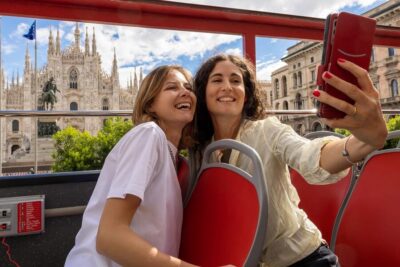
City Sightseeing Hop-On Hop-Off Bus with Audio Guide
Read our review →
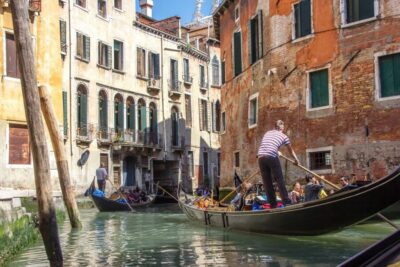
Guided Duomo, Last Supper and City Centre Tour
Read our review →
Venice Day Trip from Milan with Guided City Tour
Read our review →
Best of City Walking Tour with Last Supper Tickets
Read our review →
eBike City Tour Guided by an iPad and a Tour Leader
Read our review →
Browse the lists this tour appears in