
Reviewed · FASHION & SHOPPING TOURS
Discovering Milan’s fashion soul
Milan’s fashion quarter is more than a row of expensive shop windows. On this two-hour walk, you follow the streets where Italian style took shape, from Via della Spiga to Via Montenapoleone, while a local guide explains the people and brands behind the polished facades. It is a good way to turn a shopping district into a cultural stop.
I like the small maximum group of nine, which should make it easier to hear the guide and ask questions. I also like the route itself: Via Sant’Andrea, Via Gesù, Via Manzoni, and Piazza della Scala give you a compact look at Milan’s most famous fashion area without requiring a full day of shopping.
The main concern is the $143.87 price for two hours. That can be worthwhile if you care about fashion, design, and Milanese history, but it is a lot for a walking tour that does not include museum entry, food, drinks, or personal shopping help. Some guests found the information too basic for the cost, so your expectations matter.
In This Review
- Key points to know before booking
- Why Milan’s fashion quarter makes a good walking tour
- Meeting at Via Manzoni 31
- Via della Spiga and the first designer addresses
- Via Sant’Andrea and the international names
- Via Montenapoleone, Milan’s famous fashion street
- Via Manzoni and the Grand Hotel of Milan
- Finishing at Piazza della Scala
- How much value do you get for $143.87?
- Who should book this fashion walk?
- My verdict on Milan’s fashion soul
- FAQ
- How long does the fashion tour last?
- Where does the tour begin?
- Where does the tour end?
- Which languages are available?
- How many people can join the group?
- Is a personal shopper included?
- Are food and drinks included?
- Is the tour wheelchair accessible?
Key points to know before booking
- Milan’s Quadrilatero della Moda: Walk the city’s best-known fashion district, including Via della Spiga, Via Sant’Andrea, and Via Montenapoleone.
- A guide-led history walk: Learn how Milan grew into a major European textile center and how fashion houses established themselves in the city.
- Luxury storefronts, not shopping appointments: See Bulgari, Sergio Rossi, Dolce & Gabbana, Chanel, Hermès, Gucci, Versace, and Louis Vuitton from the street.
- Small groups: The group is limited to nine people, and a radio-guide system is provided when there are at least five participants.
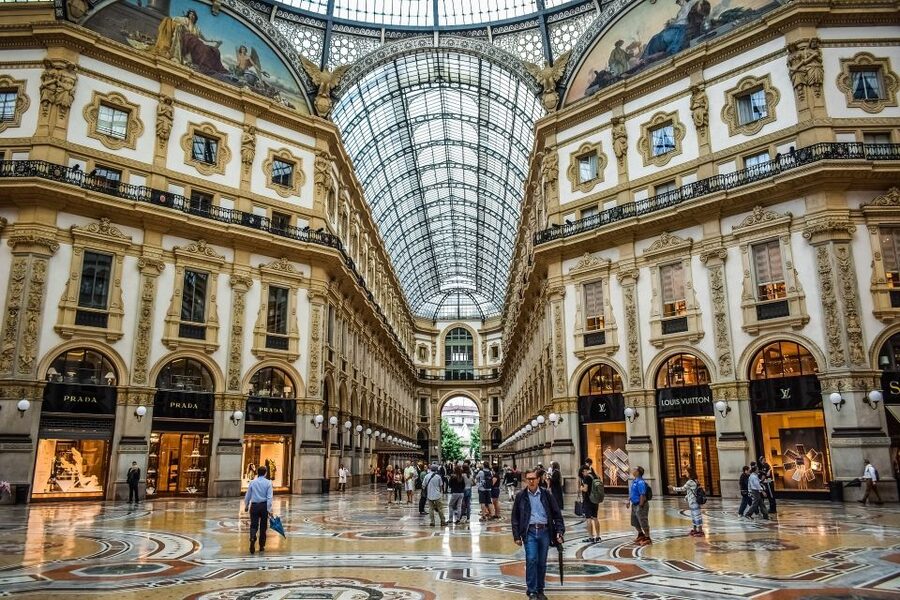
- A central finish: The walk ends near Piazza della Scala and the Galleria Vittorio Emanuele II, back at the starting point.
- A specialist interest tour: This suits you best if fashion and design are part of your Milan plans, rather than if you simply want a general introduction to the city.
Why Milan’s fashion quarter makes a good walking tour
Milan’s fashion reputation did not appear overnight. The city became one of Europe’s leading textile producers in the 19th century, giving it a practical base for clothing, fabric, and luxury production. As fashion houses grew, many chose the Quadrilatero della Moda, or Fashion Quadrilateral, for their grand stores and elegant headquarters.
That background gives the walk more substance than simply pointing out designer names. You learn why this particular part of Milan became so important, and how fashion fits into the city’s wider commercial and architectural story.
I would not book this as a standard sightseeing walk with a little window-shopping added. The appeal is narrower and more focused. You are paying for context about Milanese fashion, brand origins, designers, and the character of the streets themselves.
You also do not need to buy anything. The pleasure comes from seeing the design of the shops, courtyards, and buildings, and from understanding why these addresses carry such weight in the fashion world. For many visitors, that is enough. For others, the polished storefronts may feel like a long parade of places they cannot afford to enter.
More fashion-district and outlet trips:
- Milan: Serravalle Designer Outlet Roundtrip Bus Transfer
★ 4.4 · 4,374 reviews - Milan Fashion Tour
★ 5.0 · 111 reviews - Treasures of Milan: Fashion and Design Private Tour
★ 5.0 · 102 reviews
Meeting at Via Manzoni 31
The tour begins at Via Manzoni 31, at the corner of Via Croce Rossa. The closest metro reference is MM3 Montenapoleone, which makes the meeting point practical if you are already near Milan’s central shopping area.
Arrive ready to walk. The route moves through several nearby streets, and the experience is built around seeing the district on foot rather than settling in one place for a lecture. Since the tour lasts two hours, you get a concentrated introduction rather than an all-day fashion program.
The provider lists live guiding in English and Italian. A professional certified guide leads the walk, and a radio-guide system is used from five participants onward. That detail matters in a city where traffic, footsteps, and street noise can make it hard to catch every sentence.
The group limit of nine is one of the better features here. A small group can gather around a storefront or stop at a photo point without blocking the pavement, and you have a better chance of asking about a designer or building that catches your eye.
Via della Spiga and the first designer addresses
One of the first major sections takes you along Via della Spiga. This is one of Milan’s best-known luxury streets, and it gives you an early sense of the district’s tone: elegant facades, carefully designed windows, and Italian labels placed alongside international names.
You see stores associated with Bulgari, Sergio Rossi, and Dolce & Gabbana. These are not museum displays, so the experience depends on what is visible from the street. The guide’s role is to explain the brands and their place in Milan’s fashion story, not to arrange private access or shopping appointments.
The walk also includes Via Gesù, where you can stop for photographs. That pause breaks up the steady movement through the shopping streets and gives you a chance to look beyond the logos. Pay attention to the relationship between the shop entrances, older buildings, and smaller courtyards. The district’s character comes from that mixture of historic architecture and high-end retail.
If you are hoping to shop, this part can help you identify stores. But remember that the guide is not a personal shopper. You will not receive individual buying advice, wardrobe planning, or assistance negotiating purchases.
Via Sant’Andrea and the international names
The route continues along Via Sant’Andrea, where glossy storefronts from French fashion houses such as Chanel and Hermès come into view. This section helps show that Milan’s fashion quarter is international, even though the tour places Italian fashion at its center.
The value here lies in comparison. You can see how different labels present themselves through architecture, windows, materials, and presentation. The guide may also point out unusual traits of the brands featured in the Quadrilatero, helping you connect a familiar name with its designers and history.
I would keep your eyes up as you walk. It is easy to focus only on the shop windows, but the streets are also part of the experience. The facades and courtyards help explain why luxury companies wanted more than a simple retail address. They wanted settings that reflected the status of the brand.
This is also where the tour’s strengths and weaknesses become clearest. A strong guide can turn a familiar logo into a story about a designer, a business, or a change in Italian fashion. A less detailed explanation may leave you feeling that you could have walked the same streets alone.
One guide specifically praised by name is Valeria, who was described as combining fashion with history and biographies in an engaging way. Guide assignments can vary, so you should not assume Valeria will lead your departure. Still, her approach gives you a useful idea of what to hope for: stories about people and ideas, not just lists of luxury labels.
A different sort of day out, same corner of Lombardy:
- Milan: Cathedral and Duomo’s Terraces Entrance Ticket
★ 4.6 · 61,054 reviews - From Milan: Como & Bellagio with Private Lake Como Cruise
★ 4.6 · 9,788 reviews - Milan: City Sightseeing Hop-On Hop-Off Bus with Audio Guide
★ 4.0 · 6,256 reviews - Milan Cathedral: Duomo Terraces Ticket (No Church Access)
★ 4.6 · 6,111 reviews
Via Montenapoleone, Milan’s famous fashion street
Via Montenapoleone is the centerpiece of the walk. It is the legendary street of Milan’s fashion quadrangle, lined with luxury names such as Gucci, Versace, and Louis Vuitton.
The street is visually impressive, but it is also where the price question deserves the most thought. You can walk here independently at no cost, take photographs from public areas, and see many of the same storefronts. The tour earns its fee only if the guide adds useful detail that you would not pick up by strolling alone.
I would ask questions here. Which designers shaped Milan’s reputation? How did individual brands become associated with particular styles? What makes Milan different from other fashion capitals? The supplied tour information promises facts, anecdotes, and unusual details about the labels, but the quality of the experience will depend on how fully your guide develops those subjects.
One assessment of the tour found the information too basic and the price too high. Another found the guide’s storytelling very interesting. That contrast is important. The route is strong and the subject is distinctive, but the experience is not a guaranteed substitute for a fashion museum or a serious lecture on design.
Via Manzoni and the Grand Hotel of Milan
After Via Montenapoleone, the route heads down Via Manzoni. Here, you see the Grand Hotel of Milan among impressive buildings and fashionable boutiques.
This stop broadens the walk beyond clothing. Hotels, historic buildings, and luxury shops all contribute to Milan’s image as a city of style. The Grand Hotel also gives you a change of pace after the designer-heavy streets, with a chance to consider how visitors, designers, and wealthy shoppers have been part of the area’s identity.
The tour begins and ends in this general area, so you do not need to arrange a separate pickup or find your way across Milan afterward. That is useful if you have a restaurant booking, museum visit, or evening performance planned nearby.
The activity does not include hotel pickup or drop-off. You make your own way to Via Manzoni 31 and return there at the end. Since the route is central and the meeting point is near the Montenapoleone metro station, this is a minor issue for most visitors, but it is still worth including in your schedule.
Finishing at Piazza della Scala
The final section takes you to Piazza della Scala, home of Teatro alla Scala and the Galleria Vittorio Emanuele II. This gives the walk a satisfying finish because Milan’s fashion story meets two of the city’s best-known cultural and architectural landmarks.
The Galleria is particularly fitting as an endpoint. Its grand arcades and elegant shops connect commerce, design, and public life in one memorable setting. You finish with a view of a Milan that is not limited to fashion boutiques.
The activity ends back at the meeting point, so the final stop is part of the route rather than a one-way transfer. Afterward, you can continue exploring central Milan on your own, although no additional admissions are included in the tour.
If you have never visited Milan, this ending also helps you place the Fashion Quadrilateral within the city center. If you already know the Duomo and Galleria, the guide’s fashion angle may give familiar sights a new purpose.
How much value do you get for $143.87?
At $143.87 per person, this is an expensive two-hour walk. The small group, certified guide, and focused subject help explain the price, but they do not automatically make it good value.
I would consider booking it if fashion is one of your main reasons for visiting Milan. You may also find it worthwhile if you enjoy design, brand history, architecture, and biographies, and prefer to have a local person connect the pieces for you.
I would hesitate if you are mainly looking for general Milan sightseeing. The tour does not include the Duomo, museum entry, a meal, or an extended visit inside any fashion house. You can see the streets independently, so the fee rests almost entirely on the guide’s interpretation.
The mixed assessments point to the same practical lesson: guide quality matters a great deal. A guide who tells clear stories about designers and the city’s textile past can make the walk memorable. A guide who offers only surface facts may leave you feeling that the price was out of proportion to the content.
The free cancellation policy, with a full refund available up to 24 hours before the activity, gives you some flexibility. You can also reserve now and pay later, which helps if your Milan schedule is still changing. Those booking benefits reduce some risk, but they do not change the tour’s basic value calculation.
Who should book this fashion walk?
You are a good match for this activity if you:
- Follow Italian or international fashion brands.
- Want to understand how Milan became a fashion center.
- Enjoy city walks built around design, architecture, and local stories.
- Prefer a group of no more than nine people.
- Have two hours available near Montenapoleone, Via Manzoni, and La Scala.
- Want a guide rather than a self-guided stroll through the shopping district.
You may want another activity if you:
- Need a personal shopper or individual buying advice.
- Want to enter designer stores or receive shopping assistance.
- Prefer museums, food, or broad city history.
- Are watching your budget closely.
- Expect detailed academic information about fashion design.
The tour is wheelchair accessible, which makes the route available to more visitors. You should still check the exact starting time and availability when booking, since the activity is offered at scheduled times rather than as a walk-up experience.
My verdict on Milan’s fashion soul
I like the idea behind this tour. It takes a district many people treat as an expensive shopping zone and explains the names, streets, and social history behind it. The route is compact, easy to follow, and packed with recognizable addresses, from Bulgari and Dolce & Gabbana to Chanel, Gucci, and Versace.
The strongest reason to book is the chance to hear good storytelling in a small group. Valeria’s reported style, linking fashion with history and biographies, is exactly what this experience needs. The main warning is the cost: at $143.87 for two hours, basic commentary will not feel sufficient.
Book it if fashion is central to your Milan plans and you value a guide’s interpretation more than admission tickets or shopping help. Skip it if you only want to see the storefronts, since you can walk the Quadrilatero independently and put that money toward a museum, meal, or other Milan experience.
FAQ
How long does the fashion tour last?
The walking tour lasts two hours. Starting times vary, so you need to check availability for the date you want.
Where does the tour begin?
The meeting point is Via Manzoni 31, at the corner of Via Croce Rossa. The closest metro reference is MM3 Montenapoleone.
Where does the tour end?
The activity ends back at the meeting point. The route includes Piazza della Scala and the Galleria Vittorio Emanuele II before returning to the starting area.
Which languages are available?
The live tour guide is available in English or Italian.
How many people can join the group?
The group has a maximum of nine participants. A radio-guide system is used from five participants onward.
Is a personal shopper included?
No. The guide leads the fashion history and shopping district walk but does not act as a personal shopper.
Are food and drinks included?
No. Food and drinks are not included in the price.
Is the tour wheelchair accessible?
Yes. The activity is listed as wheelchair accessible.
Just added around Milan
- Milan: Food Tour with Pasta, Pizza, Cannoli, and Tiramisu!★ 4.3 · 3 reviews
- Varenna Walking Tour and Cooking Class★ 5.0 · 3 reviews
- 1-Day Personal Fashion Styling Course for Women★ 5.0 · 3 reviews
- Walking Tour in Lake Como with Lierna Cooking Class★ 5.0 · 3 reviews
- Milan: 4-Hour Art and History Private Walking Tour★ 5.0 · 3 reviews
- Private Wine Tasting in Bellagio with Chef Luigi Gandola★ 5.0 · 3 reviews
- Mantova: Private Walking Tour★ 4.3 · 3 reviews
- Wine and Food tasting PRIVATE Guided Tour★ 5.0 · 3 reviews
Fashion & Shopping Tours, compared.
Treasures of Milan: Fashion and Design Private Tour
Read our review →
Fashion Workshop in Atelier and Fashion District Tour
Read our review →
Browse the lists this tour appears in