Reviewed · GUIDED
Jewish Guided Tour in Milan
Milan’s Jewish story is woven through its grand center rather than gathered in one old quarter. This three-hour walk links royal power, Mussolini’s era, legal reform, Jewish life, synagogue design, and the symbols you may otherwise miss around the Duomo. The Central Synagogue visit gives the tour its clearest focus, though you must arrange entry ahead and pay a donation of at least €10.
I like the small maximum of eight people, which should make it easier to ask questions and keep up with the guide. I also like the way the walk connects Jewish history to Milan’s wider story instead of treating it as an isolated subject. The main drawback is that the Holocaust Museum itself is not included, and the tour moves through central Milan rather than a historic Jewish neighborhood.
In This Review
- Key points to know before booking
- Why Milan’s Jewish story works best as a city walk
- San Babila: start with Milan’s bigger story
- Corso Vittorio Emanuele II and the making of modern Italy
- Piazza del Liberty: war, Mussolini, and difficult memory
- Cesare Beccaria and the Italian tradition of law
- The Central Synagogue: the tour’s essential appointment
- Piazza del Duomo: Jewish symbols beside Christian monuments
- Rinascente rooftop views and Milan’s changing skyline
- The Holocaust Memorial: important guidance, but no museum tour
- Guide style and group size
- Is $120.48 a fair price?
- Who should book this Jewish Milan tour?
- Should you book it?
- FAQ
- How long is the Jewish Guided Tour in Milan?
- Where does the tour start?
- Where does the tour end?
- Is entry to the Central Synagogue included?
- Can I visit the synagogue during August?
- Does the tour include the Holocaust Museum?
- How many people can join the tour?
- Is the tour offered in English?
- Can I cancel for a full refund?
Key points to know before booking
- The route begins at San Babila and ends near Via Dante, with guidance onward to Milan’s Holocaust Memorial.
- The Central Synagogue visit requires advance coordination, especially during August, when opening hours are limited.
- A donation of at least €10 per person is required for synagogue entry and is not included in the $120.48 tour price.
- The group is capped at eight people, a useful advantage on a history-heavy walking tour.
- Guides including Galit and Nuki have led the experience, with a style that combines city history and Jewish heritage.
- The Holocaust Museum is not part of the tour, although the guide escorts you to its entrance by metro.
Why Milan’s Jewish story works best as a city walk
This is not a tour of a preserved Jewish quarter. Milan does not have one central Jewish neighborhood to wander through, and that fact shapes the whole experience. Instead, the guide points out Jewish connections in the city center, then places them beside Milan’s royal, political, legal, religious, and architectural landmarks.
I find that approach useful because it shows how Jewish life fits into the city as a whole. You are not simply moving from one Jewish site to another. You are learning how Milan was built, how power changed hands, how World War II affected the city, and how Jewish identity remains visible in places many people pass without noticing.
The tour lasts about three hours and is offered in English. At $120.48 per person, it is not a cheap orientation walk. Its value depends largely on what you want from the day. If you want a guided explanation of Jewish history tied to Milan’s main sights, the price includes a licensed or certified guide and a small group. If you mainly want a general city tour, several of these places are free to visit on your own.
A few more Milan trips worth weighing up
- Milan: City Sightseeing Hop-On Hop-Off Bus with Audio Guide
★ 4.0 · 6,256 reviews - Milan: Guided Walking Tour & Last Supper Visit with Ticket
★ 4.7 · 5,409 reviews - Milan: Fast-Track Milan Cathedral and Terraces Guided Tour
★ 4.7 · 5,240 reviews
San Babila: start with Milan’s bigger story
The meeting point is at Corso Monforte 2, near San Babila. The opening discussion covers Milan’s past, present, and future, giving you a broad frame before the tour turns toward Jewish history.
That beginning matters. Milan can feel like a city of famous surfaces: fashion shops, grand avenues, the Duomo, and polished historic buildings. A good guide helps you see the forces behind those surfaces. San Babila is a practical place to begin because you are already in the central city, close to several major streets and public transport.
You should arrive ready for a walking tour rather than a sit-down lecture. The first stop lasts about 20 minutes, and the guide uses the city around you as the classroom. I would treat this part as orientation. If you already know Milan well, it may feel familiar, but it sets up the political and urban themes that return later.
Corso Vittorio Emanuele II and the making of modern Italy
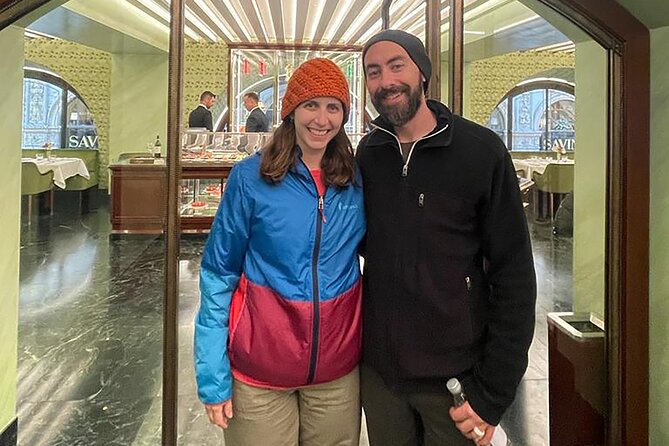
The next section takes about 25 minutes along Corso Vittorio Emanuele II. The guide discusses Vittorio Emanuele, the Italian royal dynasty, and the way Milan was built.
This is one of the tour’s useful detours from a narrow religious focus. Jewish communities do not exist apart from the political systems and city plans around them. Understanding the royal dynasty and the creation of modern Italy gives you a better sense of the setting in which Milan’s Jewish population lived and worked.
Corso Vittorio Emanuele II is also one of Milan’s main pedestrian arteries, leading toward the Duomo. It can be busy, so stay close to the guide and expect the commentary to compete with city noise. The tour does not treat the street as a simple photo stop. It uses the avenue to explain how Milan presents its national identity and public memory.
Piazza del Liberty: war, Mussolini, and difficult memory
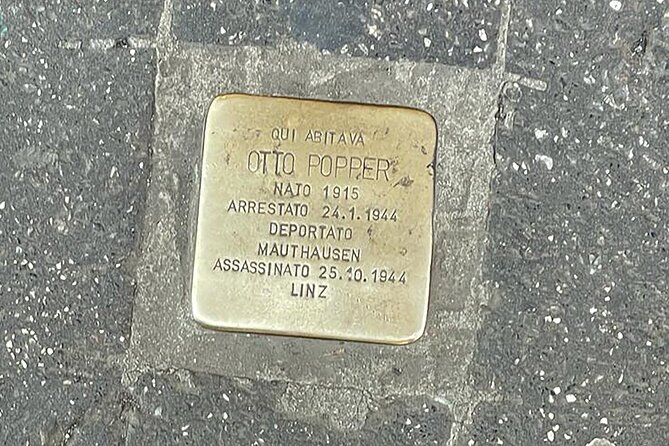
At Piazza del Liberty, the guide turns to World War II and Mussolini. This 20-minute stop adds the political weight that the earlier city history prepares you for.
For me, this is where the tour’s subject becomes more serious. Jewish history in Milan cannot be separated from fascism, wartime persecution, and the destruction caused by Nazi and Fascist rule. The guide’s job here is not only to name dates or leaders, but to help you connect national politics to what happened to Jewish people in Italy.
Because the tour is conducted outdoors, the depth of this discussion will depend on the guide and on your questions. You may want to ask how Milan’s Jewish community was affected during the war and how the city remembers that period today. The tour later points you toward the Holocaust Memorial, so this stop serves as an important bridge rather than a complete account of the Holocaust.
A different sort of day out, same corner of Lombardy:
- Milan: Cathedral and Duomo’s Terraces Entrance Ticket
★ 4.6 · 61,054 reviews - From Milan: Como & Bellagio with Private Lake Como Cruise
★ 4.6 · 9,788 reviews - Milan Cathedral: Duomo Terraces Ticket (No Church Access)
★ 4.6 · 6,111 reviews - Milan: Milan Cathedral Direct Entrance – Terrace Excluded
★ 4.5 · 5,782 reviews
Cesare Beccaria and the Italian tradition of law
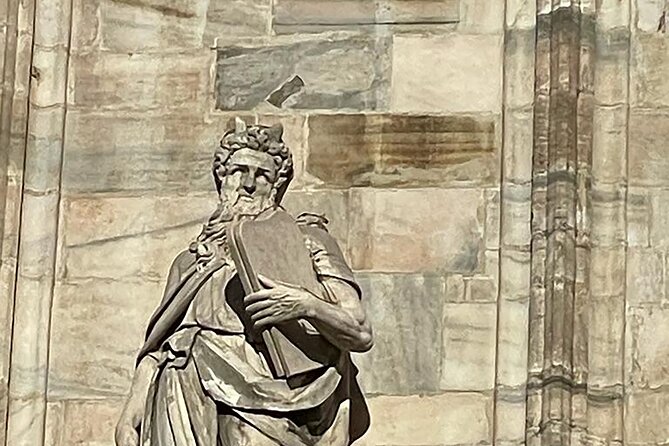
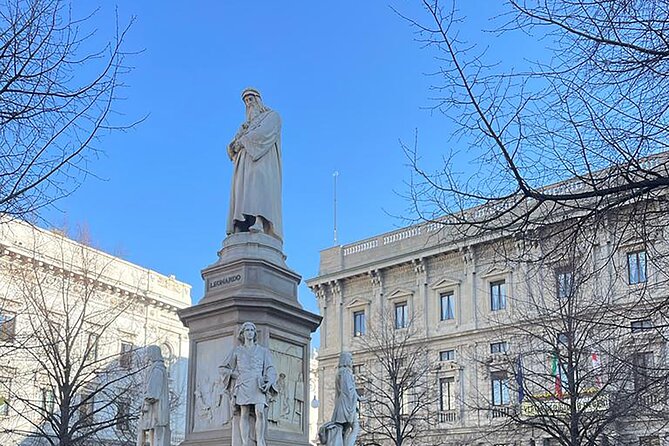
At the monument to Cesare Beccaria, the guide spends about 20 minutes discussing Beccaria and his contribution to law in Italy.
This may seem like an unexpected stop on a Jewish tour, but it gives the walk a broader intellectual angle. Jewish history is often reduced to religious buildings and wartime tragedy. Here, the guide connects the subject with legal ideas and the development of public life in Italy.
The stop also breaks up the route with a different kind of story. You are not looking only at what happened to a community. You are considering the laws and ideas that shape how people are treated by the state. If you enjoy political history, this section may be one of the more rewarding parts of the walk. If you want only synagogue architecture and Jewish ritual, it may feel less direct.
The Central Synagogue: the tour’s essential appointment
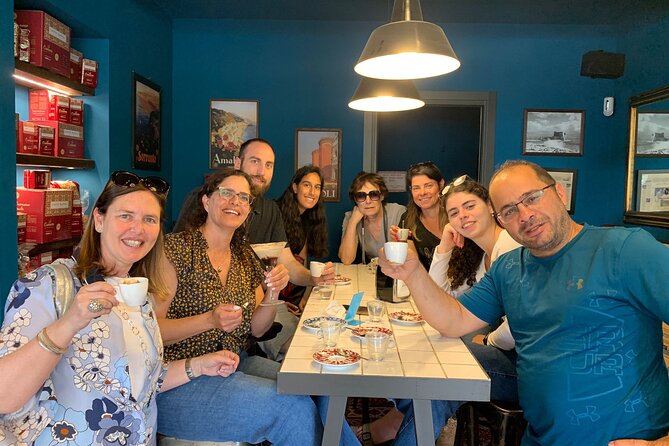
The Central Synagogue, or Sinagoga Centrale, is the main Jewish-focused stop. Here the guide discusses Judaism, Jewish history in Italy, and Jewish life in Milan.
Entry is not included in the tour price. You must make arrangements in advance, and a donation of at least €10 per person is required. During August, opening hours are limited, so prior coordination is especially important. Do not assume you can simply arrive at the door and enter with the group.
This is the point where the tour moves from public streets into a religious space. Be prepared for the tone to change. The guide can explain beliefs, symbols, and the place of Judaism in Italian and Milanese life, while the synagogue provides a setting that makes those subjects more concrete.
The tour information does not promise a full religious service or an extended architectural visit, so keep your expectations focused. You are paying for a guided introduction and arranged access, not a separate museum-style synagogue tour. Still, the synagogue is a major reason to choose this experience over a general Milan history walk.
The absence of a central Jewish quarter is worth keeping in mind here. You will not spend the afternoon walking through a preserved Jewish district with a dense collection of old Jewish buildings. Instead, the synagogue acts as the main anchor for a Jewish presence spread through the wider city.
Piazza del Duomo: Jewish symbols beside Christian monuments
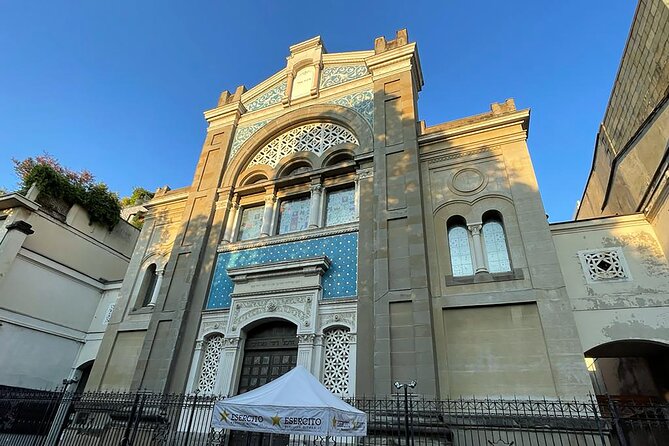
The route continues to Piazza del Duomo for about 25 minutes. The guide discusses similarities and differences between Judaism and Christianity, the architecture of churches and synagogues, and Jewish symbols connected with the Duomo.
This is a smart location for that comparison. The Duomo dominates Milan’s public image, and its scale and Christian symbolism can make other religious traditions easy to overlook. The guide encourages you to examine the city’s most famous church through a wider religious and architectural lens.
Expect interpretation rather than a formal interior visit. The tour does not list admission to the Duomo, and the stop is conducted in the piazza. You will be looking at the cathedral and its setting while the guide explains how church and synagogue architecture express different traditions.
This section should suit you if you enjoy visual details. A guide can point out symbols that you might walk past without recognizing, which was a key reason to book the tour for people who wanted more than a standard city stroll. Bring questions. The comparison between Judaism and Christianity can become much more useful when you ask about ritual, design, symbols, or the role of the building in community life.
Rinascente rooftop views and Milan’s changing skyline
The final listed stop is Rinascente Milano, where the guide takes about 15 minutes to discuss Milan’s high-rise buildings and Italy’s changing cityscape.
The rooftop viewpoint gives the tour a lighter finish after the heavier material about fascism and wartime persecution. From above, you can connect the old city center with Milan’s newer vertical development. The view also helps make sense of the city as a changing place, not a collection of frozen monuments.
The tour description does not specify whether a purchase or separate access fee is needed for the rooftop, so confirm that detail when arranging your booking. The stop is short, which suggests it is meant for orientation and discussion rather than a long photography session.
The Holocaust Memorial: important guidance, but no museum tour
There is a practical detail about the ending. The listed end point is Via Dante, but the tour also includes an escort to Milan’s Holocaust Memorial Site. The guide travels with you by metro and arrives with you at the entrance to the Holocaust Museum.
The museum itself is not included. You should not expect the three-hour experience to include museum admission, an indoor museum visit, or a guided tour of the exhibits. The escort is still useful because it connects the street tour with one of Milan’s most important Holocaust remembrance sites and helps you reach the entrance.
I would treat this as a handoff to a separate visit. If the museum is central to your plans, ask the provider about timing and entry arrangements before booking the tour. The walk may leave you with the historical context and location you need, but you will need a separate plan for the museum.
Guide style and group size
The maximum group size is eight people. That is a real advantage here. The subject includes religion, law, fascism, architecture, and personal community history, so a small group gives you a better chance to ask clear questions without losing the thread.
The guides named in the experience include Galit and Nuki. Galit has been praised for pointing out Jewish details that are easy to miss, while Nuki has been described as warm and informative. Guides can vary by date, so do not assume one particular person will lead your departure unless Milano Mia confirms it.
The tour is offered in English and includes an in-person licensed or certified guide. All listed fees and taxes are included, except for the synagogue donation. Coffee and tea are not included, though that is a minor point on a three-hour walk.
Is $120.48 a fair price?
At $120.48 per person, this experience costs more than a casual free walking tour. I would judge the price on three things: the small group, the specialist subject, and the planned synagogue access.
For a full group of eight, the guide can give a more personal explanation than you would get on a large city tour. You are also covering a focused subject that is not usually part of a standard Duomo walk. The synagogue arrangement adds value, but the required donation means your real outlay is at least $10 more per person.
The price is harder to justify if you plan to visit only the outdoor stops and do not enter the synagogue. San Babila, Corso Vittorio Emanuele II, Piazza del Liberty, Beccaria’s monument, Piazza del Duomo, and Rinascente are not listed with admission charges. In that case, you are mainly paying for the guide’s interpretation and the small-group format.
I would book it if Jewish history is a priority and you want a structured introduction rather than a self-guided route. I would skip it if your main goal is a broad overview of Milan or a full Holocaust Museum visit.
Who should book this Jewish Milan tour?
This experience suits you if you want to:
- Connect Jewish history with Milan’s royal, legal, political, and religious landmarks.
- Visit the Central Synagogue with advance arrangements.
- Ask questions in a group limited to eight people.
- See how Jewish symbols and ideas are discussed alongside the Duomo.
- Finish near the Holocaust Memorial and continue independently to the museum.
It may not suit you if you need a dedicated Jewish neighborhood tour. Milan does not offer that kind of route here. It may also disappoint you if you expect the Holocaust Museum to be included or want long visits inside each place.
Wear comfortable shoes, allow time for walking and metro travel, and confirm the synagogue appointment before setting your day around this tour. Since the route includes sensitive wartime subjects, I would avoid packing another rushed attraction immediately afterward.
Should you book it?
Book this tour if you want Milan explained through its Jewish presence, especially if the Central Synagogue visit matters to you. The small group, English-speaking licensed guide, and links between Jewish history and major city sights give the experience a clear purpose.
Skip it if you are looking for a preserved Jewish quarter, a full Holocaust Museum tour, or a low-cost sightseeing walk. The strongest value comes from the guide’s interpretation and the arranged synagogue access, not from admission to a long list of attractions.
FAQ
How long is the Jewish Guided Tour in Milan?
The experience lasts approximately three hours.
Where does the tour start?
The meeting point is at Corso Monforte 2, 20122 Milano MI, Italy, near San Babila.
Where does the tour end?
The listed end point is Via Dante in Milan. The tour also includes escort and guidance to Milan’s Holocaust Memorial Site, traveling together by metro to the museum entrance.
Is entry to the Central Synagogue included?
No. Entry requires a donation of at least €10 per person, and you need to coordinate the visit in advance.
Can I visit the synagogue during August?
During August, a synagogue visit requires prior arrangement because opening hours are limited. Contact Milano Mia to coordinate the visit.
Does the tour include the Holocaust Museum?
No. The tour does not include a tour of the Holocaust Museum, but it does escort you to the Holocaust Memorial Site and its entrance.
How many people can join the tour?
The maximum group size is eight people.
Is the tour offered in English?
Yes. The tour is offered in English with an in-person licensed or certified guide.
Can I cancel for a full refund?
Yes, if you cancel at least 24 hours before the experience’s start time. Cancellations made less than 24 hours in advance are not refunded, and changes within that period are not accepted.
Just added around Milan
- Varenna Walking Tour and Cooking Class★ 5.0 · 3 reviews
- 1-Day Personal Fashion Styling Course for Women★ 5.0 · 3 reviews
- Milan: Food Tour with Pasta, Pizza, Cannoli, and Tiramisu!★ 4.3 · 3 reviews
- Milan: 4-Hour Art and History Private Walking Tour★ 5.0 · 3 reviews
- Private Wine Tasting in Bellagio with Chef Luigi Gandola★ 5.0 · 3 reviews
- Walking Tour in Lake Como with Lierna Cooking Class★ 5.0 · 3 reviews
- Mantova: Private Walking Tour★ 4.3 · 3 reviews
- Wine and Food tasting PRIVATE Guided Tour★ 5.0 · 3 reviews
Guided, compared.
City Sightseeing Hop-On Hop-Off Bus with Audio Guide
Read our review →
Guided Walking Tour & Last Supper Visit with Ticket
Read our review →
Fast-Track Milan Cathedral and Terraces Guided Tour
Read our review →
Duomo Rooftop and Cathedral Guided Tour with Tickets
Read our review →
Sforza Castle Entry Ticket with Digital Audio Guide
Read our review →