
Reviewed · SKIP THE LINE
Milan: San Sepolcro Crypt Skip-the-Line Entry Ticket
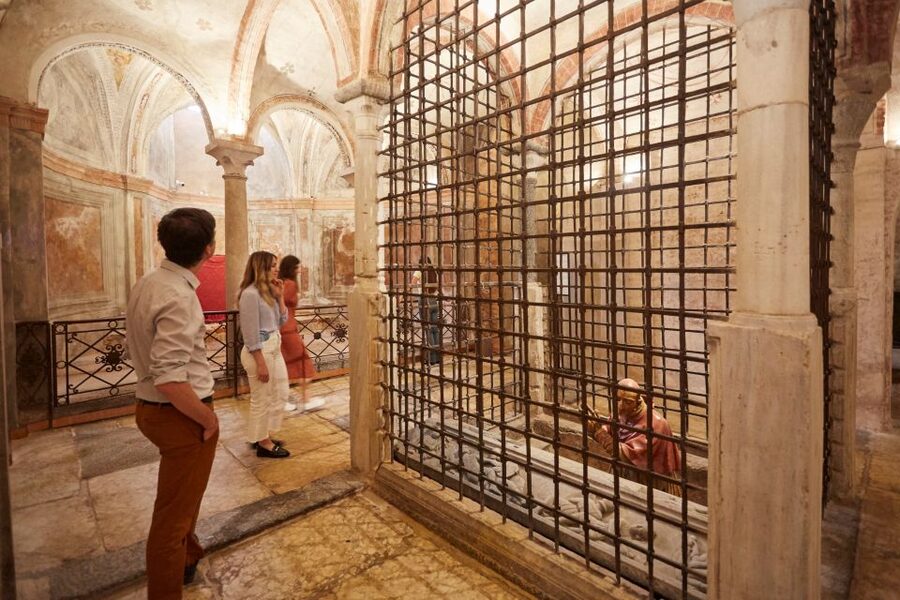
Milan’s San Sepolcro Crypt puts you beneath the city center, on the very ground where ancient Mediolanum’s Roman forum once stood. The best moment comes when you look down at the large white Verona-stone slabs, then up at the restored medieval vaults overhead.
I like the direct link to Roman Milan, and I like the crypt’s small scale. You can take in the main features without giving up half a day. The catch is value: at $11, the price is fair for a quick historic stop, but the space may take only 10 minutes to see.
In This Review
- Key points to know
- What makes San Sepolcro Crypt special
- Finding the entrance in Piazza San Sepolcro
- Walking into the underground church
- Looking down at Roman Milan
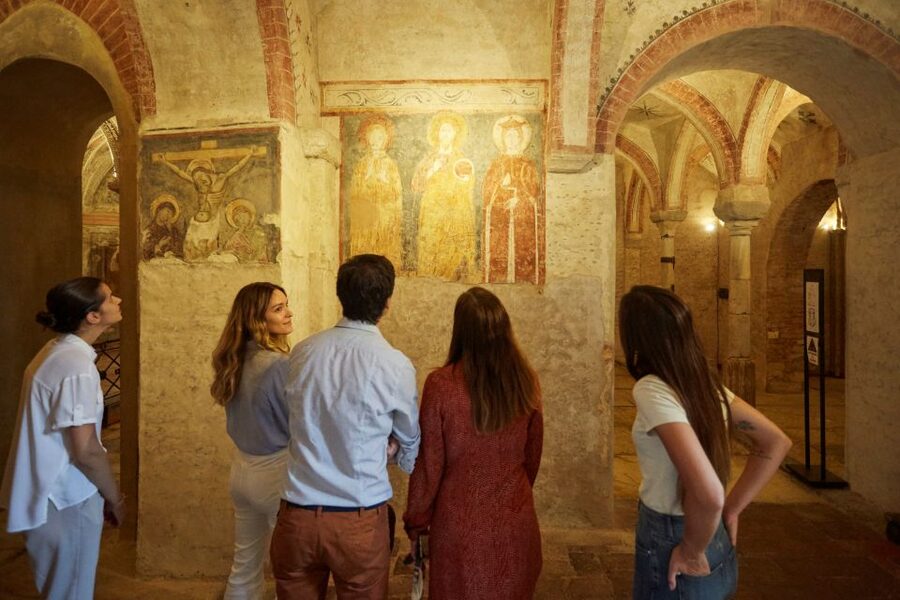
- Studying the restored medieval frescoes
- How long the 30-minute visit really takes
- Who will enjoy this compact historic stop
- Is the skip-the-line ticket worth $11?
- Practical timing and planning advice
- My verdict on San Sepolcro Crypt
- FAQ
- How long does the San Sepolcro Crypt visit last?
- What does the ticket include?
- Where is the entrance?
- Can wheelchair users visit the crypt?
- Are baby strollers allowed?
- Can I cancel the booking?
Key points to know
- Roman forum underfoot: Walk across paving stones linked to the 4th-century forum of Mediolanum.
- A church below street level: San Sepolcro was founded in 1030 and built underground on an important Roman site.
- Late 13th-century decoration: Restored frescoes and vault paintings provide the main visual appeal.
- A very short visit: The ticket allows 30 minutes, though many people will see the crypt in about 10 minutes.
- Easy central pairing: The entrance is in Piazza San Sepolcro, by the courtyard exit of the Pinacoteca Ambrosiana.
- Stairs are required: Baby strollers are not allowed, and the crypt is not suitable for wheelchair users.
What makes San Sepolcro Crypt special
Milan is often sold through its grand cathedral, polished shopping streets, and famous art collections. San Sepolcro offers a quieter story. Here, the city’s past is layered vertically: modern Milan above you, a medieval church around you, and Roman civic life beneath your feet.
The crypt was founded in 1030 A.D. That alone makes it an important stop for anyone interested in Milan before the age of modern streets and grand palaces. It is not a vast church with a long sequence of chapels. It is a compact underground space, and its power comes from the concentration of old material in one place.
The most unusual feature is the floor. The crypt uses large slabs of white Verona stone taken from the pavement of the old Roman forum. The forum belonged to Mediolanum, the Roman city that occupied this central part of Milan. The paving dates from the 4th century, giving you a physical connection to the period when Roman public life still shaped the city.
Leonardo da Vinci is said to have been fascinated by these stones. That detail adds a human touch to the site. You are not only looking at an archaeological remnant. You are standing on a surface that caught the attention of one of Milan’s most famous historical figures.
A few more Milan trips worth weighing up
- Milan Duomo & The Last Supper Skip-the-Line Small Group Tour
★ 4.5 · 2,761 reviews - Historic Milan Tour with Skip-the-Line Last Supper Ticket
★ 4.5 · 1,976 reviews - Milan Super Saver: Skip-the-Line Duomo and Rooftop Guided Tour
★ 4.5 · 1,501 reviews
Finding the entrance in Piazza San Sepolcro
The entrance can be easy to miss if you approach Piazza San Sepolcro without checking the directions. Go through the gate into the courtyard where the exit of the Pinacoteca Ambrosiana is located. Near the statue of Federico Borromeo, look for the staircase leading down to the crypt entrance.
This is not a street-level museum entrance with a large sign dominating the square. I would read the directions before arriving and keep the ticket details ready. The location near the Ambrosiana makes the crypt convenient to pair with other central Milan sights, but it also means you should not assume the entrance is directly on the main pavement.
The skip-the-line feature is useful if a queue has formed, though the crypt’s short visit and compact size mean the benefit may vary. You are paying for a reserved way in, not for a guided tour. No guide is included in the information provided, so plan to appreciate the space through its setting, architecture, and displayed remains rather than through a scheduled talk.
Walking into the underground church
The staircase down changes the feel of the visit right away. You leave the open square and enter a darker, older setting below street level. San Sepolcro is a church built entirely underground, which gives the visit a strong sense of separation from modern Milan.
The atmosphere is solemn rather than theatrical. This was a sacred place, but it also sits on the site of the Roman forum, where civic and religious activities once took place. That overlap is what makes the crypt more than a pretty old room. It shows how one important city center can be reused across many centuries.
The church was founded in 1030, while much of the decoration you see belongs to the late 13th century. Those dates help you read the room. The structure reaches back to the early Middle Ages, while the painted vaults reflect a later medieval phase.
Because the interior is small, you will not spend the visit marching through a series of grand spaces. Instead, you move slowly through a limited area, looking closely at the floor, walls, and ceiling. If you enjoy small historic sites where each surface matters, this works well. If you expect a large crypt with numerous chapels or rooms full of objects, it may feel thin.
Looking down at Roman Milan
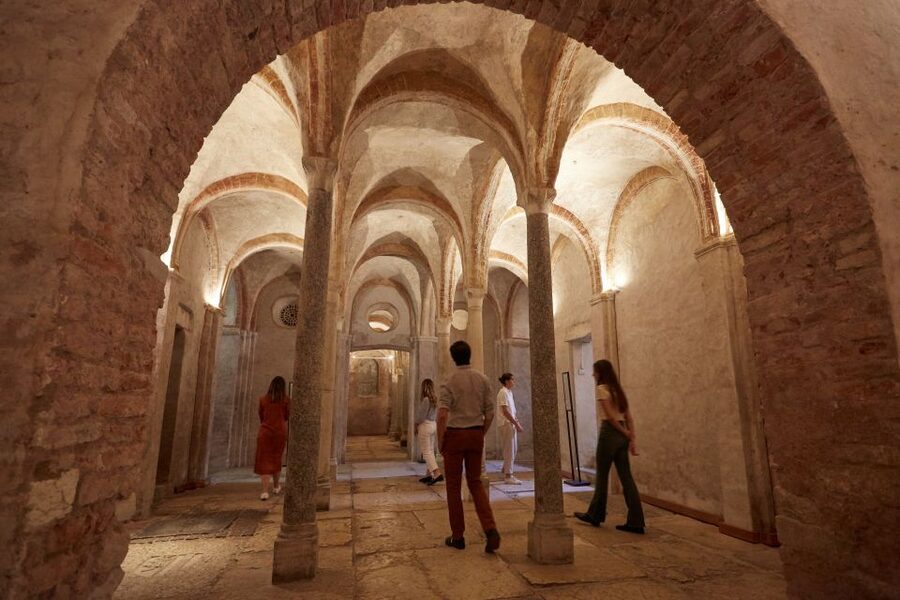
The Roman pavement is the crypt’s strongest feature. Large blocks of pale stone give the floor a sturdy, worn appearance. These are not modern reproductions or decorative tiles made to suggest antiquity. They come from the pavement of the old forum.
The forum was the center of ancient Mediolanum. Roman civilians came there for the city’s main civil and religious business. Standing on the surviving paving helps you picture Milan as a Roman town rather than only as the medieval and modern city you see above ground.
This is also where the visit rewards patience. Do not rush immediately toward the painted vaults. Spend a moment looking at the irregular stone surfaces and considering what it means to walk across part of a public square that served a completely different city.
The stones will appeal most to visitors who like archaeology and urban history. If your interest is mainly in painting, you may find the ceiling more compelling. The crypt works because both elements share the same small room: Roman civic remains under a medieval religious setting.
A different sort of day out, same corner of Lombardy:
- Milan: Cathedral and Duomo’s Terraces Entrance Ticket
★ 4.6 · 61,054 reviews - From Milan: Como & Bellagio with Private Lake Como Cruise
★ 4.6 · 9,788 reviews - Milan: City Sightseeing Hop-On Hop-Off Bus with Audio Guide
★ 4.0 · 6,256 reviews - Milan Cathedral: Duomo Terraces Ticket (No Church Access)
★ 4.6 · 6,111 reviews
Studying the restored medieval frescoes
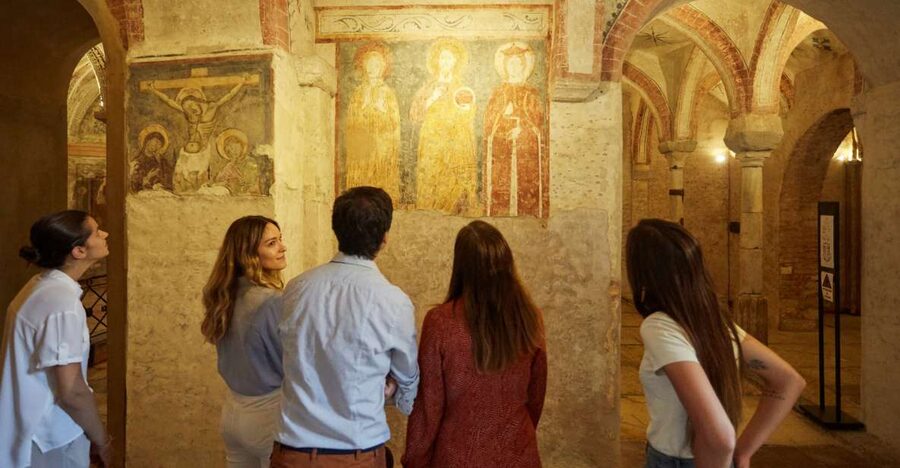
The restored frescoes and vault decoration provide the main color and detail. The paintings belong to the late 13th century, and restoration has helped bring their forms back into view. In a dim underground church, even partial medieval decoration can change the mood of the room.
Look up as you move through the crypt. The vaults are easy to overlook if you focus only on the Roman floor. The painted surfaces show how the space was shaped for worship, while the paving beneath you points to an older public world.
The frescoes are not presented as a giant gallery. You will not find a long trail of masterpieces requiring labels and extended study. Instead, they work as part of the room’s overall character. The appeal lies in seeing medieval decoration in its original architectural setting.
If you have visited Milan’s major art collections, this is a different kind of art stop. The paintings are not separated from the building. They remain tied to the vaults, the underground setting, and the ancient pavement. I find that connection more memorable than a quick look at another framed picture.
How long the 30-minute visit really takes
The stated duration is 30 minutes, but that does not mean you must fill every minute. A careful visitor may use the full half hour to examine the frescoes, take in the atmosphere, and read any available information. Many people will find that around 10 minutes is enough for a straightforward look.
That short length is both a strength and a weakness. It makes the crypt easy to add between larger Milan stops. You can visit without planning an entire morning around it. The compact schedule also suits you if you want a brief encounter with the city’s ancient foundations.
The same feature can make the $11 ticket feel expensive. At that price, you are paying for access to a rare site in a central location, not for a long program. If you judge value by time alone, the cost may not feel ideal. If you judge it by the age and setting of the remains, the price is more defensible.
I would not travel across Milan only for a 10-minute visit unless Roman archaeology or medieval churches is a personal priority. If you are already near the Ambrosiana, the calculation improves. Add the crypt to a day focused on central Milan, and the short duration becomes an advantage.
Who will enjoy this compact historic stop
San Sepolcro suits you best if you like old buildings, layered city history, and places that reward close looking. It is especially good for:
- People interested in Roman Milan and the city of Mediolanum
- Visitors who enjoy medieval churches and restored frescoes
- Anyone already visiting the Pinacoteca Ambrosiana area
- Families with older children who can manage stairs and a short visit
- Museum fans looking for a small, unusual stop between larger attractions
It is less suitable if you want a major visual spectacle. The crypt is not large, and there are not many separate sections to explore. A visitor expecting grand scale may leave disappointed.
The space also requires physical access by stairs. Baby strollers are not allowed, and the crypt is not suitable for wheelchair users. Those limits matter more here than at a street-level museum because the entrance leads down into the underground church.
Is the skip-the-line ticket worth $11?
For $11, the ticket can be good value when you use it as part of a central Milan walking day. The site is unusual, the Roman floor is authentic, and the restored medieval decoration gives you something you will not see in a standard city stroll.
The price is harder to justify if you expect a long visit. The interior is small enough that you may finish in 10 minutes. The ticket includes entry only, so there is no guide, extended tour, or added activity to lengthen the experience.
The skip-the-line element adds convenience, but it is not the main reason to come. The real reason is the chance to stand inside a church founded in 1030 and walk across stones from a Roman forum. If those details interest you, $11 is a reasonable charge for access to a rare setting.
I would think of it as a focused historic stop, not a headline attraction. Give it a place in your day beside the Ambrosiana and other nearby sights. That approach keeps expectations in line with the crypt’s size.
Practical timing and planning advice
Allow 30 minutes on your schedule, even if you expect to look around for only 10. That gives you time to find the courtyard entrance, descend the stairs, and examine the floor and frescoes without turning the visit into a rushed photo stop.
The crypt is in Piazza San Sepolcro. The key directions are simple: enter through the courtyard gate by the Pinacoteca Ambrosiana exit, find the statue of Federico Borromeo, and take the staircase down. I would not rely on spotting a prominent entrance from the square.
You can cancel up to 24 hours before the visit for a full refund, and the booking option allows you to reserve now and pay later. Starting times depend on availability, so check the available slot before building the rest of your day around it.
Since this is a ticket-only visit, make sure you understand what you are booking. You receive skip-the-line entry, not a guided explanation. That is fine if you enjoy setting your own pace, but you may prefer a larger guided site if you want detailed commentary throughout.
My verdict on San Sepolcro Crypt
San Sepolcro is a small stop with unusually old foundations. The Roman forum pavement is the star, while the restored late 13th-century frescoes give the underground church its visual appeal.
I would book it if you are already exploring central Milan, especially if you like archaeology, medieval architecture, or unusual religious sites. I would skip it if you need a large attraction to justify every euro or if stairs and a compact interior will be a problem.
The best way to approach the crypt is with modest expectations. You are not entering a vast underground complex. You are stepping into a short, atmospheric chapter of Milan’s past, where Roman public life and medieval worship share the same floor.
FAQ
How long does the San Sepolcro Crypt visit last?
The stated duration is 30 minutes. Because the crypt is very small, you may see its main features in about 10 minutes, though you can spend the full half hour looking at the floor, frescoes, and vaults.
What does the ticket include?
The ticket includes skip-the-line entry to the Crypt of San Sepolcro. A guide is not listed as part of the experience.
Where is the entrance?
The entrance is in Piazza San Sepolcro. Go through the courtyard gate where the exit of the Pinacoteca Ambrosiana is located, then look for the staircase near the statue of Federico Borromeo.
Can wheelchair users visit the crypt?
No. The crypt is not suitable for wheelchair users.
Are baby strollers allowed?
No. Baby strollers are not allowed inside the crypt.
Can I cancel the booking?
Yes. You can cancel up to 24 hours in advance for a full refund. You can also reserve now and pay later.
Just added around Milan
- Milan: Food Tour with Pasta, Pizza, Cannoli, and Tiramisu!★ 4.3 · 3 reviews
- Varenna Walking Tour and Cooking Class★ 5.0 · 3 reviews
- 1-Day Personal Fashion Styling Course for Women★ 5.0 · 3 reviews
- Milan: 4-Hour Art and History Private Walking Tour★ 5.0 · 3 reviews
- Private Wine Tasting in Bellagio with Chef Luigi Gandola★ 5.0 · 3 reviews
- Walking Tour in Lake Como with Lierna Cooking Class★ 5.0 · 3 reviews
- Mantova: Private Walking Tour★ 4.3 · 3 reviews
- Wine and Food tasting PRIVATE Guided Tour★ 5.0 · 3 reviews
Skip the Line, compared.

Milan Duomo & The Last Supper Skip-the-Line Small Group Tour
Read our review →
Historic Milan Tour with Skip-the-Line Last Supper Ticket
Read our review →
Milan Super Saver: Skip-the-Line Duomo and Rooftop Guided Tour
Read our review →
Last Supper Skip-the-Line Entry Ticket & Guided Tour
Read our review →
Guided Walking Tour with Last Supper Skip-the-Line
Read our review →
Milan Last Supper and S. Maria delle Grazie Skip the Line Tour
Read our review →
Browse the lists this tour appears in