
Reviewed · MILAN
Milano: Degustazione caffè di qualità dalla moka al filtro
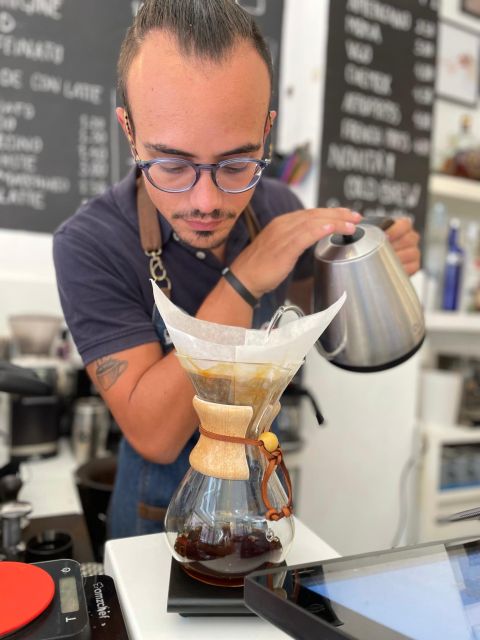
The most interesting part of this Milan experience is that you taste the same idea, coffee, through three very different tools. Il Cafetero pairs three single-origin beans with the Italian moka, the V60, and the Chemex, so you can notice how brewing changes aroma, body, and flavor.
I like the small group, limited to six people, and the practical focus on making better coffee at home. I also like that Ivone and Federico explain the subject in a friendly, down-to-earth way rather than turning the tasting into a lecture. The main consideration is simple: if you only want a quick espresso, two hours and three brewing methods may feel like a lot.
In This Review
- Key points
- Three coffees, three very different cups
- Starting with the Italian moka
- The V60 and the difference between filter coffee and American coffee
- The Chemex brings out aroma
- Friendly instruction from Ivone and Federico
- Dessert keeps the tasting balanced
- What the $35 price really covers
- Who will enjoy this Milan coffee tasting
- Practical details for planning your day
- How to get the most from the two hours
- Is Il Cafetero worth booking?
- FAQ
- How long does the coffee tasting last?
- How much does the activity cost?
- How many people are in the group?
- Which coffee brewing methods are included?
- How many coffees will I taste?
- Where do the coffees come from?
- Which languages are available?
- Is food included?
- Can I cancel the booking?
Key points
- Three origins, three brewing styles: Taste coffees from Africa, South America, and Asia, depending on seasonal availability.
- The moka gets a proper look: Learn how this Italian classic has changed and how to use it without flattening the coffee’s natural flavors.
- V60 and Chemex show the lighter side of coffee: Compare filter coffee with what many people call American coffee, then taste the aromatic Chemex result.
- A true small-group setting: With no more than six participants, you have room to ask questions and watch each preparation closely.
- Home-brewing advice is part of the point: The session gives you techniques and tips you can use after returning from Milan.
- Dessert and coffee-bean savings add value: Your tasting includes a sweet, biscuit, or vegan or gluten-free option, plus a special discount on beans.
Three coffees, three very different cups
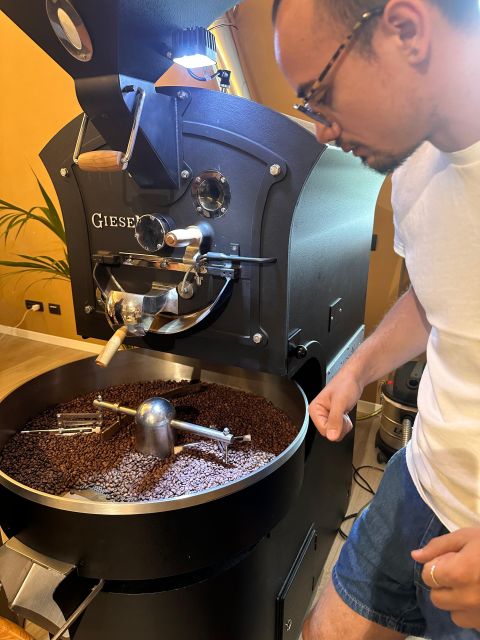
Il Cafetero builds the tasting around three single-origin coffees. That means each bean comes from one plantation or producer, rather than being part of a broad blend designed to taste the same year-round.
The beans are selected from Africa, South America, and Asia, with the exact choices changing according to season and availability. This is a useful detail, not a minor footnote. You are not booking a fixed menu that will taste identical every month. You are tasting coffee as an agricultural product, with changes linked to where and when it was grown.
Each coffee is prepared using a different method. That lets you compare two things at once: the character of the bean and the effect of the brewing tool. A coffee that seems bold and rounded from a moka may taste cleaner or more aromatic through a filter method.
I find this format more useful than a tasting where you simply sample several cups and move on. You get a clear reason for each preparation, and the differences are easier to understand because the session connects them to technique.
Other Milan trips people book alongside this one:
- Milan: Cathedral and Duomo’s Terraces Entrance Ticket
★ 4.6 · 61,054 reviews - From Milan: Como & Bellagio with Private Lake Como Cruise
★ 4.6 · 9,788 reviews - Milan: City Sightseeing Hop-On Hop-Off Bus with Audio Guide
★ 4.0 · 6,256 reviews
Starting with the Italian moka
The moka is the natural first stop for an experience in Italy. It is a familiar little pot in many Italian kitchens, but familiarity does not always mean good results. The session looks at how the moka has changed over time and how to use it in a way that brings out the coffee’s aroma and natural qualities.
You will see the moka treated as more than a symbol of Italian home life. The important lesson is how the method affects the finished cup. The brewing process produces a coffee with a different feel from paper-filter methods, and small choices can change the balance.
This is likely the most immediately useful section for anyone who already owns a moka pot. You can take the advice home and test it with your own coffee. It also gives first-time users a better sense of why the moka remains such an important part of Italian coffee culture.
The drawback is that the moka method may feel less novel if you already use one every morning. Still, the value comes from learning how to improve the result, not simply from seeing the pot.
The V60 and the difference between filter coffee and American coffee
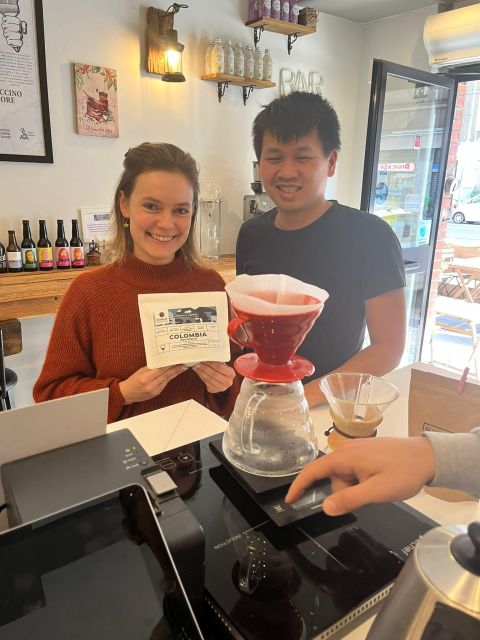
The V60 is one of the best-known brewing methods among baristas, and it is now appearing in more Italian coffee shops. Here, it provides a clear contrast with the moka.
A useful part of the session is the explanation of the difference between American coffee and filter coffee. Those terms are often used loosely, but they do not describe exactly the same preparation. The V60 gives you a chance to taste what a carefully prepared filter coffee can be like, rather than assuming that all larger cups of coffee are alike.
The method also makes preparation visible. You can watch the coffee being made and connect the steps with what ends up in the cup. For someone who usually orders a latte or cappuccino, this may be the point where coffee begins to make sense on its own.
One person booked the session mainly for a coffee-loving partner but usually drank coffee only with milk. The tasting changed that preference, showing how useful this type of guided comparison can be if you have never enjoyed black coffee. You do not need to arrive as a serious coffee hobbyist.
The V60 section also has a practical purpose. You are shown techniques that can be repeated at home, though the supplied information does not specify the equipment or measurements used during the session. If you want exact recipes, ask questions while the coffee is being prepared.
The Chemex brings out aroma
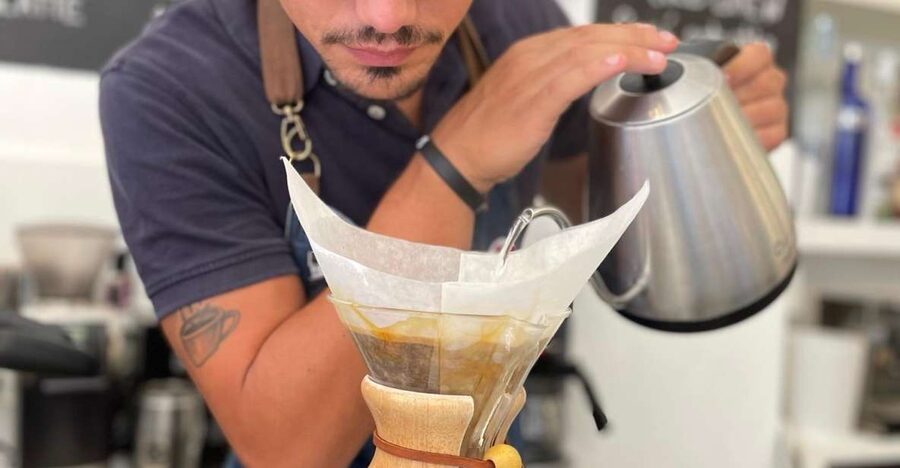
The Chemex is easy to recognize because of its distinctive design, but its appearance is not the reason it belongs in the tasting. This method produces a particularly aromatic coffee and offers one more point of contrast with the moka and V60.
By the time you reach the Chemex, you have already tasted how a traditional Italian brewer and a modern pour-over method can differ. The Chemex adds another version of filter coffee, helping you notice the way brewing changes clarity and aroma.
This part should appeal to anyone curious about the gentler, more fragrant side of coffee. It may also be the most unfamiliar preparation for people who usually drink espresso-based coffee in Italy.
The session is not only about tasting the final drink. You explore the three methods, their differences, and the techniques behind them. That makes the Chemex useful even if you never buy one. You can understand what it contributes without treating it as essential kitchen equipment.
A different sort of day out, same corner of Lombardy:
- Milan Cathedral: Duomo Terraces Ticket (No Church Access)
★ 4.6 · 6,111 reviews - Milan: Milan Cathedral Direct Entrance – Terrace Excluded
★ 4.5 · 5,782 reviews - Milan: Guided Walking Tour & Last Supper Visit with Ticket
★ 4.7 · 5,409 reviews - Milan: Fast-Track Milan Cathedral and Terraces Guided Tour
★ 4.7 · 5,240 reviews
Friendly instruction from Ivone and Federico
The teaching style is a major reason this experience works. Ivone and Federico are described as friendly, helpful, and easy to talk with. Their approach keeps the coffee subject approachable rather than overly formal.
That matters in a group of six or fewer. A large demonstration can leave you watching from the back, but this format gives you a better chance to follow each brewing method and ask about your own habits at home. The languages offered are English, Italian, and Spanish, which makes the activity practical for a mixed international audience.
The tone is also important. Coffee has its own vocabulary, and a tasting can become intimidating if every cup is treated like an examination. Here, the emphasis is on understanding what you are drinking and learning how to prepare it better.
You should still expect a real lesson, not simply a social coffee break. The experience lasts two hours, and the schedule is built around three preparations, explanations, and discussion. That is enough time to learn, but not so much that the session becomes an all-day workshop.
Dessert keeps the tasting balanced
Each participant receives a dessert or biscuits during the tasting. A vegan option is available, and the included food can also accommodate gluten-free needs.
This is a small feature, but it helps pace the experience. Three different coffees can be tiring if you rush from one cup to the next, so water is provided between coffees as well. The water helps clear your palate and makes the comparisons more useful.
The dessert also gives you a chance to notice how coffee changes beside food. The available sweet is chosen by you, although the supplied details do not list the exact choices. If dietary needs matter, confirm the suitable option when booking or at the start of the session.
Do not think of the food as a full meal. It is a tasting accompaniment, useful for a midmorning or afternoon activity, but you should plan another meal around it.
What the $35 price really covers
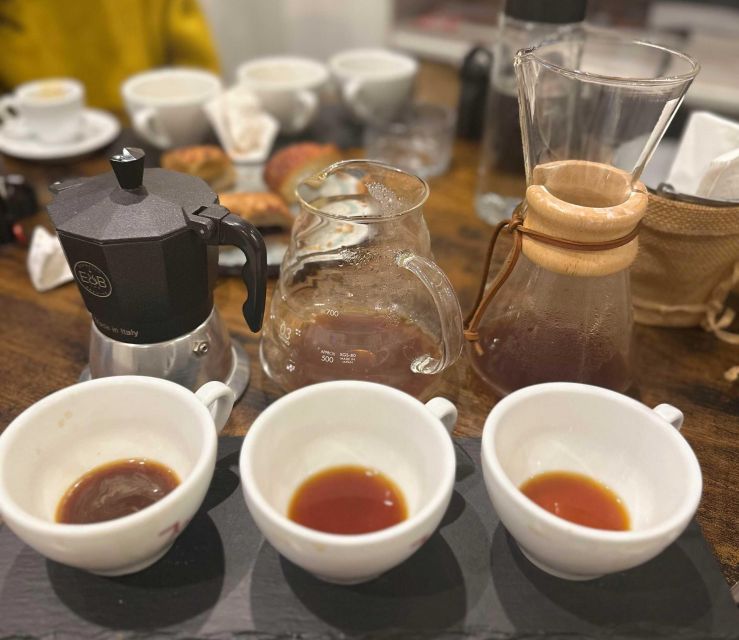
At $35 per person, this is not the cheapest coffee you will drink in Milan. You can order an espresso for far less. The value is in the instruction, the range of methods, and the chance to taste three single-origin coffees in one sitting.
You are also paying for a small group rather than a crowded demonstration. With a maximum of six participants, the guide can explain the moka, V60, and Chemex at a pace that allows questions. For anyone who wants to improve home coffee, that personal attention makes the price easier to justify.
The included dessert, water, and special discount on coffee beans add a little more value. The discount may be especially useful if you find a coffee you want to take home, though the amount of the discount is not specified.
I would judge the price by your interest level. If coffee is just fuel between Milan sights, spend the money elsewhere. If you already own a moka, enjoy trying new beans, or want to understand filter methods, the two-hour format offers a fair amount of content for the cost.
Who will enjoy this Milan coffee tasting
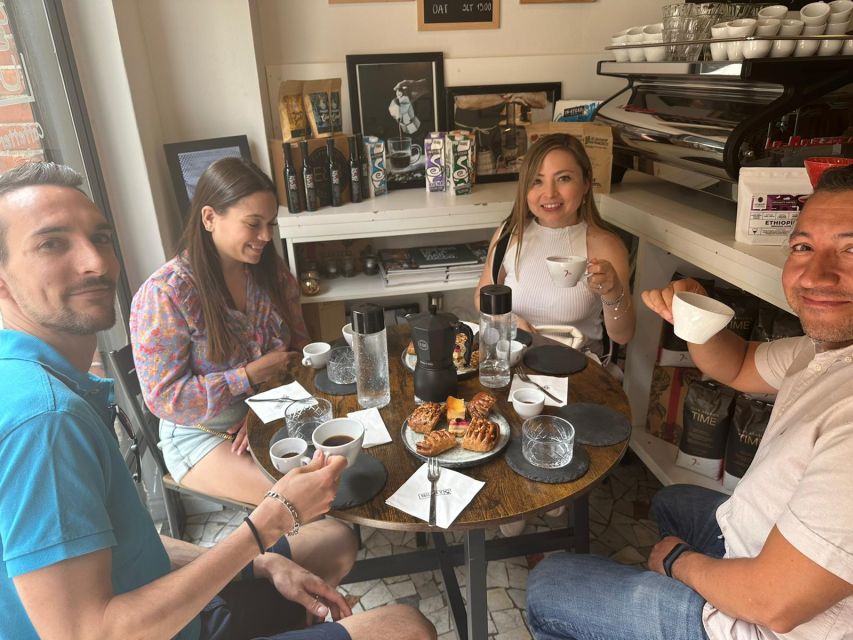
This activity suits several kinds of people:
- Coffee lovers: You get three origins and three brewing methods, with plenty to compare.
- Moka owners: The Italian method receives focused attention, including ways to improve your results.
- Curious beginners: You do not need prior coffee knowledge to follow the session.
- Couples with different tastes: Someone who drinks cappuccino or latte can discover whether black coffee appeals to them.
- Home brewers: The strongest practical benefit is advice you can use in your own kitchen.
- Visitors seeking a slower Milan activity: Two hours at a coffee table gives you a break from museums, shopping, and city walking.
It may be less suitable if you dislike unsweetened coffee, have no interest in preparation methods, or want a fast tasting with no instruction. The experience is built around comparison and learning, not just consumption.
Practical details for planning your day
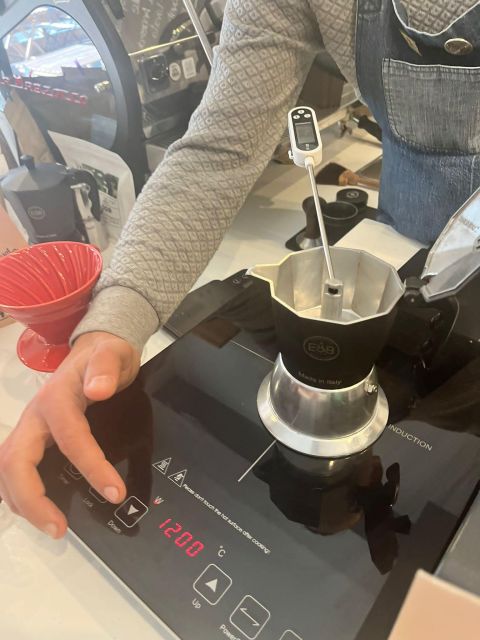
The tasting lasts two hours, so it fits neatly into a morning or afternoon in Milan. Starting times vary, and you need to check availability for the date you want.
The group is limited to six participants. That is small enough for direct contact with the instructors, while still giving the session a social feel. You are not booking a private class, but the group size should keep the demonstrations easy to follow.
Instruction is offered in English, Italian, or Spanish. Select the language that lets you ask questions comfortably, since much of the value comes from understanding the explanations rather than simply drinking the samples.
The activity is in Lombardy, Italy, and is provided by Il Cafetero Specialty Coffee. The available booking terms allow you to reserve now and pay later, and cancellation is free up to 24 hours in advance for a full refund. Those conditions are useful if your Milan plans are still shifting.
How to get the most from the two hours
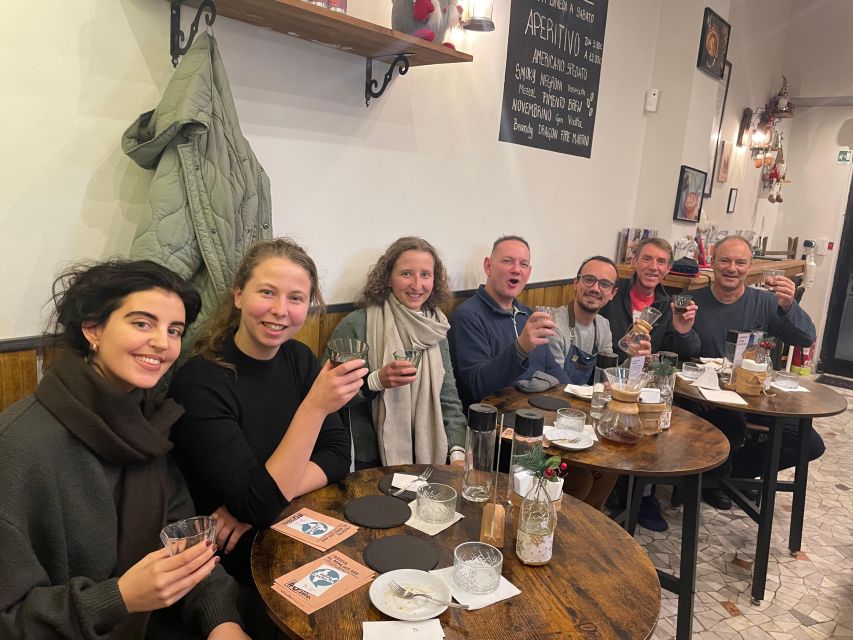
Arrive ready to compare, not to find one perfect cup. The point is to notice how origin and brewing method work together.
A few simple habits will help:
- Drink the water between samples so the next coffee gets a fair chance.
- Pay attention to aroma before tasting, especially with the Chemex.
- Ask how the method can be repeated with equipment you already own.
- If you use a moka at home, describe your current routine and ask what you could change.
- Ask for the names and origins of the coffees served that day, since selection depends on season and availability.
- Use the bean discount only after deciding which style you actually prefer.
You may find that the coffee you like best is not the one you expected. That is part of the fun. A bean from one continent can taste very different through two brewing methods, and the most aromatic coffee may not be the strongest one.
Is Il Cafetero worth booking?
Book this experience if you want more than a caffeine stop and would like useful coffee skills to take home. The combination of three single origins, moka, V60, and Chemex gives you a clear way to understand how coffee changes from one preparation to another.
I especially recommend it for couples or friends where one person is a coffee enthusiast and the other usually prefers milk-based drinks. The friendly instruction from Ivone and Federico, the six-person limit, and the dessert make the session approachable rather than intimidating.
Skip it if you want a quick espresso, a full meal, or a tour centered on Milan landmarks. For everyone else, $35 buys a thoughtful two-hour lesson, a small tasting, and a better chance of making a good cup after you return home.
FAQ
How long does the coffee tasting last?
The experience lasts two hours.
How much does the activity cost?
The price is $35 per person.
How many people are in the group?
The group is limited to six participants.
Which coffee brewing methods are included?
You taste coffee prepared with a moka, a V60, and a Chemex.
How many coffees will I taste?
You will taste three different single-origin coffees.
Where do the coffees come from?
The coffees are selected from single plantations or producers in Africa, South America, and Asia. The exact origins depend on seasonal availability.
Which languages are available?
The activity is offered in English, Italian, and Spanish.
Is food included?
Yes. You receive a dessert or biscuits, with vegan and gluten-free options available.
Can I cancel the booking?
You can cancel up to 24 hours in advance for a full refund. You can also reserve now and pay later.
Just added around Milan
- Milan: Food Tour with Pasta, Pizza, Cannoli, and Tiramisu!★ 4.3 · 3 reviews
- Varenna Walking Tour and Cooking Class★ 5.0 · 3 reviews
- 1-Day Personal Fashion Styling Course for Women★ 5.0 · 3 reviews
- Milan: 4-Hour Art and History Private Walking Tour★ 5.0 · 3 reviews
- Private Wine Tasting in Bellagio with Chef Luigi Gandola★ 5.0 · 3 reviews
- Walking Tour in Lake Como with Lierna Cooking Class★ 5.0 · 3 reviews
- Mantova: Private Walking Tour★ 4.3 · 3 reviews
- Wine and Food tasting PRIVATE Guided Tour★ 5.0 · 3 reviews