
Reviewed · LAST SUPPER TOURS
Da Vinci’s Last Supper – S/M group
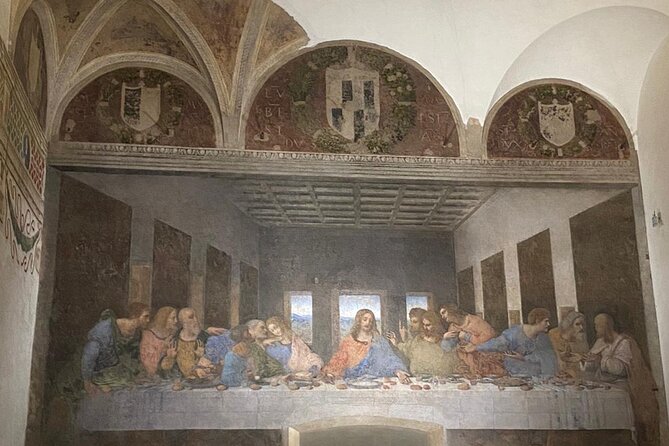
Leonardo’s Last Supper is a fragile wall painting, not a typical museum canvas, and the visit is tightly controlled. That makes the guided explanation especially useful: you get the painting’s setting, technique, restoration, and symbolism before your viewing time runs out. I like the direct meeting point at Santa Maria delle Grazie and the use of headsets, which help you follow the guide in a crowd.
I also like that the experience is short and focused, with priority access and a stated maximum of 15 people. The main drawback is price: at $66.25, you pay far more than the venue’s reported €15 admission for the added access and interpretation. Clear meeting instructions matter too, since one late arrival led to confusion and a missed part of the talk.
In This Review
- Key points to know before booking
- Why the Last Supper needs a guide
- Meeting at Santa Maria delle Grazie
- Entering Il Cenacolo
- Reading the figures and symbols
- Leonardo’s technique and the painting’s fragile life
- What else you will see in the refectory
- Is $66.25 good value?
- How the organization affects the visit
- Who should book this experience?
- Should you book Da Vinci’s Last Supper?
- FAQ
- Where does the Last Supper tour begin?
- Where does the activity end?
- How long does the tour last?
- What language is the tour offered in?
- What is included in the experience?
- How many people can join the group?
- Is the tour private?
- Is the tour near public transportation?
- Can most people participate?
- Can I cancel or change the booking?
Key points to know before booking
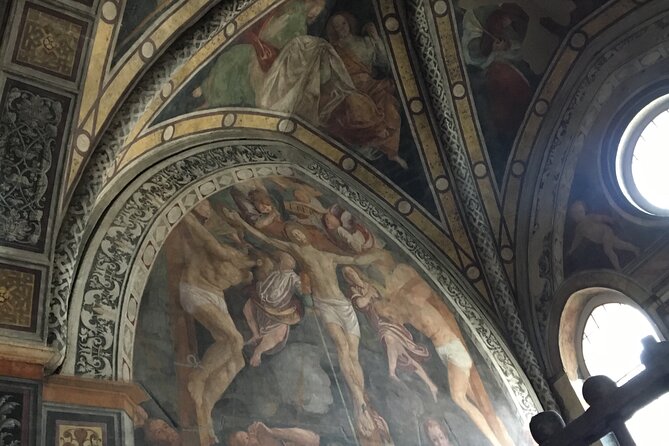
- The visit centers on one masterpiece: You see Leonardo’s Last Supper and the nearby Crucifixion of Christ by Montorfano, with no large museum collection attached.
- Katerina is the guide most often named: Her talks focus on Leonardo, the commission, each apostle, artistic methods, and the painting’s symbols.
- The tour takes about one hour: The actual visit to the fresco is listed at about 50 minutes, with the full activity lasting roughly an hour.
- Priority access saves planning trouble: Regular tickets can sell out, so this option may be useful when direct admission is unavailable.
- The group is designed to be small: The official maximum is 15 people, though one account describes a larger group during a busy summer period.
- English is the only stated language: Do not book this tour expecting German, French, or another language.
Why the Last Supper needs a guide
I understand the appeal of seeing the painting on your own. You enter, look at one of the world’s most famous images, take in the room, and leave. But without context, much of the work can pass you by in a few minutes.
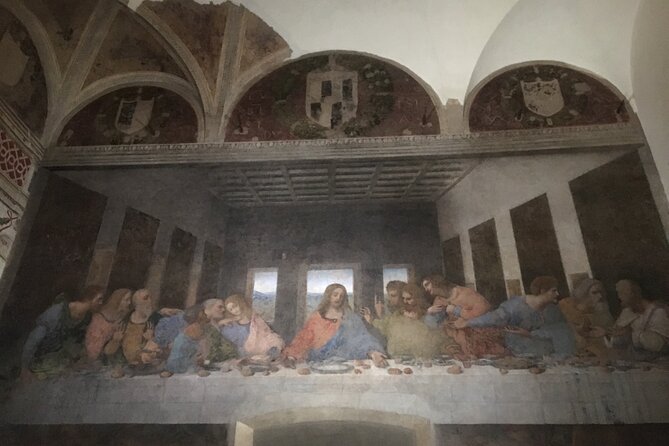
The Last Supper is packed with gestures and reactions. Leonardo arranged the apostles in groups, gave each figure a distinct response, and built the scene around the moment Christ announces that one of them will betray him. A guide can direct your eye to those details instead of leaving you to scan the wall without a plan.
The tour begins with the painting’s historical and artistic setting. You learn why Leonardo’s work is in the former refectory of Santa Maria delle Grazie and why that location suited the subject. The explanation also covers the original methods Leonardo used and the later work required to preserve the damaged image.
That preparation has real value. The painting is not in perfect condition, and you are not looking at a fresh Renaissance surface. You are looking at a work that has changed over time, survived serious threats, and required major restoration. Knowing that before you enter makes the visit more honest and more interesting.
Guide Katerina receives the strongest praise in the supplied material. She is described as engaging, clear, and able to answer questions. Several accounts also credit her with making the history easier to understand, including the commission, the stages of the painting process, and the meaning of individual figures.
I would choose a guide here for interpretation, not just for access. The ticket gets you through the door. The guide helps you understand what you are seeing.
More ways to get in front of the Last Supper:
- Milan: Guided Walking Tour & Last Supper Visit with Ticket
★ 4.7 · 5,409 reviews - Milan’s Must See: Half-Day Tour of Last Supper, Duomo & La Scala
★ 4.0 · 4,193 reviews - Milan: Last Supper Guided Visit
★ 4.7 · 2,854 reviews
Meeting at Santa Maria delle Grazie
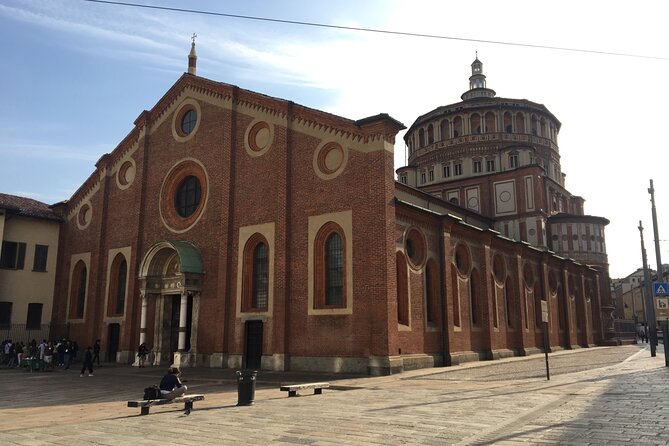
The meeting point is Piazza di Santa Maria delle Grazie, directly outside the church in central Milan. This is easier than a vague city-center meeting point, since the church itself gives you a clear landmark.
You should arrive early. The venue follows a strict entry schedule, and the group needs to collect tickets and headsets before the required check-in. One person arrived at the church well before the start but waited in the wrong place and did not collect the materials. The result was a missed first ten minutes.
That is a useful warning, not a minor detail. Confirm the exact meeting instructions before leaving your hotel, and look for the guide or group connected with the tour. The guide’s name may be Katerina, also written as Katarina in some information, so keep that name handy.
The supplied details identify the meeting point as both the start and end of the activity. You do not need to plan transport from a separate final location. The church is near public transportation, which makes it practical to fit into a day of sightseeing in Milan.
The tour is offered in English only. If you need a slower pace or a different language, this group format may not suit you. One account specifically found the English too fast, while another booking expected German despite the English-only description. Read the language information carefully before paying.
Entering Il Cenacolo
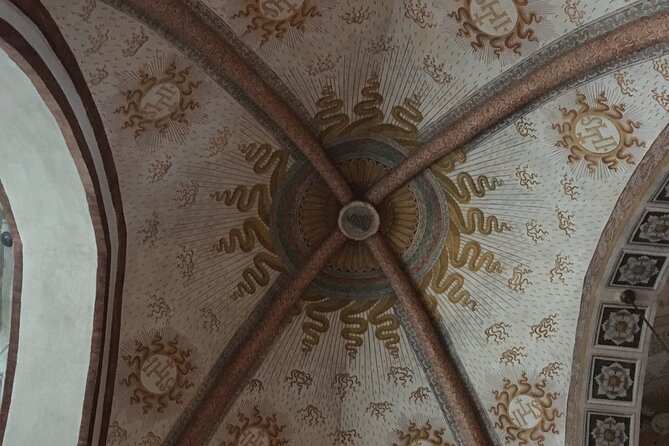
The Last Supper is also known as Il Cenacolo. The visit takes place in the former refectory connected with Santa Maria delle Grazie, a setting that matters because this was a dining space. Leonardo’s scene was designed for a room where religious meals and reflection took place, so the painting was not simply hung in an unrelated gallery.
The guide explains why the location fits the subject. That connection between the room and the image helps you understand why the painting belongs there and why moving it would make little sense. The room itself is part of the experience, even though the principal attraction remains the wall painting.
Access is controlled, and the number of people in the room is limited. The official group maximum is 15. Some accounts describe groups of 6 to 12 as normal, with a larger group appearing during a busy summer period. I would treat 15 as the realistic upper limit rather than assume a private visit.
Inside, you receive a historical and artistic introduction before or during the viewing. The guide discusses Leonardo’s approach, the painting’s composition, and the way the scene develops around Christ. You are not simply pointed toward a famous wall and left to figure it out.
The available viewing time is limited by the venue. This is why a focused talk matters. You do not have unlimited time to study every face, hand, and architectural detail. Headsets help keep the commentary audible, particularly when other groups are nearby.
Reading the figures and symbols
The most useful part of the tour is the close reading of the composition. The guide works through the apostles and explains their positions, gestures, and reactions. That gives you a structure for looking.
The scene is not arranged as twelve identical figures lined up for a formal portrait. Leonardo groups the apostles and gives the composition movement. Their bodies, hands, and expressions direct your attention across the wall, with Christ providing the central point.
The tour also deals with the hidden meanings and religious symbols Leonardo placed in the scene. I would keep your expectations sensible here. The guide can offer an informed reading of the work, but the visit is not built around sensational theories or secret-code claims. Its value comes from seeing how the painting communicates through posture, space, and visual emphasis.
The commentary also places the image within Leonardo’s understanding of sacred art. That matters because the scene is both a religious image and a study of human emotion. You can appreciate the shock, confusion, and tension in the room while still understanding its place in Christian storytelling.
Several descriptions of the tour stress that the guide explains each figure rather than giving only a general speech. This is where Katerina’s presentation appears to work best. She is often praised for making the painting memorable and for answering questions instead of rushing through a fixed script.
That said, this is a group tour. The guide must balance individual questions with the needs of everyone present. If you want the pace adjusted just for you, a private booking would be more suitable, but this product is not advertised as private.
More Leonardo da Vinci trails:
- Milan: Leonardo3 The World of Leonardo Museum Entry Ticket
★ 4.4 · 3,241 reviews - Best of Milan Experience Including Da Vinci’s The Last Supper and Milan Duomo
★ 4.5 · 1,516 reviews - Milan: Guided Tour of Leonardo da Vinci’s ‘The Last Supper’
★ 4.6 · 1,281 reviews - Milan: Leonardo’s Last Supper Guided Tour
★ 4.6 · 685 reviews
Leonardo’s technique and the painting’s fragile life
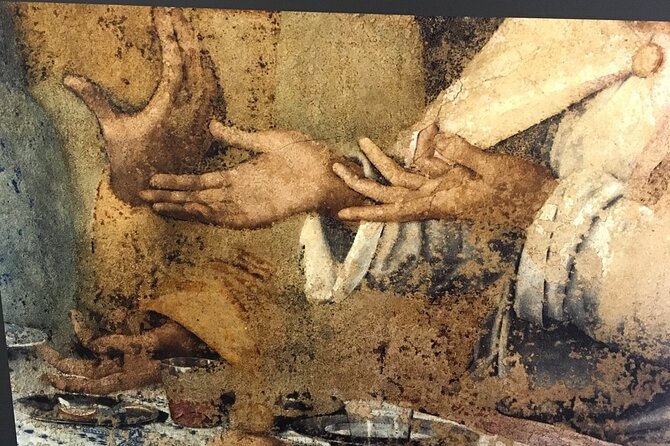
The painting’s condition is central to understanding it. Leonardo did not use the standard fresco method in the usual way. The tour explains the methods he first used and how those choices affected the painting’s survival.
The image has changed through the centuries, and later experts carried out restoration work to stabilize and reveal what could still be seen. You learn about the evolution of the painting’s fate, including the damage and preservation efforts that shaped its current appearance.
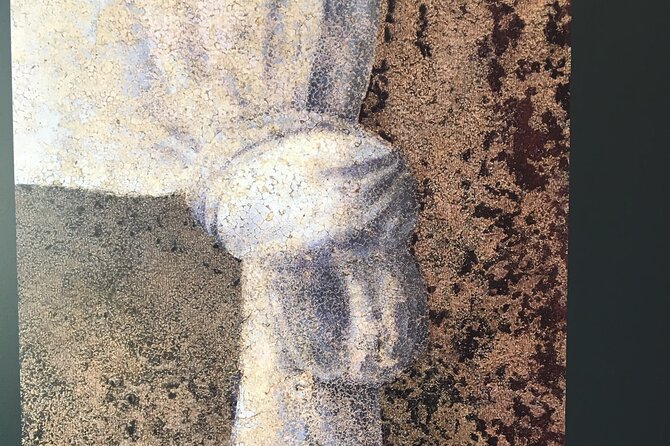
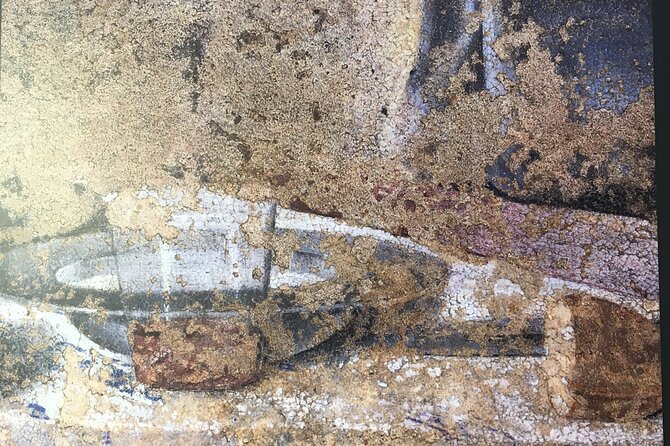
This context protects you from a common disappointment. You should not expect the bright, crisp surface shown in every reproduction. Printed images and digital versions can make the work look more complete than it does in person. The real experience is partly about seeing Leonardo’s design through the marks of time and conservation.
A guide is especially helpful here because restoration can be hard to understand from a distance. You may find it difficult to separate Leonardo’s original work from later intervention without an explanation. The tour addresses that difference and gives you a clearer sense of what you are actually seeing.
The visit is also a reminder that great art does not have to look untouched to matter. The damaged surface does not erase Leonardo’s arrangement or the emotional force of the scene. It does, however, mean you should value the chance to see it under carefully controlled conditions.
What else you will see in the refectory
The Last Supper is the clear reason to book this activity. You will also see the Crucifixion of Christ by Montorfano, another wall painting in the former refectory.
Do not expect a broad museum visit. There is no large collection of paintings, no long series of Leonardo works, and no full morning of exhibits attached to this ticket. The experience is concentrated on the room and its two major wall paintings.
That narrow focus suits me. I would rather know this one work properly than hurry through a larger display after a rushed look at Leonardo. But if you want a full art museum experience, you should plan another stop in Milan.
The short format also makes the tour easy to combine with other sights. It lasts about an hour, and the painting visit itself is listed at approximately 50 minutes. One account found that this was plenty of time, while another late arrival missed the opening section. The lesson is simple: the time is sufficient if you are present from the start.
Is $66.25 good value?
The listed price is $66.25 per person. That is a substantial markup over the reported €15 venue admission, so you should understand what the extra money buys.
You are paying for access when regular tickets may be gone, a guide’s interpretation, group coordination, and headsets. The experience is also easier to book than trying to find a direct ticket on a popular date. The fact that it is booked an average of 42 days in advance shows that this is not an attraction to leave until the last afternoon of your Milan visit.
For me, the value depends on your priorities. If you already have a direct ticket and feel comfortable reading the painting on your own, the extra cost is hard to defend. If direct entry is sold out, or if this is one of the main reasons you came to Milan, the added cost can be reasonable.
The strongest value comes from the explanation. The guide covers the setting, commission, painting process, restoration, figures, and symbolism in a compact visit. That is much more useful than paying extra only to enter five minutes ahead of another group.
You should also compare the group size you want. The advertised maximum is 15, which is small enough for questions and a clear view of the guide. It is not a private experience, and a group can feel less personal when the numbers rise or when late arrivals interrupt the opening.
How the organization affects the visit
Most of the tour’s structure is straightforward. You meet at the church, receive the entry materials and headset, listen to the explanation, view the paintings, and return to the same meeting point.
The weak spot is communication at the start. Confusion over whether to wait outside or collect materials at the ticket office caused one couple to lose part of the talk. The guide’s account also describes waiting outside for late arrivals, which can make the opening feel less tidy for everyone.
I would arrive at least 20 to 30 minutes early and confirm where the guide wants you to stand and where tickets are collected. Do not assume that seeing people enter the ticket office means your own group is ready to enter. Ask specifically for the Last Supper group and the guide’s name.
The venue controls the entrance time. Rain or cold weather does not necessarily mean you can enter early, and one complaint about waiting outdoors appears to have involved the site’s rules rather than a delayed tour. Bring suitable weather protection and avoid scheduling something immediately afterward.
The headsets are worth using. They let you listen without crowding around the guide, and they help when other groups are speaking nearby. If you miss the equipment collection, the entire visit becomes harder to follow.
Who should book this experience?
I would recommend it to a first-time visitor to the Last Supper who wants the painting explained rather than simply photographed. It also suits anyone who has tried and failed to find direct admission, since regular tickets can sell out.
Art lovers will get the most from the sections on composition, technique, restoration, and symbolism. History-minded visitors will appreciate the account of how the painting’s fate changed over the centuries. Even a repeat visitor can gain something from a different explanation, and one repeat visit was described as much more informative than the first.
This is also a good fit if you want a compact activity. You will not spend half a day here, and the meeting point is easy to combine with other Milan plans.
I would hesitate if you expect a private tour, a large museum, or commentary in a language other than English. I would also hesitate if price is your main concern and you can obtain the €15 direct ticket. The guide adds value, but the premium is real.
Should you book Da Vinci’s Last Supper?
Book this tour if seeing the painting is important to your Milan trip and you want a clear explanation of what you are looking at. The short duration, priority access, headsets, and small-group format make it practical, while Katerina’s detailed treatment of the figures, restoration, and symbols gives the visit more substance than a quick entry alone.
Skip it if you have already secured a direct ticket, do not need a guide, or want a private and multilingual experience. At $66.25, this is not the cheapest way to enter Santa Maria delle Grazie. It is a focused way to improve your understanding and reduce the risk of missing Milan’s most difficult ticket.
FAQ
Where does the Last Supper tour begin?
It begins at Piazza di Santa Maria delle Grazie, 20123 Milano MI, Italy, directly outside Santa Maria delle Grazie church.
Where does the activity end?
The activity ends back at the meeting point at Piazza di Santa Maria delle Grazie.
How long does the tour last?
The activity lasts approximately one hour. The visit to Il Cenacolo is listed as about 50 minutes.
What language is the tour offered in?
The tour is offered in English only.
What is included in the experience?
Priority access, admission to see the Last Supper, a guide’s explanation, and headsets to follow the commentary are included.
How many people can join the group?
The stated maximum is 15 people. Some departures may be smaller.
Is the tour private?
No. This is a small-group tour, not a private tour for only you and your companions.
Is the tour near public transportation?
Yes. The meeting point is near public transportation.
Can most people participate?
Yes. The activity information states that most people can participate.
Can I cancel or change the booking?
No. The experience is non-refundable and cannot be changed for any reason. If the activity is canceled because of poor weather, you will be offered another date or a full refund.
Just added around Milan
- Milan: Food Tour with Pasta, Pizza, Cannoli, and Tiramisu!★ 4.3 · 3 reviews
- Varenna Walking Tour and Cooking Class★ 5.0 · 3 reviews
- 1-Day Personal Fashion Styling Course for Women★ 5.0 · 3 reviews
- Milan: 4-Hour Art and History Private Walking Tour★ 5.0 · 3 reviews
- Private Wine Tasting in Bellagio with Chef Luigi Gandola★ 5.0 · 3 reviews
- Walking Tour in Lake Como with Lierna Cooking Class★ 5.0 · 3 reviews
- Mantova: Private Walking Tour★ 4.3 · 3 reviews
- Wine and Food tasting PRIVATE Guided Tour★ 5.0 · 3 reviews
Last Supper Tours, compared.
Guided Walking Tour & Last Supper Visit with Ticket
Read our review →
Milan’s Must See: Half-Day Tour of Last Supper, Duomo & La Scala
Read our review →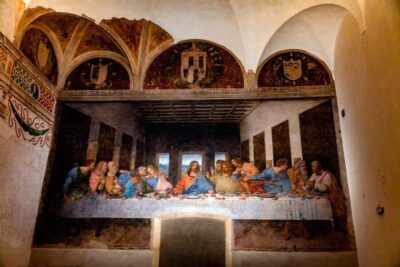
Milan Duomo & The Last Supper Skip-the-Line Small Group Tour
Read our review →
Historic Milan Tour with Skip-the-Line Last Supper Ticket
Read our review →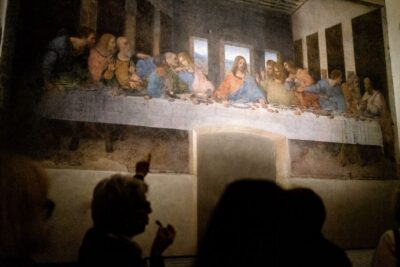
Best of Milan Experience Including Da Vinci’s The Last Supper and Milan Duomo
Read our review →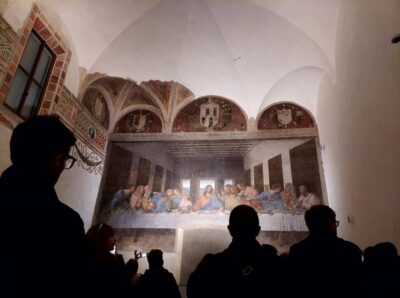
Last Supper Skip-the-Line Entry Ticket & Guided Tour
Read our review →Browse the lists this tour appears in