
Reviewed · LEONARDO DA VINCI TOURS
Entrance to the Leonardo da Vinci Science and Technology Museum
Milan’s Leonardo da Vinci Science and Technology Museum is far bigger than a single-artist museum. Its prize exhibit is a full gallery of Leonardo’s machines, manuscripts, and observations, but the wider collection carries you from steam trains and ocean liners to space launchers, particle physics, and a fragment of the Moon. Go for the range, not just the name over the door.
I especially like the 170 historical models in the Leonardo galleries and the chance to see major objects such as the submarine Toti, the Luna Rossa catamaran, and the transatlantic Conte Biancamano. The main drawback is easy to miss: if your sole goal is Leonardo da Vinci, much of the museum may feel off target. Also, a late arrival can leave you rushing, since staff may begin clearing rooms before the posted closing time.
In This Review
- Key points to know before you go
- What this Milan museum really is
- Leonardo’s 170 models: the main reason to visit
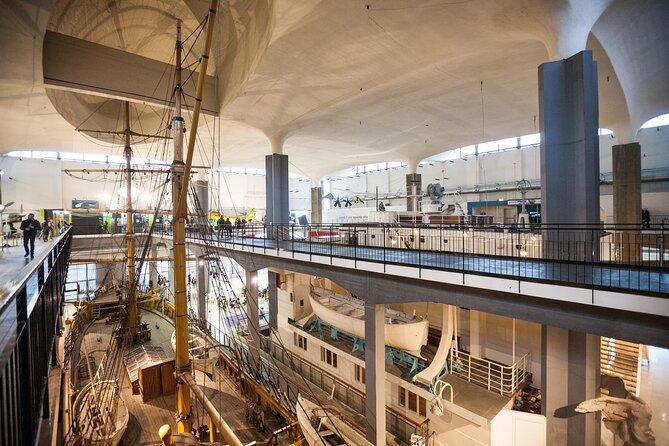
- From steam trains to the submarine Toti
- Space, the Moon, and science after Leonardo
- How much time should you plan?
- A useful route through the building
- Is the $15.69 ticket good value?
- Who will enjoy it most?
- Practical details that affect your visit
- Should you book the Leonardo da Vinci Science and Technology Museum?
- FAQ
- Where is the Leonardo da Vinci Science and Technology Museum?
- How much does admission cost?
- How long does the visit take?
- Is the museum only about Leonardo da Vinci?
- What is included in the ticket?
- What can I see in the Leonardo galleries?
- What large objects are displayed?
- Are the exhibits available in English?
- What are the listed opening hours?
Key points to know before you go
- Leonardo’s galleries contain 170 historical models, along with artwork, old books, and installations explaining his work as an engineer, humanist, and student of nature.
- The museum goes far beyond Leonardo, with displays on transport, energy, materials, astronomy, space, genetics, biotechnology, nutrition, and particle physics.
- Large original objects are a major draw, including the submarine Toti, the schooner brigantine Ebe, the Vega launcher, and Italy’s only Moon fragment.
- Allow two and a half to four hours if you want more than a quick look at the Leonardo section.
- The setting is unusual, with galleries arranged through the cloisters of a 16th-century Olivetan monastery.
- The $15.69 admission is good value for a large museum, especially if you enjoy science, engineering, transport, or the history of invention.
What this Milan museum really is
The National Museum of Science and Technology Leonardo da Vinci is not a small museum devoted only to one Renaissance genius. It is a large museum about human ingenuity, with Leonardo as its most famous starting point.
That distinction matters. You will find an important Leonardo section, but you will also move through centuries of scientific and technical change. The experience links sketches and wooden models to engines, ships, aircraft, space equipment, materials science, and modern research.
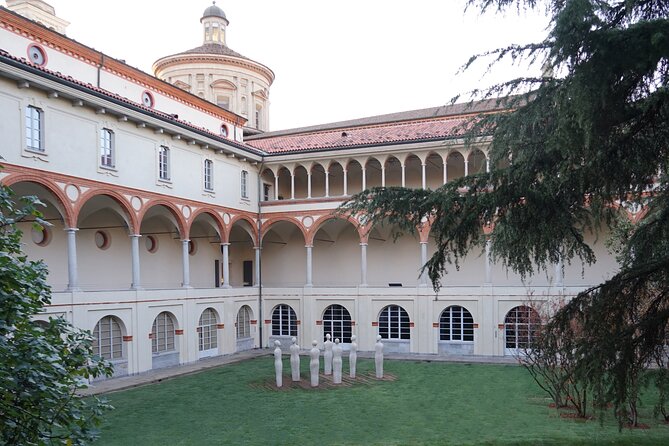
The museum occupies the former monastery of San Vittore al Corpo, a 16th-century Olivetan complex. That gives the visit a pleasant sense of place. Instead of walking through one plain modern hall, you pass through a historic building whose cloisters now hold displays about machines and scientific discovery.
The museum is offered in English, and exhibit descriptions are available in Italian and English. That makes the collection workable for international visitors, though you should not expect every part to feel equally accessible to young children.
More Leonardo da Vinci trails:
- Milan: Leonardo3 The World of Leonardo Museum Entry Ticket
★ 4.4 · 3,241 reviews - Best of Milan Experience Including Da Vinci’s The Last Supper and Milan Duomo
★ 4.5 · 1,516 reviews - Milan: Guided Tour of Leonardo da Vinci’s ‘The Last Supper’
★ 4.6 · 1,281 reviews
Leonardo’s 170 models: the main reason to visit
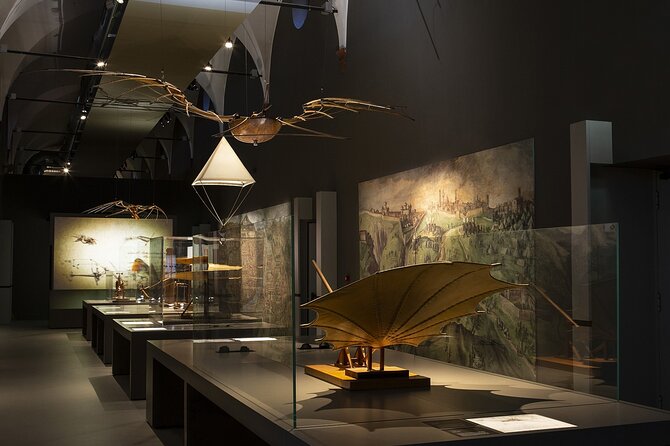
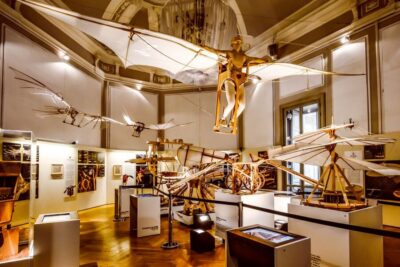
The Leonardo galleries are the heart of the visit. A scenographic route brings together 170 historical models, works of art, ancient volumes, and installations. The displays present Leonardo as more than the painter of the Mona Lisa. You see his interests in engineering, anatomy, mechanics, water, flight, architecture, and the natural world.
The models are especially useful because Leonardo’s drawings can be difficult to read at a glance. A wooden reconstruction gives you a clearer idea of how a machine might have worked. You can compare the original sketch with the physical form and see the gap between an idea on paper and a device built for the real world.
Videos and digital installations add context. They help explain the broad line from Leonardo’s observations and experiments to later questions about efficiency, sustainability, and the environment. The result is less about a single famous painting and more about the habits of an inventive mind.
I would give this section your best attention. It is the part most closely tied to the museum’s name, and it is where you get the strongest sense of Leonardo’s range. Still, keep your expectations realistic. The display is mainly about models, writings, and interpretations of his work, not a large collection of original Leonardo masterpieces.
If you are choosing between this museum and the Leonardo3 Museum near the Galleria, think about your priorities. The Leonardo3 Museum offers a more concentrated experience focused on Leonardo’s world. This museum gives you Leonardo plus a much wider story about science and technology.
From steam trains to the submarine Toti
After Leonardo, the collection opens into a broad survey of technology. Transport is one of the most memorable parts because the objects are large enough to make the past feel physical.
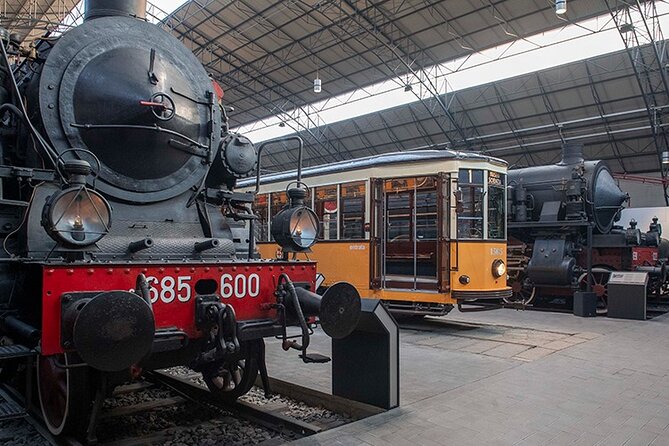
You might encounter steam trains, historic vessels, and the schooner brigantine Ebe. The scale changes the way you understand industrial progress. A diagram can explain a railway engine, but standing beside a real locomotive gives you a better sense of its weight, mechanical complexity, and social impact.
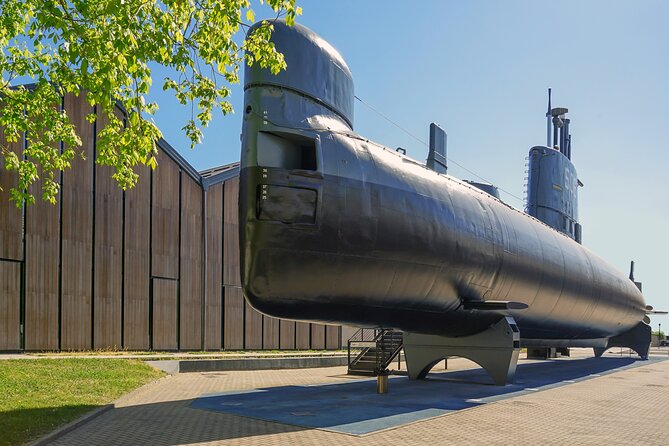
The submarine Toti is another major object. It is the sort of exhibit that gives the museum a strong visual anchor. The same is true of the transatlantic Conte Biancamano, which represents the age of long-distance ocean travel.
The AC72 Luna Rossa catamaran brings the collection into a more recent period. Its presence shows that the museum is not limited to old inventions. You can see how design, materials, speed, and engineering continue to shape transport.
These objects are valuable even if you are not a specialist. They make abstract subjects easier to grasp. You do not need to know naval engineering to appreciate the difference between a sailing vessel, an ocean liner, a racing catamaran, and a military submarine.
Space, the Moon, and science after Leonardo
The museum’s story continues far beyond the Renaissance. Displays and installations cover astronomy, space, energy, materials, genetics, biotechnology, nutrition, and particle physics.
The Vega launcher is one of the striking space-related objects. It shifts the focus from Leonardo’s hand-built machines to modern launch technology and the effort required to send equipment beyond Earth.
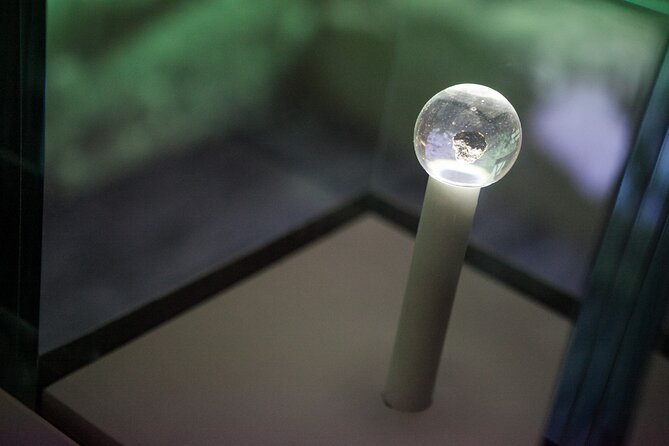
Another special item is Italy’s only fragment of the Moon. It is a small object with an outsized effect. Space exhibits can sometimes feel remote or technical, but a lunar fragment gives the subject a direct physical connection.
The science sections may appeal most to adults, older children, students, and anyone who likes understanding how things work. Some areas use interactive displays and digital material, but the museum is not uniformly hands-on. If you are bringing children under about 10, plan around their interests rather than assuming every gallery will hold their attention.
Older children can have a better time because the exhibits ask for some reading and patience. Adults interested in engineering and science may appreciate the museum more than families looking for constant button pressing and play equipment.
A few more Milan trips worth weighing up
- Milan: La Scala Theater & Museum Guided Experience
★ 4.1 · 2,931 reviews - Milan: La Scala Theater and Museum Tour with Entry Tickets
★ 4.7 · 1,722 reviews - Milan: Cathedral, Archeological Area and Museum Ticket
★ 4.5 · 1,093 reviews - Casa Milan: Museum Entry Ticket
★ 4.6 · 969 reviews
How much time should you plan?
The advertised visit length is about one to three hours, but I would treat one hour as a quick introduction. You can see the Leonardo galleries and a few large objects in that time, but you will skip much of the wider collection.
For a worthwhile visit, allow at least two and a half hours. Several visitors found that three or four hours made more sense, especially when they wanted to see both Leonardo and the transport, space, and science displays.
Your pace depends on how you read museums. If you stop for every panel, watch the videos, and examine the models, the collection can easily fill an afternoon. If you focus on major objects and move briskly, two hours may be enough.
Do not schedule the latest possible entry if you want a relaxed visit. The booking information lists Tuesday through Friday hours with entry or ticket redemption from 10:00 a.m. to 3:30 p.m. Separate visitor information refers to a 6:00 p.m. closing time, while one late-afternoon visit found staff asking people to leave around 4:30 p.m.
The practical lesson is simple: arrive early, and allow a cushion before closing. A museum this large is not a good place for a rushed final hour.
A useful route through the building
Start with Leonardo. This gives you the context promised by the museum’s name and lets you study the models before your attention fades.
Next, move to the large transport objects. The trains, ships, submarine, and catamaran provide a welcome change from manuscripts and display cases. They also help you see technology as a long process rather than a series of isolated inventions.
Finish with the modern science, energy, materials, and space sections. This order creates a natural movement from observation and early mechanical thinking toward industrial production and current scientific fields.
The museum uses arrows on the floor to guide visitors through the building. That small detail helps in a large institution, particularly when you want to see a lot without repeatedly checking a map. Follow the route at first, then pause in the sections that suit you best.
There is no need to treat the visit like a formal guided tour. You can set your own pace, return to an area, or skip a subject that does not interest you. The ticket is for museum admission rather than a named guide-led experience.
Is the $15.69 ticket good value?
At $15.69 per person, the admission is fairly priced for the amount on display. You are not paying for a short room of Leonardo reproductions. You are paying for access to a large museum with historic models, full-sized transport objects, digital installations, and science displays across many fields.
The value is strongest if you plan to stay for at least two and a half hours. A short visit focused only on Leonardo may feel less worthwhile, especially if you expected a gallery filled with original works by Leonardo himself.
The ticket also makes sense as part of a day around Milan’s historic center. The museum is on Via San Vittore, near the Last Supper area, so it can fit into a wider sightseeing plan. One practical caution: being close to another major sight does not mean you should squeeze this museum into a narrow gap. Its size rewards time.
Some booking attempts have been awkward, and admission may be available at the venue. Still, a confirmed ticket gives you a clear plan and the experience includes free cancellation up to 24 hours before the start time. If your schedule is uncertain, that cutoff is useful.
Who will enjoy it most?
I would recommend this museum to:
- Adults who like engineering, transport, science, or the history of invention
- Visitors who want Leonardo in a broader technical setting
- Families with older children and teenagers
- Anyone who enjoys large objects as much as paintings
- Visitors with two and a half to four hours available
I would be more cautious if you are traveling with very young children. Some exhibits are interactive, but not enough to keep every child under 10 engaged for a long visit. The Leonardo section, in particular, is not built as a children’s play area.
You should also choose another museum if your central aim is a concentrated Leonardo experience near the Galleria. This museum is best understood as a science and technology museum with an excellent Leonardo department.
Practical details that affect your visit
The redemption point is the National Museum of Science and Technology Leonardo da Vinci at Via San Vittore 21, 20123 Milan. It is near public transportation, and most people can participate without special arrangements. Service animals are allowed.
The museum has no restaurant listed for the visit, and vending machines may be your only refreshment option if the food service is unavailable. Eat beforehand if you expect to stay several hours.
Descriptions are in Italian and English. That is helpful, but the volume of material still takes effort. Wear comfortable shoes and keep your plan flexible. The building is large, and the biggest objects are spread among many subject areas.
The experience is available in English, but this is an admission visit rather than a tour with a named guide. You explore independently, using the museum’s signs, models, videos, and installations.
Should you book the Leonardo da Vinci Science and Technology Museum?
Book it if you want to see how inventions developed across time, with Leonardo at the center of the story but not the entire story. The 170 models, submarine Toti, ships, trains, Vega launcher, and Moon fragment give the visit plenty of substance for $15.69.
Skip it if you want only original Leonardo paintings or a compact, highly focused Leonardo attraction. For the best experience, arrive well before the last entry period, allow at least two and a half hours, and treat the museum as a broad journey through science and engineering. That is where its real value lies.
FAQ
Where is the Leonardo da Vinci Science and Technology Museum?
The museum is at Via San Vittore 21, 20123 Milan, Italy.
How much does admission cost?
The listed price is $15.69 per person.
How long does the visit take?
The approximate duration is one to three hours, but allowing at least two and a half hours is wiser if you want to see the museum properly. Some visitors spend three or four hours.
Is the museum only about Leonardo da Vinci?
No. The museum includes a major Leonardo section, but much of the collection covers science and technology, including transport, space, energy, materials, genetics, biotechnology, nutrition, and particle physics.
What is included in the ticket?
Admission to the National Museum of Science and Technology Leonardo da Vinci is included.
What can I see in the Leonardo galleries?
The galleries include 170 historical models, works of art, ancient volumes, and installations about Leonardo as an engineer, humanist, and investigator of nature.
What large objects are displayed?
The collection includes steam trains, the AC72 Luna Rossa catamaran, the schooner brigantine Ebe, the transatlantic Conte Biancamano, the submarine Toti, the Vega launcher, and Italy’s only fragment of the Moon.
Are the exhibits available in English?
The experience is offered in English, and exhibit descriptions are in Italian and English.
What are the listed opening hours?
For the dates provided, Tuesday through Friday ticket redemption is listed from 10:00 a.m. to 3:30 p.m. Arriving early is recommended because late visits may be shortened.
Just added around Milan
- Milan: Food Tour with Pasta, Pizza, Cannoli, and Tiramisu!★ 4.3 · 3 reviews
- Varenna Walking Tour and Cooking Class★ 5.0 · 3 reviews
- 1-Day Personal Fashion Styling Course for Women★ 5.0 · 3 reviews
- Milan: 4-Hour Art and History Private Walking Tour★ 5.0 · 3 reviews
- Private Wine Tasting in Bellagio with Chef Luigi Gandola★ 5.0 · 3 reviews
- Walking Tour in Lake Como with Lierna Cooking Class★ 5.0 · 3 reviews
- Mantova: Private Walking Tour★ 4.3 · 3 reviews
- Wine and Food tasting PRIVATE Guided Tour★ 5.0 · 3 reviews
Leonardo da Vinci Tours, compared.
Leonardo3 The World of Leonardo Museum Entry Ticket
Read our review →
Best of Milan Experience Including Da Vinci’s The Last Supper and Milan Duomo
Read our review →
Guided Tour of Leonardo da Vinci’s ‘The Last Supper’
Read our review →
Leonardo’s Last Supper and Michelangelo’s Pietà Tour
Read our review →
Experience Da Vinci’s Last Supper: Tickets & Guided Tour
Read our review →
Da Vinci’s Last Supper Express Semi-Private Guided Tour
Read our review →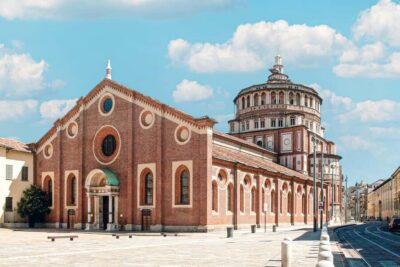
Browse the lists this tour appears in