
Reviewed · LEONARDO DA VINCI TOURS
Leonardo3 The World of Leonardo: Tickets for the Interactive Exhibition
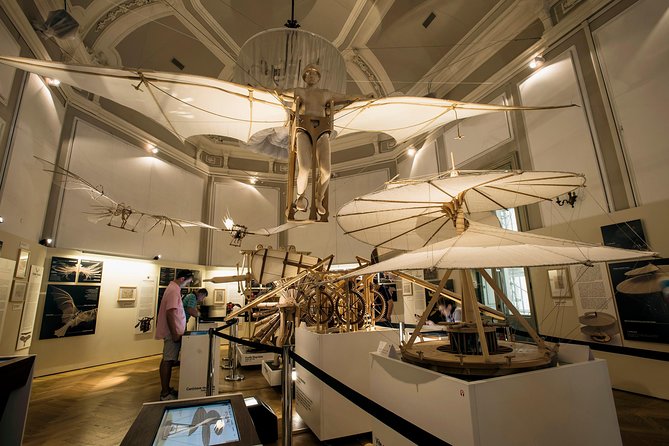
Leonardo3 turns Leonardo da Vinci’s sketches into things you can see and operate. His notebooks can feel hard to read on a page, but here, working models and digital reconstructions show how his ideas may have functioned. You see the artist, engineer, anatomist, and musician in one compact exhibition.
I like the strong focus on inventions, not just famous paintings. I also like the digital restoration of The Last Supper, which gives you a closer look at the damaged fresco and the work involved in reconstructing its original appearance. The main drawback is size: this is a small exhibition, and it can feel crowded or warm, especially when you want time at the interactive stations.
In This Review
- Key points before you go
- Inside Leonardo3 near the Duomo
- Leonardo’s notebooks turned into working machines
- The digital restoration of The Last Supper
- Why the interactive format works
- A small exhibition that needs careful timing
- What the $19.22 ticket is worth
- How to fit Leonardo3 into a Milan day
- Small practical details that affect your visit
- Who will get the most from Leonardo3
- Should you book Leonardo3?
- FAQ
- Where is Leonardo3 located?
- How long does a visit take?
- What does the ticket include?
- Does the ticket include skip-the-line access?
- Is an audio guide included?
- Does the exhibition show The Last Supper?
- Can I see Leonardo’s inventions at the exhibition?
- Can children visit Leonardo3?
- Is transportation included?
- Can I cancel the ticket for a refund?
Key points before you go
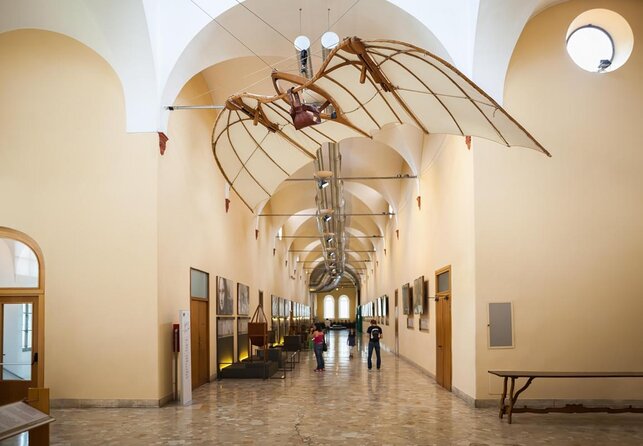
- Leonardo’s machines become hands-on objects: Working models make his sketches easier to understand.
- The Last Supper gets a digital second look: You can study details that are difficult to appreciate in a quick viewing of the original.
- The exhibition sits beside Milan’s Duomo: It fits neatly into a central Milan sightseeing day.
- Plan on one to two hours: You can move quickly, but the displays reward careful reading and testing.
- An audio guide adds useful context: It can be purchased in Chinese, English, French, German, Italian, Portuguese, Russian, and Spanish.
- Skip-the-line entry is included: The ticket gives you direct admission, though the regular entrance price may be lower at some times.
Inside Leonardo3 near the Duomo
Leonardo3, officially Museo Leonardo3, is designed around a simple idea: take Leonardo’s drawings and make them easier to understand. Instead of presenting only framed pictures and text, the exhibition uses physical models, digital screens, and reconstructed objects.
That approach works especially well for Leonardo’s machines. A drawing of a flying device, mechanical system, or musical instrument can be fascinating, but it may not explain itself at first glance. A model lets you see the parts, the movement, and the practical problem Leonardo was trying to solve.
You will find the exhibition in central Milan, close to the Duomo. The location is useful because you can pair it with the cathedral, Galleria Vittorio Emanuele II, and nearby city sights without arranging a separate trip across town. Finding the entrance can take a moment. Walk through the Galleria from the Duomo toward the next small piazza, then look on the left after the city information storefront.
This is not a large museum with miles of galleries. It is compact and tightly packed. That makes it a good choice when your Milan schedule is full, but it also means the room can feel busy when several people gather around the same display.
More Leonardo da Vinci trails:
- Milan: Leonardo3 The World of Leonardo Museum Entry Ticket
★ 4.4 · 3,241 reviews - Best of Milan Experience Including Da Vinci’s The Last Supper and Milan Duomo
★ 4.5 · 1,516 reviews - Milan: Guided Tour of Leonardo da Vinci’s ‘The Last Supper’
★ 4.6 · 1,281 reviews
Leonardo’s notebooks turned into working machines
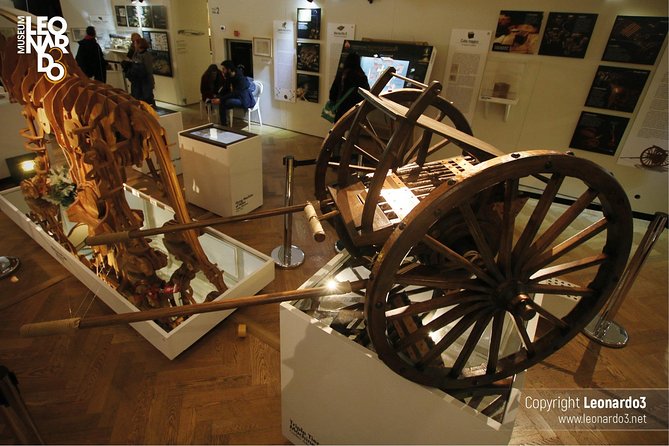
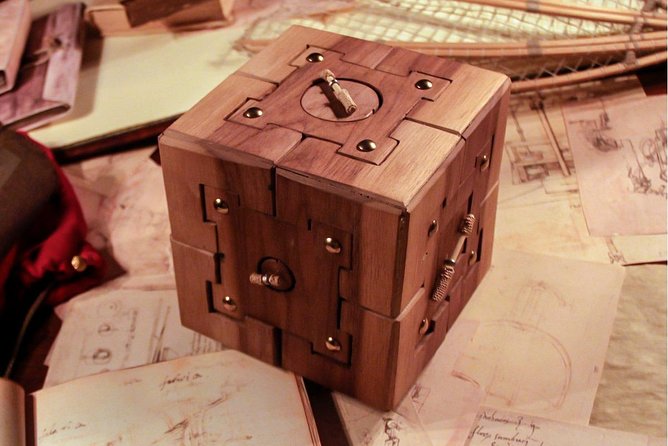
The strongest part of Leonardo3 is the way it translates ideas from Leonardo’s notebooks into objects you can understand at a glance. The exhibition includes reconstructions based on his designs, along with digital material linked to works such as the Codex Atlanticus.
You are not simply looking at a finished invention. You are seeing the thinking behind it: how Leonardo studied motion, structure, anatomy, water, flight, and mechanical power. The displays help you follow the steps from a rough drawing to a more complete working concept.
Some models are hands-on. You may be able to manipulate parts or use an interactive screen to explore how a machine works. This gives the exhibition a playful side, but the subject remains serious. Leonardo was not sketching random gadgets. He was testing solutions to real problems and recording his observations with extraordinary care.
The museum also presents Leonardo as a creator of musical instruments. One display includes instruments, and at certain times musicians may be performing. That adds a welcome change of pace from the mechanical models and reminds you that Leonardo’s interests crossed art, science, engineering, and performance.
I would give the machine displays your full attention. If you rush past them, you will see attractive models but miss the reason they matter. The audio guide can help, especially if you want a clearer explanation of the research behind each reconstruction.
The digital restoration of The Last Supper
The Last Supper receives special treatment through a digital restoration. This is not a replacement for seeing the original fresco in Milan, and it should not be presented as one. Instead, it gives you a way to study Leonardo’s work, the damage it has suffered, and the visual evidence used to reconstruct its appearance.
The restoration is one of the exhibition’s most praised features. Digital technology brings out details and colors that are difficult to examine in a brief visit to the actual painting. You can spend time looking at the composition and the condition of the work without the same pressure that comes with a tightly managed viewing appointment.
This section is particularly useful before seeing the original Last Supper. It gives you a framework for noticing Leonardo’s choices rather than simply standing in front of a celebrated image and wondering where to look first.
At the same time, keep your expectations in check. A digital restoration is an interpretation based on research and surviving evidence. It cannot reproduce the experience of standing before the original fresco. Think of it as preparation and analysis, not a substitute for the real work.
The exhibition also includes digital restorations of other Leonardo paintings. These help you see how technology can reveal layers of information and make damaged or difficult-to-read works more accessible.
Why the interactive format works
Leonardo3 is at its best when you want to understand how Leonardo’s mind operated. The format connects the sketch to the object, then connects the object to the problem it was meant to solve.
That is more useful than a room full of labels alone. You can compare a drawing with a reconstruction and ask practical questions: How would this part move? What would support the weight? How might Leonardo have tested the design? The interactive format encourages that kind of thinking.
Children can use the displays, but this is not automatically a perfect children’s attraction. Younger children may enjoy pressing buttons and moving parts, then lose interest when the explanations become more detailed. Older children and teenagers with an interest in science, design, art, or inventions may get much more from it.
Adults who know Leonardo mainly as the painter of the Mona Lisa and The Last Supper will probably find the wider range of his work most surprising. The exhibition presents a man concerned with machines, anatomy, music, engineering, and scientific observation, not only painting.
The English explanations can be limited beside some displays. If you want a full account of the research and the reconstructed machines, consider buying the audio guide. It is available in eight languages and adds more structure to a self-guided visit.
A few more Milan trips worth weighing up
- Milan: La Scala Theater & Museum Guided Experience
★ 4.1 · 2,931 reviews - Milan: La Scala Theater and Museum Tour with Entry Tickets
★ 4.7 · 1,722 reviews - Milan: Cathedral, Archeological Area and Museum Ticket
★ 4.5 · 1,093 reviews - Casa Milan: Museum Entry Ticket
★ 4.6 · 969 reviews
A small exhibition that needs careful timing
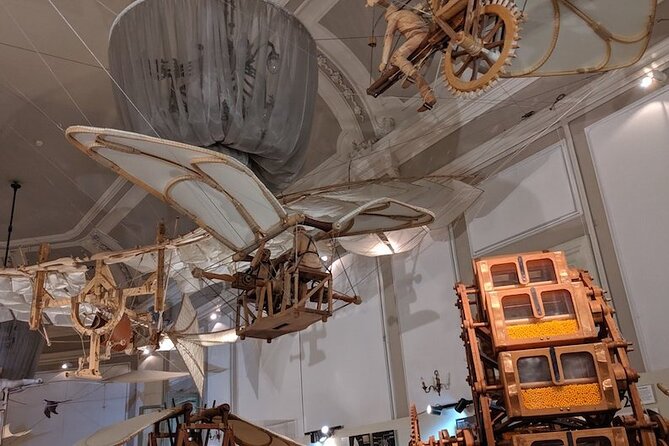
The suggested visit length is one to two hours. That is realistic, but your timing depends on how much you read and how long you wait to use the interactive displays.
A fast visit may take close to an hour. You can see the main models, look at the digital restorations, and move on to the Duomo. If you want to listen to the audio guide, test the displays, and study Leonardo’s writing, allow nearer two hours.
The compact layout is both a strength and a weakness. You do not waste time walking between distant rooms, and the exhibition fits easily into a packed day. On the other hand, several people may gather around the most popular screens or models. If you want a calmer visit, go early in the day when possible.
The published hours vary by date. During the listed November 18 to December 15 period, the exhibition is open daily from 9:30 a.m. to 8 p.m. On December 16, the listed hours are 2 p.m. to 8 p.m. From December 17 to December 23, the hours return to 9:30 a.m. to 8 p.m. Check the hours for your exact date before setting your schedule.
One practical comfort issue deserves attention: the exhibition may feel hot, particularly on a warm day. Air conditioning has been a concern during very hot weather. That matters because the models reward slow looking, and an uncomfortable room can shorten your visit.
What the $19.22 ticket is worth
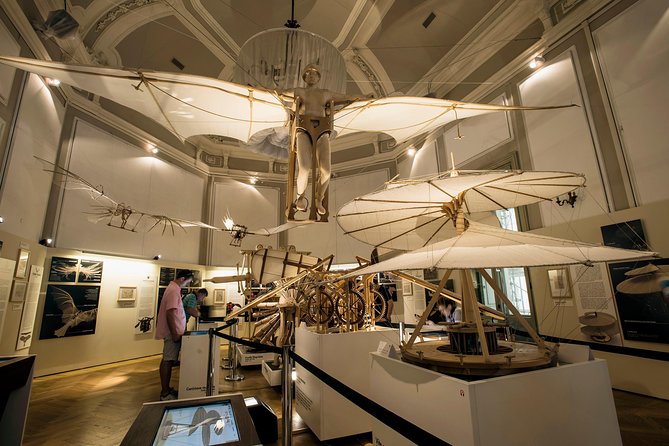
At about $19.22 per person, the ticket is reasonably priced if you want a focused Leonardo experience in central Milan. You are paying for admission to an interactive exhibition rather than a large collection of original paintings.
The value comes from the reconstructions. A standard display of reproductions might tell you what Leonardo drew. Here, the physical models and digital tools help show how his inventions were conceived and might have worked. If you are curious about engineering or the practical side of Renaissance art, that can justify the price.
The ticket also includes skip-the-line access and instant confirmation. That is helpful when Milan is busy and you want to keep your day moving. Still, compare the price with the museum’s normal entrance fee when you book. At least one visitor found that anyone could enter by paying the regular admission, which was less expensive than the packaged ticket.
The included admission does not cover transportation, souvenirs, or the audio guide. Transportation is not a major issue because the museum is near public transit and sits in the city center. The audio guide is an extra cost, but it may be worthwhile if you want more than the short English labels provide.
For a family, the cost adds up quickly, especially if younger children may not stay engaged for the full visit. For an adult Leonardo enthusiast, the price is easier to defend because the exhibition packs a great deal into a short stop.
How to fit Leonardo3 into a Milan day
The location makes planning easy. You can visit Leonardo3 before or after the Duomo, walk through the Galleria, and continue into central Milan without a long transfer.
I would place it before the actual Last Supper if you have tickets for both. The digital restoration and explanations give you useful preparation, particularly if you have only a short time with the original fresco. You will arrive with a better sense of what to examine.
You can also use Leonardo3 as a backup if you cannot secure an appointment for the original Last Supper. It will not provide the same encounter, but it offers a substantial look at the painting and at Leonardo’s wider work.
The attraction is near public transportation, and most people can take part. Children must be accompanied by an adult. The activity is listed as private, meaning only your group participates, but this is essentially a museum admission rather than a scheduled group tour with a named guide.
The ticket is flexible enough to work around other Milan plans, since the opening hours run into the evening on the listed dates. Allow extra time to locate the entrance, particularly if you are arriving from the Duomo side of the Galleria.
Small practical details that affect your visit
Lockers are available, which is useful if you are carrying bags during a day of sightseeing. Souvenirs can be purchased inside, but they are not part of the admission.
Photography has been prohibited according to the supplied visitor information. If you like taking reference pictures of models or digital displays, prepare to leave your camera and phone unused in the galleries. This rule may feel strict, particularly for an exhibition built around visual reconstructions, so check the current policy at the entrance.
The ticket offers free cancellation if you cancel at least 24 hours before the experience start time. Cancellations made less than 24 hours ahead are not refundable, and late changes are not accepted. The cut-off follows local Milan time.
There is also a date issue in the supplied ticket information. One section says the ticket is valid until November 13, 2024, while the listed opening hours are for November and December 2025. Confirm the valid date and operating schedule before purchase, especially if your visit falls outside the dates shown.
Who will get the most from Leonardo3
I recommend this exhibition to anyone who wants to see Leonardo beyond the usual paintings. It is especially suitable for adults interested in inventions, design, engineering, anatomy, or the process of turning an idea into a working object.
It also suits a short Milan itinerary. You can spend an hour or two here, then walk directly to other major sights. The central setting makes it easy to use as a practical filler between timed reservations.
Families should judge their children’s interests honestly. The interactive parts are appealing, but a child who wants constant action may not enjoy the reading and explanation. Older children can get much more from the machines and digital displays.
Art specialists may find the exhibition’s reproductions less satisfying than original works in a major museum. The value is not in seeing a large collection of authentic Leonardo paintings. The value is in understanding his inventions and seeing digital technology used to explain his surviving work.
Should you book Leonardo3?
Book it if you want a clear, hands-on introduction to Leonardo’s inventions and a useful digital study of The Last Supper. The working models, central location, and one to two-hour format make it easy to add to a Milan visit.
Skip it if you are seeking original masterpieces, a large traditional museum, or a quiet gallery with plenty of space. Also compare the advertised ticket with the regular entrance price, and verify the date details before paying.
For the best experience, visit before the actual Last Supper if you have a reservation, use the audio guide if you want fuller explanations, and allow enough time to operate the displays rather than simply walking past them.
FAQ
Where is Leonardo3 located?
Leonardo3 is in central Milan, near the Duomo and close to public transportation. From the Duomo, walk through the Galleria toward the next small piazza and look on the left after the city information storefront.
How long does a visit take?
The visit takes approximately one to two hours. You can make a shorter visit, but allow closer to two hours if you want to read the displays and use the interactive features.
What does the ticket include?
The ticket includes admission to Museo Leonardo3, also known as The World of Leonardo.
Does the ticket include skip-the-line access?
Yes. The ticket includes skip-the-line access and provides instant confirmation at booking.
Is an audio guide included?
No. The audio guide is available to purchase separately in Chinese, English, French, German, Italian, Portuguese, Russian, and Spanish.
Does the exhibition show The Last Supper?
Yes. The exhibition includes a digital restoration of The Last Supper and information about the fresco. It also presents digital restorations of other Leonardo works.
Can I see Leonardo’s inventions at the exhibition?
Yes. The exhibition includes working models and reconstructions of machines based on Leonardo’s designs, along with interactive displays.
Can children visit Leonardo3?
Yes, but children must be accompanied by an adult. Most people can participate, though younger children may not stay interested for the full visit.
Is transportation included?
No. Transportation to and from the attraction is not included. The museum is near public transportation and in the city center.
Can I cancel the ticket for a refund?
Yes, if you cancel at least 24 hours before the experience start time. Cancellations made less than 24 hours before the start time are not refundable, and late changes are not accepted.
Just added around Milan
- Milan: Food Tour with Pasta, Pizza, Cannoli, and Tiramisu!★ 4.3 · 3 reviews
- Varenna Walking Tour and Cooking Class★ 5.0 · 3 reviews
- 1-Day Personal Fashion Styling Course for Women★ 5.0 · 3 reviews
- Walking Tour in Lake Como with Lierna Cooking Class★ 5.0 · 3 reviews
- Milan: 4-Hour Art and History Private Walking Tour★ 5.0 · 3 reviews
- Private Wine Tasting in Bellagio with Chef Luigi Gandola★ 5.0 · 3 reviews
- Mantova: Private Walking Tour★ 4.3 · 3 reviews
- Wine and Food tasting PRIVATE Guided Tour★ 5.0 · 3 reviews
Leonardo da Vinci Tours, compared.
Leonardo3 The World of Leonardo Museum Entry Ticket
Read our review →
Best of Milan Experience Including Da Vinci’s The Last Supper and Milan Duomo
Read our review →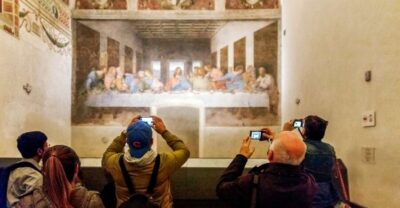
Guided Tour of Leonardo da Vinci’s ‘The Last Supper’
Read our review →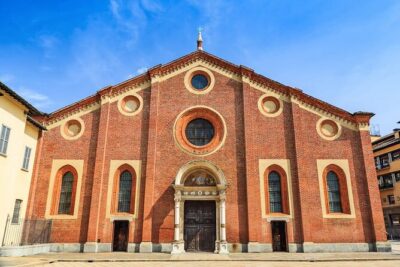
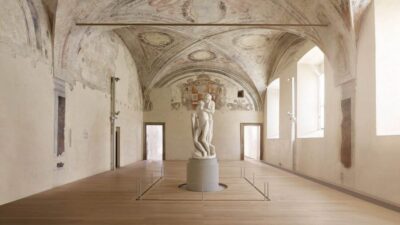
Leonardo’s Last Supper and Michelangelo’s Pietà Tour
Read our review →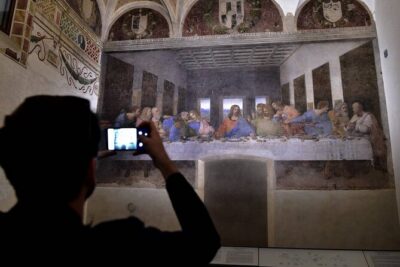
Experience Da Vinci’s Last Supper: Tickets & Guided Tour
Read our review →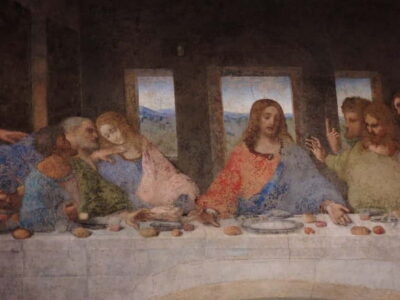
Da Vinci’s Last Supper Express Semi-Private Guided Tour
Read our review →
Browse the lists this tour appears in