
Reviewed · CYCLING TOURS
Milan: Guided Bike Tour
Milan reveals itself quickly from a bicycle. In three hours, you can roll from Sforza Castle and its courtyards to the canals, Roman columns, La Scala, the Galleria, and Duomo Square without spending the day underground on the Metro. Guides such as Emilio and Katharine bring strong knowledge of Milan’s art, architecture, and culture, while keeping the ride relaxed.
I like two things here: the small group, capped at eight, gives the guide room to answer questions, and the route mixes famous sights with less obvious stops such as the old canal lock, Roman ruins on Via Brisa, and the L.O.V.E. sculpture at Piazza Affari. The main drawback is simple: you must be comfortable cycling in a city, and the tour is not suitable for pregnant people, unaccompanied minors, or riders over 115 kilograms.
In This Review
- Key points at a glance
- Why a bicycle works so well in central Milan
- Sforza Castle and the Peace Arch
- Darsena, canals, and Milan’s old water routes
- Roman columns, Sant’Ambrogio, and Via Brisa
- Piazza Affari and the L.O.V.E. sculpture
- La Scala, the Galleria, and Duomo Square
- What the guides add to the ride
- Price, pace, and practical value
- Who should book this bike tour
- Should you book it?
- FAQ
- How long is the Milan guided bike tour?
- What sights are included?
- Is bicycle use included in the price?
- How large is the group?
- What languages are available?
- Where does the tour start and end?
- What should I wear and bring?
- Can I cancel the booking?
Key points at a glance
- A compact Milan orientation: Cover major sights across the historic center in a single three-hour ride.
- Small groups matter: With no more than eight participants, the guide can adjust explanations and stop for questions.
- A good mix of old and new: See Roman columns, medieval and Renaissance landmarks, canals, and the modern skyscraper district.
- Photo stops are built in: The Peace Arch, Darsena, Piazza Affari, and Duomo Square give you time to pause.
- Strong guide element: Emilio and Katharine are praised for clear English, local insight, and an easygoing style.
- Easy booking terms: Bikes, helmets, and a guide are included, with cancellation allowed up to 24 hours ahead.
Why a bicycle works so well in central Milan
Milan is spread out enough that walking between its major sights can eat up much of a day. A bicycle lets you connect the pieces quickly, but still move slowly enough to notice changes in the city: castle walls give way to grand avenues, quiet church precincts, canals, office towers, and polished shopping arcades.
This is not a racing tour. The route includes regular stops for explanations and photographs, and the ride is mostly on bike paths and quieter streets according to the experience details. That makes a real difference if you want to listen rather than spend the whole time watching traffic.
The three-hour length is also well judged for a first look. You will not explore each monument in depth, but you will learn where the major sights are and how they fit together. I see this as an orientation tour, not a substitute for visiting Milan’s museums or entering every church.
The group limit of eight is one of the better features. A large bicycle convoy can feel awkward in a city center, while a small group is easier to keep together and gives you a better chance to ask about a detail that catches your eye.
A few more Milan trips worth weighing up
- Milan: Hidden Gems Guided Bike Tour
★ 4.8 · 1,040 reviews - Milan’s Hidden Gems: Unique Bike Tour (ENG, NL)
★ 5.0 · 970 reviews - Milan: Highlights and Hidden Gems Guided Bike Tour
★ 4.7 · 498 reviews
Sforza Castle and the Peace Arch
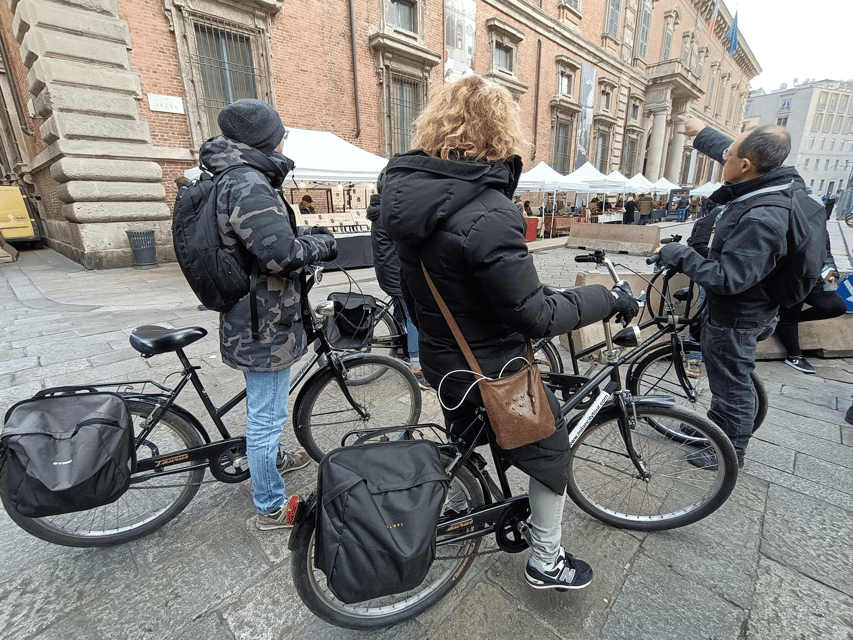
The tour begins at the Cargo bike store, where you meet the guide, receive a bicycle and helmet, and set off through central Milan. You should arrive ready to ride, wearing trainers or another pair of comfortable shoes. Large bags and luggage are not allowed, so pack light.
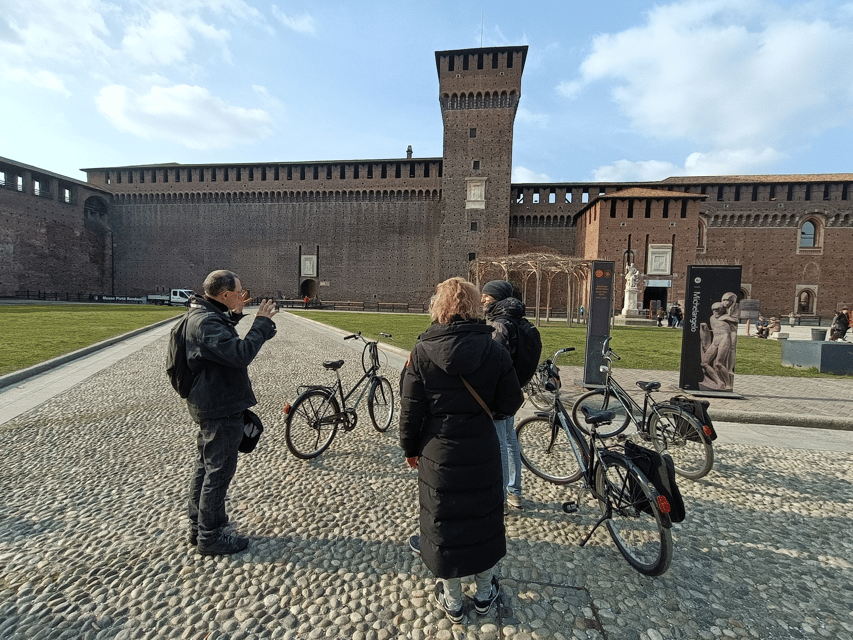
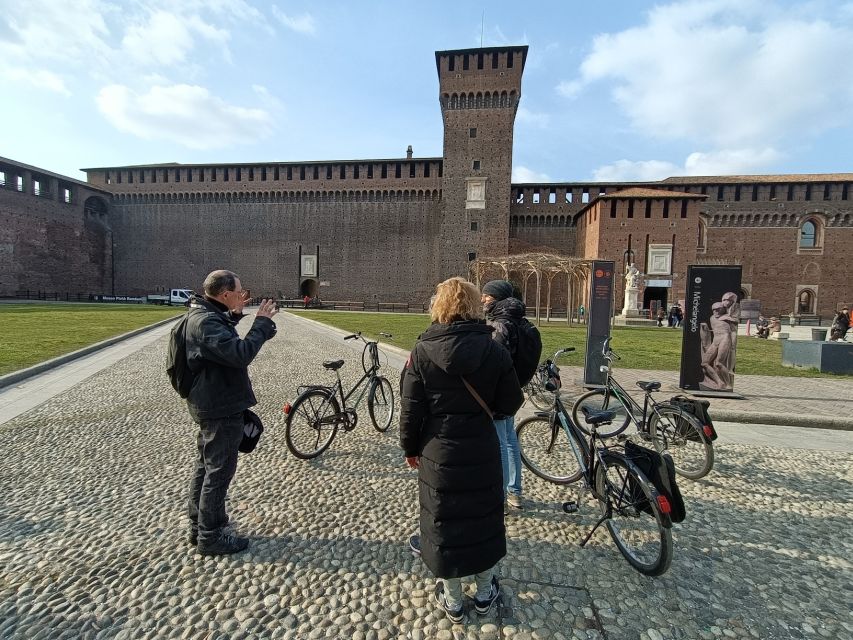
Sforza Castle is an excellent first major stop. You ride to the outside of the monument, then enter its inner courtyards for an explanation of its art and history. The courtyards give you a sense of the castle’s scale without requiring a museum visit, and they make a practical place to pause before continuing.
The guide’s role matters here. A castle can look like a wall and a gate if you do not know what you are seeing, but details about its use, design, and place in Milan’s story help turn the stop into more than a photo opportunity. Emilio is particularly praised for explaining Milan’s art and culture clearly and for shaping the conversation around the group’s questions.
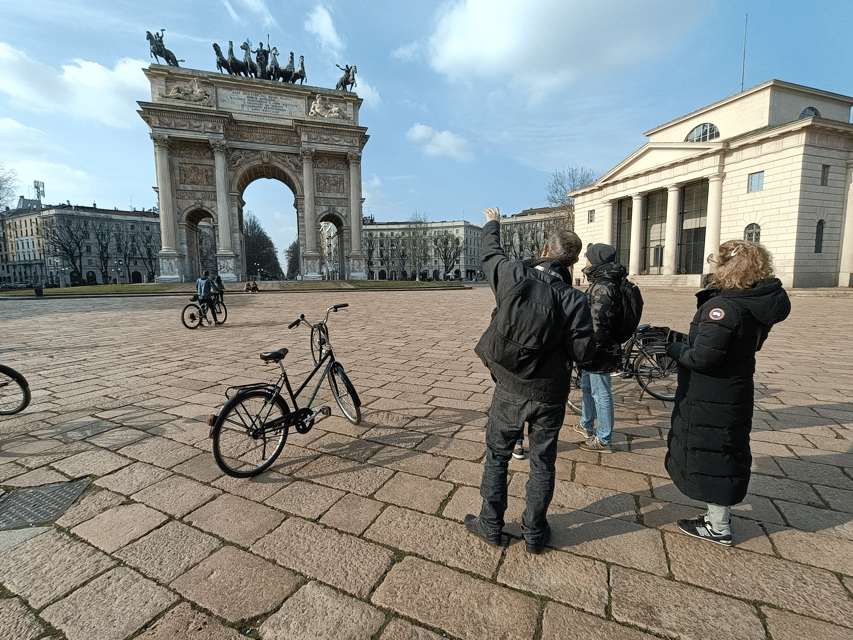
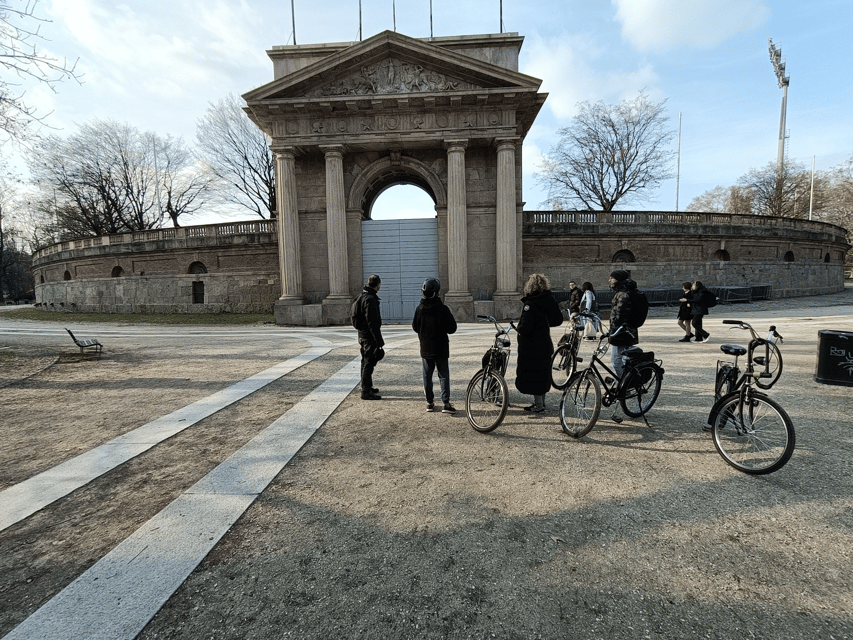
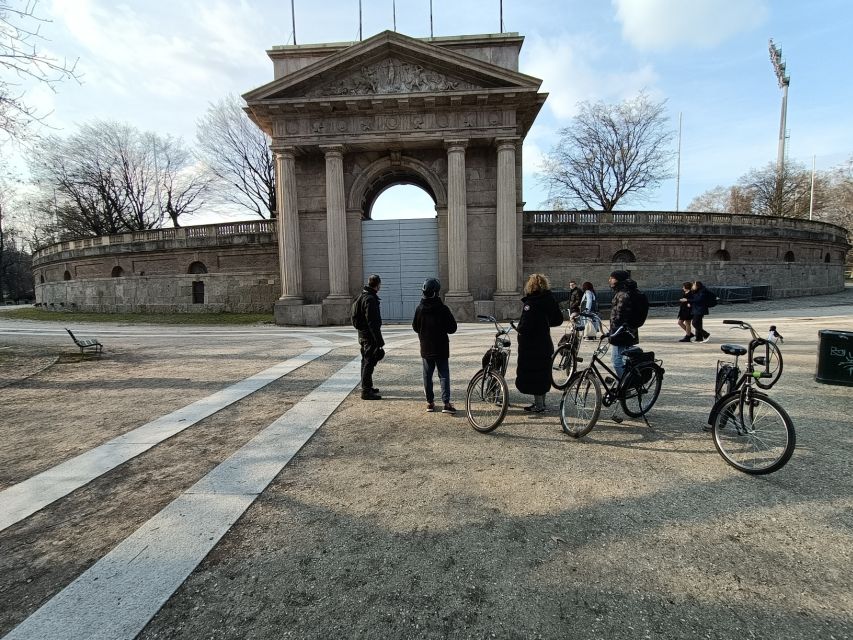
Next comes the Arco della Pace, or Peace Arch. This is one of Milan’s grand ceremonial monuments, and the open space around it gives you a useful change of pace after the castle’s enclosed courtyards. You stop for views and pictures, then continue toward Santa Maria delle Grazie.
The route provides a view of Santa Maria delle Grazie, but this bike tour is not an interior visit to the church or to see Leonardo da Vinci’s The Last Supper. If that is a priority, plan a separate timed visit. The value here is seeing the church as part of the wider route rather than treating it as the only reason to come.
Darsena, canals, and Milan’s old water routes
Darsena and Milan’s canals add a different side to the city. The water district is a useful reminder that Milan was not only a city of palaces, churches, and commerce. Its canals once supported movement and trade, and the old lock gives the guide a chance to explain how the water system worked.
You get time for photographs at Darsena and along the canals. This is one of the tour’s more atmospheric sections, especially if you want a break from monumental squares and busy shopping streets.
The route is not a canal cruise, and you should not expect a long stop at every waterway. You ride through, pause for context and pictures, then continue. That is the tradeoff of trying to cover so much of Milan in one outing.
A bike is especially handy here because it connects the water district to the central sights without asking you to retrace your steps. You see a part of Milan that can be missed if your plan focuses only on the Duomo, La Scala, and the fashion streets.
Roman columns, Sant’Ambrogio, and Via Brisa
After the canals, you cycle toward San Lorenzo and the Roman columns. These ancient columns are among the city’s clearest visible links to Roman Milan, and their position in an active urban setting makes the contrast memorable. You are not looking at ruins in an isolated archaeological park. The old stones sit amid modern Milanese life.
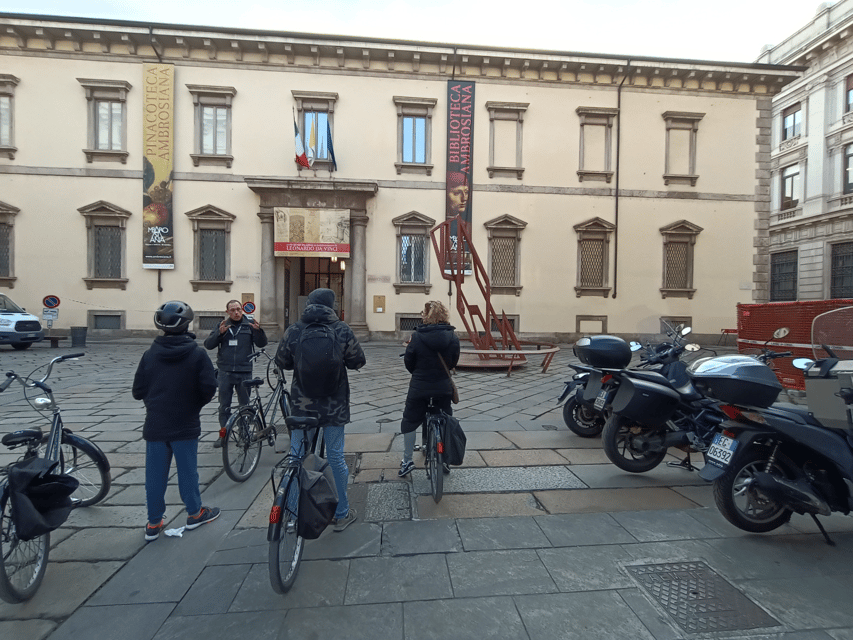
The Basilica di Sant’Ambrogio is another important stop. It gives the tour a strong religious and architectural focus, following the Roman remains with a major church tied to Milan’s identity. The guide explains the significance of the site while you take in the exterior and surrounding area.
Via Brisa brings you to more Roman remains. This stop is less polished than the city’s grandest landmarks, which is exactly why it earns a place on the route. It shows how ancient Milan survives in fragments, sometimes tucked beside ordinary streets rather than displayed as a single grand attraction.
I like this sequence because it breaks up the usual list of famous sights. You get the castle, arch, canals, and central squares, but you also see traces of older Milan that reward a bit of explanation. If you enjoy city history in layers, this will be one of the strongest sections of the ride.
A different sort of day out, same corner of Lombardy:
- Milan: Cathedral and Duomo’s Terraces Entrance Ticket
★ 4.6 · 61,054 reviews - From Milan: Como & Bellagio with Private Lake Como Cruise
★ 4.6 · 9,788 reviews - Milan: City Sightseeing Hop-On Hop-Off Bus with Audio Guide
★ 4.0 · 6,256 reviews - Milan Cathedral: Duomo Terraces Ticket (No Church Access)
★ 4.6 · 6,111 reviews
Piazza Affari and the L.O.V.E. sculpture
The next stop is Piazza Affari, Milan’s financial square, where you see Maurizio Cattelan’s contemporary sculpture L.O.V.E. The work is a large hand with its fingers cut away except for the middle finger, and it has become one of the city’s more pointed modern landmarks.
The brief stop works because it places contemporary art beside Milan’s financial district and historic center. You get a photo opportunity, but also a prompt to think about how Milan presents itself: old power, new money, design, fashion, and modern provocation all sit close together.
Do not expect a gallery-style discussion or a long art lecture. This is a short outdoor stop within a moving tour. Still, it adds variety and gives you something to look for after the ancient sites and churches.
The route then heads toward Mercanti Square. This is where the ride begins to feel like a tour of Milan’s civic heart, with grand architecture, public spaces, and the city’s most recognizable cultural addresses arriving one after another.
La Scala, the Galleria, and Duomo Square
La Scala Square brings you to Milan’s opera tradition. The guide provides context from outside, giving you a useful introduction without the time commitment of an opera house visit. If you are interested in music, architecture, or Milan’s social history, listen closely here, since the square’s importance is easy to miss when you are simply passing through.
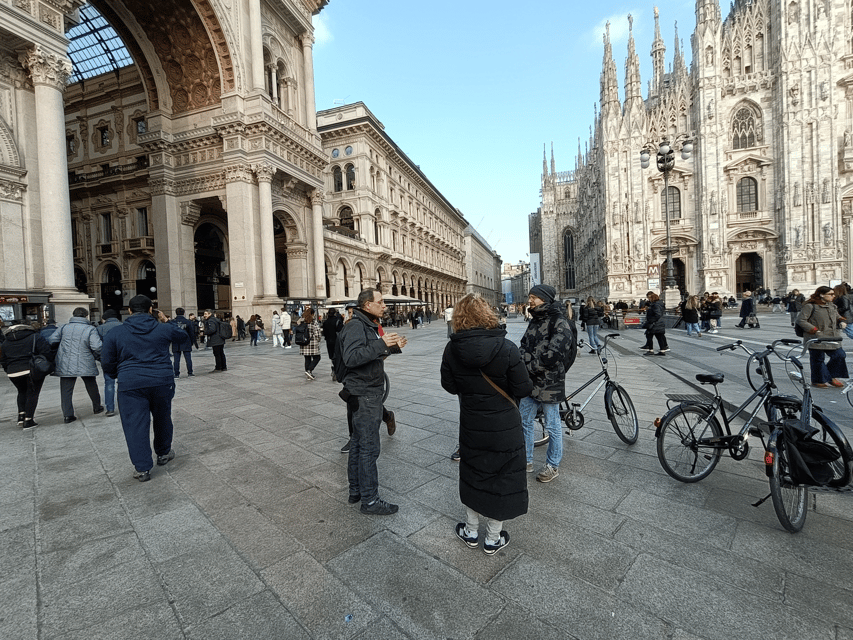
From La Scala, you continue to the Galleria Vittorio Emanuele II. The famous glass-roofed arcade is one of the city’s most elegant public spaces, with intricate decoration, polished floors, and luxury shops. A bicycle tour cannot give you a leisurely shopping visit, but it does place the Galleria neatly into the route between La Scala and the Duomo.
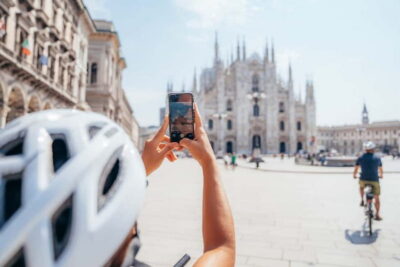
The final major stop is Duomo Square. You get another short photo session before riding back to the starting point. This ending makes sense: after seeing the castle, canals, Roman remains, churches, financial district, opera house, and arcade, you finish at the monument most closely tied to Milan in the popular imagination.
The limitation is time. You will see the Duomo from the square, but the tour does not include entry or a rooftop visit. Set aside another part of your schedule if you want to explore the cathedral interior or terraces.
What the guides add to the ride
A bike and a route are useful, but the guide determines how much you take away. The strongest feedback points to guides who combine facts with a relaxed manner rather than delivering a stiff lecture while riding.
Emilio is praised for his grasp of English, his knowledge of Milan’s art and culture, and his ability to answer questions. One detailed assessment describes him as relaxed and informative, with a style that changes to suit the people in the group. That matters on a sightseeing ride, since some people want architectural detail while others care more about daily life, food, or local customs.
Katharine is also singled out for her broad explanations of Milan’s architecture, culture, and past. Her approach includes time to stop without rushing people onward, even when conditions are not perfect. That patience is valuable because the best parts of a city tour are often the small questions that come up beside a monument.
The listed languages are English and French. If you book, check the language option and starting time that suit you, since availability controls the exact departure.
Price, pace, and practical value
At $55.80 per person, the tour sits in a reasonable range for a three-hour guided city activity that includes the bicycle, helmet, and guide. You are paying for more than bike rental: the route connects distant sights, and the guide supplies the context that a self-guided ride would require you to research in advance.
The value is strongest if you have limited time in Milan or want a first-day overview. In three hours, you cover enough ground to decide which places deserve a longer return visit. You also avoid spending your first day figuring out how the city’s major districts connect.
The value is weaker if you already know central Milan well or want long interior visits. The tour moves on after short stops, and admission to attractions is not listed as part of the activity. You will need separate plans for the Duomo interior, its rooftops, Santa Maria delle Grazie, museums, or La Scala’s interior.
The cancellation policy makes booking less risky. You can cancel up to 24 hours before the tour for a full refund, and the reserve-now, pay-later option lets you hold a place without paying immediately. That flexibility helps if your Milan schedule is still shifting.
Who should book this bike tour
I would choose this for a first visit, a short stay, or a return visit when you want to see familiar landmarks from a different angle. It suits people who prefer active sightseeing and want a guide to connect Milan’s Roman, religious, artistic, commercial, and modern sides.
It is also a good match for travelers who dislike huge groups. With eight participants or fewer, you should have a more personal exchange with the guide and a less cumbersome ride through the center.
You need to be comfortable on a bicycle and wear suitable clothing and shoes. The tour is not suitable for pregnant women, people over 115 kilograms, intoxicated participants, or unaccompanied minors. Anyone under 18 must ride with a legal guardian.
Bring an ID card and a copy of your online payment or voucher. Leave luggage and large bags behind, since they are not allowed. Hotel pickup and drop-off are not included, so you must get to the Cargo bike store on your own.
Should you book it?
Book this tour if you want a fast but thoughtful introduction to Milan, especially if your schedule is too short for separate neighborhood visits. The combination of Sforza Castle, Darsena, Roman remains, Sant’Ambrogio, Piazza Affari, La Scala, the Galleria, and the Duomo gives you a broad sense of the city in one ride.
Skip it if cycling is uncomfortable for you or if your main goal is spending hours inside museums and monuments. For everyone else, the small group, flexible pace, and guides such as Emilio and Katharine make this a practical way to get your bearings before exploring Milan on foot.
FAQ
How long is the Milan guided bike tour?
The tour lasts three hours. Starting times vary, so check availability when booking.
What sights are included?
The route includes Sforza Castle, Arco della Pace, Santa Maria delle Grazie, Darsena and the canals, San Lorenzo and the Roman columns, Basilica di Sant’Ambrogio, Roman ruins on Via Brisa, Piazza Affari, Mercanti Square, La Scala Square, Galleria Vittorio Emanuele II, and Duomo Square.
Is bicycle use included in the price?
Yes. The tour includes use of a bicycle and a helmet, as well as a tour guide.
How large is the group?
The group is limited to eight participants.
What languages are available?
The live tour guide is available in English or French.
Where does the tour start and end?
You meet at the Cargo bike store. The activity ends back at the same meeting point.
What should I wear and bring?
Wear comfortable shoes, such as trainers, along with suitable clothing for riding. You must bring an ID card and, if you booked online, a copy of your payment or voucher.
Can I cancel the booking?
Yes. You can cancel up to 24 hours in advance for a full refund. A reserve-now, pay-later option is also available.
Just added around Milan
- Milan: Food Tour with Pasta, Pizza, Cannoli, and Tiramisu!★ 4.3 · 3 reviews
- Varenna Walking Tour and Cooking Class★ 5.0 · 3 reviews
- 1-Day Personal Fashion Styling Course for Women★ 5.0 · 3 reviews
- Milan: 4-Hour Art and History Private Walking Tour★ 5.0 · 3 reviews
- Private Wine Tasting in Bellagio with Chef Luigi Gandola★ 5.0 · 3 reviews
- Walking Tour in Lake Como with Lierna Cooking Class★ 5.0 · 3 reviews
- Mantova: Private Walking Tour★ 4.3 · 3 reviews
- Wine and Food tasting PRIVATE Guided Tour★ 5.0 · 3 reviews
Cycling Tours, compared.
Milan’s Hidden Gems: Unique Bike Tour (ENG, NL)
Read our review →
eBike City Tour Guided by an iPad and a Tour Leader
Read our review →
Group Bike Tour: Onno & Ghisallino (E-bikes and Road bikes)
Read our review →Browse the lists this tour appears in