
Reviewed · CYCLING TOURS
Milan: Highlights and Hidden Gems Guided Bike Tour
Milan makes more sense from a bicycle. In three and a half hours, you move from the Duomo and La Scala to Brera, Porta Nuova, Castello Sforzesco, and ancient Roman remains, with quieter streets and local corners linking the big sights. I like the easy, mostly flat route and the way guides such as Paolo, Sandra, and Martha turn a sightseeing ride into a useful introduction to the city.
I also like the practical pace. You stop often for stories and photographs, and you can cover far more ground than on foot without feeling rushed. The main drawback is simple: you need to be comfortable riding a bike, and the minimum height is 135 centimeters. A busy city-center route also requires you to stay alert around traffic and pedestrians.
In This Review
- Key points at a glance
- Why a bicycle is a smart way to see Milan
- Starting in Ticinese and moving toward the Duomo
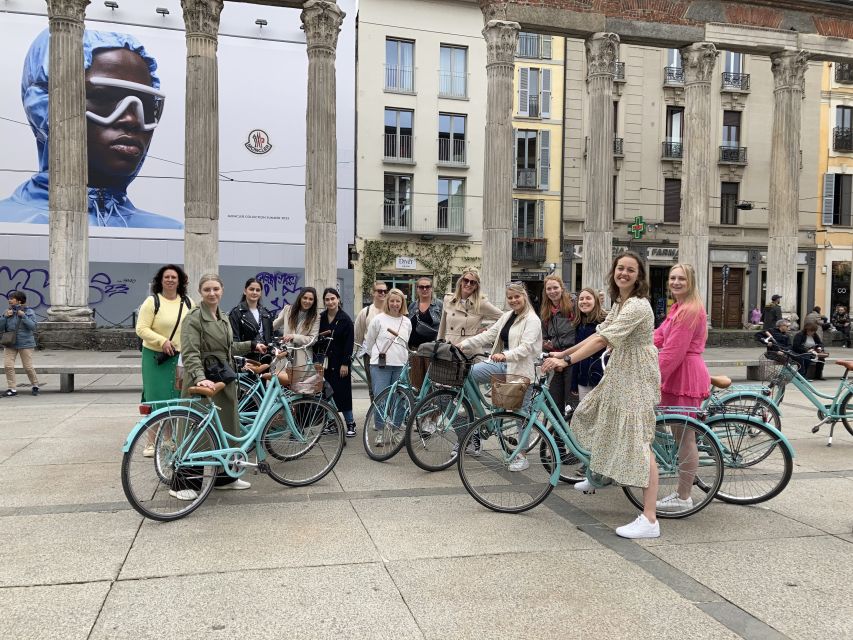
- The Duomo, Palazzo Reale, Galleria, and La Scala
- Brera, where Milan slows down
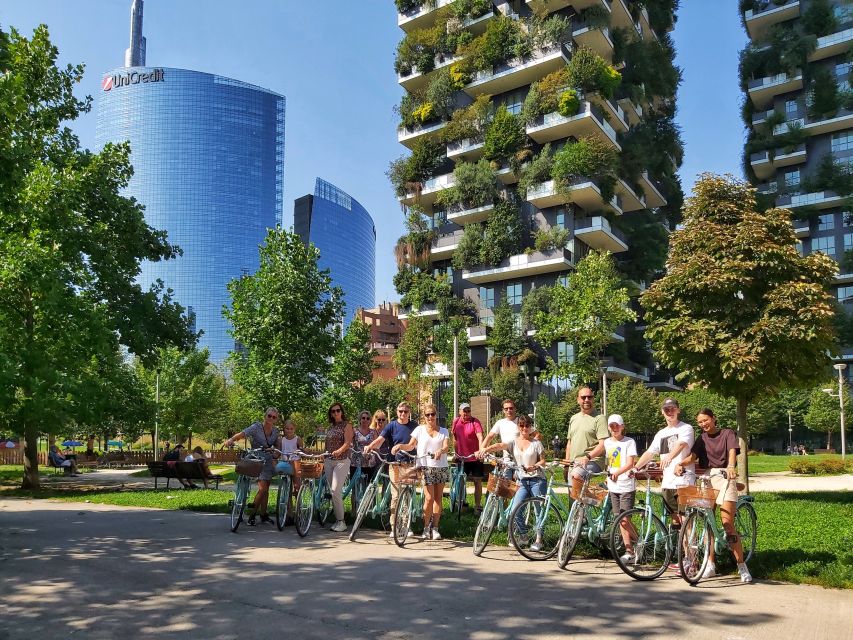
- Porta Nuova and Milan’s modern face
- Castello Sforzesco and Parco Sempione
- Roman Milan at the end of the ride
- Bikes, comfort, and the pace of the group
- What the $44.41 price gets you
- Who should book this ride
- My verdict: a strong first-day choice
- FAQ
- How long is the Milan bike tour?
- What languages are available?
- Where does the tour start?
- How do I reach the meeting point from Duomo station?
- Does the tour finish at the starting point?
- Is the route suitable for beginners?
- Is there a minimum height?
- What equipment is included?
- What happens if it rains?
Key points at a glance
- A full Milan overview in 3.5 hours: See the central monuments, arts district, modern quarter, castle, park, and Roman ruins in one outing.
- Mostly flat and easy to pedal: The bikes require no gear changes, making the ride approachable for many casual cyclists.
- A useful mix of famous and lesser-known places: The route includes the Duomo, Galleria, La Scala, Brera, Porta Nuova, and old Roman remains.
- Strong guide-led storytelling: Paolo is often praised for his energy and historical explanations, while Sandra and Martha have also led engaging rides.
- Well-kept bikes in several sizes: Helmets, liability insurance, and waterproof jackets in light rain are included.
- A smart first-day activity: The ride helps you decide which districts, cafés, restaurants, and sights deserve more of your time later.
Why a bicycle is a smart way to see Milan
Milan’s center is walkable, but its sights are spread across several districts. You can spend a long day moving between them on foot, or you can use a bicycle to connect the dots with less effort. This tour gives you a broad first look without turning the day into a race.
I especially like the way the route changes character. The ride begins in Ticinese, passes through the grand heart of the city, reaches the art-filled lanes of Brera, then shifts to the sharp modern lines of Porta Nuova. After that, the route returns to the monumental Castello Sforzesco, opens into Parco Sempione, and finishes with Roman remains. Milan can seem all fashion and shopping if you stay near the Duomo. This route shows you a much older, more varied city.
The pace is designed for sightseeing rather than sport. The route is described as leisurely, with regular stops for explanations. Several guides have also offered a coffee or gelato break during the ride, although you should treat that as part of the guide’s pacing rather than a guaranteed included stop.
A few more Milan trips worth weighing up
- Milan: Hidden Gems Guided Bike Tour
★ 4.8 · 1,040 reviews - Milan’s Hidden Gems: Unique Bike Tour (ENG, NL)
★ 5.0 · 970 reviews - Highlights and hidden gems of Milan Bike Tour
★ 5.0 · 491 reviews
Starting in Ticinese and moving toward the Duomo
The meeting point is in the historic Ticinese district, near Metro Station Vetra on the M4 line. From Vetra, it is about a three-minute walk. You can also reach the start from Duomo station in roughly 14 minutes on foot, or by tram number 3. From Sant’Ambrogio, it is about 12 minutes walking or a ride on bus 94.
Ticinese gives the tour a better opening than starting directly in the crush around the Duomo. This area helps you see Milan as a lived-in city, not just a collection of grand façades. From here, the group rides toward the central monuments, where the scale and decoration become more imposing.
If you arrive by car, take the warning about Milan’s ZTL seriously. The limited-traffic zone can result in a fine if you enter without authorization. Public transport is the simpler choice, especially since the meeting point is close to several stations.
The Duomo, Palazzo Reale, Galleria, and La Scala
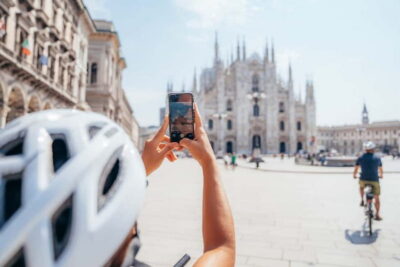
The first major section covers Milan’s best-known sights. The Duomo is the visual anchor, with its elaborate Gothic exterior and forest of spires. A bike lets you approach it from different streets and pause nearby without committing to a long walking circuit.
The tour also passes Palazzo Reale, the former royal palace beside the cathedral. Its refined exterior helps explain Milan’s role as a seat of power, while its exhibitions make it one of the city’s important cultural spaces. The experience does not include entry to the Duomo, Palazzo Reale, or any other museum, so plan a separate visit if you want to go inside.
Nearby, the Galleria Vittorio Emanuele II provides a change of mood. Its glass roof, grand arches, mosaics, and polished shops make it one of Milan’s most elegant public spaces. Then comes La Scala, one of the world’s best-known opera houses. Even if opera is not your main interest, the building adds an important cultural stop to the route.
The value here is not simply ticking off four famous names. A guide can explain how these places fit together, and the bike keeps the group moving between them without losing the connections among Milan’s political, commercial, and artistic life.
Brera, where Milan slows down
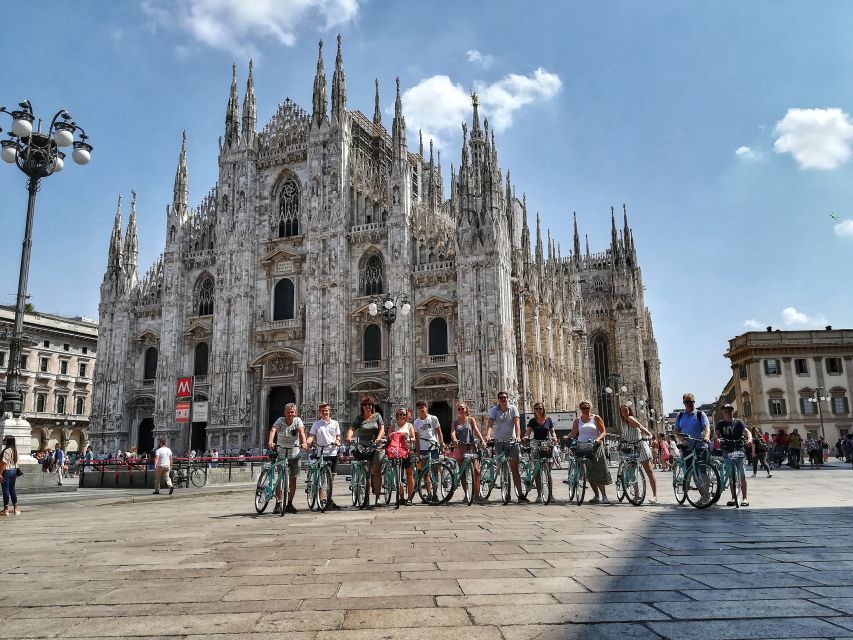
Brera is one of the most rewarding parts of the ride. This district is associated with art, narrow streets, galleries, and a more relaxed street life than the cathedral area. The Pinacoteca di Brera is the major attraction, though the tour only views it from outside unless your guide states otherwise.
I like this stop because it offers a useful contrast. The Duomo area can feel packed and polished. Brera has a more intimate feel, with lanes that reward a slower look. A bicycle is especially handy here because you can move through several streets and small squares in a short time.
The guide’s local advice can also be useful at this stage. Paolo, in particular, has been praised for pointing out places to eat and things to do later in the visit. One especially practical suggestion was panzerotto, a small folded pizza snack that can make a good quick meal. Do not expect food to be included, but do ask your guide for current recommendations.
A different sort of day out, same corner of Lombardy:
- Milan: Cathedral and Duomo’s Terraces Entrance Ticket
★ 4.6 · 61,054 reviews - From Milan: Como & Bellagio with Private Lake Como Cruise
★ 4.6 · 9,788 reviews - Milan: City Sightseeing Hop-On Hop-Off Bus with Audio Guide
★ 4.0 · 6,256 reviews - Milan Cathedral: Duomo Terraces Ticket (No Church Access)
★ 4.6 · 6,111 reviews
Porta Nuova and Milan’s modern face
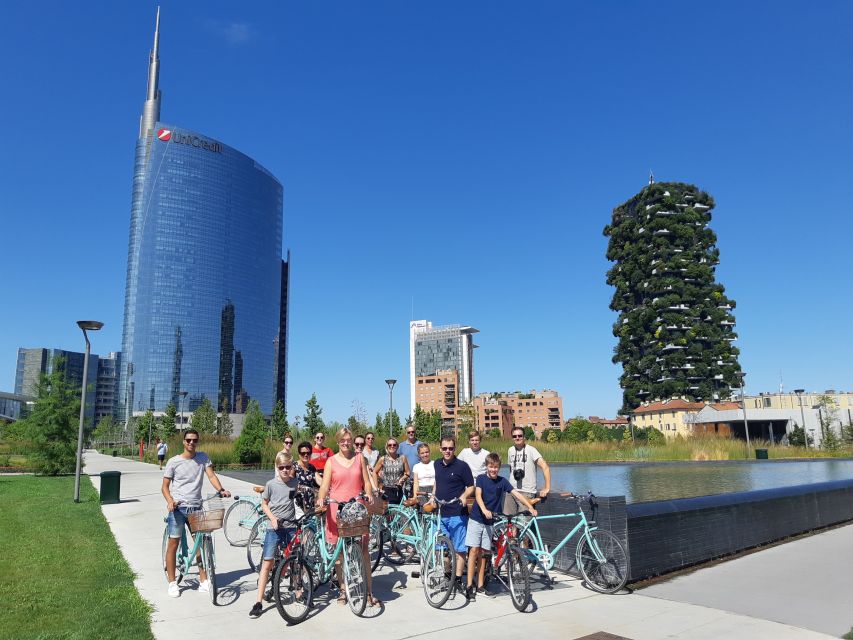
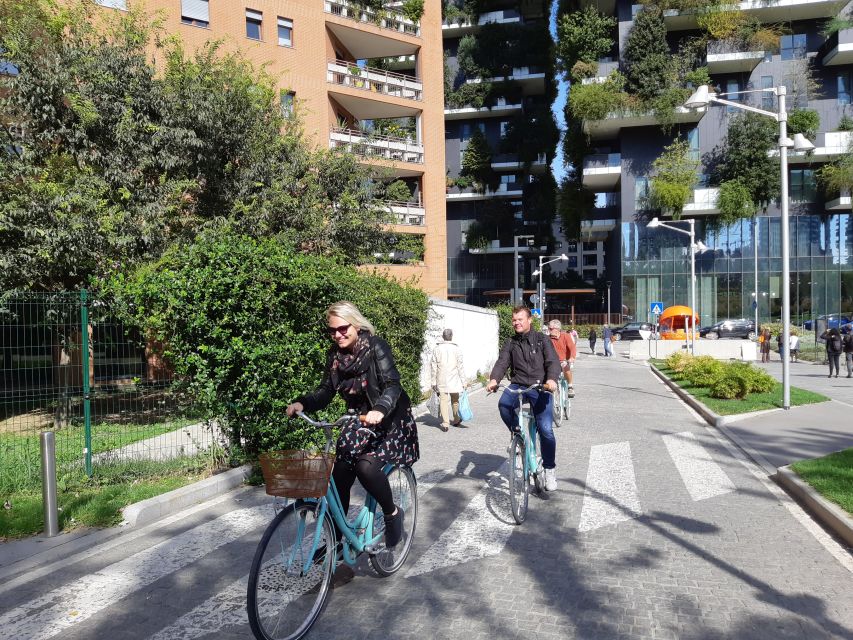
The route then jumps forward in time to Porta Nuova. This district is a clear reminder that Milan is not only a city of churches, palaces, and old streets. Its contemporary architecture gives the ride a fresh visual break and shows the city’s modern business and design side.
The contrast works well because it arrives after Brera. You move from an art district with historic buildings into a newer zone built around modern architecture. That change helps you read Milan as a city that keeps adding new layers rather than preserving only its past.
This section may appeal most if you enjoy architecture and urban design. It is not an old-world stop, and some people may prefer more historic sights. Still, it adds balance to the itinerary and helps explain why Milan feels different from Italy’s more purely historic cities.
Castello Sforzesco and Parco Sempione
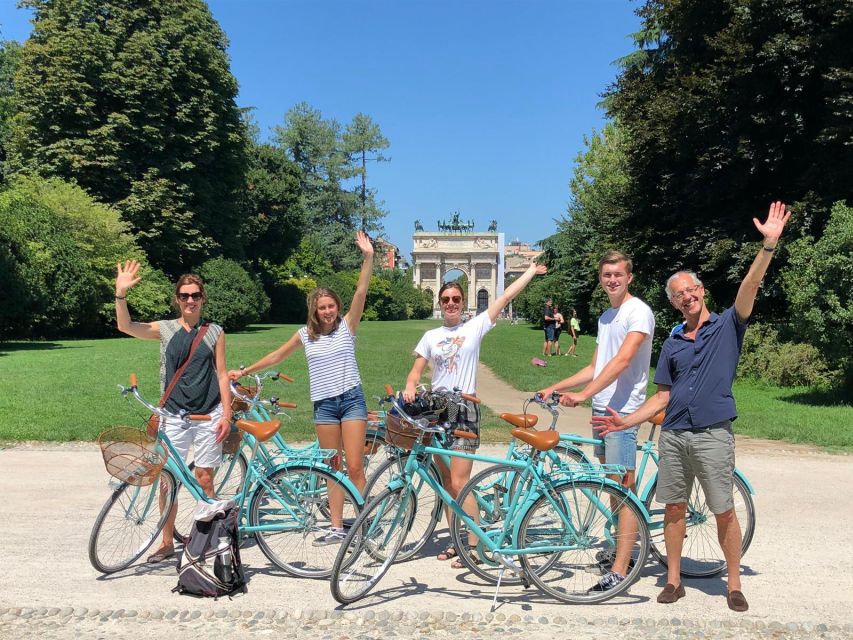
Castello Sforzesco makes a grand entrance. The castle is one of Milan’s most recognizable landmarks, tied to the powerful Sforza family and the city’s long political story. The ride gives you a chance to see its large defensive form without spending the whole day inside a museum complex.
The castle leads naturally into Parco Sempione, Milan’s major central park. Here, the pace slows. You leave the hard surfaces and traffic of the center for open green space, with the neoclassical Arco della Pace providing a handsome focal point at the far end.
This is one of the strongest parts of the route for people who want a break from city walking. You get a change of scenery without leaving central Milan. The park also gives the guide a calmer place to explain the city, and it creates a natural point for photographs.
The route is not a cycling challenge, but city riding still calls for attention. Stay with the group, follow the guide’s signals, and keep an eye out at crossings and crowded areas. Guides such as Paolo have been praised for keeping groups together and choosing safe paths, but no urban bicycle ride is entirely free of traffic or pedestrians.
Roman Milan at the end of the ride
The final section reaches further back than the medieval castle or the Gothic cathedral. You visit remnants connected with the Roman imperial palace, circus, and amphitheater, recalling the period when Milan served as a capital of the Roman Empire.
These remains are not as visually dominant as the Duomo, which is precisely why they are worth including. Without a guide, you might pass them without understanding what they represent. The Roman stops give the tour historical range, linking modern Milan to its ancient role as a major center.
Ending with Roman ruins also changes the way you see the rest of the ride. The polished Galleria, modern Porta Nuova, and busy central streets begin to feel like recent layers on a much older city. The tour returns to the original meeting point, making it easy to continue with your own plans afterward.
Bikes, comfort, and the pace of the group
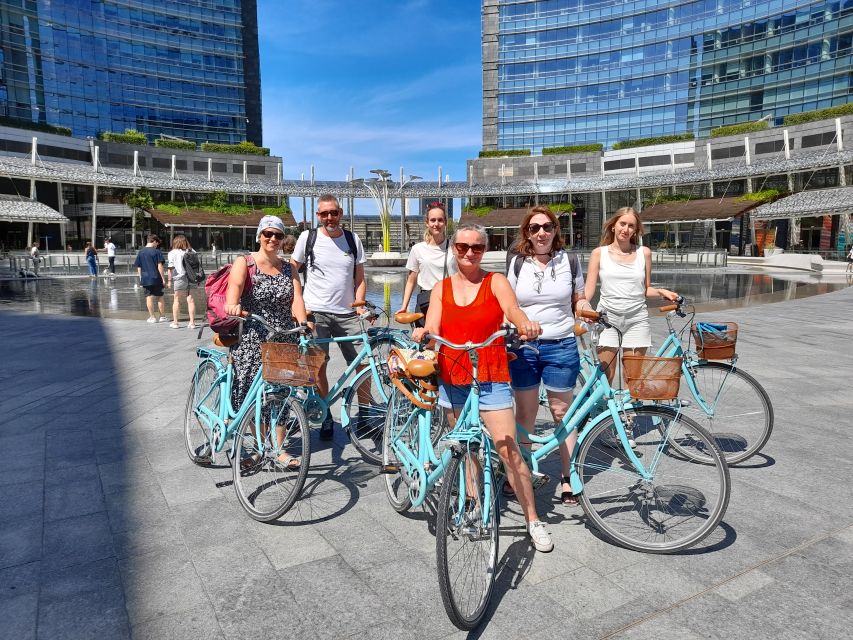
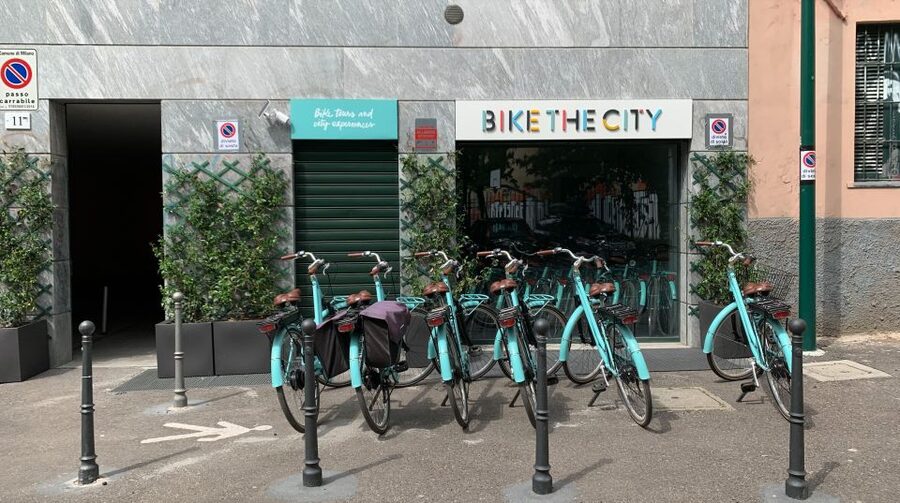
The experience includes the bicycle, helmet, official guide, and third-party liability insurance. The bikes are described as aquamarine and have been praised for being clean, comfortable, and well maintained. Several sizes are available, which matters because a poorly fitted bike can spoil even a gentle ride.
You do not need to be a serious cyclist. The route is mostly flat, and the bikes do not require gear changes. That makes this a good choice for someone who cycles occasionally but does not want a demanding half-day workout.
You should wear comfortable clothes and shoes. The operator provides a waterproof jacket if rain arrives. A light sprinkle does not normally stop the tour, but heavier weather can lead to rescheduling or a full refund. Bring an attitude that allows for changing conditions, since Milan’s weather can shift during a three-and-a-half-hour ride.
The tour is offered in English and Dutch. Group size can vary. One outing had around 15 riders, while another had a very small group, so your experience may range from fairly personal to more social. Guides have been praised for keeping larger groups together, but a bigger group can mean waiting a little longer at crossings and stops.
What the $44.41 price gets you
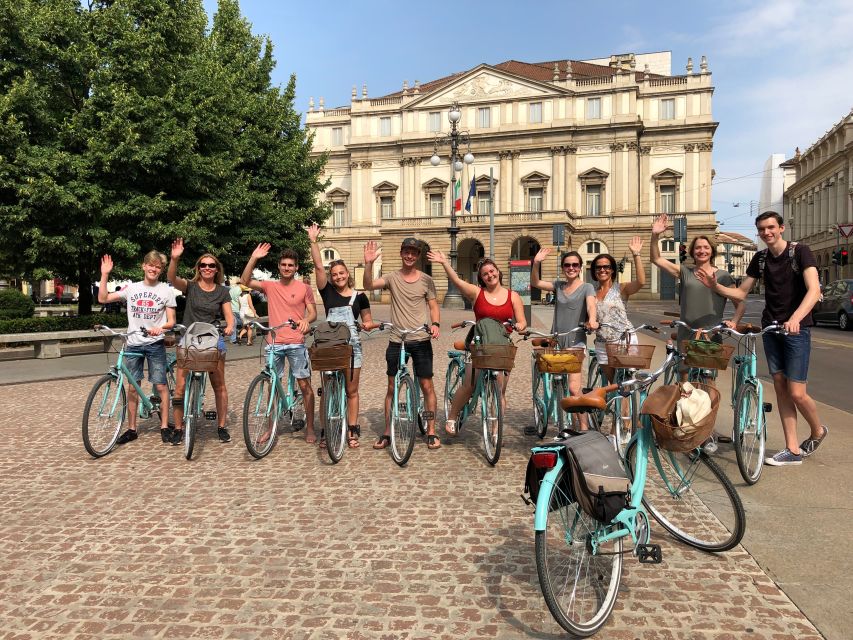
At $44.41 per person, this is a fair price for a guided city introduction. You are paying for three and a half hours of guiding, the bike, helmet, insurance, and the ability to cover districts that would take much longer on foot.
The best value comes if you use the tour as an orientation ride. Take note of the neighborhoods you like, listen for restaurant suggestions, and mark places you want to revisit. Several participants have used the ride early in a weeklong stay, then returned to Brera, Ticinese, or other areas later.
The price does not cover admission to the Duomo, Pinacoteca di Brera, Palazzo Reale, or La Scala. It also does not promise a meal or coffee stop. If you want a detailed interior visit to one landmark, book that separately. This bike tour is about connecting Milan’s districts and getting context, not replacing museum tours.
Free cancellation is available up to 24 hours before the start for a full refund, and you can reserve now and pay later. That flexibility is useful when your Milan schedule depends on trains, weather, or a changing itinerary.
Who should book this ride
I would choose this tour for a first visit to Milan, especially if you have only a few days. It is also a good fit if you like history but do not want to spend every hour indoors, or if long walking days leave your legs tired.
It suits couples, friends, and families with children above the 135-centimeter height limit, provided everyone can ride confidently. The relaxed pace makes it approachable, but it is not suitable for anyone who cannot ride a bike.
You may want a different activity if you dislike cycling in city streets, need a fully private experience, or want long interior visits at the Duomo and museums. This is an outdoor overview with many short stops, not a slow architectural seminar.
My verdict: a strong first-day choice
Book it if you want to understand Milan quickly and see more than the area around the cathedral. The blend of famous sights, Brera streets, modern Porta Nuova, the castle, park, and Roman remains gives you a useful sense of the city’s many eras.
I would schedule it near the start of your stay. Guides such as Paolo, Sandra, and Martha add the local context that makes the stops stick, and their food and neighborhood suggestions can shape the rest of your visit. Choose another tour only if you cannot ride comfortably or prefer to stay indoors. For most active visitors, this is an easygoing and well-priced way to get your bearings.
FAQ
How long is the Milan bike tour?
The tour lasts 3.5 hours. Starting times vary, so check availability when booking.
What languages are available?
The live guide service is available in English and Dutch.
Where does the tour start?
The meeting point is near Metro Station Vetra on the M4 line. It is about a three-minute walk from the station.
How do I reach the meeting point from Duomo station?
From Duomo Metro Station on lines M1 and M3, the meeting point is about a 14-minute walk away. You can also take tram number 3.
Does the tour finish at the starting point?
Yes. The activity ends back at the original meeting point.
Is the route suitable for beginners?
The route is mostly flat, relaxed, and easy to pedal. You must still be able to ride a bicycle, and the activity is not suitable for anyone who cannot ride.
Is there a minimum height?
Yes. Participants must be at least 135 centimeters, or about 4 feet 4 inches tall.
What equipment is included?
A bike, helmet, official guide, third-party liability insurance, and a waterproof jacket in case of rain are included.
What happens if it rains?
The tour can proceed during a gentle sprinkle. If the weather becomes too heavy, the operator will contact you about rescheduling or receiving a full refund.
Just added around Milan
- Milan: Food Tour with Pasta, Pizza, Cannoli, and Tiramisu!★ 4.3 · 3 reviews
- Varenna Walking Tour and Cooking Class★ 5.0 · 3 reviews
- 1-Day Personal Fashion Styling Course for Women★ 5.0 · 3 reviews
- Walking Tour in Lake Como with Lierna Cooking Class★ 5.0 · 3 reviews
- Milan: 4-Hour Art and History Private Walking Tour★ 5.0 · 3 reviews
- Private Wine Tasting in Bellagio with Chef Luigi Gandola★ 5.0 · 3 reviews
- Mantova: Private Walking Tour★ 4.3 · 3 reviews
- Wine and Food tasting PRIVATE Guided Tour★ 5.0 · 3 reviews
Cycling Tours, compared.
Milan’s Hidden Gems: Unique Bike Tour (ENG, NL)
Read our review →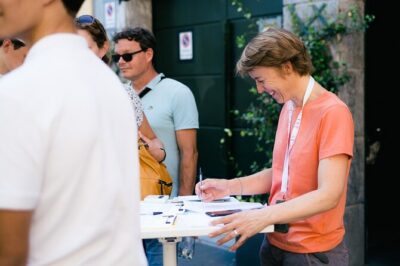
eBike City Tour Guided by an iPad and a Tour Leader
Read our review →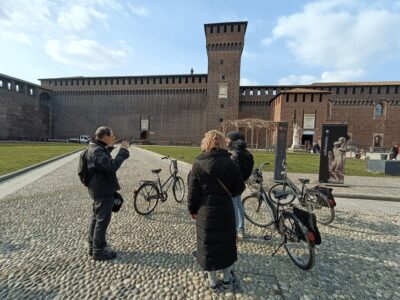
Group Bike Tour: Onno & Ghisallino (E-bikes and Road bikes)
Read our review →Browse the lists this tour appears in