Reviewed · TOURS
Milan | In the Crypt of time, holographic tour
Milan’s Crypt of San Sepolcro becomes a small time machine in this 20-minute mixed-reality experience. You wear special glasses called chronovisors and watch scenes from Milan’s past appear through holograms around you. It is a quick, unusual way to add context to the city center without committing to a long museum tour.
I like two things here: the short running time, which fits neatly into a busy day, and the blend of technology with a real historic site. You also get several audio languages, including English, French, Spanish, and Italian. The main drawback is that the visit may be hard to find at first, and the crypt is not suitable for people with mobility impairments.
In This Review
- Key Points to Know Before You Go
- Starting Below Milan at the Crypt of San Sepolcro
- How the Chronovisor Changes the Visit
- A 20-Minute Tour That Fits a Full Milan Day
- Why the Crypt Setting Adds Value
- Audio Options and the Language Choice
- The Practical Details That Can Make or Break It
- Is $17 a Fair Price?
- Who Will Enjoy the Chronovisor Most?
- Should You Book This Milan Experience?
- FAQ
- Where does the holographic tour begin?
- How long does the experience last?
- What is a chronovisor?
- Which languages are available?
- Is the activity suitable for children?
- Can I bring a stroller or large bag?
- Can I cancel the booking?
Key Points to Know Before You Go
- The crypt is the starting point: The visit takes place inside the Crypt of San Sepolcro, reached from the courtyard of the Pinacoteca Ambrosiana.
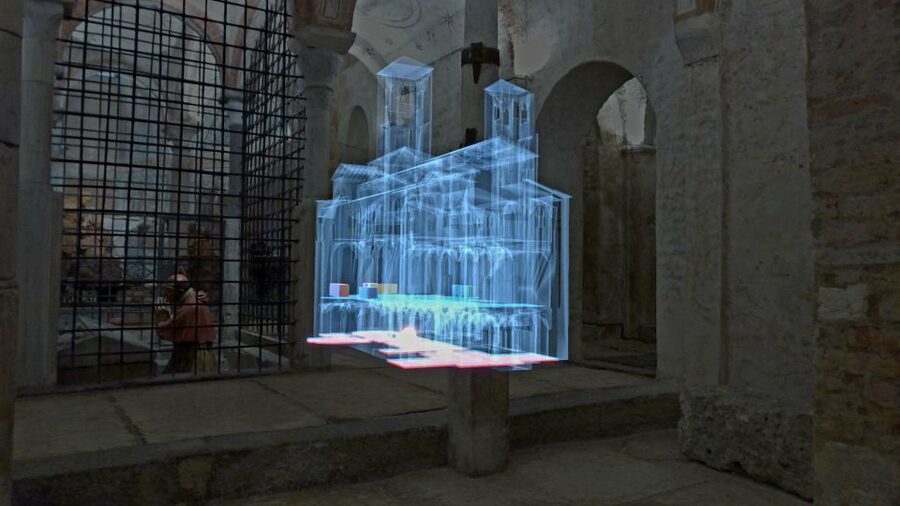
- Chronovisors show Milan’s past: You use technological glasses to see holographic scenes placed within the surrounding space.
- The whole experience lasts 20 minutes: It is easy to fit before or after another central Milan sight.
- Audio comes in four languages: Choose Italian, English, French, or Spanish.
- Children must be at least 9 years old: Baby strollers and large bags are not allowed.
- Arrive 10 minutes early: The meeting point can be confusing, so allow time to get oriented.
Starting Below Milan at the Crypt of San Sepolcro
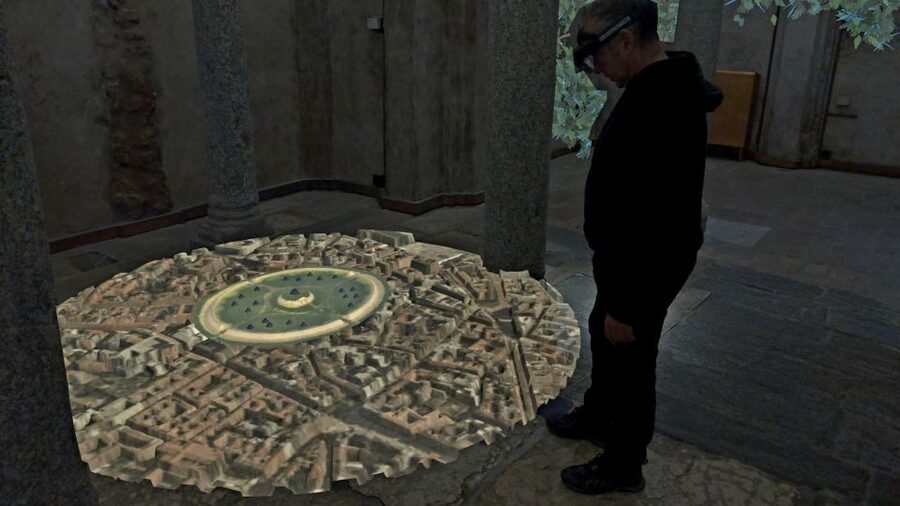
The experience begins at the Crypt of San Sepolcro, described as the true center of Milan. That phrase gives the visit its basic idea: before looking at the wider city, you begin beneath it, in a place tied to Milan’s older story.
The entrance is inside the exit courtyard of the Pinacoteca Ambrosiana. Look for Cardinal Federico Borromeo’s statue. The staircase to the crypt is on the right side of the statue. This is the detail you need most on arrival, since the entrance is not presented as a large, obvious street-front doorway.
I would arrive at least 10 minutes before the booked time. One low-rated experience reports confusion over the location, with staff pointing the visitor toward different museums. That problem may not occur on your visit, but the setting gives you a good reason to check your directions before arriving. If you are already near the Pinacoteca Ambrosiana, finding the statue and the courtyard should help you get your bearings.
The crypt itself matters because the technology works best when it is tied to a real place. You are not simply watching a film in a standard theater. You are standing in an old underground setting while the chronovisor adds images from earlier periods to the space around you.
Other Milan trips people book alongside this one:
- Milan: Cathedral and Duomo’s Terraces Entrance Ticket
★ 4.6 · 61,054 reviews - From Milan: Como & Bellagio with Private Lake Como Cruise
★ 4.6 · 9,788 reviews - Milan: City Sightseeing Hop-On Hop-Off Bus with Audio Guide
★ 4.0 · 6,256 reviews
How the Chronovisor Changes the Visit
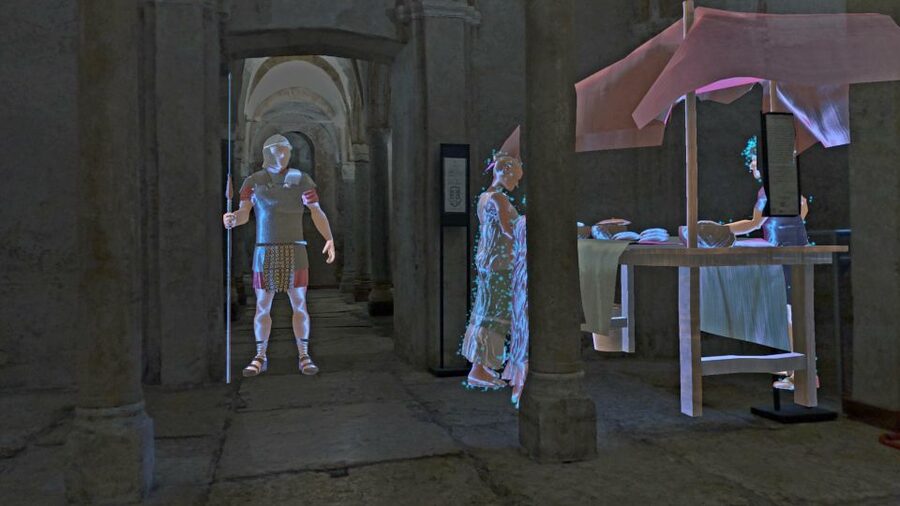
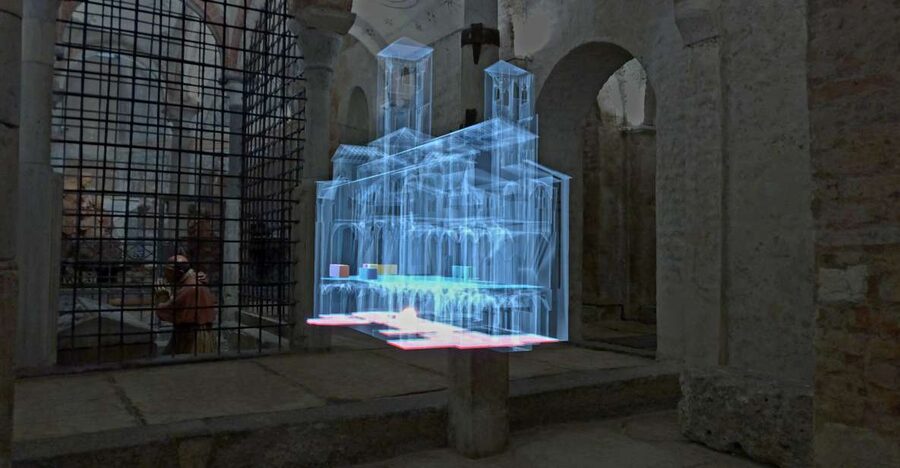
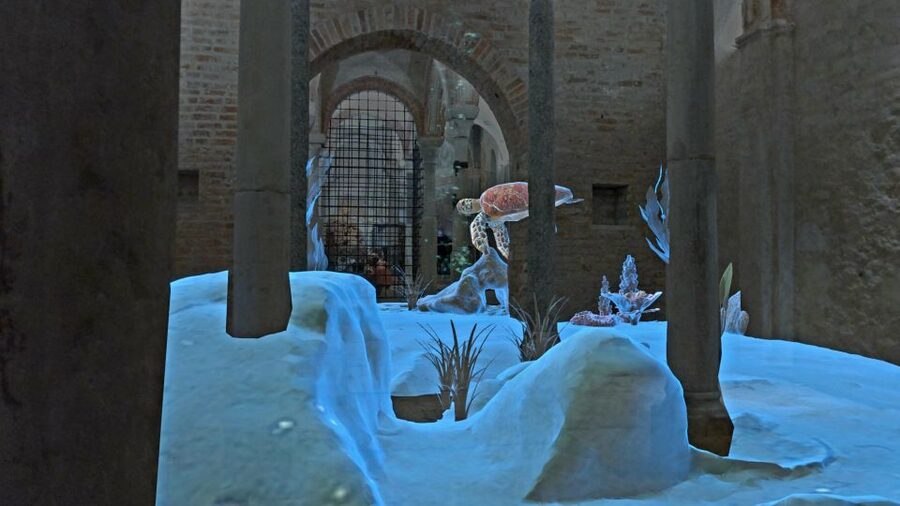
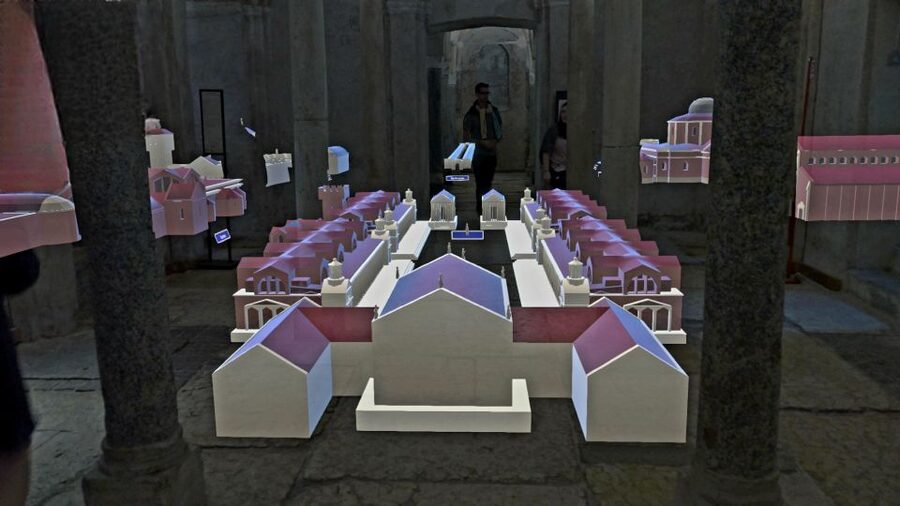
The chronovisor is the centerpiece. These technological glasses let you look toward the past through holograms projected into the surrounding environment. The effect creates a hybrid space, part historic crypt and part digital reconstruction.
The exact scenes and sequence are not specified in the available information, so I would not book this expecting a full documentary or a long guided lecture. Think of it as a concentrated visual history experience. The storytelling and the guided-tour format work together, with the digital images supplying a sense of time and place.
That distinction matters. The experience is designed to make Milan’s past visible rather than provide a complete survey of every period. You get an introduction to the city from one meaningful location, then a short trip through different ages. If you enjoy technology, visual storytelling, or new approaches to museums, this format should feel more engaging than reading a series of information panels.
At the same time, mixed reality is not for everyone. Some people prefer a guide speaking directly to the group, with time to ask questions. Here, the chronovisor and audio content carry much of the experience. The format is compact and carefully focused, but it may feel too brief if you want detailed historical discussion.
A 20-Minute Tour That Fits a Full Milan Day
At just 20 minutes, this is one of the easiest cultural activities to add to a Milan itinerary. You could place it before or after time at the Pinacoteca Ambrosiana, since the meeting point is in its exit courtyard. The information provided does not include a longer route through the museum, so plan on the crypt and the mixed-reality presentation as the full activity.
The short length is a real advantage. Milan has plenty of major sights, and you may not want another two-hour visit in the middle of your day. This experience gives you a quick historical pause without taking over your schedule.
It also works well for families with older children and teenagers. The activity is not suitable for children under 9, but the technological glasses and holographic presentation give younger school-age visitors a clear reason to pay attention. A five-star assessment describes it as well planned, fun for teenagers, and not time-consuming. That is probably the best way to think about its family appeal: brief, visual, and different from a standard museum stop.
The short format has a tradeoff. You will not have much time for lingering, detailed questions, or a slow look at the crypt. If you want a substantial history lesson, pair this with a longer museum or guided walk rather than treating it as your only introduction to Milan’s past.
Why the Crypt Setting Adds Value
The crypt gives the digital material a physical anchor. Milan’s history can feel spread across busy streets, grand churches, galleries, and modern shops. Here, you begin in one contained location and use it as a reference point for the story.
That helps the experience avoid feeling like a generic virtual-reality attraction. The holograms are projected into the surrounding environment, so the technology is connected to the architecture you are actually visiting. The past appears in relation to the crypt rather than in a separate headset-only world.
The idea is also notable because this is presented as one of the first cultural experiences to apply mixed reality in this way. That does not mean you should expect a large-scale production. The value is in the experiment: a historic site, guided storytelling, and digital overlays working together in a short format.
I would choose this for curiosity rather than completeness. You are paying for a fresh way to see a real place, not for hours of expert instruction. If you like trying new museum technology, the approach may be worth more to you than a conventional audio tour. If your priority is architectural detail or a long explanation of Milanese history, the crypt alone may not satisfy you.
A different sort of day out, same corner of Lombardy:
- Milan Cathedral: Duomo Terraces Ticket (No Church Access)
★ 4.6 · 6,111 reviews - Milan: Milan Cathedral Direct Entrance – Terrace Excluded
★ 4.5 · 5,782 reviews - Milan: Guided Walking Tour & Last Supper Visit with Ticket
★ 4.7 · 5,409 reviews - Milan: Fast-Track Milan Cathedral and Terraces Guided Tour
★ 4.7 · 5,240 reviews
Audio Options and the Language Choice
An audio guide is included, with Italian, English, French, and Spanish available. That makes the experience practical for international visitors and removes the need to depend on a live guide speaking your language.
The audio format also lets the holographic scenes remain central. You can focus on what appears around you rather than trying to read a long printed explanation. Still, the available information does not specify whether every language is offered through separate devices or selected another way, so confirm your preferred language when you arrive if it matters to you.
No guide names are provided, and this is not promoted around a particular historian or named presenter. The attraction is the location, the narration, and the chronovisor system itself. That is useful to know if you are choosing between this and a traditional walking tour led by a local guide.
The Practical Details That Can Make or Break It
The meeting point deserves special attention. Enter the exit courtyard of the Pinacoteca Ambrosiana and locate the statue of Cardinal Federico Borromeo. The staircase on the right leads to the entrance. Arriving early is not just a polite suggestion here; it gives you time to find the correct courtyard and staircase without rushing.
Large bags and luggage are not allowed. Baby strollers are also prohibited, so families with small children should plan around that rule. The activity is not suitable for people with mobility impairments, and the staircase entrance may be a concern for anyone who needs step-free access.
The experience ends back at the meeting point. That makes it simple to continue with the Pinacoteca Ambrosiana area afterward, although the crypt visit itself should not be assumed to include general admission to other attractions.
Starting times vary, so check availability before planning the rest of your day. The 20-minute duration is fixed, but your total time should include early arrival and the effort of finding the entrance.
Is $17 a Fair Price?
At $17 per person, this is priced as a small specialty attraction rather than a full museum visit. The value depends on what you want from it.
I think the price is reasonable if you are interested in mixed reality, have already planned to visit central Milan, and want a short activity with a clear theme. The cost covers the chronovisor experience and access to the Crypt of San Sepolcro, with audio in four languages. For a 20-minute stop, it is not the cheapest cultural activity in Milan, but the technology gives it something different from a basic crypt visit.
The value is less convincing if you are measuring time alone. Twenty minutes passes quickly, and you will not receive a long historical tour or an extended look at the wider Pinacoteca Ambrosiana. You should see it as a focused add-on, not a replacement for a major museum or city tour.
Flexible booking improves the deal for an uncertain schedule. You can reserve now and pay later, and cancellation is free up to 24 hours before the booked time for a full refund. Those policies are useful in Milan, where weather, museum reservations, and train schedules can shift your plans.
The overall rating is 4.6 from 77 reviews. That suggests the format works well for most people who choose it, while the location issue is the main practical warning worth keeping in mind.
Who Will Enjoy the Chronovisor Most?
I would recommend this to you if you like:
- Short cultural activities that leave room for other Milan sights
- Technology used in museums and historic buildings
- Visual storytelling rather than a long lecture
- Family activities for children aged 9 and older
- Central Milan stops that do not require a full afternoon
- Audio content in English, French, Spanish, or Italian
You may want to skip it if you need step-free access, are carrying luggage, or want a detailed historical tour led by a specialist. It is also a weak choice for children under 9, since they are not permitted to take part.
Teenagers may be especially well matched to the format. The experience has enough history to feel like a cultural visit, but the glasses and holograms provide a visual hook. Adults who enjoy experimental museum design should also find the idea appealing.
Should You Book This Milan Experience?
Book it if you want to see Milan’s past through an unusual tool and can spare 20 minutes near the Pinacoteca Ambrosiana. The Crypt of San Sepolcro setting, chronovisor glasses, and four-language audio make it more distinctive than a standard short museum stop.
Do not book it as your main history lesson or as a substitute for a major Milan museum. The visit is brief, the entrance can be confusing, and mobility restrictions are important. Arrive early, locate Cardinal Borromeo’s statue, leave large bags behind, and treat the activity as a compact technology-and-history experience. At $17, it is a fair choice for the right audience, especially families with older children and visitors who enjoy seeing old places in new ways.
FAQ
Where does the holographic tour begin?
The entrance is inside the exit courtyard of the Pinacoteca Ambrosiana. Find the staircase on the right side of Cardinal Federico Borromeo’s statue.
How long does the experience last?
The activity lasts 20 minutes. Starting times vary, so check availability when booking.
What is a chronovisor?
A chronovisor is a pair of technological glasses used during the visit. They let you see holograms representing the past within the surrounding environment.
Which languages are available?
The included audio guide is available in Italian, English, French, and Spanish.
Is the activity suitable for children?
Children under 9 are not permitted to take part. The experience may suit older children and teenagers because it uses glasses and holographic scenes.
Can I bring a stroller or large bag?
No. Baby strollers, luggage, and large bags are not allowed.
Can I cancel the booking?
Yes. You can cancel up to 24 hours in advance for a full refund. You can also reserve now and pay later.
Just added around Milan
- Milan: Food Tour with Pasta, Pizza, Cannoli, and Tiramisu!★ 4.3 · 3 reviews
- Varenna Walking Tour and Cooking Class★ 5.0 · 3 reviews
- 1-Day Personal Fashion Styling Course for Women★ 5.0 · 3 reviews
- Milan: 4-Hour Art and History Private Walking Tour★ 5.0 · 3 reviews
- Private Wine Tasting in Bellagio with Chef Luigi Gandola★ 5.0 · 3 reviews
- Walking Tour in Lake Como with Lierna Cooking Class★ 5.0 · 3 reviews
- Mantova: Private Walking Tour★ 4.3 · 3 reviews
- Wine and Food tasting PRIVATE Guided Tour★ 5.0 · 3 reviews
Tours, compared.
Guided Walking Tour & Last Supper Visit with Ticket
Read our review →
Fast-Track Milan Cathedral and Terraces Guided Tour
Read our review →
Milan’s Must See: Half-Day Tour of Last Supper, Duomo & La Scala
Read our review →

Navigli District Canal Boat Tour with Aperitivo
Read our review →
Milan Duomo & The Last Supper Skip-the-Line Small Group Tour
Read our review →
Duomo Rooftop and Cathedral Guided Tour with Tickets
Read our review →