Reviewed · TICKETS
Milan: Pinacoteca Ambrosiana and San Sepolcro Crypt Ticket
The Pinacoteca Ambrosiana packs an astonishing number of famous names into a manageable museum visit. You can see Leonardo da Vinci, Raphael, Caravaggio, Botticelli, Brueghel, and other Italian and Flemish masters without the scale or crowds of Milan’s biggest museums.
I like the freedom to set your own pace, and I like the clever pairing with the San Sepolcro Crypt. One stop gives you art and books, the other takes you below modern Milan to the stones of the Roman city. The main drawback is that the crypt is small and has architectural barriers, so this combined ticket is not suitable for wheelchair users or people with serious mobility limits.
In This Review
- Key points to know before you go
- Why the Ambrosiana deserves a place beside the Duomo
- The first rooms: old masters in a peaceful setting
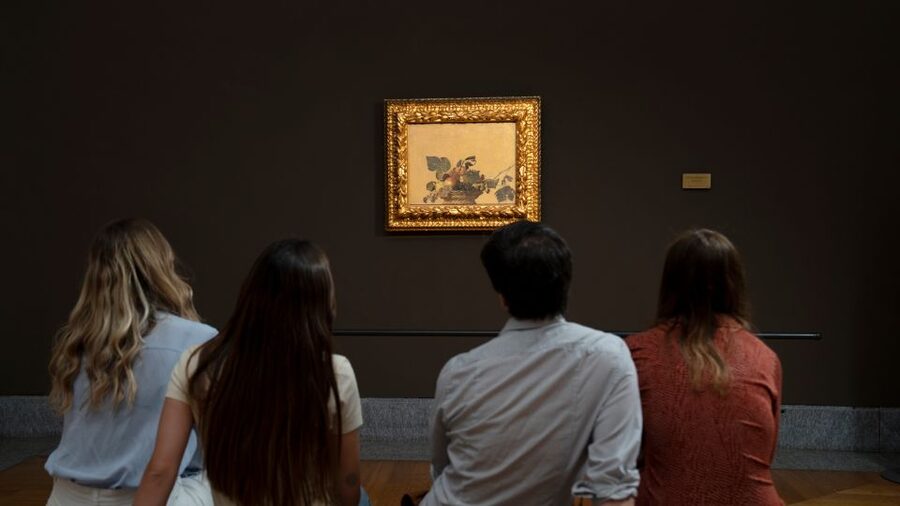
- Caravaggio’s Basket of Fruit
- Raphael’s large cartoon for the School of Athens
- Leonardo’s Musician and the Codex Atlanticus
- The building is part of the visit
- From the gallery to the San Sepolcro Crypt
- How the two stops work together
- Is $25 a fair price?
- Who should choose this experience?
- Practical advice for a better visit
- Should you book the Ambrosiana and crypt ticket?
- FAQ
- How long does the complete visit take?
- Where does the visit begin?
- Where does the visit end?
- Is the audio guide included?
- What is the crypt’s closing time?
- Can wheelchair users take the combined visit?
- Can I bring a backpack or stroller?
Key points to know before you go
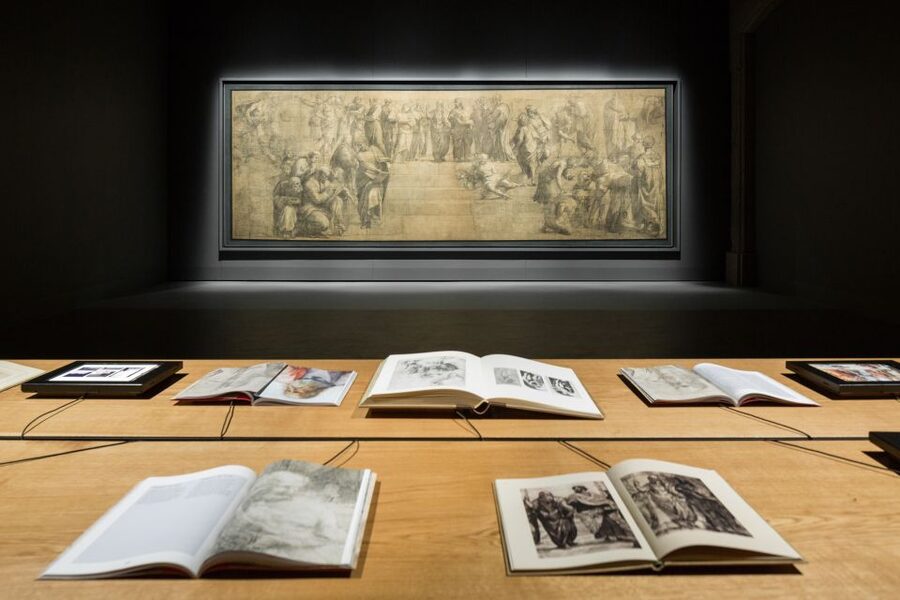
- Raphael’s School of Athens cartoon: See the large preparatory drawing connected to one of the Renaissance’s best-known frescoes.
- Leonardo’s Codex Atlanticus: Enter the 17th-century reading room and view original Leonardo drawings on display.
- Caravaggio’s Basket of Fruit: This famous still life is one of the museum’s essential stops.
- Ancient Milan underfoot: The San Sepolcro Crypt uses stones from Mediolanum, the Roman city that became Milan.
- A self-guided visit: Allow about 1.5 hours for the gallery and another 30 to 40 minutes for the crypt.
- A $25 combination ticket: The price is sensible if you want both attractions, especially since they are close to the Duomo.
Why the Ambrosiana deserves a place beside the Duomo
Milan’s Duomo gets the grand entrance and the long queues. The Ambrosiana offers something different: a quieter, more contained look at major works from several centuries of European art.
This is not a giant museum where you need half a day just to find the famous rooms. The Pinacoteca is compact enough to manage in about 90 minutes, yet it has enough important material to keep you longer if you read labels and study details.
I find that balance useful in Milan. You can visit the Ambrosiana in the morning, return to the city center for lunch, or fit it between the Duomo and another appointment. Several rooms have seating, which lets you stop and look instead of marching past every painting.
The museum also gives you a sense of Cardinal Federico Borromeo’s interests. Art, religion, books, science, and learning sit together here. That mix helps explain why the visit feels like more than a standard picture gallery.
A few more Milan trips worth weighing up
- Milan: Cathedral and Duomo’s Terraces Entrance Ticket
★ 4.6 · 61,054 reviews - Milan Cathedral: Duomo Terraces Ticket (No Church Access)
★ 4.6 · 6,111 reviews - Milan: Guided Walking Tour & Last Supper Visit with Ticket
★ 4.7 · 5,409 reviews
The first rooms: old masters in a peaceful setting
Begin at Piazza Pio XI 2. The visit starts inside the Pinacoteca Ambrosiana, and the route takes you through rooms filled with paintings, drawings, sculpture, and historic objects.
The collection includes Italian works from the Renaissance and Baroque periods, along with Flemish painting. You may see pieces by Botticelli, Luini, Tiepolo, Mengs, Brueghel, Caravaggio, Raphael, and Leonardo.
The art is often religious in subject. That is normal for the period, but you do not need to be a specialist to enjoy the faces, colors, gestures, and technical skill. Look closely at the still lifes and portraits. The collection rewards attention to small things: a fold of cloth, a hand, a glint of fruit, or an expression that shifts as you move around the room.
The gallery is usually a calm place to view the pictures. That matters in Milan, where some major sights can feel crowded and hurried. You can take your time in front of a painting without having to compete for a narrow viewing spot.
Lighting is not perfect in every room. Some art can be harder to see than expected because of reflections or uneven illumination. If a painting does not make an immediate impression, move a little and give your eyes time to adjust.
Caravaggio’s Basket of Fruit
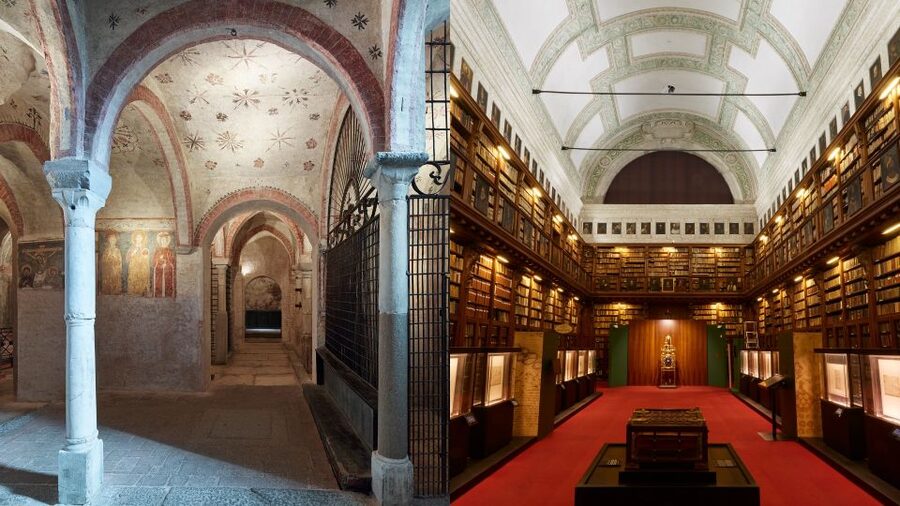
Caravaggio’s Basket of Fruit is one of the visit’s main rewards. At first glance, it looks like a simple still life. The longer you look, the more it becomes a study of weight, texture, ripeness, decay, and light.
The fruit is not polished into fantasy. Leaves curl, skin marks show, and some produce looks close to spoiling. That ordinary imperfection gives the painting its force. Caravaggio turns a basket into a quiet meditation on the physical world.
If you have seen reproductions, the original still deserves your attention. The surface, scale, and handling of paint are difficult to understand fully on a screen. This is a good place to slow down and look for the details that photographs flatten.
The museum contains many works, but this is one of the paintings I would place near the top of your must-see list. You will also want time for Leonardo and Raphael, so do not spend your entire first hour here.
Raphael’s large cartoon for the School of Athens
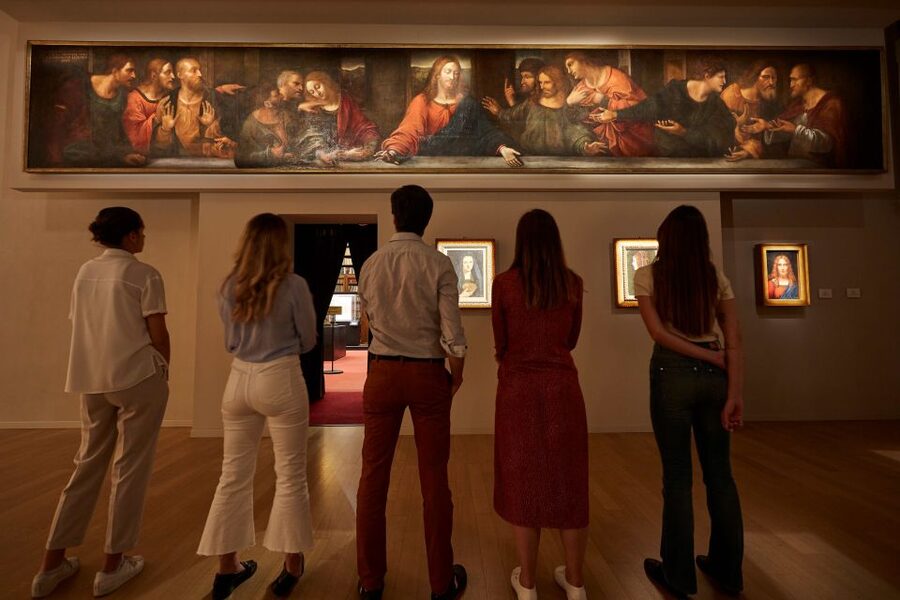
Raphael’s Cartoon for the School of Athens is another major reason to visit. In art language, a cartoon is a full-scale preparatory drawing, not a comic strip. Raphael used this kind of design to plan a finished work.
The drawing is linked to The School of Athens, Raphael’s famous fresco in the Vatican. Here, you can study the composition on a large scale and see how figures, architecture, and gestures were arranged before the final painting.
It is especially impressive because the drawing reveals the artist’s planning. You can follow the structure of the scene and notice how the figures are built. The work feels less like a rough draft and more like a complete artistic statement.
A video presentation about the cartoon may be available as part of the museum experience, and it can help explain the connection to the finished fresco. I would give this room more time than you think you need. It is easy to glance at the drawing, recognize the subject, and move on. That would be a mistake.
A different sort of day out, same corner of Lombardy:
- From Milan: Como & Bellagio with Private Lake Como Cruise
★ 4.6 · 9,788 reviews - Milan: City Sightseeing Hop-On Hop-Off Bus with Audio Guide
★ 4.0 · 6,256 reviews - Milan: Milan Cathedral Direct Entrance – Terrace Excluded
★ 4.5 · 5,782 reviews - Milan: Fast-Track Milan Cathedral and Terraces Guided Tour
★ 4.7 · 5,240 reviews
Leonardo’s Musician and the Codex Atlanticus
Leonardo appears in more than one form here. The portrait of The Musician gives you a chance to see his approach to the human face, while the Codex Atlanticus display presents his working mind through drawings and notes.
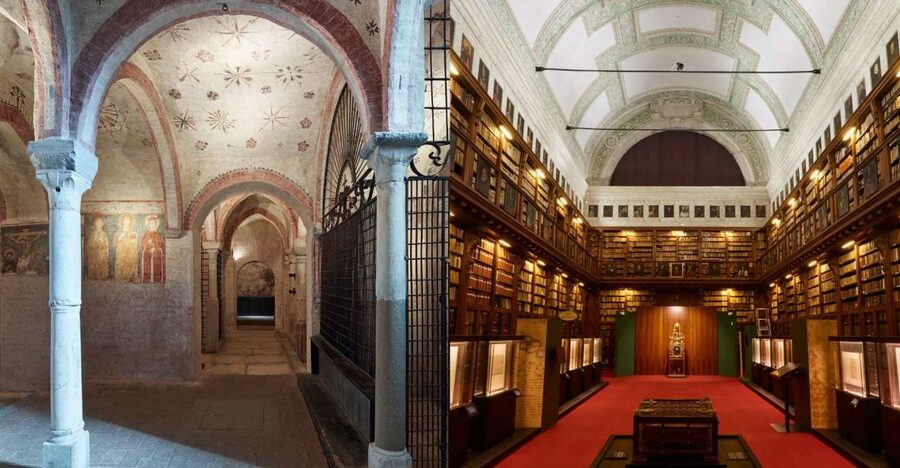
The Codex Atlanticus material is shown in the library’s 17th-century reading room. The room itself is part of the experience. Its historic setting makes the drawings feel connected to the long practice of collecting, studying, and preserving ideas.
The Leonardo material is not simply a collection of finished masterpieces. You see sketches and studies that reveal how he observed the world and worked through problems. That is valuable for anyone interested in the link between art and science.
Some displays change as original works are rotated for conservation. The selection you see can therefore depend on the current exhibition arrangement. You should expect original drawings connected with the Codex Atlanticus, but not assume that every famous Leonardo sheet will be on view.
An app can be downloaded to your device for information you can continue listening to after the visit. An audio guide may also be offered for an extra charge, reported at about 4 euros in recent visits. Since the exact arrangement can change, check what is included before paying for an add-on.
The building is part of the visit
Do not treat the museum as a series of white walls built only to hold paintings. The Ambrosiana’s interiors add character, and the old library reading room is one of the most memorable spaces.
One visitor particularly praised the staircase, while others enjoyed the leaded-light displays and the building’s sense of age. These details help break up the painting rooms and give you a better feel for the institution as a historic center of art and study.
The museum is also a good choice on a hot day or during scattered rain. You can stay indoors, move at your own speed, and still have a substantial cultural stop close to the center of Milan.
You will not receive the rhythm or interpretation of a live guide with this ticket. That is a disadvantage if you prefer someone to explain each room and connect the works for you. It is an advantage if you dislike being moved along in a group.
From the gallery to the San Sepolcro Crypt
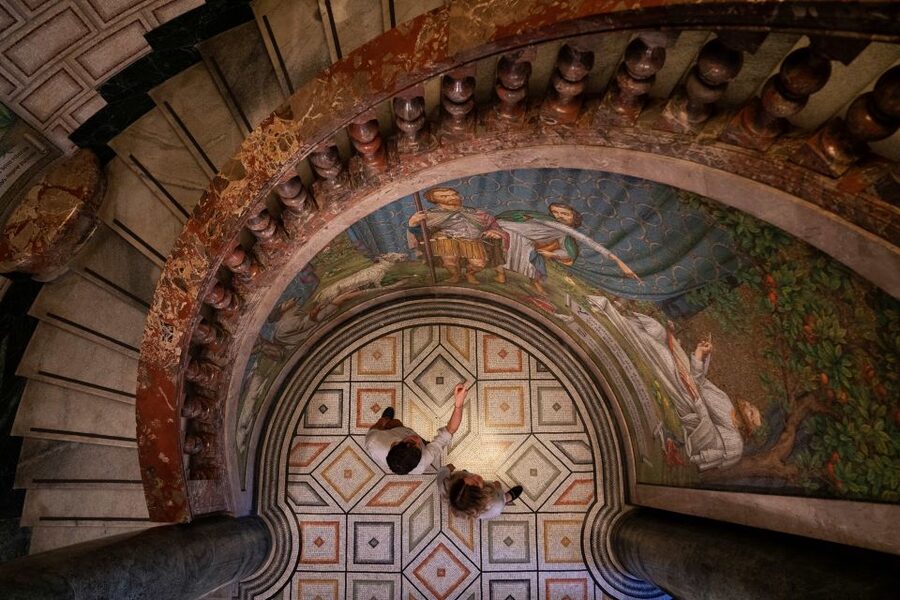
You exit the Pinacoteca on Piazza San Sepolcro, where the crypt entrance is located. The arrangement is simple, but pay attention to the clock. The last admission to the crypt is at 5:30 PM, and it closes at 6:00 PM.
The gallery normally takes about 1.5 hours. The crypt takes another 30 to 40 minutes, although a quick look can be shorter when it is quiet. I would allow at least two hours for the complete visit, with extra time if you plan to use the app or study the paintings carefully.
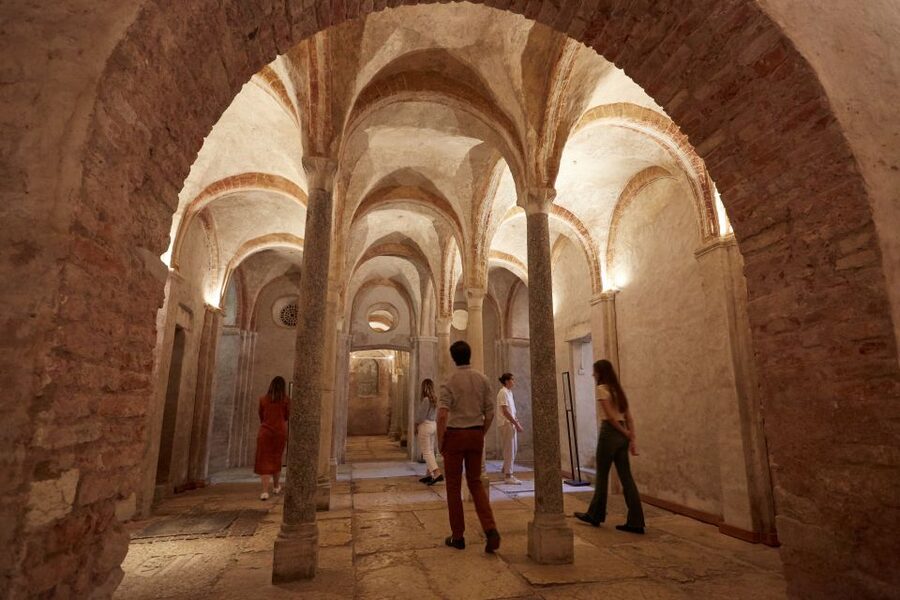
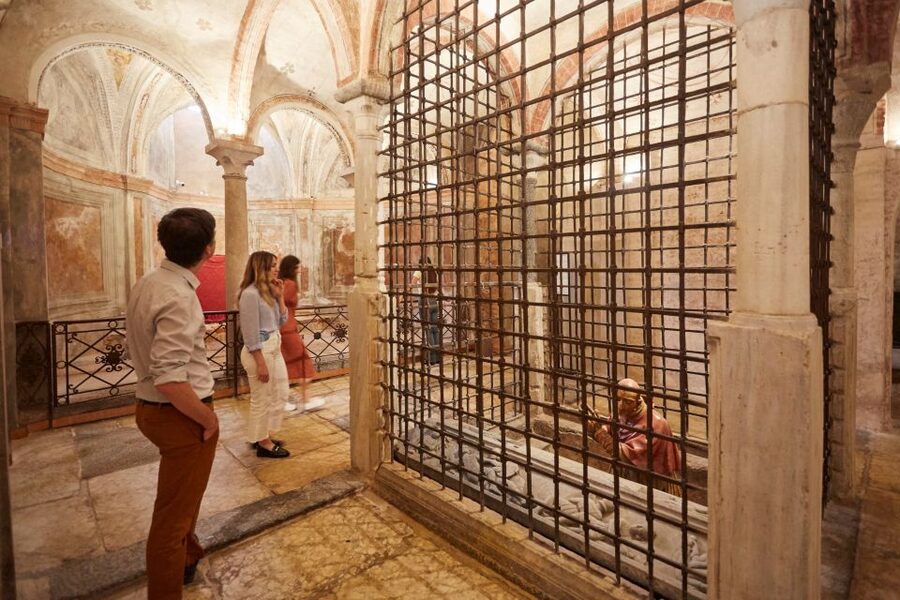
The crypt is a medieval underground church. Its floor incorporates ancient stones from Mediolanum, the Roman city beneath modern Milan. That physical connection is the point of the stop. You are not just looking at an old basement. You are standing in a place shaped by several layers of Milan’s past.
Look up at the ceiling when you enter. It is easy to focus on the floor and walls and miss the overhead details. The room is modest in size, and some people may find it less visually dramatic than expected. Its value comes from the setting and the history beneath the city, not from a long list of objects.
An optional virtual reality experience may be available at the crypt for an additional payment. It can supply useful context about ancient Milan, especially if the bare room feels difficult to read. Without some explanation, the crypt may seem plain. With historical background, the stones and layout become much easier to appreciate.
How the two stops work together
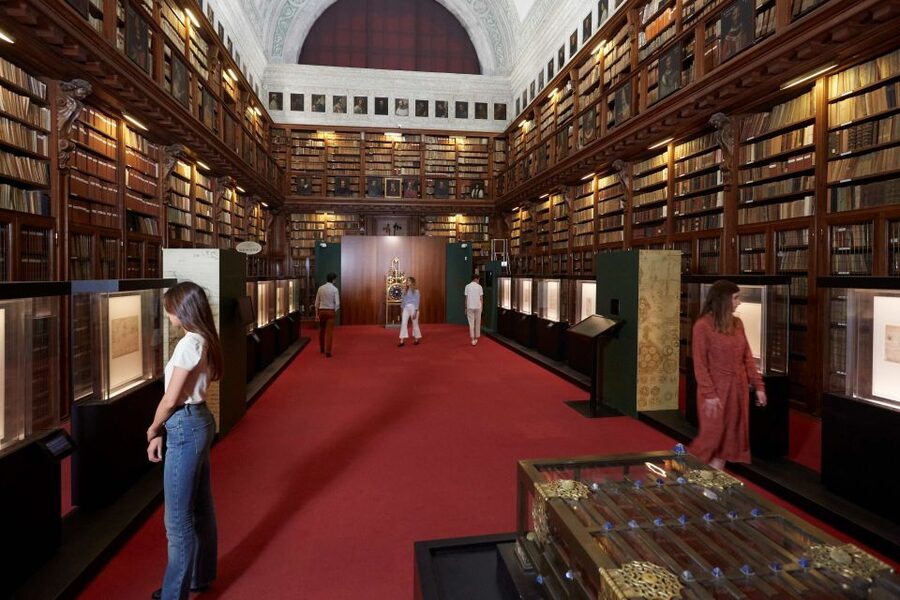
The combined ticket makes sense because the two attractions are next to each other and offer different kinds of experience.
At the Ambrosiana, you look at works made by individual artists. You see invention, composition, color, and technique. At San Sepolcro, the focus shifts to the city itself, its earlier foundations, and the religious building built below street level.
That change of scale is what I like most. The museum asks you to study a face or a basket of fruit. The crypt asks you to think about the ground beneath Milan. Together, they make a stronger visit than either stop would provide on its own.
The route also avoids unnecessary transport. You begin at Piazza Pio XI 2 and finish in Piazza San Sepolcro. The Duomo is only a short walk away, making this an easy addition to a central Milan day.
Is $25 a fair price?
At $25 per person, the ticket offers solid value if you plan to visit both the Pinacoteca and the crypt. The Ambrosiana alone could fill an hour and a half, while the crypt adds a distinct historical stop without requiring a separate journey.
The value is strongest for art lovers who want to see specific works by Leonardo, Raphael, and Caravaggio. It is also good for visitors with limited time who want a museum that feels substantial but not exhausting.
The price is less convincing if you only want a quick look at the crypt. The underground church is small, and you may spend just 10 to 15 minutes there when it is quiet. In that case, the Pinacoteca is doing most of the work for the ticket.
Keep in mind that the ticket covers admission, not necessarily every extra audio or virtual reality feature. An audio guide has been available for an additional fee, and the crypt’s VR option may also cost extra. Ask at the entrance if those tools matter to you.
The booking terms are traveler-friendly: you can cancel up to 24 hours before the visit for a full refund, and a reserve-now, pay-later option is available. The ticket is valid for one day, with starting times shown when you check availability.
Who should choose this experience?
I would recommend it to:
- Anyone who wants major Renaissance works without spending half a day in a huge museum.
- Visitors interested in Leonardo beyond the Last Supper.
- People who enjoy looking at original drawings, manuscripts, and historic interiors.
- Families with older children who can manage a self-guided visit.
- Anyone planning to visit the Duomo area and wanting a quieter stop nearby.
- Art lovers who prefer freedom over a fixed group schedule.
I would be more cautious if you use a wheelchair or have difficulty with stairs and uneven surfaces. Most Pinacoteca rooms are accessible, but the crypt has architectural barriers, so the combined experience is not fully accessible.
You should also choose another option if you need a live guide throughout. This is essentially self-guided, with a map, app, and possible paid audio support rather than a person leading you from room to room.
Practical advice for a better visit
Start early enough to leave room for the crypt. A late afternoon entry at the Pinacoteca can create a needless problem if you reach San Sepolcro after the 5:30 PM last admission.
Do not bring luggage, a large bag, backpack, or baby stroller. Those items are not allowed, and you will have a much easier visit with only small personal essentials.
Plan on 90 minutes for the gallery, but give yourself permission to stay longer. Some people move through in about an hour and a half, while others spend two or three hours with the art and library.
If you want more context, download the app before or during the visit. You can listen after leaving, which is useful if you prefer to look first and learn later. If you pay for an audio guide, do not expect a live tour pace. The strength of this format is that you control the order and timing.
At the crypt, look at the floor, walls, and ceiling. The stones underfoot are the central clue to the site. If you want a clearer picture of Milan’s earlier city, ask about the optional VR experience.
Should you book the Ambrosiana and crypt ticket?
Yes, if you value famous art, old books, and a short historical stop in a central location. The combination is especially strong for a first Milan visit because it gives you Leonardo, Raphael, Caravaggio, and ancient city remains in roughly two hours.
Book it with realistic expectations. The Pinacoteca is the main attraction, and the crypt is a compact add-on rather than a vast underground complex. If you want a guided lesson, this ticket may feel too independent. If you want to study great works quietly and then step into Milan’s older foundations, $25 is a sensible use of your time.
FAQ
How long does the complete visit take?
The Pinacoteca normally takes about 1.5 hours. The San Sepolcro Crypt takes about 30 to 40 minutes, so allow roughly two hours for both.
Where does the visit begin?
You begin at the Pinacoteca Ambrosiana at Piazza Pio XI 2 in Milan.
Where does the visit end?
You exit the Pinacoteca onto Piazza San Sepolcro, where the crypt entrance is located. The activity ends in Piazza San Sepolcro.
Is the audio guide included?
The ticket includes admission to both attractions. An app is available for your device, and an audio guide may be offered for an additional fee, reported at about 4 euros in recent visits.
What is the crypt’s closing time?
The last admission to the crypt is at 5:30 PM, and the crypt closes at 6:00 PM. Make sure you finish the Pinacoteca in time.
Can wheelchair users take the combined visit?
No. The crypt has architectural barriers, and the complete activity is not suitable for wheelchair users or people with mobility impairments. Most Pinacoteca rooms are wheelchair accessible, so a Pinacoteca-only visit may be more suitable.
Can I bring a backpack or stroller?
No. Baby strollers, luggage, large bags, and backpacks are not allowed.
Just added around Milan
- Varenna Walking Tour and Cooking Class★ 5.0 · 3 reviews
- 1-Day Personal Fashion Styling Course for Women★ 5.0 · 3 reviews
- Milan: Food Tour with Pasta, Pizza, Cannoli, and Tiramisu!★ 4.3 · 3 reviews
- Milan: 4-Hour Art and History Private Walking Tour★ 5.0 · 3 reviews
- Private Wine Tasting in Bellagio with Chef Luigi Gandola★ 5.0 · 3 reviews
- Walking Tour in Lake Como with Lierna Cooking Class★ 5.0 · 3 reviews
- Mantova: Private Walking Tour★ 4.3 · 3 reviews
- Wine and Food tasting PRIVATE Guided Tour★ 5.0 · 3 reviews
Tickets, compared.
Cathedral and Duomo’s Terraces Entrance Ticket
Read our review →
Guided Walking Tour & Last Supper Visit with Ticket
Read our review →
Leonardo3 The World of Leonardo Museum Entry Ticket
Read our review →
Duomo Rooftop and Cathedral Guided Tour with Tickets
Read our review →
Sforza Castle Entry Ticket with Digital Audio Guide
Read our review →