
Reviewed · LA SCALA OPERA HOUSE
Skip the line La Scala Theatre Guided Tour Experience
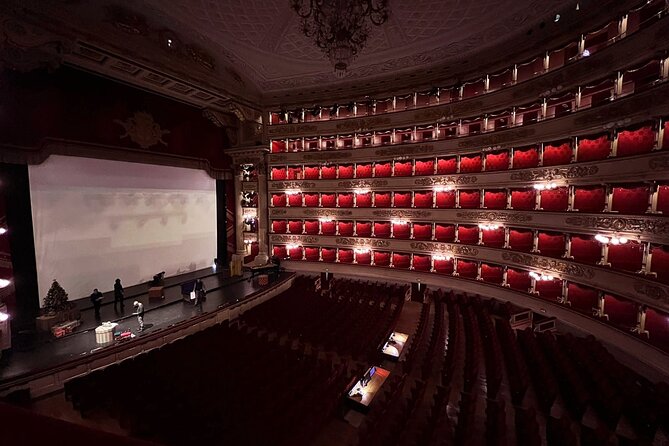
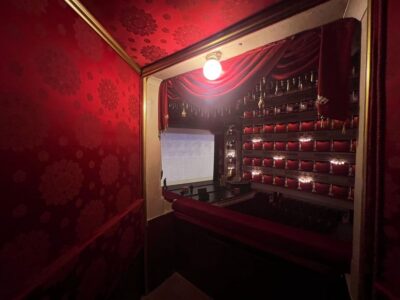
La Scala’s great moment comes when you step into one of its boxes and look across the famous auditorium. Depending on rehearsals or performances, you may see the stage lit for work, catch a slice of preparation, or view a quiet theater built for opera on a grand scale. The box view is the heart of the visit, not a backstage expedition.
I like two things here. First, the guide gives the theater a human story, connecting La Scala with major conductors and musicians from Toscanini to Barenboim. Second, the small-group setting can make the hour feel personal, with time for questions and photos. Guides including Giula, Emanuele, and Marta have been singled out for clear, lively presentations.
The main catch is that stage access is not guaranteed. Rehearsals may close the auditorium or limit what you can see, and the visit does not normally take you onto the stage, into dressing rooms, or backstage. One-hour tours also leave little room for a slow museum visit.
In This Review
- Key points to know before booking
- Your first look at Teatro alla Scala
- The box view is the tour’s main event
- What the one-hour route actually covers
- Why the guide matters so much
- Rehearsals can help or hurt
- Stairs, crowds, and the pace of the visit
- Is $46.99 a fair price?
- Who will enjoy this La Scala visit?
- Booking and cancellation details
- Should you book the Skip the Line La Scala Theatre Guided Tour?
- FAQ
- Where does the La Scala tour start and end?
- How long does the experience last?
- Is the tour offered in English?
- Is stage access guaranteed?
- What is included in the price?
- What is the cancellation policy?
Key points to know before booking
- Your best view is from a theater box: You look across the auditorium rather than walking onto the stage.
- The theater may be active: Rehearsals, technical work, or a dress rehearsal can add atmosphere, but they can also restrict access.
- The museum adds useful context: Portraits, objects, images, and musical memorabilia help explain La Scala’s role in opera.
- The guide makes the difference: Strong guides turn names and dates into a memorable story, while a rushed presentation can feel thin.
- The tour lasts about one hour: It works well as a focused cultural stop in central Milan.
- The $46.99 price buys structure and entry: It is fair if you want interpretation, but less attractive if you only want a quick look inside.
Your first look at Teatro alla Scala
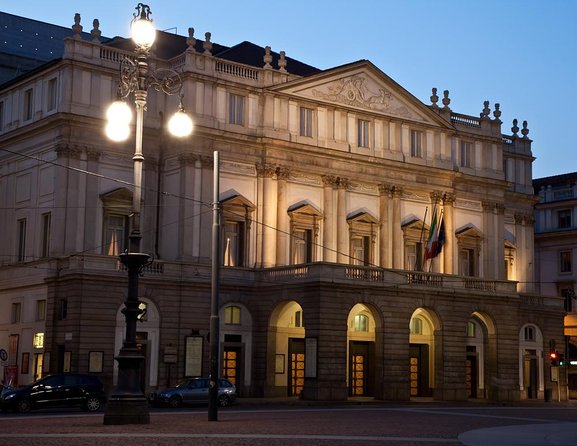
The meeting point is Largo Antonio Ghiringhelli, 1, in central Milan. The theater is close to public transportation, and the activity returns you to the same place at the end. You receive a mobile ticket, with entrance and reservation fees included.
The title promises skip-the-line access, but I would keep your expectations measured. A reservation can simplify entry, yet one account found no special priority access once inside. At a major theater, security, staff instructions, or an active rehearsal can still shape the pace.
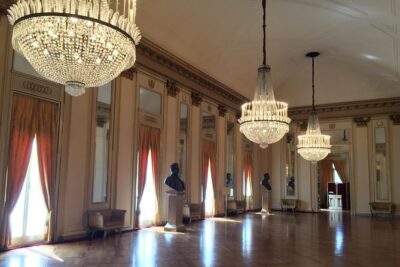
Once admitted, your guide leads the group through the public parts of Teatro alla Scala. The visit generally includes the theater auditorium and the museum, with commentary linking the building to famous conductors, singers, composers, and performances.
This is not a performance. It is a guided look at a working cultural institution. That distinction matters. You are there to see the setting and understand its role, not to hear a full opera or watch a normal stage production.
More La Scala visits and opera nights:
- Milan’s Must See: Half-Day Tour of Last Supper, Duomo & La Scala
★ 4.0 · 4,193 reviews - Milan: La Scala Theater & Museum Guided Experience
★ 4.1 · 2,931 reviews - Milan: La Scala Theater and Museum Tour with Entry Tickets
★ 4.7 · 1,722 reviews
The box view is the tour’s main event
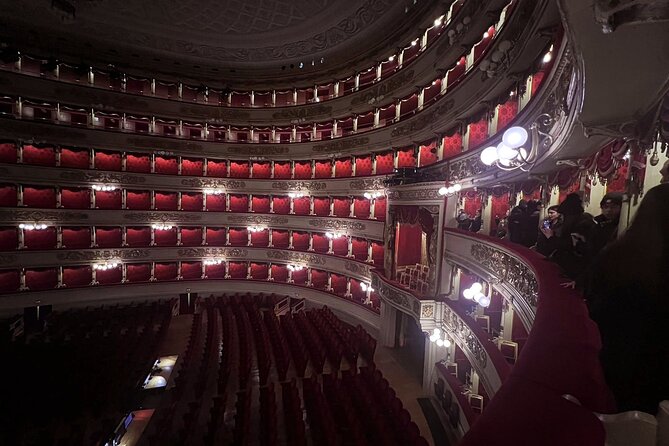
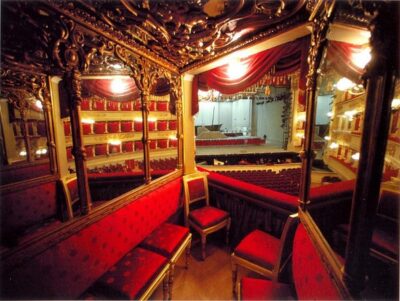
The most memorable part is usually the view into the auditorium from a theater box. From here, you can take in the curved rows, stage, lighting, and ornate interior in one sweep.
The box also gives you a sense of how La Scala was experienced by its historic audience. You are not simply looking at a pretty room. You are seeing the social arrangement of an opera house, where the auditorium, stage, and private boxes shaped the evening.
If the lights are on, the effect is especially strong. One visit included the unusual contrast of lights off and lights on while preparations were taking place. Another group hoped only to glimpse the theater during a dress rehearsal, then was allowed into a box during a break and saw the auditorium fully lit.
That kind of access depends on theater operations. You might see stage technicians at work, hear part of a rehearsal, or catch a few minutes of a dress rehearsal. You might also find the stage unavailable. The operator specifically warns that no refund is offered if the stage cannot be viewed, so do not book this expecting a guaranteed production-room experience.
What the one-hour route actually covers
The advertised itinerary gives roughly 45 minutes to La Scala itself, within an overall visit of about one hour. The exact order can change depending on what is happening in the building.
The guide may begin with the auditorium, then explain the theater’s past while you look from the boxes. Or the group may spend more time in the museum first, using its displays to set up the story of the theater.
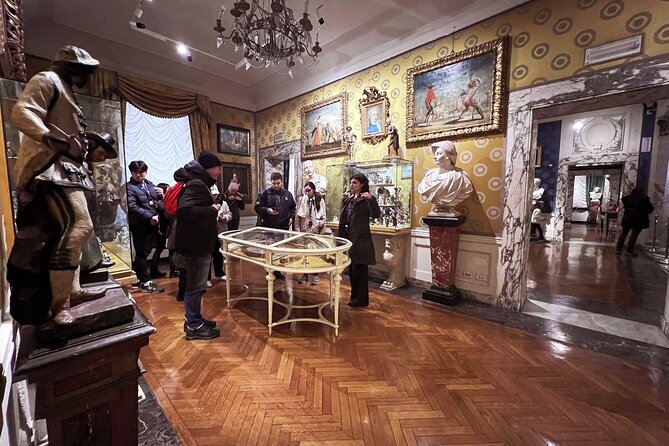
The museum includes historical images and artifacts connected with La Scala and its performers. You might see portraits, period material, and objects that make the theater’s musical past easier to picture. Some groups found the museum particularly rewarding, while others felt the tour spent too much time looking at images on a large screen rather than moving through more of the building.
That difference points to an important truth: this is an interpretation-heavy visit. The theater itself is compact from a sightseeing point of view, and the guide’s stories fill much of the hour. If you enjoy opera, ballet, theater design, or Milanese cultural history, that approach can work very well.
If you mainly want to wander through rooms, see props and costumes, or explore backstage areas, you may leave wanting more. The route does not promise dressing rooms, rehearsal rooms, the stage floor, or production storage. One especially disappointed visitor expected a behind-the-scenes tour and found the experience limited to public interiors and a view from a box.
Why the guide matters so much
This is the kind of tour where the guide can change the value of the ticket. La Scala has plenty to look at, but its meaning comes from the explanation.
The best presentations connect the theater to its performers and to the wider history of European music. A strong guide can explain why Toscanini matters, place Barenboim in the theater’s story, and show how the auditorium has functioned over time. Several guides have been praised for humor, warmth, clear speech, and an ability to answer questions.
Giula received especially warm attention for her background information and for handling a rehearsal break so the group could see the lit theater. Emanuele was also praised for making the visit work during a student dress rehearsal. Marta was credited with explaining the theater’s importance in a way that made the building easier to appreciate.
You should also know that the standard is not perfectly even. One group encountered a guide who seemed rushed and repeatedly referred to having somewhere else to be. Another found the commentary flat and received little help with questions. A late start was also reported.
That does not make the tour a bad choice, but it makes the booking more of a calculated bet than a guaranteed performance. If you get a guide who enjoys the subject, the hour can feel full. If the presentation is hurried, the theater may seem like a short look from a balcony with a lecture attached.
A few more Milan trips worth weighing up
- Milan Duomo & The Last Supper Skip-the-Line Small Group Tour
★ 4.5 · 2,761 reviews - Historic Milan Tour with Skip-the-Line Last Supper Ticket
★ 4.5 · 1,976 reviews - Milan Super Saver: Skip-the-Line Duomo and Rooftop Guided Tour
★ 4.5 · 1,501 reviews - Milan: Last Supper Skip-the-Line Entry Ticket & Guided Tour
★ 4.8 · 1,451 reviews
Rehearsals can help or hurt
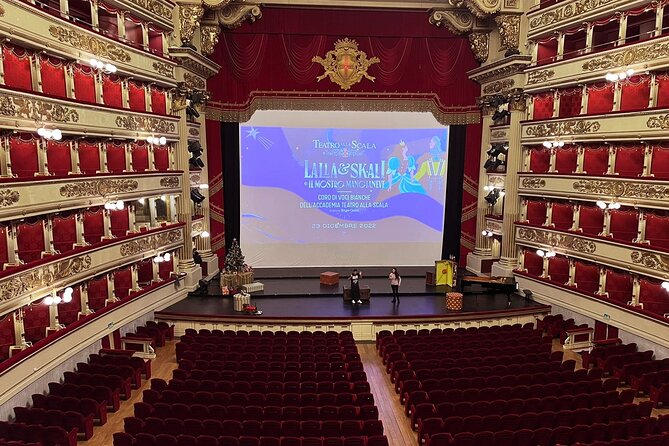
An active theater is part of La Scala’s appeal. Seeing technicians prepare the stage or hearing a rehearsal gives you a glimpse of the building as a working opera house rather than a frozen monument.
A dress rehearsal can be a real bonus. One visit included work on Turandot and a moment from Nessun Dorma. That is not something you can count on, but it shows why a rehearsal is not always a problem.
The trouble is that rehearsals can also close the auditorium or limit the group to a box. Staff may allow access during a break, but the decision belongs to the theater. You could see the room with the lights on, or you could be kept farther back while activity continues.
I would treat the rehearsal situation as a possible extra, not part of the guaranteed product. The dependable elements are the guide, the public areas, the museum, and the box view when permitted.
Stairs, crowds, and the pace of the visit
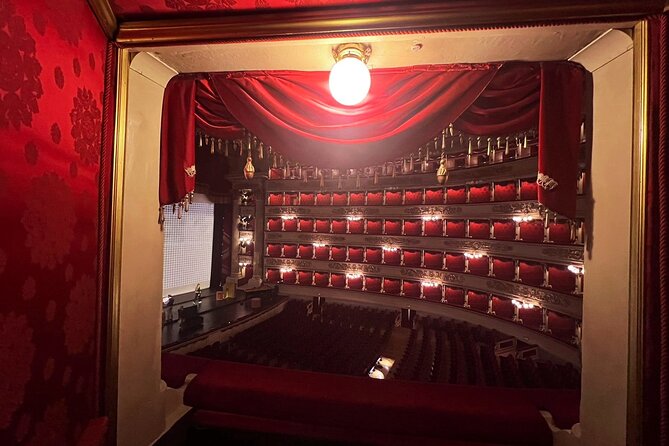
One practical warning concerns stairs. A visitor reported three steep flights and no available elevator. The supplied information does not promise elevator access, so anyone who has difficulty with stairs should check before booking.
The group can include up to 30 people, though some departures are smaller. A small group is useful inside the auditorium, where it is easier to hear and ask questions. A full group may feel tighter in the boxes and museum rooms.
School groups and other tours can also be present. One visit felt crowded with students, which reduced the sense of quiet. La Scala is an operating theater, not a private museum, so you should expect some shared space and changing access.
Headsets are supplied when more than five people are in the group. That matters in a large room, especially if the guide is speaking while people are spread between a box and nearby displays.
The meeting point is simple, but arrive early. The operator has received complaints about late starts, changed times, and groups unable to locate their guide. Those incidents appear to be exceptions, but they are serious enough to justify allowing extra time and keeping your confirmation handy on your phone.
Is $46.99 a fair price?
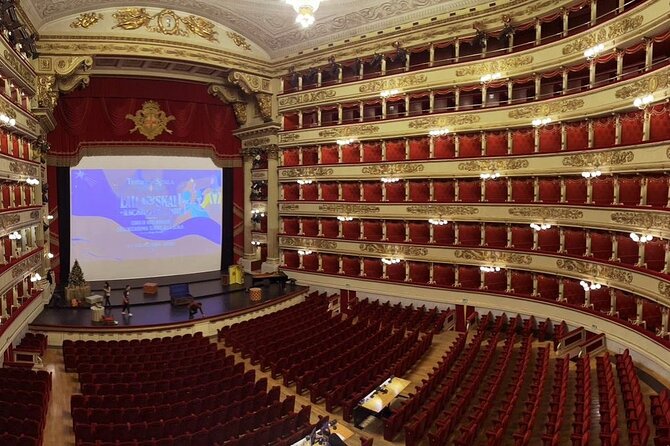
At $46.99 per person, this is not the cheapest way to see an opera house. The price includes admission, reservation fees, an English-speaking professional guide, and headsets for larger groups.
I think the value is reasonable if you want the story of La Scala explained as you go. You are paying for a focused cultural visit, not just a door ticket. The guide can point out details you might miss and explain why the theater matters beyond its decoration.
The value drops if you want broad access. You may not enter the stage area, backstage rooms, dressing rooms, or rehearsal spaces. If your goal is simply to stand inside the auditorium for a few minutes, a self-guided museum visit or standard entry, if available for your date, may suit you better.
There is also no food, drink, hotel pickup, or drop-off. That is normal for a one-hour central Milan tour, and the meeting point is easy to pair with other sightseeing. Plan your own coffee or meal before or after the visit.
Who will enjoy this La Scala visit?
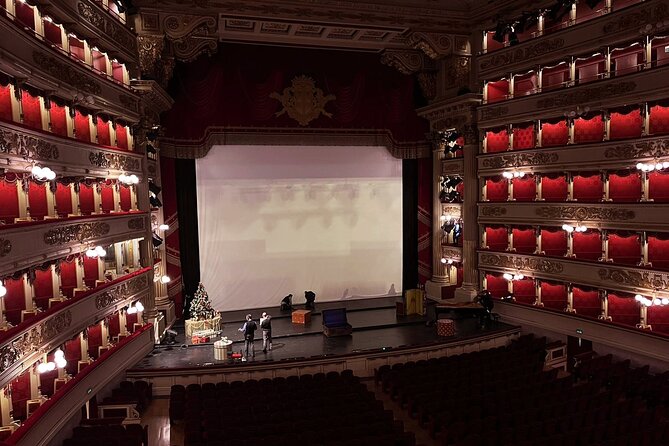
I would choose this tour for anyone interested in opera, ballet, theater architecture, or Milan’s cultural life. You do not need to be an opera expert. The right guide can give you enough background to understand the names, traditions, and setting without turning the hour into a musicology class.
It also works well for a first visit to Milan. La Scala is close to other central sights, and the short duration lets you fit it between museum visits, shopping, or a walk through the city center.
You may want to skip it if you are expecting a full backstage tour. The experience is not built around costumes, props, dressing rooms, or stage machinery. You should also think twice if steep stairs are a concern or if a fixed, tightly timed itinerary makes you uneasy.
The tour is offered in English, but one group still found a French presentation useful even though some participants were not native speakers. The important factor is the guide’s clarity and energy, not just the language listed.
Booking and cancellation details
Confirmation is sent when you book, and most people reserve about 28 days ahead. That advance pattern suggests you should not leave the decision until the last minute during a busy Milan visit, especially if your schedule depends on a particular time.
Free cancellation is available until 24 hours before the start time. Cancel at least a full day ahead for a refund. Changes or cancellations inside that 24-hour window are not accepted for a refund.
Because the stage may be closed, I would avoid scheduling this immediately before an important train, timed museum entry, or dinner reservation. The official duration is about one hour, but theater operations and meeting issues can affect the day.
Should you book the Skip the Line La Scala Theatre Guided Tour?
Book it if you want a short, guided introduction to La Scala and will be satisfied with the auditorium from a box, museum displays, and a clear account of the theater’s past. A strong guide can make the visit memorable, and a rehearsal or lit stage may add an unexpected thrill.
Skip it if your priority is guaranteed stage access, a backstage route, or a long, quiet exploration. The mixed experience with timing and guide quality also means you should arrive early, confirm the meeting details, and keep your expectations realistic about skip-the-line entry.
For opera lovers and culturally curious visitors, the $46.99 cost can be worthwhile. For everyone else, the decision comes down to one question: are you paying to see every working corner of the theater, or are you paying to understand why this particular auditorium matters? If it is the second, this one-hour visit makes sense.
FAQ
Where does the La Scala tour start and end?
The tour starts at Largo Antonio Ghiringhelli, 1, 20121 Milano MI, Italy. It ends back at the same meeting point.
How long does the experience last?
The experience lasts about one hour. The listed theater visit itself takes about 45 minutes.
Is the tour offered in English?
Yes. The tour is offered in English.
Is stage access guaranteed?
No. The stage may not be visible because of rehearsals or other theater activity. No refund is issued if the stage cannot be viewed.
What is included in the price?
Admission and reservation fees, a professional guide, and headsets when more than five people are in the group are included. Food, drinks, transportation, and optional gratuities are not included.
What is the cancellation policy?
You can cancel up to 24 hours before the start time for a full refund. Cancellations or changes made less than 24 hours before the experience are not accepted for a refund.
Just added around Milan
- Milan: Food Tour with Pasta, Pizza, Cannoli, and Tiramisu!★ 4.3 · 3 reviews
- Varenna Walking Tour and Cooking Class★ 5.0 · 3 reviews
- 1-Day Personal Fashion Styling Course for Women★ 5.0 · 3 reviews
- Private Wine Tasting in Bellagio with Chef Luigi Gandola★ 5.0 · 3 reviews
- Walking Tour in Lake Como with Lierna Cooking Class★ 5.0 · 3 reviews
- Milan: 4-Hour Art and History Private Walking Tour★ 5.0 · 3 reviews
- Mantova: Private Walking Tour★ 4.3 · 3 reviews
- Wine and Food tasting PRIVATE Guided Tour★ 5.0 · 3 reviews
La Scala Opera House, compared.
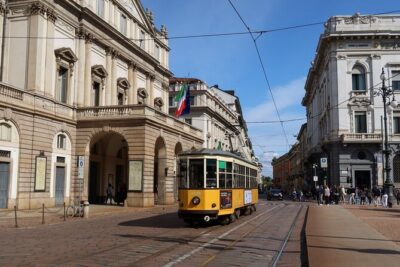
Milan’s Must See: Half-Day Tour of Last Supper, Duomo & La Scala
Read our review →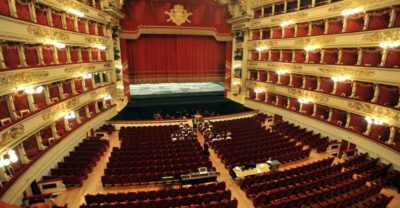
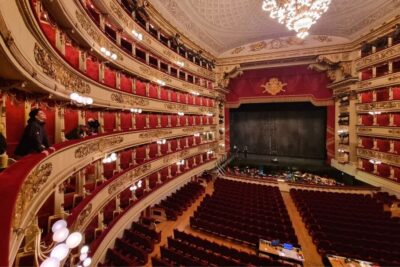
La Scala Theater and Museum Tour with Entry Tickets
Read our review →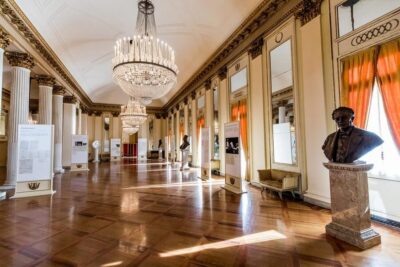
La Scala Theatre and Museum Tour in Milan With Private Guide
Read our review →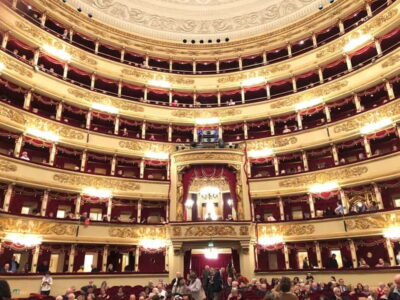
Skip-the-Line Duomo & La Scala Museum Tour + Hop On Hop Off
Read our review →Browse the lists this tour appears in