
Reviewed · MILAN
Street Art&Urban Vibes in Milan’s Most Exciting Rising Areas
Milan’s most revealing art may not be in a museum. This two-hour private walk heads north from Pasteur into streets where murals, protest art, immigrant culture, and new creative businesses share the same walls. You’ll see a side of Milan that most visitors miss, with a local guide explaining what you’re looking at instead of simply leading you from one photo stop to the next.
I like two things here: the route gives street art a social setting, and the private format lets the guide shape the conversation around your interests. Simon, one of the guides associated with this experience, is praised for making an effort, finding tucked-away corners, and filling the walk with useful facts and surprises. The main drawback is price: at $90.63 per person for two hours, it is a serious spend unless you care deeply about urban art or value a private guide.
In This Review
- Key points to know before you book
- Why this northern Milan walk feels different
- Starting at Pasteur and entering Via Padova
- Via Giovanni Pontano and the art of looking up
- Viale Monza and Milan’s working-class side
- Mosso, Bici&Radici, and Hug
- What the guide adds to the experience
- Is two hours enough for the route?
- The price and who gets good value
- Practical planning for the Pasteur meeting point
- Should you book this Milan street-art tour?
- FAQ
- Where does the street art tour start?
- Where does the activity end?
- How long does the experience last?
- What languages are available?
- Is the experience private?
- Is public transportation included?
Key points to know before you book
- Pasteur is the starting point: Meet in front of the Scaringi pastry shop, then return to the same spot at the end.
- The route covers several northern Milan streets: You’ll visit Via Padova, Via Giovanni Pontano, Viale Monza, Mosso, Bici&Radici, and Hug.
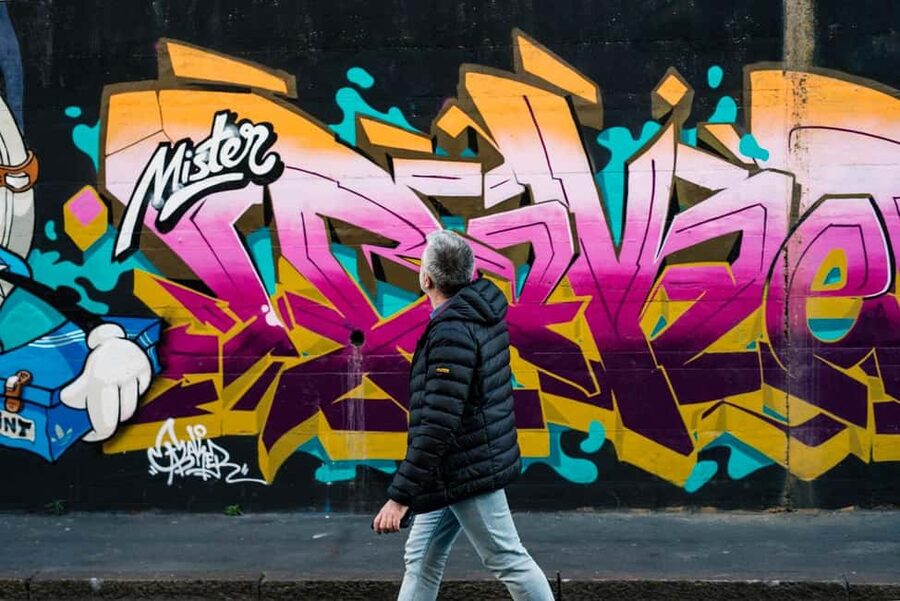
- This is more than a mural checklist: Your guide adds background on Milanese and Italian street art, including its role as protest.
- You get a private experience: The guide can focus on your questions, photography, and interest in local culture.
- It is available in English or Italian: Check the schedule for the exact starting time.
- Budget for your own transport: Public transportation to Pasteur is not included.
Why this northern Milan walk feels different
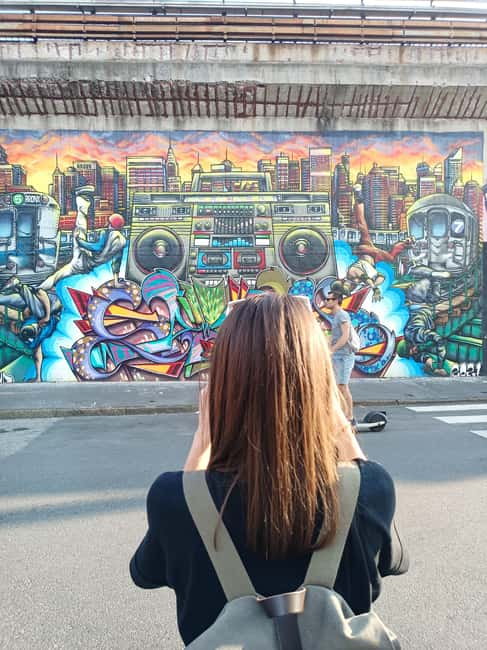
Central Milan is polished, grand, and easy to navigate. This route takes you somewhere less staged. The streets around Via Padova and Viale Monza show a city in motion, where old working-class areas meet new businesses and creative projects.
That contrast is the point. You are not only looking for large painted walls. You are learning how street art fits into everyday Milan, how artists respond to their surroundings, and how a neighborhood can carry several identities at once.
The experience is described as a photo safari, but you should think of it as a guided urban walk with plenty of chances to take pictures. The guide helps you notice details you might pass on your own, then places them in the story of Milanese and Italian street art.
I especially like the focus on small and alternative businesses. That gives the tour a local footing. You see art in relation to shops, streets, and people, rather than treating each mural as a stand-alone decoration.
A few more Milan trips worth weighing up
- Milan: Street Art Tour of Ortica, Milan’s open air museum
★ 5.0 · 5 reviews
Starting at Pasteur and entering Via Padova
The meeting point is in front of the Scaringi pastry shop at Pasteur. This is a useful, clear landmark, but you should still allow enough time to reach it because public transportation is your responsibility.
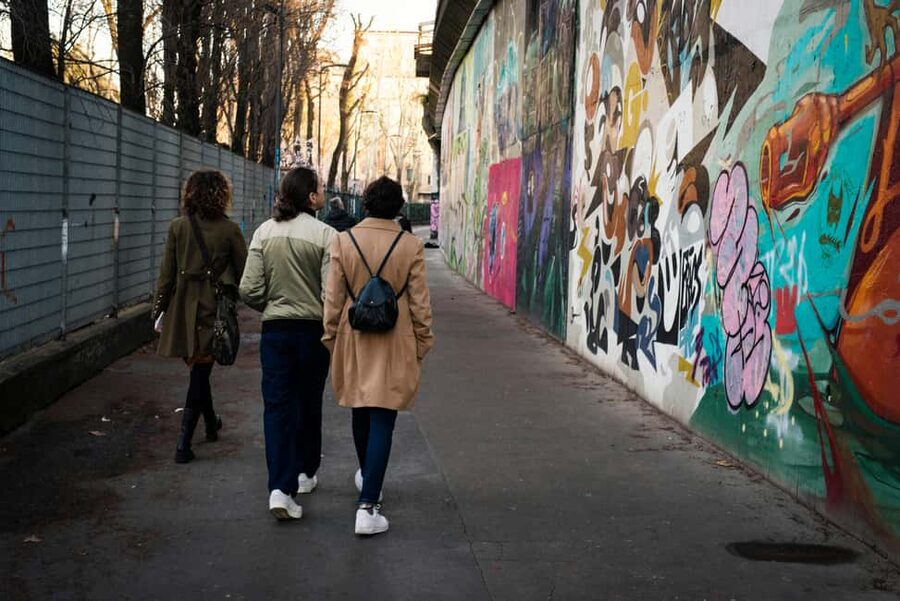
From Pasteur, the route moves toward Via Padova. This is where the tour begins to show its character. The street is presented as a meeting point for different cultures and a part of Milan where ordinary urban life sits beside colorful public art.
At the Via Padova stop, expect a photo stop, a visit, and guided commentary. The guide can explain the art rather than leaving you to guess at symbols, slogans, or visual references. That matters because street art can lose much of its meaning when you only see it through a camera.
You’ll also get a sense of why this kind of walk works better with someone local. A mural may be striking, but the surrounding street can tell you how the work relates to the area. The guide’s job is to connect those pieces.
Do not expect a formal gallery setup. Walls may be weathered, streets may feel rough around the edges, and the art may be political or temporary. That is part of the appeal, but it also means the experience suits people who enjoy urban texture more than polished attractions.
Via Giovanni Pontano and the art of looking up
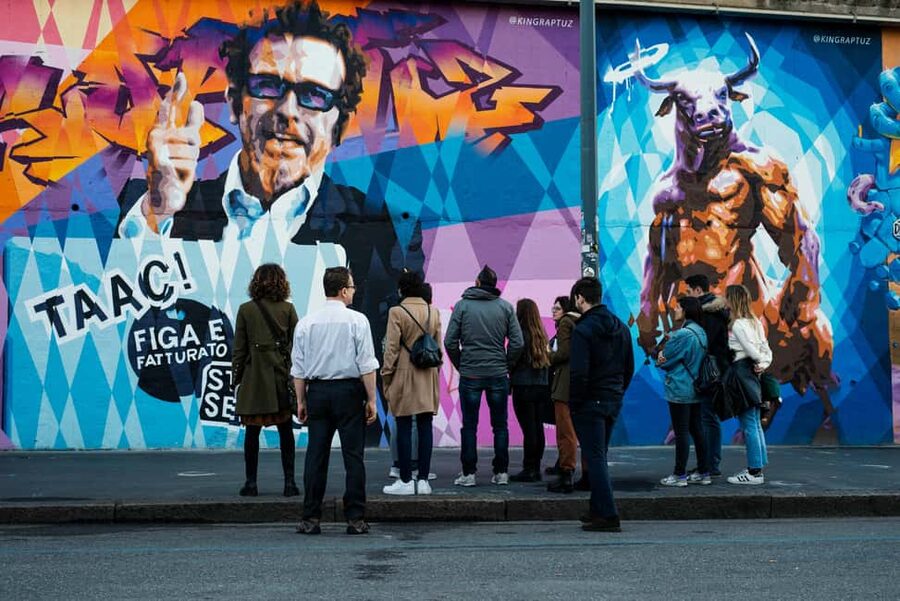
The next stop is Via Giovanni Pontano. As at Via Padova, the plan includes a photo stop, a visit, and a guided tour.
This part of the route gives you another chance to see how Milan uses its built environment as a canvas. The most useful habit here is simple: look beyond eye level. Public art can occupy building fronts, side walls, narrow corners, and surfaces you might ignore while walking from one major sight to another.
Your guide also discusses the history of Milanese and Italian street art. That context turns a series of attractive images into a more thoughtful walk. You may hear how street art can act as a form of protest, how styles change, and why a particular area attracts artists and creative businesses.
The exact works on view can change. Street art is exposed to weather, repainting, construction, and new projects. That is one reason a guide adds value, since the route is not dependent on a permanent museum collection.
For photographers, Via Giovanni Pontano should be one of the more useful stops. You can take your time with compositions, but remember that this is a walking tour, not a dedicated photography workshop. The emphasis is on seeing, understanding, and moving through the neighborhood.
Viale Monza and Milan’s working-class side
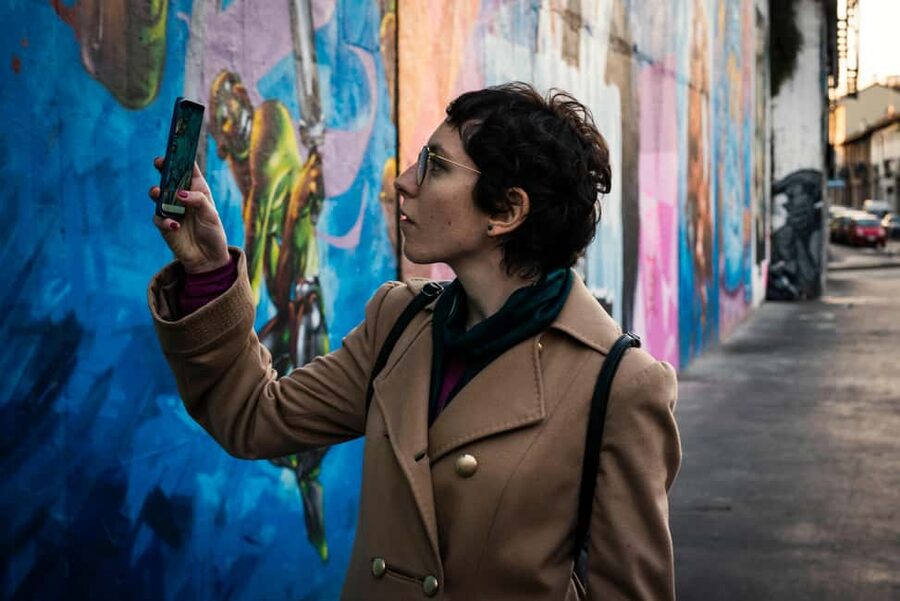
Viale Monza adds another layer to the experience. The description of this route emphasizes working-class streets, cultural variety, and art that can carry a message of protest.
That is an important distinction. Milan is often sold through fashion, design, opera, and grand architecture. Those subjects are real, but they do not tell the whole story. A street-art walk through Viale Monza gives you a look at the city’s less formal voice.
You may find the art direct, funny, strange, or political. The guide helps you understand the setting without turning the walk into a lecture. I would ask questions here about how the local community views public art, how artists choose locations, and which works are meant to last.
This is also where expectations matter. Some people want every stop to deliver one famous, instantly recognizable mural. This tour appears designed for a broader experience, with smaller discoveries and neighborhood context mixed in. If you prefer a clean list of landmark artworks, the route may feel less predictable.
If you want to take photographs, keep your phone or camera ready. The tour includes repeated photo stops, but the two-hour duration means you will not have unlimited time at each location.
A different sort of day out, same corner of Lombardy:
- Milan: Cathedral and Duomo’s Terraces Entrance Ticket
★ 4.6 · 61,054 reviews - From Milan: Como & Bellagio with Private Lake Como Cruise
★ 4.6 · 9,788 reviews - Milan: City Sightseeing Hop-On Hop-Off Bus with Audio Guide
★ 4.0 · 6,256 reviews - Milan Cathedral: Duomo Terraces Ticket (No Church Access)
★ 4.6 · 6,111 reviews
Mosso, Bici&Radici, and Hug
The itinerary continues to Mosso, Bici&Radici, and Hug. Each is listed as a stop for photographs, a visit, and guided commentary.
These names matter because they show that the tour is not limited to walls and alleys. The route also brings you toward alternative businesses and creative spaces. That gives you a chance to see how newer local projects fit into an area with older working-class roots.
Mosso is part of the route’s creative side. You might find that the guide uses the stop to explain how art, events, and local enterprise can bring attention to a neighborhood. The supplied details do not promise a specific event or activity there, so treat it as a place to see and discuss rather than a scheduled workshop.
Bici&Radici and Hug add similar variety. They are not described as shopping stops, and purchases are not included. Still, the guide can point out why these places matter to the local scene and how small businesses help shape the feel of an area.
I like this mix because it keeps the walk from becoming a hunt for painted surfaces only. You get the art, then you see the kind of businesses and public spaces that make a district worth exploring.
At the same time, do not book this expecting a long break inside each business. The tour lasts two hours and returns to Pasteur. These stops are part of a compact route, so the focus remains on observation and explanation.
What the guide adds to the experience
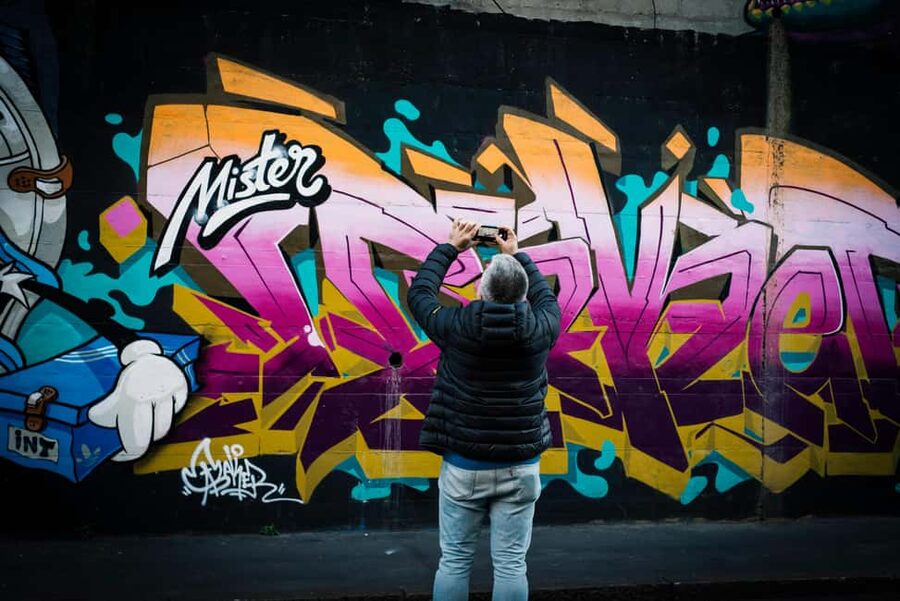
The guide is the main reason to choose this walk instead of exploring the same streets alone. The experience is offered in English or Italian, and the private format gives you a better chance to ask questions as you go.
A strong guide can explain a work’s visual language, point out details that are easy to miss, and describe the difference between decoration and protest. The supplied feedback specifically praises Simon for making an effort, showing lesser-seen corners of Milan, and making the walk informative and full of surprises.
That is the kind of praise that matters here. Street art changes, and much of its meaning depends on place. A guide who knows the area can help you read both the artwork and the city around it.
You should still take an active role. Ask Simon or your guide about artists, local reactions, recent changes, and the businesses along the route. Since you have a private group, your questions can shape the pace and subject matter more easily than on a large group excursion.
The guide is also useful if you are unsure how to approach the neighborhood. The route is designed to take you beyond the usual tourist circuit, but you are not being dropped into an unfamiliar area without context.
Is two hours enough for the route?
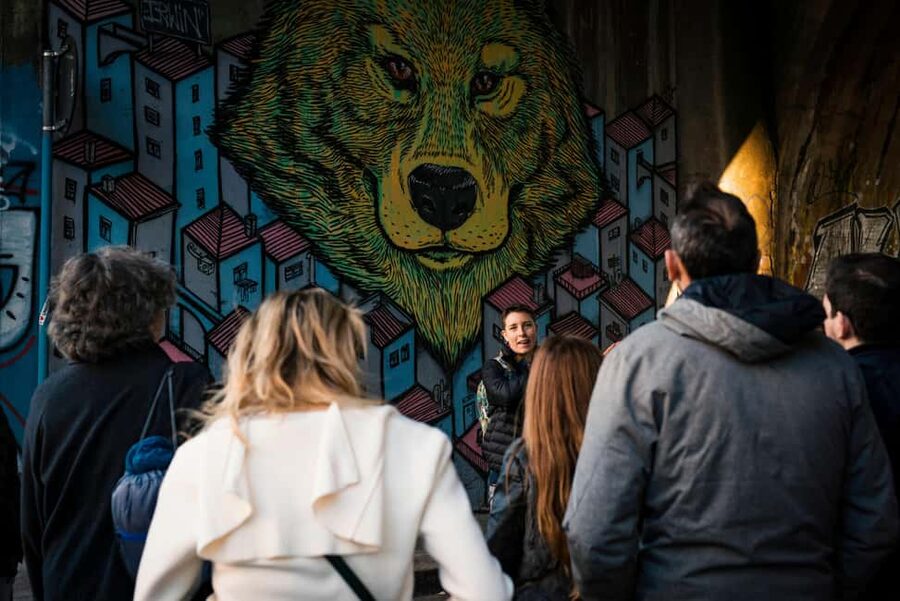
Two hours is a good length for a first look at Milan’s street art. It fits easily into a day that also includes museums, shopping, or a meal, and the return to Pasteur makes the logistics simple.
The trade-off is pace. There are six main stops after the starting point, and each includes visiting, photography, and commentary. You should expect a steady walk rather than long, unhurried sessions at every location.
The short format works best if you want an introduction. It gives you enough time to see several parts of the area and learn the basic story of Milanese and Italian street art. If you want extended photography, detailed discussion of individual artists, or time to browse businesses, two hours may feel tight.
Wear comfortable shoes and arrive ready to walk. Specific distance and terrain details are not provided, but the experience is a street-based route with several stops. The activity is listed as wheelchair accessible, which is useful information for planning, though you may want to confirm current route conditions before booking.
The price and who gets good value
At $90.63 per person, this is not a bargain city walk. For two hours, the cost is high compared with a standard shared orientation tour.
The calculation changes if you value privacy and specialist knowledge. You are paying for a local guide focused on one subject, a route outside the main tourist center, and the ability to ask questions without a large group setting. For two or more people sharing the private experience, the cost may feel easier to justify, depending on the booking arrangement.
I would book it for an art-minded visitor who has already seen Milan’s major sights and wants a different angle. It is also a good fit for photographers, design fans, repeat visitors, and anyone curious about how neighborhoods change.
I would hesitate if your main goal is to see famous Milan landmarks. The Duomo, Last Supper, and grand design districts are not part of this route. I would also think twice if you are looking for a cheap way to fill two hours.
The free cancellation policy, allowing cancellation up to 24 hours before the start for a full refund, reduces some booking risk. You can also reserve now and pay later, which helps if your Milan schedule is still shifting.
Practical planning for the Pasteur meeting point
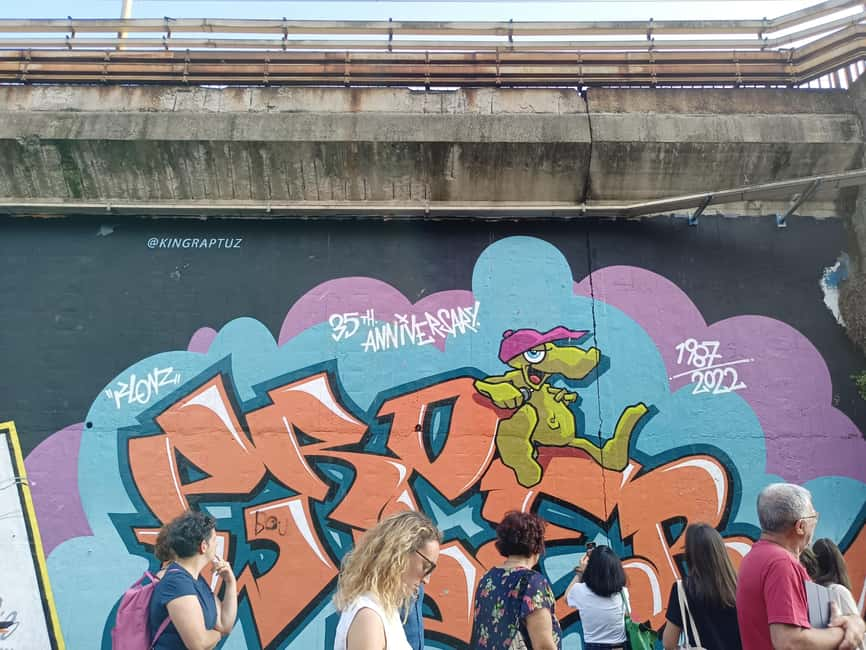
Public transportation to the meeting point is not included, so plan that separately. Your exact start time depends on availability, and the meeting point is in front of the Scaringi pastry shop.
The walk ends back at Pasteur, not at one of the later stops. That is convenient because you do not have to arrange a separate ride from an unfamiliar part of Milan after the tour.
English and Italian are available. The activity is listed as wheelchair accessible, but because it takes place along city streets, confirming the current route with the provider is sensible if you have specific mobility needs.
The tour is operated by FollowMi Around. Since it is a private group experience, the atmosphere should be more personal than a large scheduled walk, though the supplied details do not specify the maximum number of participants.
Should you book this Milan street-art tour?
Book it if you want a local, creative side of Milan and are willing to pay for a private guide. The route through Via Padova, Via Giovanni Pontano, Viale Monza, Mosso, Bici&Radici, and Hug gives you more than a set of attractive walls. It links public art with protest, local businesses, and the changing character of northern Milan.
The best reason to go is the guide. Simon’s reported approach, showing lesser-seen corners and adding facts and surprises, is exactly what this kind of walk needs.
Skip it if you want major monuments, a low price, or a long photography session at each stop. For the right audience, though, this is a lively and useful way to see Milan beyond its postcard center.
FAQ
Where does the street art tour start?
It starts at Pasteur, in front of the Scaringi pastry shop.
Where does the activity end?
The walk ends back at the Pasteur meeting point.
How long does the experience last?
The activity lasts two hours. Starting times depend on availability.
What languages are available?
The live guide is available in English or Italian.
Is the experience private?
Yes. It is offered as a private group activity.
Is public transportation included?
No. You need to arrange and pay for transportation to the meeting point yourself.
Just added around Milan
- Milan: Food Tour with Pasta, Pizza, Cannoli, and Tiramisu!★ 4.3 · 3 reviews
- Varenna Walking Tour and Cooking Class★ 5.0 · 3 reviews
- 1-Day Personal Fashion Styling Course for Women★ 5.0 · 3 reviews
- Milan: 4-Hour Art and History Private Walking Tour★ 5.0 · 3 reviews
- Private Wine Tasting in Bellagio with Chef Luigi Gandola★ 5.0 · 3 reviews
- Walking Tour in Lake Como with Lierna Cooking Class★ 5.0 · 3 reviews
- Wine and Food tasting PRIVATE Guided Tour★ 5.0 · 3 reviews
- The art of the Italian Aperitivo with a local: Learn & Enjoy in Milan★ 4.5 · 3 reviews