
Reviewed · MUSEUMS
Milan: Street Art Tour of Ortica, Milan’s open air museum
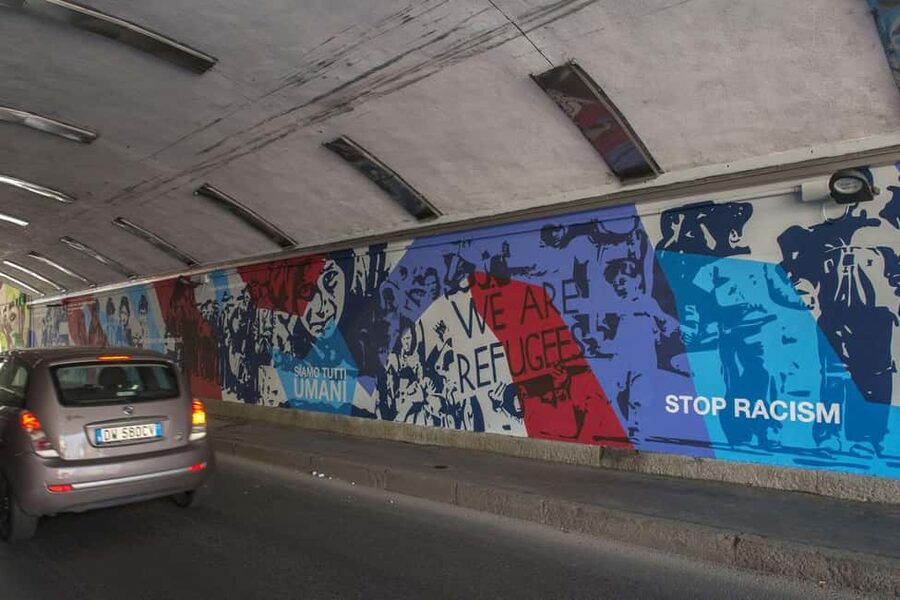
Ortica’s large wall paintings do more than brighten Milan. They tell stories about partisans, workers, musicians, activists, and feminist figures, turning a former industrial fringe into Milan’s first open-air museum district. The Or.Me. Project gives the neighborhood a clear sense of place, and this tour explains how those paintings came to be.
I like the small group, limited to eight people, and the way the walk links art with local memory rather than treating murals as pretty backdrops. I also like the meeting point at Argonne Metro, which makes the start simple. The main drawback is scope: two hours cannot cover every work, and one visitor wished there were more mural-covered buildings along the route.
- Twenty-plus Or.Me. murals: Follow a public art project devoted to Milan’s collective memory.
- Ortica beyond central Milan: See a district shaped by railway tracks, viaducts, and the Lambro River.
- Guides with personality: Lucy has been praised for her warmth and enthusiasm, while Luca is easy to chat with and informative.
- A compact eight-person group: Ask questions without trying to speak over a crowd.
- A walk with a social purpose: Learn how art can change the way a neighborhood is seen and used.
- A final viewpoint: End with a photo stop that gives the tour a wider sense of Ortica.
In This Review
- Ortica turns Milan’s walls into public memory
- Starting outside Argonne Metro on Line 4
- Following the first Ortica murals
- The Or.Me. Project and the people behind it
- Photo time and a pause to look around
- The second half connects art with urban change
- The final viewpoint gives Ortica a wider frame
- What $49 buys you in two hours
- Who will get the most from this walk
- Practical advice before you meet your guide
- Should you book the Ortica street art tour?
- FAQ
- Where does the Ortica street art tour meet?
- How long does the tour last?
- What language is the tour offered in?
- How many people are in the group?
- Is the tour wheelchair accessible?
- Is transportation included?
- What should I wear?
- Can I take photographs during the walk?
- What happens if the weather is bad?
- Can I cancel for a refund?
Ortica turns Milan’s walls into public memory
Milan is often thought of through grand design, famous churches, and polished shopping streets. Ortica offers a different story. Here, walls carry the names and images of people connected to Milan’s working life, politics, music, and social movements.
The district was once isolated by railway lines, viaducts, and the Lambro River. It had an industrial, working-class character and was easy to overlook. The Or.Me. Project, created by the local collective Orticanoodles, helped change that. More than 20 large murals now form a connected account of Milan’s past and present.
I like this approach because the art is not presented as decoration detached from its setting. The paintings belong to the neighborhood. Local residents helped shape the community storytelling behind them, so the walk asks you to look at both the artwork and the people who live around it.
You will not simply move from one colorful wall to the next. Your guide explains the shift from graffiti as an underground act of rebellion to street art as a recognized public art form. That gives the paintings a useful frame. You learn why scale, location, technique, and subject matter matter.
Starting outside Argonne Metro on Line 4
The meeting point is outside Argonne station on Metro Line 4, where your guide waits with the agency logo. This is a practical start, especially if you are staying elsewhere in Milan and prefer not to find a small street address in Ortica.
The first part of the walk lasts about 15 minutes. Think of it as the transition from meeting point to neighborhood rather than a major art stop. Your guide begins setting up the story of Ortica and the wider role of street art in Milan.
That opening matters. If you arrived expecting a rapid procession of murals, you may find the first section slow. I would use it to ask your guide how the Or.Me. Project developed and which subjects you will see later. With a group capped at eight, there should be room for that sort of question.
The tour is offered in English, and guide quality matters here because the paintings depend on explanation. Lucy has been praised for being professional and enthusiastic, while Luca has been described as informative and easy to chat with. Guides can vary, but these names give you an idea of the personal style the tour aims for.
A few more Milan trips worth weighing up
- Street Art&Urban Vibes in Milan’s Most Exciting Rising Areas
★ 4.4 · 5 reviews
Following the first Ortica murals
Once you reach Ortica, the main guided section lasts about 45 minutes. This is where the tour begins to show why the district works as an open-air museum.
The art is spread through the neighborhood rather than gathered in one gallery. You walk along backstreets and smaller passages, looking for murals placed on ordinary buildings. That setting is part of the point. A painting on a local wall changes your sense of the street in a way a framed work inside a museum cannot.
The guide brings out the subjects behind the images. You may hear about anti-fascist partisans, jazz legends, factory workers, and feminist icons, along with other figures tied to Milan’s collective memory. These themes give the art political and human weight, but the experience is still visual and easy to enjoy if you know little about Milanese history.
The tour also covers different street art methods and styles. The supplied details do not name each technique or assign particular methods to individual murals, so you should not expect a technical workshop. You can expect a general explanation of how contemporary artists work on public walls and how street art has changed over time.
I find this more useful than simply collecting photographs. Without context, a large mural can become one more colorful image in your phone. With a guide, you have a reason to stop, look closely, and understand why a person or event appears on that wall.
The Or.Me. Project and the people behind it
The central story is the Or.Me. Project, short for Ortica Memoria. Local artist collective Orticanoodles created the project as a large public art program, with more than 20 murals devoted to Milan’s shared memory.
The scale is important. This is not one commissioned painting in isolation. The works create a route through the district, with each wall adding another piece to a broad account of the city.
The community element also deserves attention. Residents took part in the storytelling process, which helped connect the images to local identity. You are seeing a neighborhood explain itself, at least in part, rather than an outside artist simply imposing a theme on blank walls.
That does not mean every mural will appeal to you equally. Public art can be direct, symbolic, political, or sentimental. Some visitors may prefer pure visual style, while others will value the social subjects more. The tour is strongest if you enjoy asking what art is doing in a place, not just deciding if you like its colors.
One practical point: the experience is about two hours, not a full survey of all 20-plus murals. The route selects works that support the guide’s story. If your main goal is to photograph every painted building in Ortica, you may want extra time afterward to explore independently.
Photo time and a pause to look around
The itinerary includes a 10-minute photo stop in Ortica. That pause is welcome. Guided walks can sometimes rush you through a painting just as you frame it, so a dedicated stop gives you time to take pictures and inspect details.
Photography is encouraged, but you are asked to respect the art and the neighborhood. That means keeping clear of entrances, avoiding disruption for residents, and remembering that these are public streets rather than a closed gallery.
A further 10 minutes of free time follows. The short break gives you a chance to look at nearby details, catch up with your group, or ask your guide about a mural that caught your eye. It is not enough time for a separate meal or a major side trip, so treat it as breathing room within the walk.
One visitor felt the route could include more street art buildings. I think that is a fair expectation to manage before booking. Ortica has a substantial project, but this particular tour is also a guided introduction to the district’s meaning. You receive explanation and a planned route, not unlimited mural hunting.
A different sort of day out, same corner of Lombardy:
- Milan: Cathedral and Duomo’s Terraces Entrance Ticket
★ 4.6 · 61,054 reviews - From Milan: Como & Bellagio with Private Lake Como Cruise
★ 4.6 · 9,788 reviews - Milan: City Sightseeing Hop-On Hop-Off Bus with Audio Guide
★ 4.0 · 6,256 reviews - Milan Cathedral: Duomo Terraces Ticket (No Church Access)
★ 4.6 · 6,111 reviews
The second half connects art with urban change
After the break, the guided sections continue for about 20 minutes and then another 10 minutes. These shorter segments appear to carry the story onward through additional parts of Ortica, giving your guide time to explain more works and the district’s transformation.
This is where the tour’s larger idea comes into focus. A simple tag or a carefully planned mural can affect how people see a street. Public art may draw attention to an overlooked area, encourage local pride, and give residents a shared way to talk about the past.
The tour does not promise that murals solve every urban problem. That balanced view is useful. Art can make a place more visible and more inviting, but it does not replace investment, housing policy, or community work. In Ortica, the paintings are best understood as one part of a broader change in how the neighborhood presents itself.
I like that the experience treats street art as a cultural form with an evolution. You learn about its roots in underground rebellion and its later acceptance by institutions and the wider public. The same artwork can be both an artistic object and a public statement, and the guide helps you hold those ideas together.
The final viewpoint gives Ortica a wider frame
The walk ends with a 10-minute photo stop at a viewpoint. The exact view is not specified, so I would think of this as a closing look at the district rather than a guaranteed landmark panorama.
After seeing walls at close range, a viewpoint helps you step back. You can consider how the murals fit into a neighborhood once divided by infrastructure and now linked by a public art route. It also gives you a final chance to take photographs without the pressure of keeping the group moving.
The ending is brief, but it provides a natural finish. You have moved from the Metro into Ortica, from individual paintings to community memory, and from street-level details to a wider view of the district.
What $49 buys you in two hours
At $49 per person, this is not the cheapest way to spend two hours in Milan. You are paying for a live English-language guide, a carefully arranged walking route, and interpretation of an area you might otherwise pass without understanding.
The value depends on your habits. If you are comfortable researching Ortica, finding the murals yourself, and reading about the Or.Me. Project later, you can see the neighborhood without paying for a tour. If you want the stories delivered as you walk, the fee is easier to justify.
The small group improves the value. With no more than eight participants, the guide can keep the pace personal and answer questions. That is especially useful for street art, where the meaning of a mural may not be obvious from a distance.
The tour does not include transportation to or from the activity, food, or drinks. The Metro start keeps the transport issue simple, but you need to arrange your own way to Argonne and from the end of the route.
You can reserve now and pay later, and cancellation is free up to 24 hours before the start for a full refund. Those policies help if your Milan schedule is still shifting. Bad weather may lead to rescheduling, so check the forecast and keep some flexibility.
Who will get the most from this walk
I would recommend this tour to you if you enjoy local neighborhoods, public art, and social history more than a checklist of Milan’s major monuments. It suits first-time visitors who want a different side of the city, as well as repeat visitors who have already seen the Duomo and central sights.
It is also a good fit for photographers. The murals offer strong subjects, and the planned photo stops reduce the chance of feeling hurried. Still, bring comfortable shoes rather than treating this as a quick picture break. The experience is a walking tour through backstreets and alleys.
Families and mixed-age groups may appreciate the straightforward format, though the supplied information does not give a specific child age recommendation. People using wheelchairs can book because the tour is listed as wheelchair accessible.
You should think twice if you want only nonstop mural viewing. The opening transfer, historical explanation, breaks, and closing discussion take time away from photography. The guide’s interpretation is the reason to book, not an extra attached to a rapid art crawl.
Practical advice before you meet your guide
Wear comfortable shoes. The route lasts two hours and includes ordinary streets, backstreets, and hidden passages rather than a single level gallery floor.
Check the weather before leaving and dress for the conditions. The experience is outdoors, and bad weather can lead to a rescheduled tour. Photography is encouraged, but be considerate of residents and the buildings around the art.
Arrive at the Argonne Metro stop and look for the guide with the agency logo. Since the meeting point is outside the station, you should not need to search through Ortica for the start.
The group is limited to eight participants, and the live guide speaks English. If a particular guide is important to you, Lucy and Luca are names associated with recent departures, but guide assignment is not guaranteed in the supplied information.
Should you book the Ortica street art tour?
Book it if you want Milan to be more than grand buildings and famous artworks. Ortica gives you a look at a working-class district through murals about people, memory, protest, and hope. The guide adds the background that turns a pleasant walk into a readable story.
At $49, the tour earns its price through the small group and the explanations of the Or.Me. Project. Its limitation is clear: two hours will not show every mural, and the route may feel too short if your only goal is maximum street art.
For most visitors interested in modern Milan, community projects, and photography, I think it is a worthwhile choice. Go with comfortable shoes, reasonable expectations, and a willingness to listen as much as you look.
FAQ
Where does the Ortica street art tour meet?
The meeting point is outside Argonne Metro station on Line 4. Your guide will be there with the agency logo.
How long does the tour last?
The tour lasts two hours.
What language is the tour offered in?
The live tour guide speaks English.
How many people are in the group?
The group is limited to eight participants.
Is the tour wheelchair accessible?
Yes, the activity is listed as wheelchair accessible.
Is transportation included?
No. Transportation to and from the activity is not included.
What should I wear?
Wear comfortable shoes for walking and dress appropriately for the weather. Check the forecast before you go.
Can I take photographs during the walk?
Yes. Photography is encouraged, but you should respect the artwork and the Ortica neighborhood.
What happens if the weather is bad?
The tour may be rescheduled in case of bad weather.
Can I cancel for a refund?
Yes. You can cancel up to 24 hours in advance for a full refund.
Just added around Milan
- Milan: Food Tour with Pasta, Pizza, Cannoli, and Tiramisu!★ 4.3 · 3 reviews
- Varenna Walking Tour and Cooking Class★ 5.0 · 3 reviews
- 1-Day Personal Fashion Styling Course for Women★ 5.0 · 3 reviews
- Walking Tour in Lake Como with Lierna Cooking Class★ 5.0 · 3 reviews
- Milan: 4-Hour Art and History Private Walking Tour★ 5.0 · 3 reviews
- Private Wine Tasting in Bellagio with Chef Luigi Gandola★ 5.0 · 3 reviews
- Mantova: Private Walking Tour★ 4.3 · 3 reviews
- Wine and Food tasting PRIVATE Guided Tour★ 5.0 · 3 reviews
Museums, compared.
Leonardo3 The World of Leonardo Museum Entry Ticket
Read our review →
La Scala Theater and Museum Tour with Entry Tickets
Read our review →
Cathedral, Archeological Area and Museum Ticket
Read our review →
Browse the lists this tour appears in