
Reviewed · WALKING TOURS
Beautiful Brescia – Guided Walking Tour
Brescia packs Roman ruins, medieval churches, Renaissance buildings, and a former monastery into a compact historic center. This two-hour private walk gives you a clear route through that story, beginning at the Duomo and ending at San Salvatore, also known as Santa Giulia.
I like the focus on Roman Brescia, especially Piazza del Foro and the Capitolium. I also like the practical start and finish: you begin in Piazza Paolo VI and end at a major museum complex, so you can keep exploring after the guide leaves. The main drawback is the price, $222.49 per person, which is a lot for two hours when no admission charges are listed for the stops.
In This Review
- Key points at a glance
- Why Brescia makes a strong walking-tour city
- Starting beneath the Duomo in Piazza Paolo VI
- Reading Roman Brescia in Piazza del Foro
- Standing before the Capitolium of Brixia
- Ending among the buildings of San Salvatore
- What the private format changes
- Timing, transport, and how to use the two hours
- The city beyond the four named stops
- Who should book this Brescia walk
- Booking details worth knowing
- Should you book Beautiful Brescia?
- FAQ
- Where does the tour start?
- Where does the tour end?
- How long does the tour last?
- Is the tour private?
- What language is offered?
- What places are visited?
- Can I cancel for a full refund?
Key points at a glance
- Four major historic stops: See the Duomo Nuovo, Piazza del Foro, Capitolium, and Basilica di San Salvatore.
- Roman Brescia takes center stage: The route covers the ancient forum, the Capitolium temple, and nearby Roman remains.
- Private English-language format: Only your group participates, giving the walk a more personal feel.
- A compact two-hour introduction: The tour works well for a first look at Brescia’s old center.
- A useful ending point: Finish at the former San Salvatore monastery, now the Santa Giulia museum.
- Strong but limited rating sample: The experience holds a 4.8 rating from four ratings, so the early response is good but the sample is small.
Why Brescia makes a strong walking-tour city
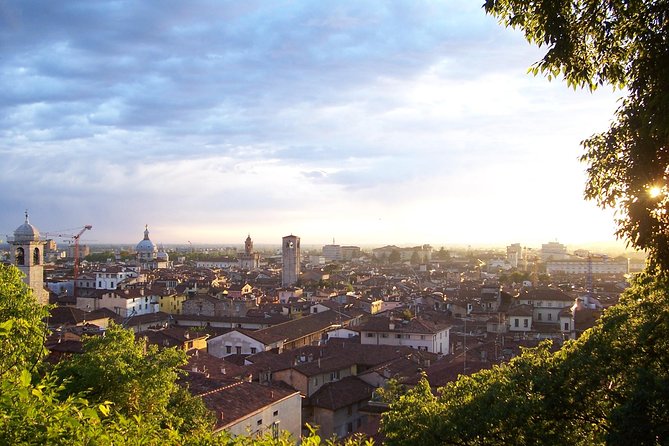
Brescia is often passed over for better-known stops between Milan and Verona. That is a mistake if you enjoy old city centers with several layers of history close together. Here, Roman monuments, religious buildings, civic squares, and later architecture sit within a manageable walking area.
I like cities that reveal themselves on foot rather than through one isolated sight. This route gives you that sense of connection. The Duomo begins the story with religious power, Piazza del Foro and the Capitolium shift the focus to ancient Rome, and San Salvatore brings you into the world of monastic buildings and museum collections.
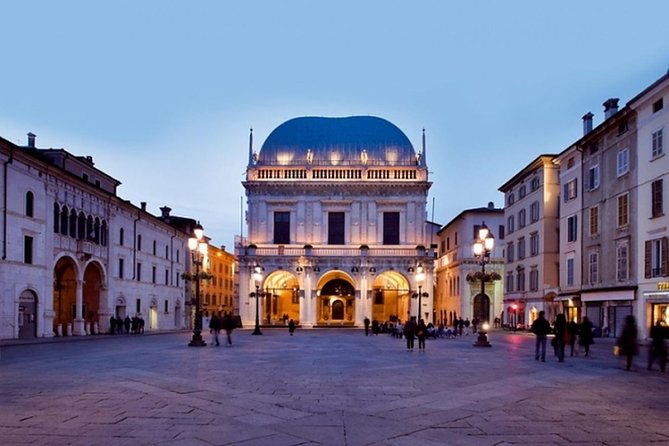
The town also works well for an independent afternoon after the tour. The historic center includes several notable squares, including Piazza della Loggia, Piazza della Vittoria, and Piazza del Duomo. The walk described here does not list all three as formal stops, but one recent account of the experience included the Renaissance square and the Loggia building as part of the broader city introduction.
That is worth keeping in mind. A guided walk can help you notice the relationship between the named monuments and the surrounding streets, even when the official route lists only four principal locations.
A few more Brescia trips worth weighing up
- Brescia: Digital Guide made by a Local for your walking tour
★ 4.7 · 46 reviews - Brescia Walking Tour with Audio and Written Guide by a Local
★ 4.5 · 44 reviews - Lake Garda at Sunset: Desenzano Walk & Boat around Sirmione
★ 5.0 · 18 reviews
Starting beneath the Duomo in Piazza Paolo VI
The tour starts at the Cathedral of Santa Maria Assunta, in Piazza Paolo VI. This is the Duomo Nuovo, or New Cathedral, the largest Roman Catholic church in Brescia.
The square is a sensible meeting place because it puts you right in the historic core. You do not waste the first part of the tour walking in from an outer neighborhood. The location is also near public transportation, which helps if you arrive by metro or another local service.
Inside, the church contains works connected with major Brescian painters. Girolamo Romanino created scenes from the life of the Virgin Mary, including the Marriage, Visitation, and Birth. Moretto da Brescia is associated with the Sacrifice of the Virgin Mary and Isaac.
The listed stop lasts about 28 minutes. That is enough time for a guide to explain the building, point out selected works, and give you a framework for understanding Brescia’s religious art. It is not enough for a slow inspection of every chapel or painting, so you should think of this as an introduction rather than a full art-history visit.
One unusual feature of the cathedral area is the contrast between the New Cathedral and the older Rotonda, or Duomo Vecchio, nearby. The formal tour description names the Cathedral of Santa Maria Assunta, but the wider square is known for both churches. If the guide discusses the area’s older cathedral, that comparison can help you see how Brescia changed across the centuries.
Reading Roman Brescia in Piazza del Foro
From the cathedral area, the route moves toward Piazza del Foro, one of Brescia’s oldest squares. Its shape comes from the first-century Roman city, when this part of town served as the forum.
This is where the tour becomes especially useful for visitors who might otherwise walk past the ruins without grasping their purpose. A Roman forum was not simply an open plaza. It was a civic center tied to public life, commerce, religion, and government. In Brescia, the surviving remains let you connect the modern street plan with the ancient city beneath it.
The stop is listed for about 28 minutes, matching the time given to each of the four principal locations. That steady rhythm gives the walk structure, though it also means you may need to choose between careful photography and close listening. If you like to linger, note the places you want to revisit on your own.
Piazza del Foro is part of the Brescia Antica neighborhood in the center of town. The route crosses north through the museum area, linking the open urban space to the archaeological remains nearby. That connection is one of the strongest parts of the walk: you are not seeing disconnected monuments, but pieces of one ancient district.
Standing before the Capitolium of Brixia
The Capitolium, also called the Temple of the Capitoline Triad, is the key Roman monument on this route. It was the main temple in the Roman center of Brixia, the ancient name for Brescia.
The temple was dedicated to the Capitoline Triad, the three principal Roman gods worshipped at the heart of the city’s official religious life. You do not need a long background lesson to appreciate the site, but the guide’s explanation can show why this was more than an attractive ruin. It was a statement about Roman civic order and identity.
The ancient area also includes a Roman amphitheater and a museum in the center of Brescia. The tour description places the Capitolium within this larger archaeological setting, giving you a chance to understand the temple as one part of a wider Roman complex.
Again, allow about 28 minutes. That is a useful amount of time for orientation and explanation. It is less suitable for a detailed archaeological study, especially if you want to examine every remaining architectural feature. The advantage is clarity. You move through the site with a guide who can explain what you are looking at before the Roman remains blur into the surrounding city.
For me, this is the most distinctive reason to book the walk. Many city tours focus mainly on churches and pretty squares. Brescia offers those, but the Capitolium gives the city a serious archaeological dimension.
More Brescia and Franciacorta trips:
- Canyoning “Gumpenfever” – beginner Canyoningtour for everyone
★ 5.0 · 391 reviews - Milan: Franciacorta Winery and Bergamo Day Trip with Lunch
★ 4.8 · 85 reviews - Wine Tour and Tasting of Lugana Wines in Desenzano
★ 5.0 · 58 reviews - From Bergamo: Winery Tour in Franciacorta with Lunch
★ 4.6 · 34 reviews
Ending among the buildings of San Salvatore
The final stop is the Basilica di San Salvatore, on Via Giovanni Piamarta. The complex is also known as Santa Giulia and is now a museum.
San Salvatore is an old monastery with a mix of architectural periods. Roman remains, pre-Romanesque work, Romanesque buildings, and Renaissance additions all appear within the larger complex. That variety makes it a fitting final stop because it gathers several stages of Brescia’s past in one place.
The 28-minute visit gives you a brief introduction to the monastery and its architecture. It may also help you decide if you want to return for a longer museum visit. The formal tour information does not say that a full museum admission is included, and each stop is marked admission ticket free, so I would not assume that an extended visit inside the museum is part of the booking.
Ending here is practical. You are not returned to the starting square, but Brescia’s center is compact enough for you to continue on foot. You can spend more time at Santa Giulia, look for a café, or continue toward other central squares and shops.
What the private format changes
This is a private activity, so only your group participates. That matters more than it might seem. You can ask about a Roman feature, a painting, or a building style without worrying about holding up a large group.
A private format can also make the two-hour schedule more flexible in practice, though no specific customization is promised. The description does not name the guide, so you should not book expecting a particular person. The available language is English.
The small group setting suits couples, families, and friends who want a direct introduction rather than a large scheduled walk. It is also useful if your time in Brescia is short and you want a route that joins the main historic layers in one sitting.
The tradeoff is cost. At $222.49 per person, the tour asks you to pay for private guiding and a focused route, not for a long excursion or a package of paid entries. Group discounts may improve the calculation, especially if the price structure reduces the per-person cost for a larger party.
For one person or a couple on a tight budget, the price may feel hard to justify for two hours. For a group that values privacy, a guide’s attention, and a quick orientation to a city it does not know, the value is easier to see.
Timing, transport, and how to use the two hours
The listed duration is approximately two hours. Each of the four stops receives about 28 minutes, leaving a small amount of time for walking between sites and settling into each explanation.
That schedule is well suited to a first visit. You get enough context to recognize the importance of the city’s central monuments, but you will not have time for a long museum session, a leisurely meal, or extensive shopping during the walk.
Plan your day around the start at Piazza Paolo VI. Since the tour ends at San Salvatore, avoid leaving a car or bag at the starting point if you want an easy finish. Public transportation is nearby, and the city’s metro was found useful by visitors exploring Brescia independently.
The route is a walking tour through the historic center. The activity notes say most people can participate, but no specific distance, step count, or accessibility details are provided. If you need exact information about surfaces, stairs, or museum access, ask the provider before booking.
A good plan is to take the tour earlier in your stay. Afterward, you will know which places deserve a longer look. You can return to Santa Giulia, spend more time around the cathedral square, or seek out Piazza della Loggia and Piazza della Vittoria.
The city beyond the four named stops
The walk gives you a strong historical spine, but Brescia has more to offer than the four main locations. Piazza della Loggia is known for its handsome Loggia building and Renaissance character. Piazza della Vittoria presents a more restrained architectural style associated with Fascist-era Italy. Piazza del Duomo brings together the cathedral area and the historic Palazzo del Broletto.
Those squares help explain why Brescia feels like a city made for walking. The architecture changes as you move, yet the distances remain manageable. You can follow the route as a lesson in Roman, religious, civic, and modern Italian history without needing a full-day commitment.
The city also has an appealing everyday side. Public transportation makes it easy to get around, and the local aperitivo tradition becomes especially appealing from around 6 p.m. The local custom can include substantial snacks with the price of a drink, making it a useful way to end your day after the tour.
The tour itself is not an aperitivo outing, and food or drinks are not listed as inclusions. Still, the timing tip is valuable. A morning or early afternoon walk leaves room to enjoy Brescia’s squares, shops, and evening social life independently.
Who should book this Brescia walk
I would recommend this experience to you if you want a short, organized introduction to Brescia and care about the city’s art and archaeology. The Capitolium and Piazza del Foro give the route more substance than a simple photo walk, while the cathedral and San Salvatore add religious and architectural variety.
It is a good match for:
- First-time visitors with only part of a day in Brescia
- Small groups that prefer a private English-language guide
- Museum-minded visitors who want context before exploring Santa Giulia
- People interested in Roman remains but not ready for a full archaeological tour
- Families or mixed-interest groups that need a compact route
I would be more cautious if you want a slow, detailed museum visit. Two hours moves quickly, and the price is high if you mainly want to see the sights from outside. You may find better value by exploring independently if you are comfortable reading signs and planning your own route.
The current rating is 4.8 from four ratings, which is encouraging but not a large record. The strongest themes are Brescia’s historical and artistic character, the impressive Roman remains, the attractive squares, and the city’s welcoming feel. Those are all sensible reasons to visit, but the limited number of ratings means I would focus more on the tour design and price than on the score alone.
Booking details worth knowing
You receive confirmation at booking, and the experience is offered in English. It is near public transportation, and the activity notes say most people can participate.
Cancellation is free up to 24 hours before the start time. Cancel at least 24 hours ahead for a full refund. Inside that window, no refund is provided, and changes are not accepted. The cut-off follows Brescia’s local time.
The provider is listed as US LLC, Local Tours in Lithuania. No individual guide name is supplied, so the booking decision should rest on the private format, route, language, and price rather than on a named guide.
Should you book Beautiful Brescia?
Book it if you want a private, tightly focused introduction to a city that combines Roman archaeology, religious art, medieval buildings, and Renaissance architecture in a small central area. The route is especially appealing if Brescia is a short stop between larger Italian destinations and you want more than a quick look at the main square.
Think twice if $222.49 per person feels steep for two hours or if you prefer to explore at your own pace. The free-entry stops and short duration make the price difficult to defend for solo visitors, but group discounts and the private format can make it more reasonable for families or friends.
My practical call: choose this walk for orientation, context, and convenience. Then keep the rest of the day open for Santa Giulia, the other central squares, and an evening aperitivo.
FAQ
Where does the tour start?
It starts at the Cathedral of Santa Maria Assunta, also called the Duomo Nuovo, at Piazza Paolo VI, 25121 Brescia, Italy.
Where does the tour end?
The tour ends at Basilica di San Salvatore, also known as Santa Giulia, at Via Giovanni Piamarta 6, 25121 Brescia, Italy.
How long does the tour last?
The walking tour lasts approximately two hours.
Is the tour private?
Yes. Only your group participates in this private tour or activity.
What language is offered?
The tour is offered in English.
What places are visited?
The route includes the Cathedral of Santa Maria Assunta, Piazza del Foro, the Capitolium or Temple of the Capitoline Triad, and Basilica di San Salvatore.
Can I cancel for a full refund?
Yes. You can receive a full refund if you cancel at least 24 hours before the experience start time. Cancellations or changes made less than 24 hours before the start time are not refunded or accepted.
Just added around Brescia
- Museo Diocesano di Brescia: Entrance ticket★ 5.0 · 3 reviews
- Private Full-Day Tour by Boat in Lake Garda★ 5.0 · 4 reviews
- Sirmione Sunset Tour★ 5.0 · 5 reviews
- Private Cooking Class at a Cesarina’s Home in Desenzano del Garda★ 5.0 · 6 reviews
- Brescia Hidden Legends: Self-Guided Puzzle Quest★ 4.5 · 6 reviews
- Milan: Brescia & Franciacorta with Wine Tasting Small Group★ 4.2 · 6 reviews
- Sato Code Escape Room across Iseo★ 4.5 · 7 reviews
- Self-guided Wine tour in Franciacorta, Full-Day Experience with Lunch★ 5.0 · 7 reviews
Walking Tours, compared.
Guided Walking Tour & Last Supper Visit with Ticket
Read our review →
Guided Walking Tour with Last Supper Skip-the-Line
Read our review →
Guided Street Food Walking Tour with Food Tasting
Read our review →
Guided Walking Tour with Duomo and the Last Supper
Read our review →
Best of City Walking Tour with Last Supper Tickets
Read our review →
Milan Highlights and Hidden Gems Private Guided Walking Tour
Read our review →
Browse the lists this tour appears in