
Reviewed · BRESCIA TOURS
Museo Diocesano di Brescia: Entrance ticket
The most rewarding part of Museo Diocesano di Brescia is its illuminated manuscript collection, where tiny painted letters, animals, leaves, and flowers turn church books into works of art. You’ll also find paintings and sculptures from Brescia and the Veneto, all displayed inside an old Renaissance monastery near Piazza Loggia.
I like the museum’s strong mix of art and setting, and I appreciate the way it invites you to look beyond paintings through its tactile TUTTO HA SENSO route. At $9, admission is a good value if you want a focused cultural stop in central Brescia. The main limitation is that the experience is primarily in Italian, and guided tours cost extra.
In This Review
- Key points to know before you go
- Inside the Renaissance monastery near Piazza Loggia
- A collection that reaches beyond church art
- The illuminated manuscripts are the visual highlight
- The painting and sculpture galleries
- Byzantine-Orthodox icons and a different kind of image
- TUTTO HA SENSO makes the museum more open
- Workshops, guided tours, and the Italian-only setting
- How much time should you plan?
- Is the $9 ticket good value?
- Who will enjoy this museum most?
- Practical details for your visit
- Should you book Museo Diocesano di Brescia?
- FAQ
- Where is Museo Diocesano di Brescia?
- How much does admission cost?
- How long is the ticket valid?
- What does the admission ticket include?
- Are guided tours included?
- Is the museum wheelchair accessible?
- Can I take photographs inside?
Key points to know before you go
- 12th to 16th-century illuminated books: See missals, breviaries, antiphonaries, graduals, and richly decorated pages.
- More than 2,000 works: The permanent collection covers painting, sculpture, icons, ancient books, and contemporary art.
- A central Brescia location: The museum is on Via Gasparo da Salò, only a few steps from Piazza Loggia.
- Special Byzantine-Orthodox icons: A renewed display explains their religious meaning and visual symbols.
- TUTTO HA SENSO route: Tactile elements make selected works available through touch as well as sight.
- Good practical value: Your ticket includes the permanent collection, temporary exhibitions, the accessible route, and the historic cherry tree in the main cloister.
Inside the Renaissance monastery near Piazza Loggia
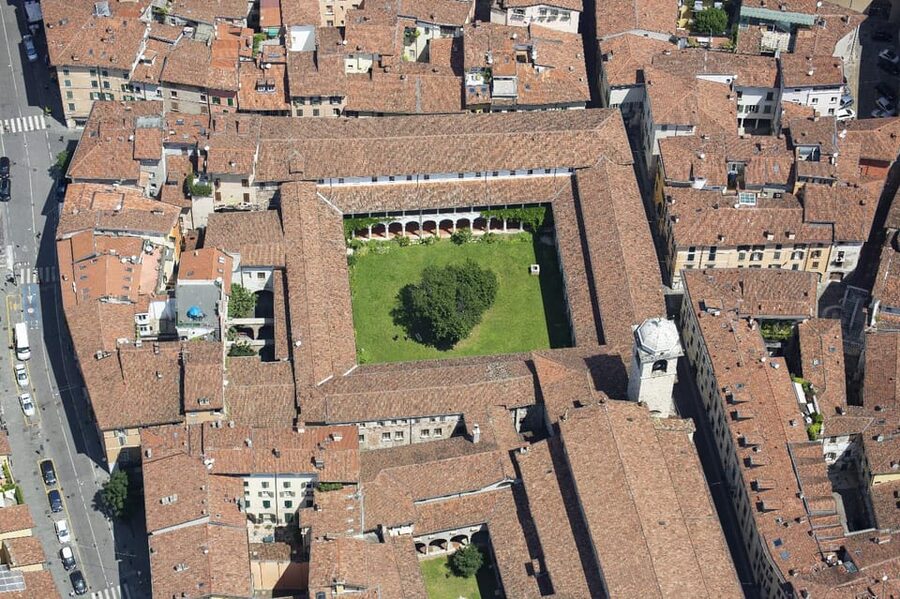
You’ll find the museum on Via Gasparo da Salò, close to Piazza Loggia in the center of Brescia. That location matters. You can fit the museum into a walk around the historic center without arranging a separate trip across town or using transport.
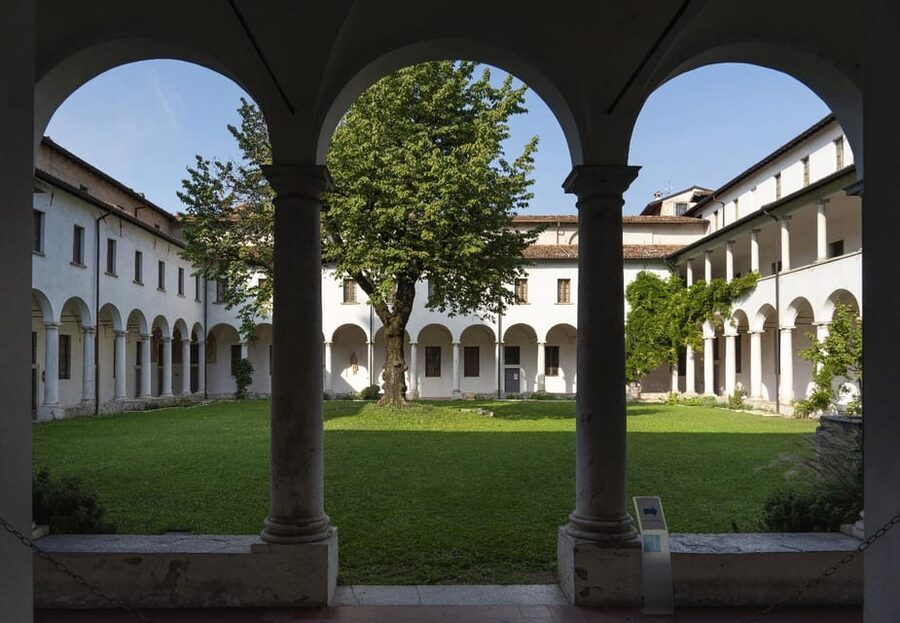
The building gives the visit much of its character. Instead of entering a plain modern gallery, you move through the spaces of an ancient Renaissance monastery. Corridors, rooms, and the main cloister create a quieter setting for the art. The historic cherry tree in the cloister is included with admission, giving you a small pause between gallery sections.
I would allow at least a couple of hours if you want to look carefully at the books, paintings, sculptures, and icons. The ticket remains valid for one day from first activation, so you have flexibility if you want to split your museum visit around lunch or other sights in central Brescia. The published duration is one day rather than a fixed guided timetable, so you can set your own pace.
There is no transportation included, but that is hardly a concern if you are already visiting the city center. Comfortable shoes are still a smart choice, since the visit involves walking through the museum and historic center.
More Brescia and Franciacorta trips:
- Canyoning “Gumpenfever” – beginner Canyoningtour for everyone
★ 5.0 · 391 reviews - Milan: Franciacorta Winery and Bergamo Day Trip with Lunch
★ 4.8 · 85 reviews - Wine Tour and Tasting of Lugana Wines in Desenzano
★ 5.0 · 58 reviews
A collection that reaches beyond church art
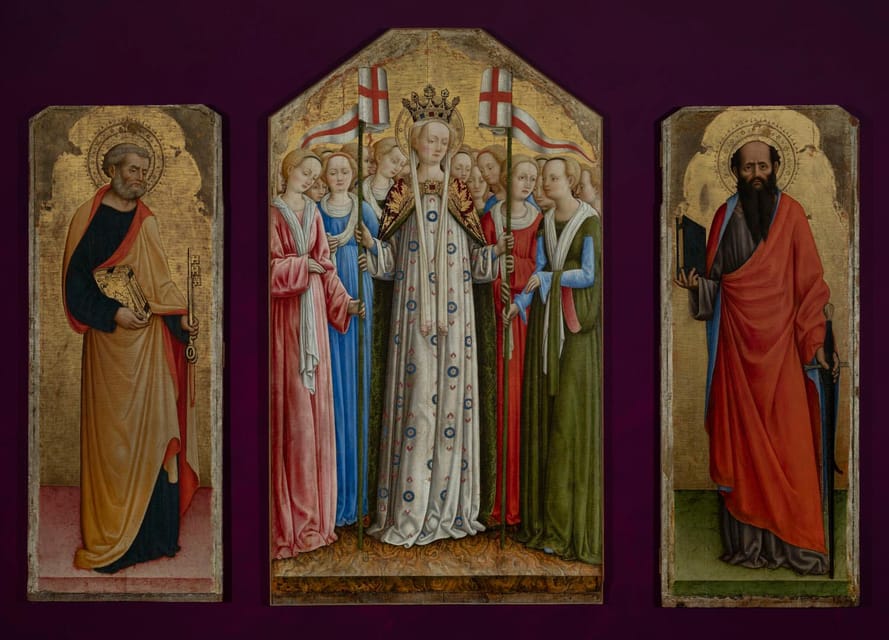
The permanent collection contains more than 2,000 works, with painting and sculpture mainly connected to Brescia and the Veneto area. That regional focus gives the museum a clear purpose. You are not getting a random selection of European art, but a look at the religious and artistic traditions that shaped this part of northern Italy.
The collection includes paintings, sculptures, illuminated manuscripts, icons, ancient books, and contemporary works. This range keeps the visit from becoming repetitive. You can move from large visual works to the tiny details of a manuscript page, then shift from Western Christian art to Byzantine-Orthodox imagery.
The museum also provides a useful setting for learning about major Italian Renaissance masters and the art of their period. The available information does not identify every artist or guarantee a particular masterpiece on display, so I would approach this as a regional museum with broad historical coverage rather than a single-artist museum.
That distinction helps set expectations. If you want one famous painting after another, this may not be the right stop. If you enjoy seeing how religious art was made, used, and preserved in its local setting, the collection gives you plenty to study.
The illuminated manuscripts are the visual highlight
The manuscript section is the part I would make a priority. These books range from the 12th century to the middle of the 16th century, and their pages show how much care went into objects that served practical religious purposes.
Look closely at the decorated initials, known as capilettera. Their letters are filled or surrounded with animals, plants, and flowers. The color and fine detail reward slow viewing, so do not rush past the cases as if they were ordinary books.
The collection includes 15th-century liturgical books such as missals and breviaries. You’ll also see musical books, including antiphonaries and graduals. These categories are useful to understand: a missal supported Mass, a breviary contained prayers, and the musical books helped organize chants for church services.
One particularly interesting object is the Mariegola di Collio, a small booklet linked to the Confraternity of Saints Faustino and Giovita in the parish of Collio in Valtrompia. Its first two pages were fully illuminated by the Brescian painter Floriano Ferramola, and the work belongs to the early 16th century.
That local connection is exactly what makes this section worthwhile. You are not just looking at pretty old pages. You are seeing a document connected to a specific community, confraternity, and Brescian artist. The manuscripts also show how art, faith, music, and daily religious life once shared the same object.
Because the pages are delicate, you’ll view them rather than handle them. Photography without flash is allowed inside the museum, but take care not to let the camera distract you from the small details that make this section special.
The painting and sculpture galleries
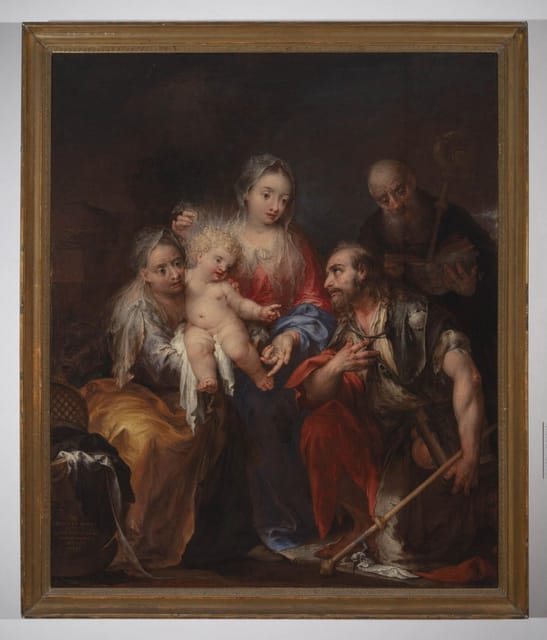
The museum’s painting and sculpture collection focuses mainly on Brescia and the Veneto. The displays give you a way to follow local religious art across different periods while staying within a manageable museum.
The setting is especially helpful here. The works are shown in former monastic spaces rather than a huge exhibition hall, so the visit feels more intimate. You can spend time with individual paintings and then step into a corridor or cloister before continuing.
The collection also connects with the great Italian Renaissance tradition. For you, that means the museum can work well as a companion to a broader sightseeing day in Brescia. It offers context for the visual language of the period, especially the use of religious subjects, devotional imagery, and careful decorative detail.
Still, the museum’s size and scope mean you should not expect every room to receive the same level of interpretation. The experience is better for visitors who enjoy looking closely and making connections than for anyone seeking a fast checklist of famous names.
I like that the museum includes contemporary artworks as well. They create a bridge between the religious art of the past and the ways artists continue to approach spiritual or cultural subjects today. The supplied information does not specify which contemporary artists or works are displayed, so check current details if modern art is your main reason for visiting.
A few more Brescia trips worth weighing up
- Milan: Cathedral and Duomo’s Terraces Entrance Ticket
★ 4.6 · 61,054 reviews - Milan Cathedral: Duomo Terraces Ticket (No Church Access)
★ 4.6 · 6,111 reviews - Milan: Guided Walking Tour & Last Supper Visit with Ticket
★ 4.7 · 5,409 reviews - Milan: Leonardo3 The World of Leonardo Museum Entry Ticket
★ 4.4 · 3,241 reviews
Byzantine-Orthodox icons and a different kind of image
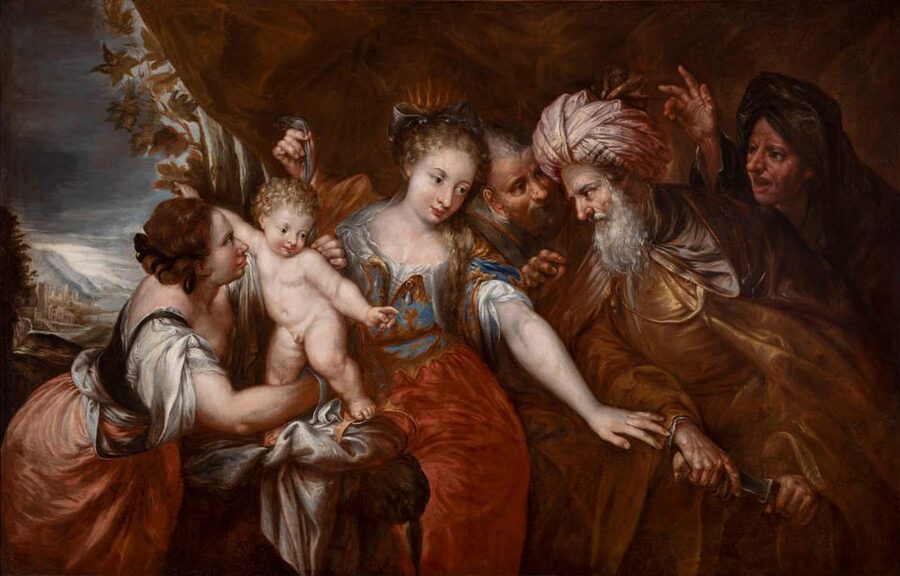
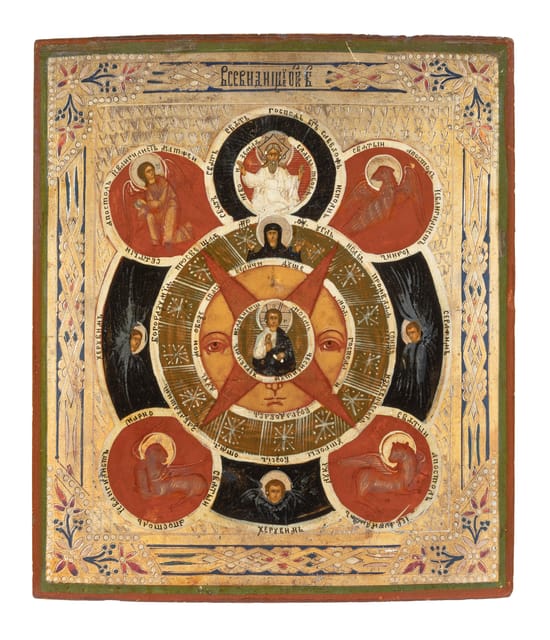
The icon collection offers a change in mood and visual language. These works come from the Byzantine-Orthodox tradition and are described as fragments of the sacred, or windows open to mystery.
You do not need specialist knowledge to appreciate the display. Pay attention to the way the icons use light, frontal figures, symbols, and carefully controlled compositions. They are not simply portraits or decorative panels. Their religious function shapes how you are meant to see them.
The museum has revised the layout of this section to explore the themes and iconography more clearly. That is useful because icons can seem unfamiliar if you approach them only as old paintings. The arrangement encourages you to consider what the images represent and how their symbols carry meaning.
For me, this section works best after the manuscripts. Both areas show how religious images were made to guide attention and belief, but they do so in different ways. The manuscript depends on the page, letter, color, and written word. The icon depends on a focused sacred image and a visual language developed over centuries.
TUTTO HA SENSO makes the museum more open
The museum’s multisensory route, TUTTO HA SENSO, runs along the corridors of the permanent collection. It invites you to experience selected works through touch as well as sight.
This is more than a convenience for people who cannot see clearly. Tactile access can change how anyone understands a sculpture, a surface, or the shape of a work. You are encouraged to notice form and texture rather than relying only on a framed image viewed from a distance.
The museum identifies the pathway as part of its wider work on accessibility and active, cross-cultural participation. It is accessible to wheelchair users and to blind visitors. The available information does not list the exact number or names of the tactile works, so ask Italian staff for the current route when you arrive.
The accessible design is one of the museum’s strongest features. Many art museums treat access as an add-on. Here, it is built into the way the collection can be experienced. Families and visitors with different needs may find this especially valuable, though the Italian-only language service could make orientation harder for some international visitors.
Workshops, guided tours, and the Italian-only setting
Admission covers the museum itself, but guided tours are not included. Workshops and other public programs are part of the museum’s cultural schedule, though dates, prices, and languages are not specified here.
The host or greeter language is Italian. If you understand Italian, you may get more from labels, explanations, and scheduled activities. If you do not, the art remains accessible through close looking, but you should not count on an English-language guide being available with this ticket.
That language point is the main practical drawback. The museum has subjects that reward explanation, especially the illuminated manuscripts, the confraternity booklet, and the Byzantine-Orthodox icons. If you want a guided interpretation, check the museum’s program before your visit and confirm the language and extra cost.
The self-guided format does have an advantage. You are free to linger over a single miniature, move quickly through familiar material, or spend extra time in the icon section. There is no group schedule pushing you along.
How much time should you plan?
The ticket is valid for one day from first activation, but the museum does not give a fixed visit length. I would plan a flexible half-day around it, with enough time for the manuscript cases, the icon display, the paintings and sculptures, the TUTTO HA SENSO route, and the cloister.
You can also make it a shorter stop if your schedule is tight. The central location makes that practical. A focused visit centered on the manuscripts and icons should still give you a clear sense of what makes the museum different.
The best pace is slow rather than hurried. Manuscripts are full of details that disappear when you look from several feet away, and religious art often makes more sense after a few quiet minutes. Comfortable shoes will help, especially if the museum is one stop within a full day of walking around Brescia.
Opening hours can change, so check the museum’s website before setting your schedule. The same applies to current health and safety guidance and any temporary exhibitions.
Is the $9 ticket good value?
At $9 per person, this is a reasonably priced cultural stop, especially because the ticket includes more than the basic permanent collection. You also receive access to temporary exhibitions, the multisensory route, and the historic cherry tree in the main cloister.
The value improves if you care about manuscripts, religious art, or local history. A single famous object may not justify the price for you, but a collection of more than 2,000 works offers enough range for a worthwhile visit. The strongest value comes from the variety: painting, sculpture, books, icons, contemporary art, and an accessible tactile route in one historic building.
I would be less enthusiastic if your only interest is secular modern art or blockbuster Renaissance painting. The museum’s identity is firmly tied to diocesan and religious collections, even though it includes contemporary works and broader regional art.
The free cancellation policy and reserve-now, pay-later option add planning flexibility, though they do not change the museum experience itself. If your Brescia schedule is uncertain, those terms let you hold a place without paying at once, with cancellation available up to 24 hours in advance for a full refund.
Who will enjoy this museum most?
I would recommend it to you if you enjoy:
- Religious painting and sculpture from northern Italy
- Old books, miniature painting, and decorative lettering
- Smaller museums where you can set your own pace
- Historic buildings used as exhibition spaces
- Byzantine-Orthodox icons and sacred imagery
- Museums that make a serious effort to welcome blind and wheelchair users
- A central stop that fits easily into a day in Brescia
It is also a good choice for repeat visitors who have already seen the city’s main sights and want a quieter cultural hour or two. Families may appreciate the tactile elements, although the museum’s Italian-only setting may limit the value of scheduled explanations for non-Italian speakers.
I would think twice if you need an English-language guide, want a fast overview of all Brescia attractions, or are looking only for major secular masterpieces. The museum rewards curiosity more than speed.
Practical details for your visit
The museum is on Via Gasparo da Salò, near Piazza Loggia. Transportation to and from the museum is not included, but its central address makes independent arrival straightforward if you are already in the historic center.
The museum is wheelchair accessible and accessible to blind people. The multisensory route is part of the admission, not a separate upgrade. If you have specific access needs, it is still sensible to contact the museum before arrival, since the information provided does not describe every gallery feature.
Photography without flash is allowed. Pets and bikes are not allowed inside, and alcohol and drugs are prohibited. Food and drinks are not included, so plan those separately around your visit.
The museum’s public programming may include workshops and guided tours, but these are not covered by the entrance ticket. Check the official website for opening times, temporary exhibitions, current programs, and health guidance before you go.
Should you book Museo Diocesano di Brescia?
Book it if you want a thoughtful, affordable museum visit in the center of Brescia, especially if illuminated manuscripts are your kind of art. The Ferramola-decorated Mariegola di Collio, the 12th to 16th-century books, and the Byzantine-Orthodox icons give the visit a clear identity.
The $9 price is fair because it includes the permanent collection, temporary exhibitions, the accessible route, and the cloister. Just arrive knowing that Italian is the listed language and that guided tours are extra.
For art lovers, history fans, and visitors interested in accessible museum design, this is an easy recommendation. If you prefer large-name masterpieces or English-led interpretation, check the current program first, then decide.
FAQ
Where is Museo Diocesano di Brescia?
The museum is on Via Gasparo da Salò, a short distance from Piazza Loggia in the heart of Brescia.
How much does admission cost?
The entrance ticket costs $9 per person.
How long is the ticket valid?
The ticket is valid for one day from the time you first activate it.
What does the admission ticket include?
Admission includes the Museo Diocesano di Brescia, the permanent collection, temporary exhibitions, the multisensory and accessible route, and entry to the historic cherry tree in the main cloister.
Are guided tours included?
No. Guided tours are not included in the entrance ticket.
Is the museum wheelchair accessible?
Yes. The museum is wheelchair accessible, and it also provides access for blind visitors through its multisensory approach.
Can I take photographs inside?
Yes. Photography without flash is allowed inside the museum.
Just added around Brescia
- Private Full-Day Tour by Boat in Lake Garda★ 5.0 · 4 reviews
- Beautiful Brescia – Guided Walking Tour★ 5.0 · 4 reviews
- Sirmione Sunset Tour★ 5.0 · 5 reviews
- Private Cooking Class at a Cesarina’s Home in Desenzano del Garda★ 5.0 · 6 reviews
- Brescia Hidden Legends: Self-Guided Puzzle Quest★ 4.5 · 6 reviews
- Milan: Brescia & Franciacorta with Wine Tasting Small Group★ 4.2 · 6 reviews
- Sato Code Escape Room across Iseo★ 4.5 · 7 reviews
- Self-guided Wine tour in Franciacorta, Full-Day Experience with Lunch★ 5.0 · 7 reviews
Brescia Tours, compared.
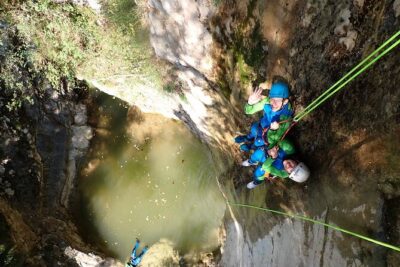
Canyoning “Gumpenfever” – beginner Canyoningtour for everyone
Read our review →
Franciacorta Winery and Bergamo Day Trip with Lunch
Read our review →
Wine Tour and Tasting of Lugana Wines in Desenzano
Read our review →
Digital Guide made by a Local for your walking tour
Read our review →
Brescia Walking Tour with Audio and Written Guide by a Local
Read our review →
Brescia the Unexpected: History, Local Stories & a drink
Read our review →
E-Bike tour and Wine tasting from Desenzano Inland
Read our review →Browse the lists this tour appears in