
Reviewed · WALKING TOURS
Brescia Walking Tour with Audio and Written Guide by a Local
Brescia is the kind of Italian city that rewards a bit of structure. Matteo Colosio’s digital guide takes you from market squares and Fascist-era architecture to Roman ruins, medieval churches, Santa Giulia Museum, and the hilltop castle. You walk independently, using your own phone rather than following a live guide.
I like the low price of $7.79 and the freedom to pause, replay, or skip sections. I also like the mix of audio, written information, images, and Google Maps links, especially if you want to preview Brescia at home before your trip.
The main drawback is clear: this is not a personal walking tour. Some explanations are brief, and a few audio sections may last only about 30 seconds. If you want long stories and detailed art history at every stop, you will need another guidebook or paid museum guide alongside it.
In This Review
- Key things to know before you book
- What kind of experience is this?
- Starting at Piazza del Mercato
- Piazza della Vittoria and the rhinoceros
- Piazza della Loggia and a difficult chapter
- Piazza Paolo VI and Brescia’s two cathedrals
- Teatro Grande from the outside
- Roman Brescia at the Capitolium and Piazza del Foro
- Teatro Romano, one of the route’s major sights
- Santa Giulia Museum takes the most time
- Finishing at Brescia Castle
- What the $7.79 price really buys
- Practical tips for using the guide
- Who will enjoy this Brescia walk?
- Should you book Matteo’s Brescia guide?
- FAQ
- Is this a guided walking tour with a person?
- How long does the Brescia walking tour take?
- Where does the tour begin?
- Where does the tour finish?
- Which languages are available?
- Do I need a smartphone?
- Can I listen without headphones?
- Are museum tickets included?
- Is the tour available every day?
- Can I cancel for a refund?
Key things to know before you book
- The route takes about five hours, including the major squares, cathedrals, Roman sites, Santa Giulia Museum, and Brescia Castle.
- Matteo Colosio is the local guide behind the digital material, but he does not walk with you in person.
- Audio and written notes are available in five languages: English, Spanish, Italian, German, and French.
- Google Maps links connect the stops, so you can follow the route without worrying about losing your way.
- Museum and Capitolium admission are extra, while the outdoor squares, castle, and most listed stops are free to enter.
- The guide works best for independent visitors who prefer a planned route but want control over pace and timing.
What kind of experience is this?
Think of this as a walking route with commentary, not a conventional group excursion. You download the guide, meet it at Piazza del Mercato, and use your smartphone to move from one location to the next.
The material combines audio, text, images, historical notes, curiosities, and restaurant suggestions. You can listen through your phone speaker or headphones. The Google Maps connection is useful because it gives the route a practical backbone, particularly if you are unfamiliar with Brescia.
The five-hour estimate is realistic for a full day of sightseeing, though your actual time will depend on museum visits, cathedral interiors, meal stops, and how often you pause the audio. The itinerary itself is tightly arranged, with ten to twenty minutes of commentary at most outdoor stops and about two hours reserved for Santa Giulia Museum and the castle.
This format gives you control. You can start late, take a coffee break, spend extra time in a church, or return to a section later. The tradeoff is that no one is there to answer questions, adjust the route, or add a story based on what catches your eye.
A few more Brescia trips worth weighing up
- Brescia: Digital Guide made by a Local for your walking tour
★ 4.7 · 46 reviews - Lake Garda at Sunset: Desenzano Walk & Boat around Sirmione
★ 5.0 · 18 reviews - Brescia: Private Guided Walking Tour
★ 5.0 · 8 reviews
Starting at Piazza del Mercato
Piazza del Mercato is a sensible starting point because it gives you an early introduction to Brescia and its nickname. The first section lasts about ten minutes and is free.
This is a short orientation stop rather than a major sightseeing block. You begin with the city’s wider identity before moving toward its grander squares. I would treat it as a way to get your bearings and understand why Brescia is sometimes associated with the nickname Leonessa d’Italia, the Lioness of Italy.
The guide begins here, so check your phone connection and make sure the digital material has loaded before setting off. Since the route depends on your own device, this small bit of preparation can save trouble later.
Piazza della Vittoria and the rhinoceros
The next stop, Piazza della Vittoria, lasts around twenty minutes. Its architecture opens a very different chapter of Brescia’s story, covering the last two centuries of Italian history.
The unusual hook is a rhinoceros. That detail may sound odd in a city tour, but it gives the square a memorable point of focus and keeps the section from becoming a dry lecture about architecture and politics.
This is one of the places where the short format can work well. You get a clear explanation, a few details to notice, and a reason to look more closely at the square. If modern Italian history is a major interest, you may want to supplement this stop with further reading, since the guide aims to keep you moving rather than provide a full academic account.
Piazza della Loggia and a difficult chapter
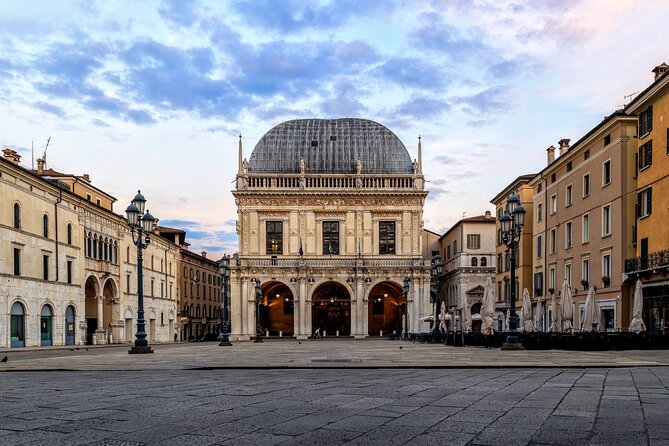
Piazza della Loggia is one of the route’s most important stops. The square is known for its Venetian-style architecture from the 15th century, and the audio also addresses one of the most serious attacks in Italian history.
The stop lasts about fifteen minutes. That is enough time to understand why the square matters, but the subject deserves your attention. This is not just a pretty central plaza. It is also a place connected with a painful event in modern Italy.
I appreciate that the route does not limit itself to attractive buildings and easy anecdotes. A good city walk should show you how public spaces carry memory as well as beauty. At the same time, the brief treatment means you may want to pause the guide and spend a few quiet minutes looking around before continuing.
A different sort of day out, same corner of Lombardy:
- Canyoning “Gumpenfever” – beginner Canyoningtour for everyone
★ 5.0 · 391 reviews - Milan: Franciacorta Winery and Bergamo Day Trip with Lunch
★ 4.8 · 85 reviews - Wine Tour and Tasting of Lugana Wines in Desenzano
★ 5.0 · 58 reviews - From Bergamo: Winery Tour in Franciacorta with Lunch
★ 4.6 · 34 reviews
Piazza Paolo VI and Brescia’s two cathedrals
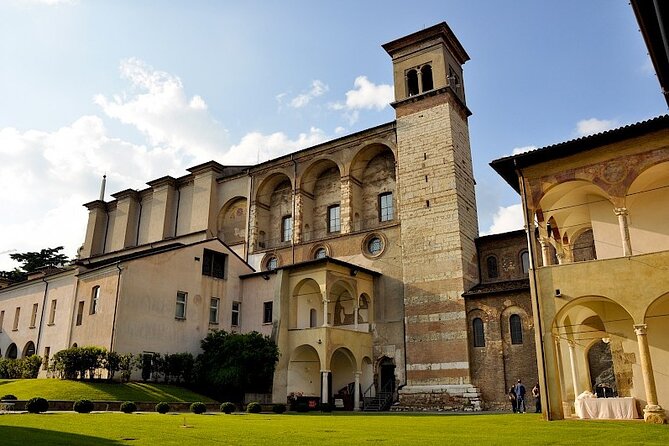
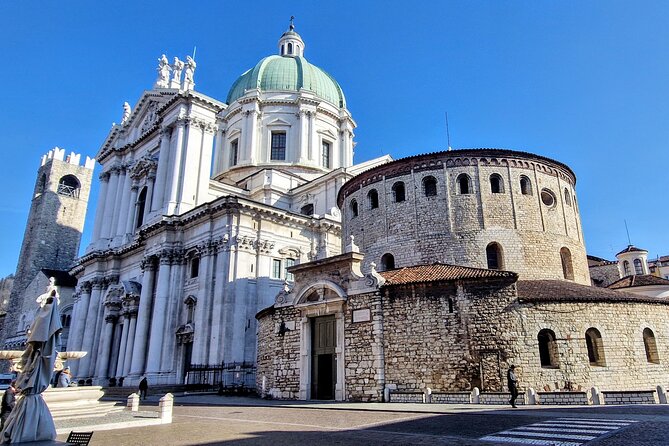
Piazza Paolo VI, also called Piazza del Duomo, brings together several layers of Brescia in one compact setting. The guide allows about ten minutes for the square, followed by twenty minutes inside the Duomo Vecchio and another twenty minutes for the Duomo Nuovo.
The old cathedral is especially distinctive. Its circular plan was inspired by the Holy Sepulchre in Jerusalem, and its construction began in the 11th century as a grand replacement for the Basilica of Santa Maria Maggiore. The result is a church with a powerful sense of age and an unusual shape.
The newer cathedral tells a different story. Work began in the 17th century, and the building took almost two centuries to finish. Its large columns, statues, marble, frescoes, and gilding create a more imposing interior.
Together, the two cathedrals make this part of the route worthwhile. You are not simply visiting two churches. You are seeing Brescia’s changing ambitions across many centuries, from a compact medieval building to a larger and more formal cathedral.
The guide’s advantage here is comparison. You can listen to the old and new cathedral sections one after another, then decide which details deserve a closer look. Its limitation is depth. The audio and text offer the main facts and points of interest, but visitors who want detailed explanations of individual artworks should plan to use an additional source.
Teatro Grande from the outside
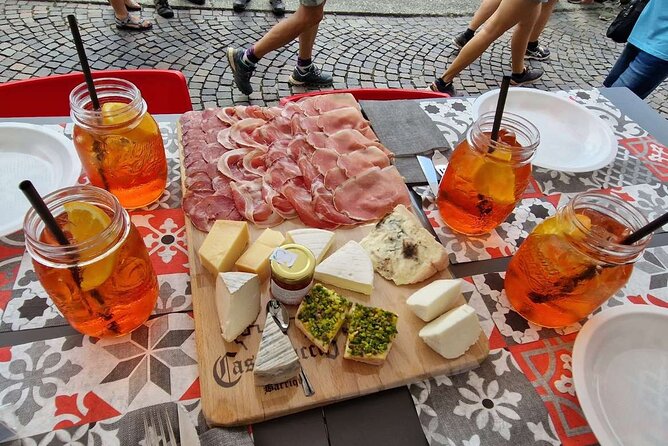
Teatro Grande receives about ten minutes, and the route views it from outside. That distinction matters. Admission is not included, and the itinerary does not present an interior theater visit.
Even from the street, the building helps explain Brescia’s place in Italian music and opera culture. The guide introduces the theater as a major home of music and melodrama with a long past.
This is a quick stop, best suited to someone who wants to understand the building’s role in the city rather than attend a performance or examine every interior detail. If you have special interest in theaters, check current opening or performance information separately, since this experience only covers the exterior.
Roman Brescia at the Capitolium and Piazza del Foro
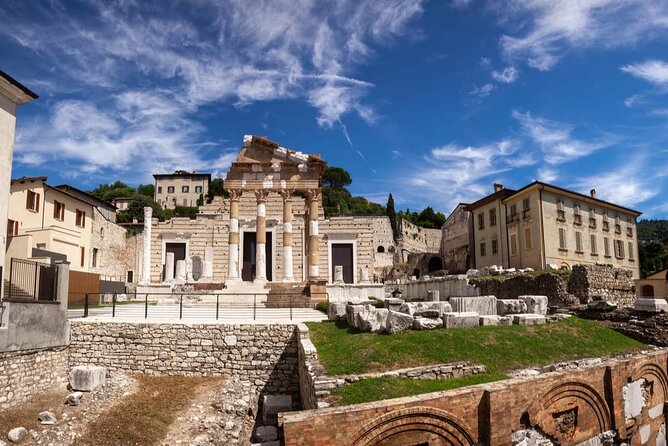
The route then moves into Brescia’s Roman past at Tempio Capitolino and Piazza del Foro. The surrounding street follows the line of the ancient decumanus maximus, the principal east-west street of a Roman city.
This section lasts about fifteen minutes and helps you read the city beneath the modern streets. Brescia became part of Roman territory in the 1st century BC, and Roman planning shaped the area you are walking through.
The Capitolium is not included as an admission ticket, so allow extra time and budget if you want to go inside. The guide gives you the setting and historical frame, while a paid visit can provide a closer look at the surviving remains and displays.
This is a good example of how the route works best. It connects a street, a forum, a temple, and the next theater stop into one story instead of treating each sight as an isolated photo opportunity.
Teatro Romano, one of the route’s major sights
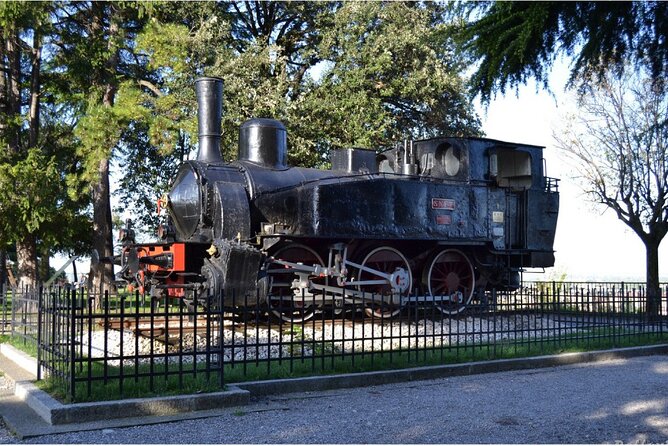
The Roman Theater receives about twenty minutes. It was the largest theater in northern Italy after the one in Verona, making it one of Brescia’s essential ancient sites.
The theater is close to the Capitolium, so the two stops fit naturally together. You can follow the audio while viewing the remains, then decide if you want more time on site. The guide also reminds you to look back toward the Capitolium, which is easy to miss if you focus only on the theater.
For many people, this will be one of the most satisfying parts of the walk. Brescia is not only a city of churches and piazzas. Its Roman remains are part of the city center, and this route gives them a clear place in the overall story.
Santa Giulia Museum takes the most time
Santa Giulia Museum is the longest stop, with about one hour and forty minutes assigned to it. Admission is not included, so you need a separate ticket.
The museum covers Brescia’s history, art, and religious life from prehistoric times through the 18th century. Its displays extend across about 14,000 square meters and include works dating from the 4th millennium BC onward.
This is not a quick add-on. If you intend to visit Santa Giulia properly, plan your day around it. The time allocation tells you something useful: the museum is a central part of the route, not an optional ten-minute glance.
I like the museum placement because it gives context to the sites you have already seen. You move from outdoor spaces and visible ruins into a setting where Brescia’s long story can be explored through objects and art. Still, the digital guide should not be mistaken for a complete museum audio service. Its role is to guide your city route and point you toward the museum’s importance.
If you are short on time, you could reduce the museum visit and save the full collection for another day. If art, archaeology, and church history are high on your list, keep the full one hour and forty minutes.
Finishing at Brescia Castle
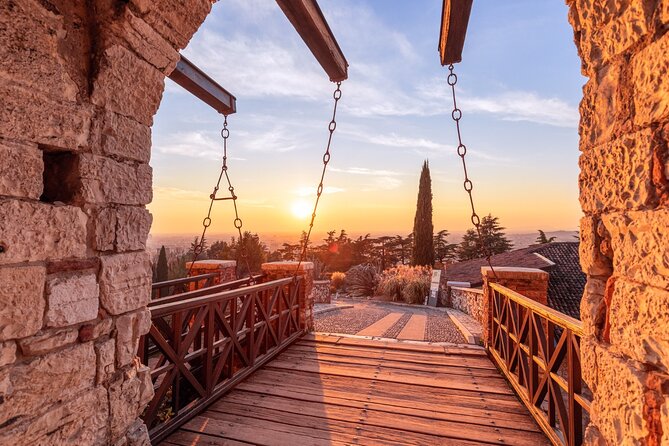
The final stop is Brescia Castle, with about one hour allocated. It is free to visit, and the route includes the story of the fortress as well as the view over the city.
The castle is a fitting finish because it changes your perspective. After walking through streets, squares, churches, and archaeological sites, you look back over Brescia from above.
The climb or route details are not specified, so you should rely on the Google Maps link and allow enough time for the approach. The castle is not just a final photo stop. Give yourself time to explore and listen without rushing toward the end of the guide.
Ending here also makes the route feel complete. You begin in a market square at street level and finish with a broad view that helps you understand how the city’s historic center fits together.
What the $7.79 price really buys
At $7.79 per person, the guide is inexpensive for a five-hour route. The value comes from the planning, not from a live person delivering a detailed talk at every monument.
You are paying for:
- A tested sequence of major sights
- Audio and written content
- Five language options
- Google Maps connections between stops
- Local food suggestions
- Historical notes and curiosities
- The ability to use the guide before, during, or after your visit
That is a strong deal if you would otherwise buy a city guide or spend time building your own route. One particularly useful feature is the chance to preview the tour from home. You can inspect the stops, read about the sights, and see how the route fits your schedule before arriving in Brescia.
The value drops if you expect a live guide, detailed art commentary, or personal answers. Several sections are intentionally concise, and some audio clips are very short. The guide is designed to keep the city walk manageable, not to replace a specialist guide at every church or museum.
Group discounts are available, which may make the per-person cost even lower for families or friends. The maximum group size is listed as 99, but because this is a self-guided digital experience, you should not expect a single person to lead that entire group through the city.
Practical tips for using the guide
You need a smartphone with an internet connection. Activation instructions are provided in your voucher, so read them carefully before you arrive.
I would download or open the guide before leaving your accommodation and bring headphones if you have them. Phone speakers work, but headphones make it easier to hear the commentary in busy public spaces.
The activity is offered in English, Spanish, Italian, German, and French. The language choice matters because the written information can be useful when you want to check a name, date, or detail that went by quickly in the audio.
The tour begins at Piazza del Mercato and ends at Brescia Castle, not at the starting point. Plan your onward route from the castle rather than assuming you will return to the market square.
The listed operating window runs every day from noon to 11:30 p.m. The product is available through July 2, 2027. Confirmation arrives at booking, and free cancellation is available until 24 hours before the start time. Service animals are allowed, the route is near public transportation, and most people can participate.
Who will enjoy this Brescia walk?
I would choose this for independent visitors who like having a plan but dislike being tied to a group schedule. It also suits anyone who wants a first look at Brescia before deciding which museums and churches deserve extra time.
It is useful for a short city break because the route covers a lot: modern history, Venetian architecture, Roman archaeology, two cathedrals, a major museum, and a castle view. The local restaurant suggestions are another practical touch if you want food advice alongside sightseeing.
Families and friends may also like the ability to split up briefly and reconnect later. You can replay information, skip a stop, or linger without holding up a guide.
I would not make it your only source if you are an art historian, architecture student, or serious archaeology enthusiast. The explanations are aimed at general sightseeing. Use the digital route as your framework, then add dedicated museum information where needed.
Should you book Matteo’s Brescia guide?
Book it if you want an affordable, flexible route through Brescia’s main sights and you are comfortable guiding yourself with a phone. The strongest features are the connected map route, multilingual audio and text, the sensible five-hour plan, and the freedom to revisit sections. Matteo Colosio’s local tips also give the experience a personal touch without adding the cost of a private guide.
Skip it if you expect a person to meet you at Piazza del Mercato and walk beside you, or if you need lengthy explanations at every monument. The guide can give you the city’s main stories and curiosities, but it is a starting point for deeper study, not a substitute for specialist commentary.
At this price, I see it as a useful Brescia companion. Pair it with admission to Santa Giulia Museum and the Capitolium, wear comfortable shoes, and leave room for your own discoveries along the route.
FAQ
Is this a guided walking tour with a person?
No. It is a self-guided digital tour with audio, written information, images, and Google Maps connections. Matteo Colosio created the local content, but he does not accompany you in person.
How long does the Brescia walking tour take?
The planned duration is about five hours. The itinerary includes roughly one hour and forty minutes at Santa Giulia Museum and one hour at Brescia Castle, with shorter stops at the squares, cathedrals, theater, and Roman sites.
Where does the tour begin?
It begins at Piazza del Mercato in Brescia, Italy.
Where does the tour finish?
The route ends at Brescia Castle, in a different location from the starting point.
Which languages are available?
The audio guide and written material are available in English, Spanish, Italian, German, and French.
Do I need a smartphone?
Yes. You need a smartphone with an internet connection to use the digital guide. Activation details are included in the voucher.
Can I listen without headphones?
Yes. You can listen through your smartphone speakers or use headphones if you have them.
Are museum tickets included?
No. Admission to Santa Giulia Museum and the Capitolium is not included in the price.
Is the tour available every day?
The listed opening hours are Monday through Sunday, from 12:00 a.m. to 11:30 p.m., for the period from April 4, 2024, through July 2, 2027.
Can I cancel for a refund?
Yes. You can cancel at least 24 hours before the experience start time for a full refund. Cancellations or changes made less than 24 hours in advance are not refunded or accepted.
More Audio Tours in Brescia
- Milan: City Sightseeing Hop-On Hop-Off Bus with Audio Guide
★ 4.0 · 6,256 reviews - Milan: Sforza Castle Entry Ticket with Digital Audio Guide
★ 4.0 · 2,675 reviews - Milan: Museum of the 900 Entry Ticket with Audio Guide
★ 4.4 · 72 reviews - Pinacoteca Ambrosiana audioguide
★ 4.2 · 32 reviews
Just added around Brescia
- Museo Diocesano di Brescia: Entrance ticket★ 5.0 · 3 reviews
- Private Full-Day Tour by Boat in Lake Garda★ 5.0 · 4 reviews
- Beautiful Brescia – Guided Walking Tour★ 5.0 · 4 reviews
- Sirmione Sunset Tour★ 5.0 · 5 reviews
- Private Cooking Class at a Cesarina’s Home in Desenzano del Garda★ 5.0 · 6 reviews
- Brescia Hidden Legends: Self-Guided Puzzle Quest★ 4.5 · 6 reviews
- Milan: Brescia & Franciacorta with Wine Tasting Small Group★ 4.2 · 6 reviews
- Sato Code Escape Room across Iseo★ 4.5 · 7 reviews
Walking Tours, compared.
Guided Walking Tour & Last Supper Visit with Ticket
Read our review →
Guided Walking Tour with Last Supper Skip-the-Line
Read our review →
Guided Street Food Walking Tour with Food Tasting
Read our review →
Guided Walking Tour with Duomo and the Last Supper
Read our review →
Best of City Walking Tour with Last Supper Tickets
Read our review →
Milan Highlights and Hidden Gems Private Guided Walking Tour
Read our review →
Browse the lists this tour appears in