
Reviewed · MANTUA TOURS
AT THE COURT OF THE GONZAGA:Journey of discovery of the Ducal Palace
Mantua’s Ducal Palace is not one grand building so much as a sprawling courtly world, covering about 35,000 square meters with the Castello di San Giorgio and the famed Bridal Chamber inside its orbit. This tour gives you a guided path through that maze, beginning with Andrea Mantegna’s painted masterpiece and moving through several centuries of Gonzaga taste.
I like two things right away: the focus on the palace’s visual surprises, from crocodiles and flying puffer fish to white peacocks and armadillos, and the chance to see works linked to Mantegna, Giulio Romano, and Rubens in one visit. Italian guide Eleonora Scacchetti has been praised for explaining the main rooms carefully. The main catch is simple: your museum ticket is not included, and the tour is conducted in Italian.
In This Review
- Key points about the Gonzaga Palace tour
- Why the Ducal Palace deserves your time
- Starting at Castello di San Giorgio
- Entering Mantegna’s Camera Picta
- Following Giulio Romano into the 16th century
- Finding Rubens among the palace’s later treasures
- Crocodiles, puffer fish, and precious stones
- What two hours gives you
- The Italian-language guide
- What to bring and what to leave behind
- Is $11 a good value?
- Who should book this palace visit?
- Should you book At the Court of the Gonzaga?
- FAQ
- Where does the Ducal Palace tour begin?
- Where does the activity end?
- How long does the tour last?
- Is museum admission included?
- What language is the tour conducted in?
- Is the tour wheelchair accessible?
- What items are not allowed inside?
Key points about the Gonzaga Palace tour
- Mantegna’s Camera Picta: Begin with the Bridal Chamber, the palace’s most famous artistic stop.
- Three artistic eras: Move from Renaissance painting to Giulio Romano’s 16th-century mannerism and Rubens’s 17th-century grandeur.
- Odd details everywhere: Look for crocodiles, puffer fish, white peacocks, armadillos, lapis lazuli, amethysts, and amber.
- Private two-hour visit: You receive a dedicated guide rather than joining a large shared group.
- Italian-language guiding: Eleonora Scacchetti leads the experience in Italian.
- Ticket cost is separate: The $11 tour price covers guiding, but not admission to the museum.
Why the Ducal Palace deserves your time
Mantua’s Ducal Palace is ideal for visitors who enjoy places that refuse to fit into a single label. It is not only a Renaissance palace, not only a castle, and not only an art museum. The Gonzaga family reshaped it over generations, leaving behind a sequence of rooms, courtyards, decorations, and collections that reflect changing tastes.
That long development is what makes a guided visit useful. On your own, you might admire a painted ceiling, pass through a decorated room, and move on. With a guide, those rooms become part of a larger story about the Dukes of Mantua, their ambitions, and the way they used art to project power.
The palace can feel confusing because of its scale. The complex includes the Ducal Palace and Castello di San Giorgio, and the route does not present itself like a tidy modern museum gallery. A two-hour tour gives you a clear framework without asking you to spend an entire day inside.
The price is listed at $11 per person, which is a modest guiding fee for a private visit. But calculate the full cost before booking, since admission to the museum is extra and that ticket is non-refundable. The tour can be canceled up to 24 hours ahead for a full refund, but that flexibility does not apply to the museum admission.
More Mantua trips:
- Palazzo Te Mantova – Tour with Guide Tiziana Portioli
★ 5.0 · 66 reviews - Palazzo Ducale Mantova – by Local Guide Tiziana Portioli
★ 5.0 · 62 reviews - Mantova Centro Storico – Tour a piedi con Guida Tiziana Portioli
★ 5.0 · 61 reviews
Starting at Castello di San Giorgio
You meet in front of the ticket office at Palazzo Ducale. The experience includes a short visit of about five minutes at Castello di San Giorgio before the main guided portion through the Ducal Palace.
That brief castle stop is best understood as an orientation point rather than a full castle tour. It places you at one of the most recognizable parts of the complex and helps connect the palace’s many sections. If you arrive early, use the time to get comfortable in your shoes and make sure you have handled your museum admission.
Do not expect the five-minute stop to cover the castle in detail. The real substance comes in the two-hour guided visit that follows. The short opening works well for anyone who wants a quick sense of place before focusing on the decorated interiors and major works of art.
Entering Mantegna’s Camera Picta
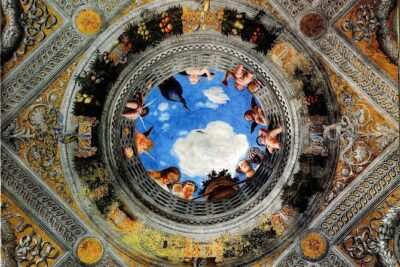
The tour begins in the Camera Picta, also called the Bridal Chamber. This is the essential stop, and it gives the visit an immediate artistic focus.
Andrea Mantegna designed the room as a painted environment rather than a simple display of pictures. The walls and ceiling work together, creating an illusion-filled space that rewards slow looking. The room is famous enough to attract attention on its own, but a guide can point out how the painted architecture, figures, and decoration interact.
I would pay close attention here instead of rushing to photograph every surface. Video recording is not allowed, and touching the exhibits is prohibited. Those rules may feel strict, but they also encourage you to study the room directly, especially its details and visual tricks.
The Bridal Chamber is also where the tour’s theme, not everything is what it seems, becomes clear. Painted spaces can suggest more depth than the actual room contains. A guide’s explanation helps you understand how Mantegna made the chamber feel larger, more theatrical, and more alive.
This is the one part of the visit that art lovers should make sure not to miss. If your time in Mantua is limited, the Camera Picta alone gives the palace a strong claim on your schedule.
Following Giulio Romano into the 16th century
After Mantegna, the tour moves into the 16th-century mannerism of Giulio Romano. This change matters because it shows that the palace was not frozen in its earliest Renaissance style.
Mannerist art often plays with proportion, movement, drama, and unusual visual effects. Here, Giulio Romano’s work forms part of the palace’s continuing artistic story. You are not seeing one ruler’s finished project. You are seeing a court that kept updating its rooms as ideas and tastes changed.
The guide’s role is especially helpful during this section. It can be hard to recognize a shift in style when you move from room to room without context. Eleonora Scacchetti has been specifically praised for explaining the principal rooms in detail, which is useful in a complex where the sheer quantity of decoration can blur together.
Take time to compare the atmosphere of these rooms with the Bridal Chamber. The point is not simply to collect famous names. It is to notice how the palace changes mood and visual language as you move through different periods.
A different sort of day out, same corner of Lombardy:
- Mantova City Center and Ducal Palace: 3-Hour Guided Tour
★ 4.9 · 47 reviews - Mantua Lakes and Vallazza Oasis: a timeless boat trip
★ 4.5 · 45 reviews - Mantovagando
★ 4.5 · 40 reviews - From the magic of the lakes to the ingenuity of Leonardo: sailing through waters and locks
★ 4.6 · 30 reviews
Finding Rubens among the palace’s later treasures
The route then reaches the 17th-century magnificence associated with Rubens. This gives the visit another turn, moving beyond Renaissance and mannerist decoration into a later, more grandly theatrical style.
Rubens is one of the major names attached to the palace, so this section will appeal to anyone who wants more than a single masterpiece. It also shows why the Ducal Palace works better as a historical sequence than as a quick checklist of famous art.
You may find that the transition from Mantegna to Giulio Romano to Rubens is the most satisfying part of the tour. Each artist represents a different moment in the palace’s development, and the guide connects those moments to the Gonzaga court.
The supplied information does not identify a specific Rubens work or room, so you should not book this expecting a detailed catalog of every painting. Instead, expect an overview of the major artistic phases and the chance to appreciate how the palace’s decoration changed over time.
Crocodiles, puffer fish, and precious stones
The palace is not only about formal portraits and famous artists. Some of its most memorable details are the unexpected ones: crocodiles, flying puffer fish, white peacocks, and armadillos.
These images give the visit a playful edge. They also remind you that court decoration could include the strange, exotic, and eye-catching alongside the solemn and prestigious. If you tend to lose interest during long art tours, these unusual details provide small discoveries to look for as you move through the rooms.
Precious materials add another layer. The tour draws attention to lapis lazuli, amethysts, and amber. These are not just decorative color words. They help show how the Gonzaga court used rare materials to signal wealth and refinement.
I would keep a mental checklist as you go: one unusual animal, one stone, one painted illusion, and one detail that would be easy to miss without a guide. That approach makes the visit more active and helps you remember the palace after you leave.
What two hours gives you
Two hours is a sensible length for this experience. It is long enough to cover the key rooms and artistic periods, but short enough to fit into a day of sightseeing in Mantua.
A palace complex of this size can easily overwhelm you. The guided format removes some of the guesswork. You do not need to decide which corridor matters most or search alone for the Bridal Chamber. The route starts at the ticket office, includes the short Castello di San Giorgio stop, and then concentrates on the Ducal Palace.
The private-group format is another advantage. You can focus on the guide’s explanation without being part of a large public group, and the pace may feel more personal. Still, private does not mean unlimited access or a customized route. The information describes a set two-hour visit, so ask ahead if you have a particular room or artwork you consider essential.
The tour is listed as wheelchair accessible. That is important in a palace complex where older buildings can sometimes create practical challenges, although the supplied information does not specify details about every surface, doorway, or route. If you use a wheelchair, confirm the exact path when arranging the visit.
The Italian-language guide
The live guide speaks Italian, and the experience is offered as a private group tour. This makes it a natural choice for Italian-speaking visitors or anyone traveling with an Italian-speaking companion.
Eleonora Scacchetti is identified as the guide and experience provider through Guidamica Mantova Guida Turistica. Her explanation of the main rooms has received particular praise, so expect the tour to lean toward careful interpretation rather than a quick walk from one famous name to the next.
If you do not understand Italian, this is a serious consideration. The visual art can still be enjoyed, but much of the tour’s value comes from the explanations linking the rooms, artists, Gonzaga rulers, materials, and strange decorative subjects. Book only if you are comfortable following an Italian-language guide.
What to bring and what to leave behind
Wear comfortable shoes and comfortable clothes. Two hours on your feet in a large palace is not the moment for delicate footwear.
Food and drinks are not allowed. Backpacks are also prohibited, so pack lightly and check the storage rules before arriving. Pets cannot enter, although assistance dogs are allowed.
You cannot make video recordings, and you must not touch the exhibits. A phone for permitted still photography may be useful, but follow the palace’s own rules rather than assuming every room allows the same treatment.
The meeting point is in front of the ticket office, and the activity ends back there. That makes it easy to continue sightseeing in Mantua afterward without arranging transport between separate locations.
Is $11 a good value?
At $11 per person, the guiding fee is appealing, especially for a private two-hour visit focused on one of Italy’s major courtly complexes. You are paying for structure and explanation, not transportation, meals, or admission.
The value is strongest if you want to understand what you are seeing. The Ducal Palace is large enough that a short self-guided visit could leave you with a blur of rooms and names. A guide helps turn that visual overload into a sequence: Mantegna first, Giulio Romano next, Rubens later, with the unusual animals and precious materials adding personality.
The value is weaker if you want a completely independent visit or if you do not speak Italian. You will still see the palace, but you would miss much of the spoken interpretation that makes this particular experience worthwhile.
Remember to add the museum admission ticket to the advertised price. Since that ticket is non-refundable, check your schedule carefully before buying it.
Who should book this palace visit?
I would choose this tour if you are interested in court art, Renaissance and Baroque interiors, or the Gonzaga family’s role in Mantua. It also suits anyone who prefers a private visit with a clear route and a fixed two-hour limit.
Families with older children may enjoy the odd animal imagery more than a tour built only around dates and names. The crocodiles, puffer fish, peacocks, and armadillos give younger minds something concrete to search for.
Art enthusiasts will appreciate the concentration of major figures, especially Mantegna, Giulio Romano, and Rubens. First-time visitors to Mantua may also benefit from the guide’s help because the palace’s scale can be difficult to grasp alone.
I would hesitate if you need an English-language tour, want a full-day exploration of every palace section, or dislike fixed itineraries. The description confirms Italian guiding and a two-hour route, not multilingual commentary or an all-access study visit.
Should you book At the Court of the Gonzaga?
Book it if you want the Ducal Palace explained as a changing court rather than viewed as a series of empty rooms. The Camera Picta gives you a powerful opening, Giulio Romano and Rubens broaden the artistic story, and the strange animals and precious stones keep the visit from feeling too solemn.
The decision comes down to language and ticket planning. The $11 fee is reasonable for a private guide, but admission is extra, and Italian is the only listed tour language. For an Italian-speaking visitor who wants a focused introduction to Mantua’s greatest palace, this is a practical choice. For everyone else, confirm the language and total cost before committing.
FAQ
Where does the Ducal Palace tour begin?
The tour begins in front of the ticket office at Palazzo Ducale.
Where does the activity end?
The activity ends back at the meeting point.
How long does the tour last?
The guided experience lasts two hours. There is also a short visit of about five minutes at Castello di San Giorgio.
Is museum admission included?
No. The museum admission ticket is not included in the tour price and is non-refundable.
What language is the tour conducted in?
The live guided tour is conducted in Italian.
Is the tour wheelchair accessible?
Yes, the activity is listed as wheelchair accessible.
What items are not allowed inside?
Food and drinks, pets except assistance dogs, backpacks, video recording, and touching the exhibits are not allowed.
Just added around Mantua
- Mantova: Private Walking Tour★ 4.3 · 3 reviews
- Private Tour Lazing Between the Giants★ 4.5 · 4 reviews
- Mantua: Self-Guided Audio Tour to the City of Lakes★ 4.0 · 4 reviews
- Half-day Guided tour of Mantua City Centre and Ducal Palace★ 5.0 · 6 reviews
- MANTOVA: OZIANDO TRA I GIGANTI: Visit to Palazzo Te★ 4.9 · 7 reviews
- Mantua: Town Highlights and Monuments Walking Tour★ 4.7 · 10 reviews
- Discovery Private Tour of the Gonzaga Palace★ 4.5 · 11 reviews
- MANTOVAGANDO: Tour of the Historic Center of Mantua★ 4.5 · 24 reviews
Mantua Tours, compared.
Mantova Centro Storico – Tour a piedi con Guida Tiziana Portioli
Read our review →

Mantua Lakes and Vallazza Oasis: a timeless boat trip
Read our review →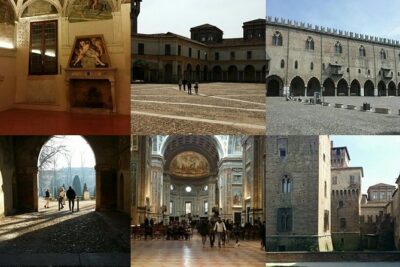

From the magic of the lakes to the ingenuity of Leonardo: sailing through waters and locks
Read our review →
Browse the lists this tour appears in