
Reviewed · WALKING TOURS
Mantua: Town Highlights and Monuments Walking Tour
Mantua reveals its best side on foot, where a Gonzaga palace, medieval market square, painted churches, and riverside fish market fit into a compact two-hour route. You move through the old center without transport, seeing how court power, religion, trade, and opera shaped this Lombard town.
I like the private format, which gives your group up to 14 people a more personal pace. I also like the mix of major sights and small details, from the astronomical clock to Rigoletto’s bronze statue. The main consideration is that Palazzo Ducale is viewed only from outside, and the famous Camera degli Sposi is not included.
In This Review
- Key points at a glance
- Starting beside Rigoletto’s house
- Meeting the Gonzaga court at Palazzo Ducale
- Inside Mantua Cathedral
- Reading Mantua through Piazza delle Erbe
- The Rotonda and the astronomical clock
- Sant’Andrea, Mantegna, and the Sacred Vases
- Finishing at the Loggia delle Pescherie
- What the private format is worth
- Pace, language, and practical comfort
- Who will get the most from this walk
- Should you book it?
- FAQ
- Where does the tour begin?
- How do I identify the guide?
- Where does the tour end?
- How long does the walking tour last?
- What languages are available?
- Is this a private tour?
- How many people can join for the listed price?
- Is Palazzo Ducale included inside?
- Is the Camera degli Sposi included?
- What should I bring?
Key points at a glance
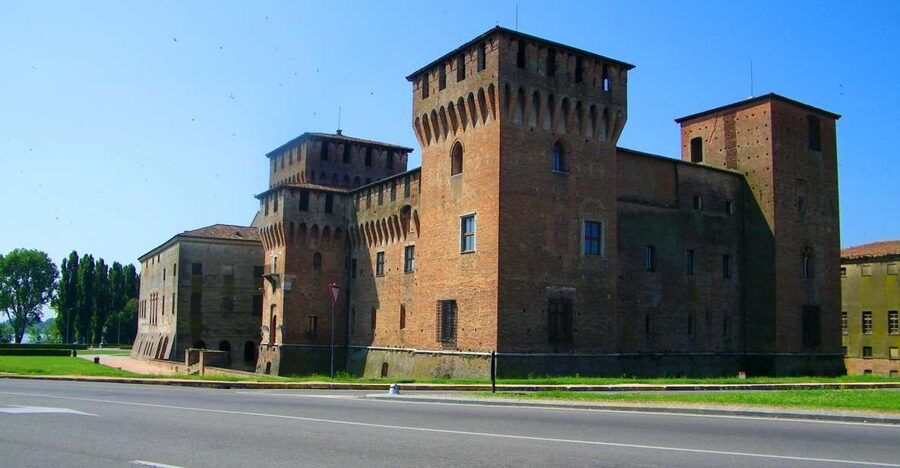
- Palazzo Ducale from the outside: See the Gonzaga court complex, Castle of San Giorgio, Palazzo del Capitano, and Corte Vecchia without an interior palace visit.
- Mantua’s oldest church: Enter the round Rotonda di San Lorenzo, modeled after the Church of the Holy Sepulcher in Jerusalem.
- Piazza delle Erbe details: Study the House of the Merchant, Palazzo della Ragione, arcades, and astronomical clock tower.
- Sant’Andrea and its sacred relic: Visit Mantua’s largest Renaissance church, linked with the Sacred Vases and the burial place of Mantegna.
- Riverside finish: End at the Loggia delle Pescherie, a 16th-century Giulio Romano structure built for the city’s fish trade.
- Private guide in two languages: Tours are offered in English or Italian, with guides including Liliana and Antonella.
Starting beside Rigoletto’s house
Your walk begins beside the House of Rigoletto, at the tourist information office. Look for a guide wearing a visible license badge around the neck. This clear meeting point matters in Mantua, where the old center contains several connected squares and narrow streets that can feel confusing at first.
The Rigoletto stop gives the tour a playful opening. The house is viewed from outside, with a bronze statue of the court minstrel made famous by Giuseppe Verdi’s opera. Rigoletto is a fictional character, but the setting connects Mantua’s real court culture with one of opera’s best-known stories.
You do not need to know Verdi’s opera to enjoy the stop. It works as a quick introduction to Mantua’s long association with rulers, musicians, artists, and theatrical life. If you are traveling with teenagers, this is also a useful visual moment before the more serious church and palace stops.
The tour returns to the same meeting point at the end. Since the route lasts two hours, you can plan a meal, museum visit, or independent walk afterward without giving up an entire morning or afternoon.
A few more Mantua trips worth weighing up
- Mantova Walking Tour with Audio and Written Guide by a Local
★ 5.0 · 26 reviews - Mantova: Private Walking Tour
★ 4.3 · 3 reviews - Milan: Guided Walking Tour & Last Supper Visit with Ticket
★ 4.7 · 5,409 reviews
Meeting the Gonzaga court at Palazzo Ducale
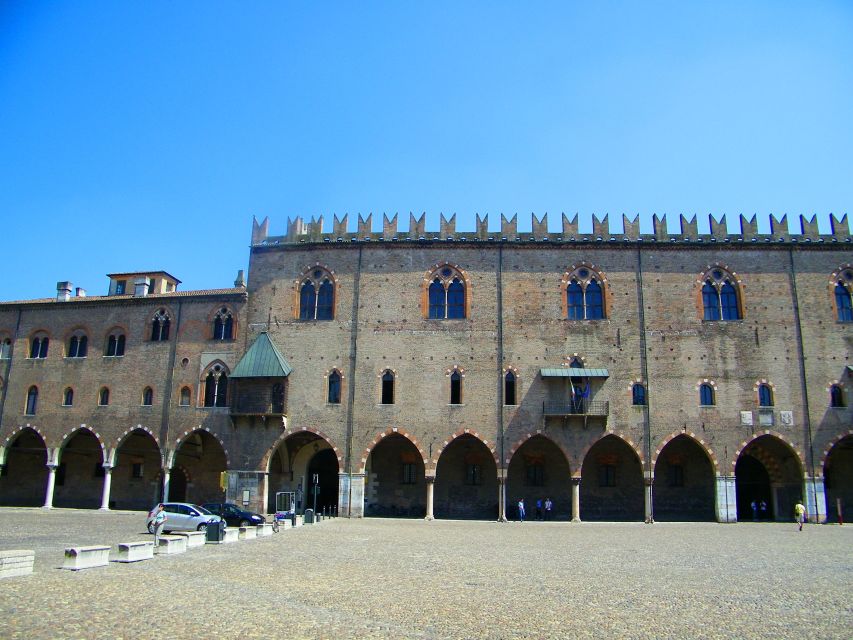
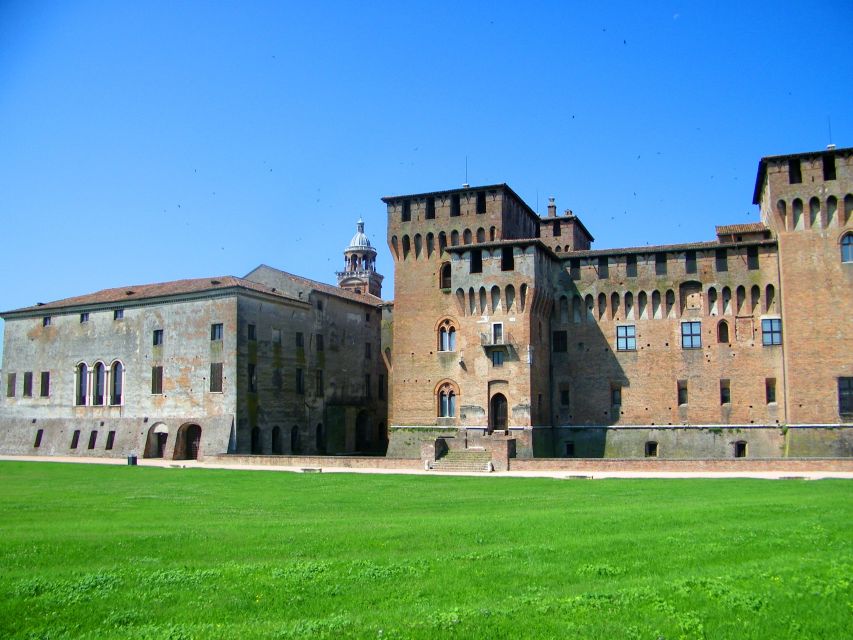
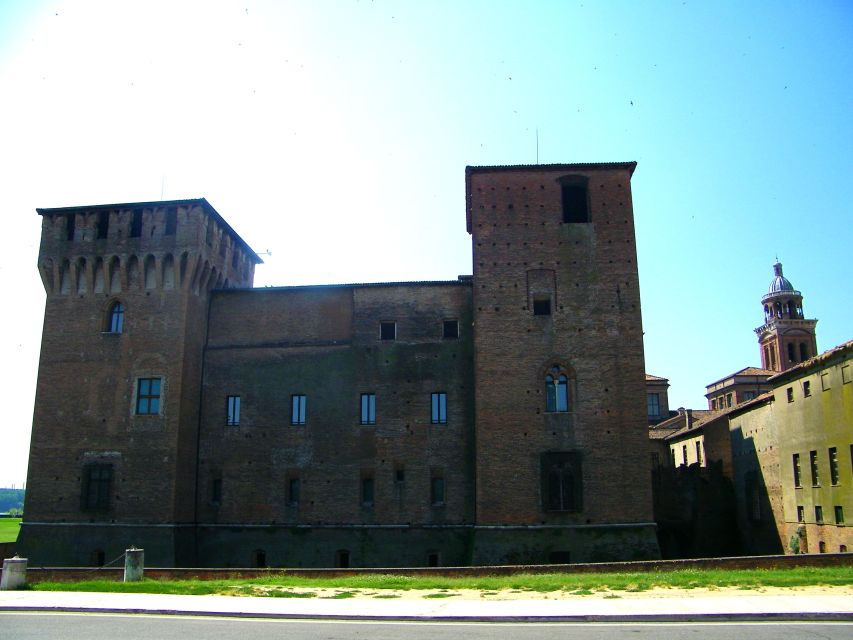
The first major sight is Palazzo Ducale, the huge complex associated with the Gonzaga family, who ruled Mantua for many years. From outside, you can appreciate the scale of the court residence and the way several buildings were joined into one grand center of power.
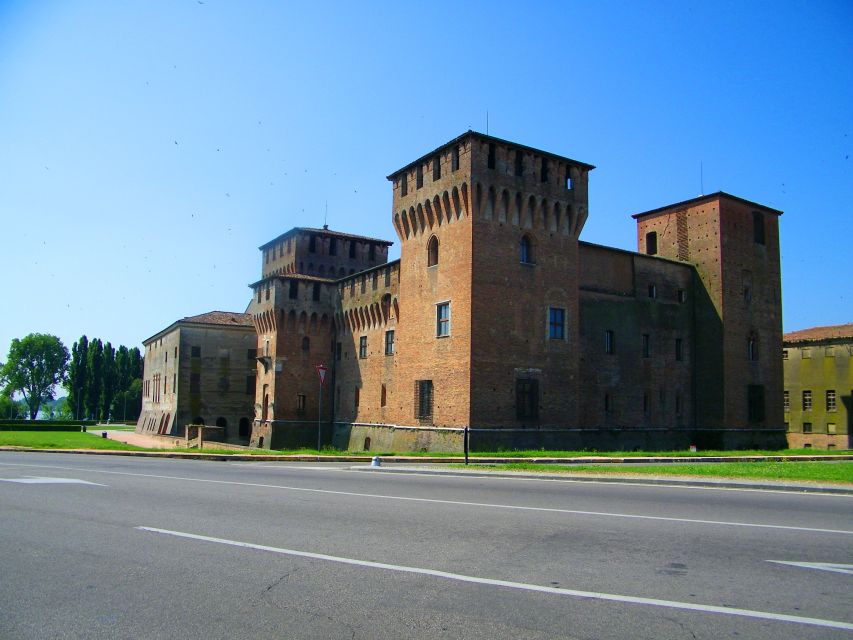
The complex includes the Castle of San Giorgio, Palazzo del Capitano, and Corte Vecchia. Castle of San Giorgio began with a defensive purpose. Its four corner towers helped protect the building, but the castle later became an elegant residence decorated with frescoes by Andrea Mantegna.
That change from fortress to court home tells you much about Mantua. The Gonzaga rulers wanted security, but they also wanted art, ceremony, and a residence that displayed their status. Your guide can explain the connection between the defensive structure and its later artistic role while you examine the exterior.
There is an important limit here. This experience includes only an external visit to Palazzo Ducale. You do not enter the palace or see the Camera degli Sposi. If Mantegna’s famous frescoed room is your chief reason for coming to Mantua, you will need a separate palace admission and more time.
Still, the outside visit has value. You get the setting, the names of the main sections, and the political story before deciding if you want to return for a longer interior visit. For a short orientation walk, this is a sensible tradeoff.
Inside Mantua Cathedral
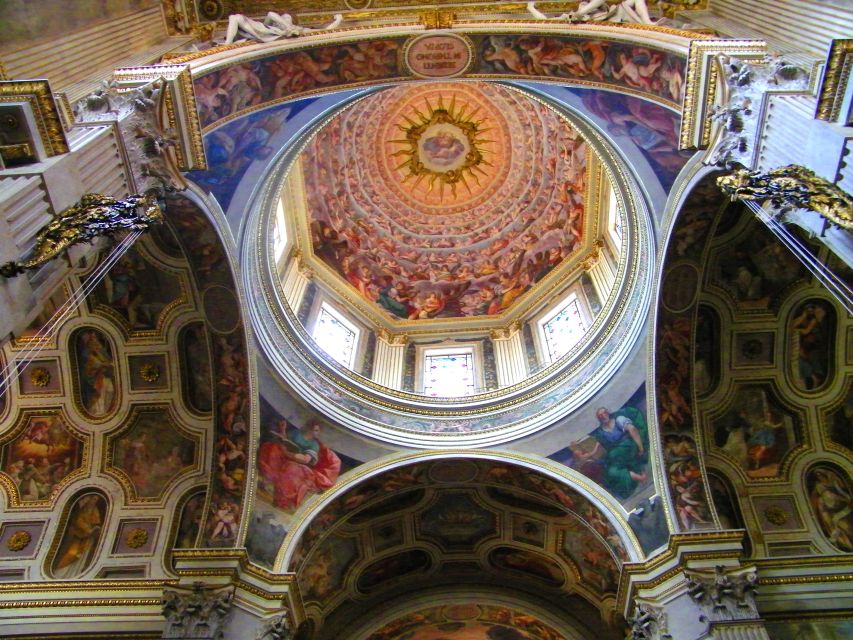
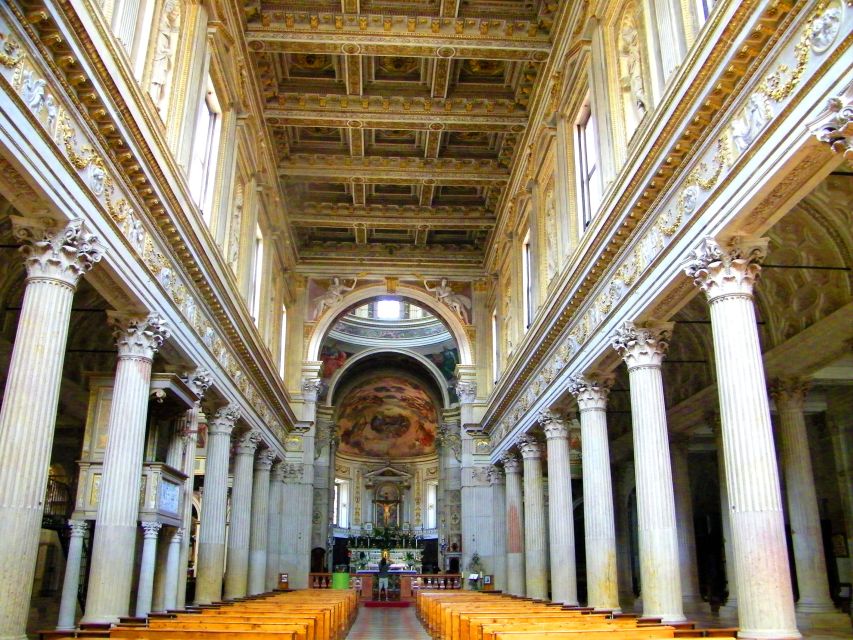
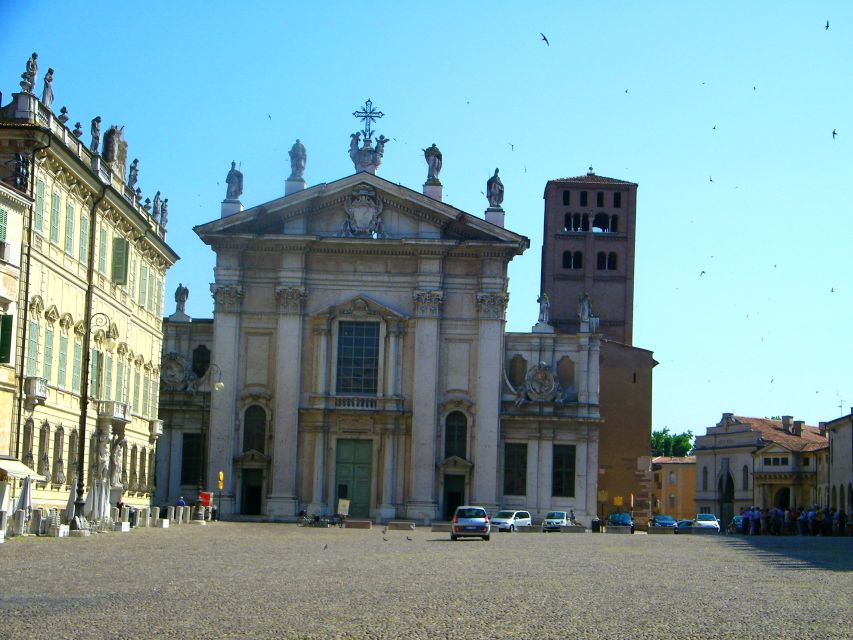
The route continues to Mantua Cathedral, dedicated to St. Peter. Its Carrara marble facade gives the church a formal Renaissance appearance, while the interior contains paintings by Renaissance artists, Gonzaga tombs, and a clay Via Crucis.
This is one of the tour’s useful contrasts. Palazzo Ducale shows secular power, while the cathedral shows how religion and dynastic identity met in the same city. The tombs of important Gonzaga family members make the connection direct.
The cathedral visit is more rewarding if you take time to look beyond the main altar area. Notice the change between the exterior marble and the decorated interior, then listen for the guide’s explanation of the artwork and the Gonzaga family connection.
The tour description does not promise a long interior study, so do not expect a specialist art-history lecture lasting hours. You are getting a guided introduction as part of a moving walking route. That keeps the pace lively, but anyone who wants to examine every painting closely may want to return on their own.
Reading Mantua through Piazza delle Erbe
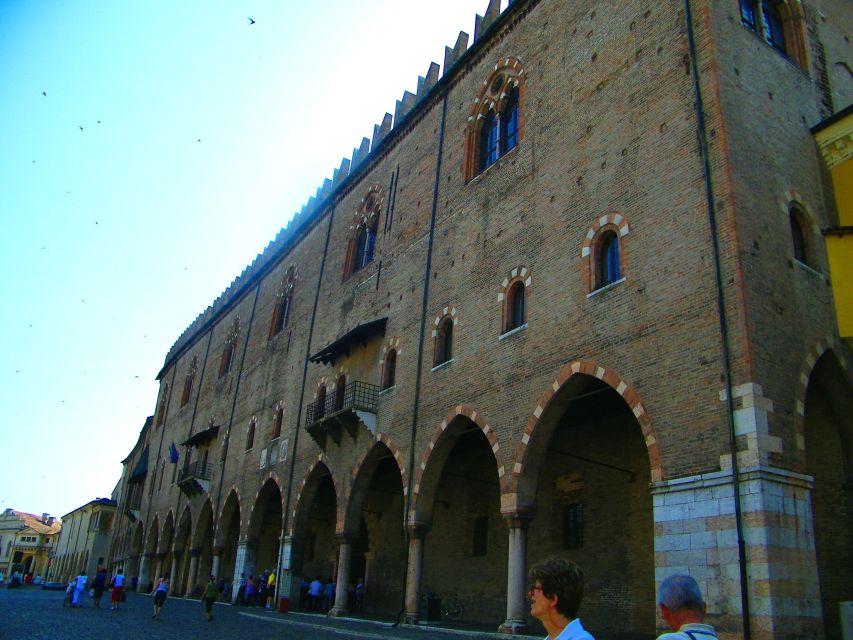
From the cathedral, the walk reaches Piazza delle Erbe, one of Mantua’s oldest and most picturesque squares. Its name means Square of Herbs, and the space still hosts a fruit and vegetable market.
This is the kind of place where Mantua feels like a living town rather than a row of monuments. Gothic and Renaissance arcades frame shops, bars, and restaurants, making the square a natural meeting place. You can look at the architecture, then notice the ordinary business of buying food and meeting friends.
Several major buildings crowd into the square, so the guide’s explanations help you sort them out. The Palazzo della Ragione represented administrative power, while the House of the Merchant has an original oriental-style facade linked to the goods once sold there.
The House of the Merchant is an especially good detail for anyone interested in trade. Its facade is not simply decoration. It hints at the goods and contacts that connected Mantua with places beyond Lombardy.
Because the square still functions as a market and social space, the scene can change depending on the time of day. You might find stalls, open shops, and busy cafes, or a quieter view of the arcades. The tour gives you the context to understand both versions.
More Mantua trips:
- Palazzo Te Mantova – Tour with Guide Tiziana Portioli
★ 5.0 · 66 reviews - Palazzo Ducale Mantova – by Local Guide Tiziana Portioli
★ 5.0 · 62 reviews - Mantova Centro Storico – Tour a piedi con Guida Tiziana Portioli
★ 5.0 · 61 reviews - Mantova City Center and Ducal Palace: 3-Hour Guided Tour
★ 4.9 · 47 reviews
The Rotonda and the astronomical clock
The Rotonda di San Lorenzo is the oldest medieval church in Mantua and one of the route’s most unusual buildings. Its round plan recalls the Church of the Holy Sepulcher in Jerusalem, giving it a shape unlike the larger rectangular churches nearby.
The simple geometry is the point. Instead of entering another grand hall filled with layers of decoration, you see a compact medieval structure with a strong symbolic connection to Jerusalem. It offers a change of mood after the larger cathedral.
In the same square, the Clock Tower carries an astronomical clock. It marks more than the hour, showing the days of the moon, the position of the stars, and the zodiac signs.
This is a stop where a guide adds real value. A clock face can be easy to pass without understanding what you are seeing. The explanation turns it into evidence of medieval and Renaissance interest in time, astronomy, and the order of the heavens.
The square also contains Palazzo della Ragione and the House of the Merchant, so these stops form a compact lesson in civic authority, commerce, religion, and science. You are not simply checking off buildings. You are seeing the different systems that kept Mantua running.
Sant’Andrea, Mantegna, and the Sacred Vases
The walk then reaches the Church of Sant’Andrea, the largest church in Mantua and a major example of Renaissance design. Its interior is filled with decorations and frescoes associated with artists including Correggio and Mantegna.
Mantegna is especially important here because he is buried in the church. His presence links Sant’Andrea with the artistic culture of the Gonzaga court that you encountered earlier at Palazzo Ducale.
The church also preserves the Sacred Vases, a relic associated by legend with earth containing the blood of Christ. This is a distinctive part of Mantua’s religious identity, and your guide can explain its place in local tradition.
The stop works for both art lovers and visitors who prefer stories to technical detail. You can focus on the grand interior, the paintings, Mantegna’s tomb, or the unusual relic. The guide’s job is to connect these pieces so the church does not feel like a list of names.
As with the cathedral, the available time is limited by the two-hour route. You will see the church during the guided walk, but you may want to return if you prefer a quiet, unhurried look at the decorations.
Finishing at the Loggia delle Pescherie
The final stop is the Loggia delle Pescherie, an atmospheric riverside structure built in the 16th century by Giulio Romano. Fish caught in the Po River once arrived here before being sold in the nearby market.
This is a fitting end because it brings the tour back to daily life. The palace shows rulers, the churches show faith and art, and the loggia shows food, trade, and work. Its position beside the river also gives you a good setting for photographs.
The building is one of the route’s most distinctive photo stops, but its real interest is practical. It was made for a specific local trade, not just for appearance. That detail helps you picture how Mantua operated before modern markets and transport changed the city.
The tour ends back at the original meeting point. From there, you can return to a favorite square, find a restaurant, or decide to visit Palazzo Ducale separately.
What the private format is worth
The price is $303.60 per group of up to 14 people. At the maximum group size, that works out to about $21.69 per person. For a couple or a very small group, the per-person cost is much higher, so the format makes the most financial sense for families, friends, or a larger party traveling together.
You are paying for a licensed guide, not entrance tickets. That distinction matters because Palazzo Ducale is outside-only, and the Camera degli Sposi is not included. The cathedral, churches, squares, and exterior monuments form the substance of the walking route.
I see the strongest value in the guide’s ability to connect scattered sights. Mantua has no shortage of impressive buildings, but their stories can blur together if you explore without context. A private guide can keep the focus on your group and explain why a clock, a merchant’s facade, or a fish market belongs in the same city story as a ducal palace.
The tour is also short enough to fit into a larger Lombardy itinerary. You do not need to give up a full day. Two hours gives you a firm introduction, though it is not enough for every interior or a slow examination of each work of art.
Pace, language, and practical comfort
The walk is conducted in English or Italian. Guides named Liliana and Antonella are associated with this experience. Liliana is particularly good at keeping younger people engaged, including teenagers, while Antonella is described as patient in her explanations.
That is useful information for families. The route includes art, religion, and political history, subjects that can lose a teenager quickly if explained in a dry way. A guide who keeps the pace and invites attention can make the same buildings work for adults and children.
Wear comfortable shoes. The experience is entirely on foot and moves through the historic center. The route is designed as a walking introduction, not a seated lecture, so practical footwear will make the two hours easier.
Weather can affect the experience. One visitor still enjoyed the route despite heavy rain, but wet conditions will make outdoor stops and the walk between monuments less pleasant. Since Palazzo Ducale and Rigoletto’s house are exterior stops, poor weather matters more here than on an indoor museum tour.
The tour is private, which means your group can share the experience without joining strangers. It does not mean every stop will be long or that the route can cover every monument in Mantua. You are choosing personal attention and a compact route rather than an extended palace visit.
Who will get the most from this walk
I would choose this tour if you are visiting Mantua for the first time and want a clear introduction before exploring alone. It suits families, small groups, and anyone who prefers a guide to explain the links between architecture, art, religion, and local life.
It is also a good choice if you have only a short stay. The route gathers many central sights into two hours, beginning and ending at the same place.
You might choose something else if your main goal is entering Palazzo Ducale and seeing the Camera degli Sposi. Since those interiors are not included, you should treat this tour as an orientation and arrange palace admission separately if needed.
Food-minded visitors may also enjoy the route’s final connection to Mantuan trade and local specialties. The walk itself does not include food or tastings, but it ends near the historic center, where you can continue with Mantuan sweet and savory dishes.
The 4.7 rating from 10 ratings fits the experience’s strengths: capable guiding, patient explanations, and a route that remains enjoyable even in rain. The number of ratings is small, so I would use it as a helpful signal rather than a guarantee.
Should you book it?
Book this Mantua walk if you want a short, private introduction to the city’s Renaissance center and care more about connected stories than admission to one major museum. The route gives you Palazzo Ducale’s setting, the cathedral, Piazza delle Erbe, the Rotonda, the clock tower, Sant’Andrea, and the riverside Loggia delle Pescherie.
Skip it if you already know Mantua well or want a long, detailed palace visit. In that case, put the $303.60 toward individual admission and independent time inside Palazzo Ducale.
For most first-time visitors with a group large enough to share the cost, I think the tour is a sensible way to get oriented. You leave with the city’s main pieces in place, then can choose which church, palace, market, or restaurant deserves a closer look.
FAQ
Where does the tour begin?
It begins next to the House of Rigoletto at the tourist information office.
How do I identify the guide?
The guide will wear a visible license badge around the neck.
Where does the tour end?
The tour ends back at the original meeting point.
How long does the walking tour last?
The tour lasts two hours.
What languages are available?
The tour is available in English and Italian.
Is this a private tour?
Yes. It is offered as a private group experience.
How many people can join for the listed price?
The price of $303.60 covers a group of up to 14 people.
Is Palazzo Ducale included inside?
No. Palazzo Ducale is visited from the outside only.
Is the Camera degli Sposi included?
No. The Camera degli Sposi is not included.
What should I bring?
Bring comfortable shoes because the experience takes place on foot.
Just added around Mantua
- Mantova: Private Walking Tour★ 4.3 · 3 reviews
- Private Tour Lazing Between the Giants★ 4.5 · 4 reviews
- Mantua: Self-Guided Audio Tour to the City of Lakes★ 4.0 · 4 reviews
- AT THE COURT OF THE GONZAGA:Journey of discovery of the Ducal Palace★ 4.7 · 6 reviews
- Half-day Guided tour of Mantua City Centre and Ducal Palace★ 5.0 · 6 reviews
- MANTOVA: OZIANDO TRA I GIGANTI: Visit to Palazzo Te★ 4.9 · 7 reviews
- Discovery Private Tour of the Gonzaga Palace★ 4.5 · 11 reviews
- MANTOVAGANDO: Tour of the Historic Center of Mantua★ 4.5 · 24 reviews
Walking Tours, compared.
Guided Walking Tour & Last Supper Visit with Ticket
Read our review →
Guided Walking Tour with Last Supper Skip-the-Line
Read our review →
Guided Street Food Walking Tour with Food Tasting
Read our review →
Guided Walking Tour with Duomo and the Last Supper
Read our review →
Best of City Walking Tour with Last Supper Tickets
Read our review →
Milan Highlights and Hidden Gems Private Guided Walking Tour
Read our review →
Browse the lists this tour appears in