
Reviewed · CITY TOURS
Mantova City Center and Ducal Palace: 3-Hour Guided Tour
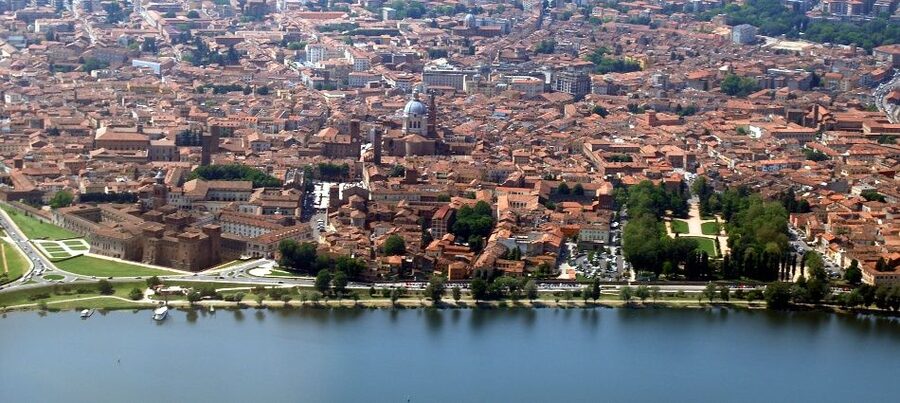
Mantua rises from three small lakes, with medieval canals and grand Gonzaga buildings packed into a walkable old town. The best part of this private three-hour tour is the way guide Manuela Roversi links the city’s water, art, politics, and literary past instead of treating each monument as a separate stop. I especially like the clear route through Piazza Sordello, Piazza delle Erbe, and Piazza Mantegna, plus the chance to add the Ducal Palace and its famous Mantegna frescoes.
I also like the flexibility: the tour is for your group of up to five, and Manuela speaks English, Italian, Spanish, and German. The main consideration is cost. At $124.61 per group, it can be good value for five people, but palace admission is extra at €13 per person, and a three-hour visit cannot cover every corner of a complex with about 1,000 rooms.
In This Review
- Key points at a glance
- Why Mantua works best with a guide
- Starting at Rigoletto’s House
- The Gonzaga court and the Ducal Palace
- Mantegna’s Wedding Room
- Piazza Castello, Santa Barbara, and the palace churches
- Piazza Broletto and Mantua’s medieval center
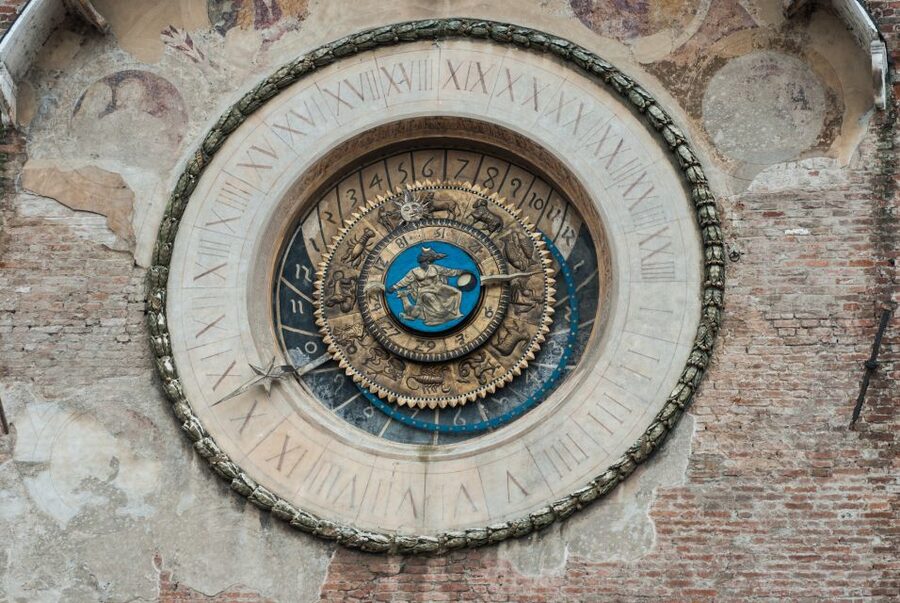
- Piazza delle Erbe and the Clock Tower
- Piazza Mantegna and Sant’Andrea
- The optional Bibiena Theatre
- How much value do you get for $124.61?
- Guide style and group experience
- Who should book this Mantua tour?
- Should you book it?
- FAQ
- How long is the Mantova city tour?
- Where does the tour begin?
- Where does the tour end?
- Is the Ducal Palace entrance fee included?
- Is the tour private?
- Which languages are available?
- Do I need an entrance ticket for the city-center walk?
- What should I wear to enter the churches?
- Can I cancel the booking?
Key points at a glance
- A private route through Mantua’s grandest squares: See Piazza Sordello, Piazza Broletto, Piazza delle Erbe, and Piazza Mantegna with a guide focused on the city’s story.
- The Gonzaga family shapes the whole experience: Their former residence grew into a 34,000-square-meter palace complex filled with courts, galleries, gardens, and art.
- Mantegna’s Wedding Room is the major art highlight: Entry to the Ducal Palace costs extra, and access to this room can be limited on free-admission Sundays.
- Water is part of Mantua’s identity: The Mincio River, three lakes, and the medieval Rio canal help explain the city’s unusual setting.
- A small group makes questions easy: The booking covers up to five people, with a live guide in English, Italian, Spanish, or German.
- Church visits need planning: Shoulders must be covered, shorts are not allowed, and churches close at noon before reopening at 3 p.m.
Why Mantua works best with a guide
Mantua, also called Mantova, is easy to picture as a collection of handsome buildings. A guide helps you see the connection between them. The Gonzaga family did not simply occupy one palace. They reshaped the city over centuries, turning their home into a court complex where artists, architects, and musicians worked.
That story gives the walking route a useful thread. You move from civic squares to religious buildings, then toward the Ducal Palace, seeing how power was displayed in stone, paintings, arcades, and carefully placed entrances.
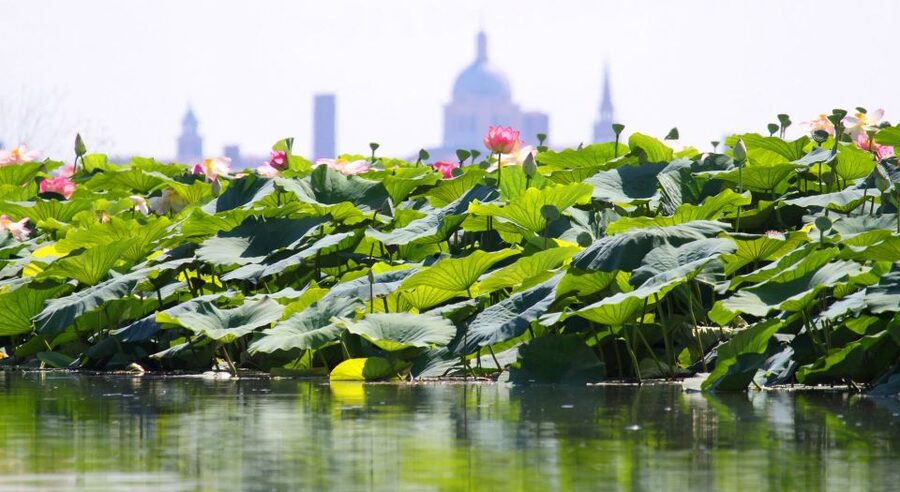
The city’s setting adds another layer. Mantua is surrounded by three small lakes, while the Mincio River and the Rio canal run through local traditions and urban life. You will not be taking a boat on this tour, but the guide uses the relationship between water and earth to explain why the city feels separate from the surrounding countryside.
This is also a good introduction to Mantua’s literary associations. Virgil was born here, Shakespeare sent Romeo to Mantua after his exile from Verona, and Verdi used the city as the setting for Rigoletto. Those connections are not the main reason to book the tour, but they make the streets easier to remember.
A few more Mantua trips worth weighing up
- Lake Como: 3-Hour Boat Rental
★ 4.6 · 185 reviews - 3 hours Boat Rental Lake Como
★ 5.0 · 141 reviews - 3 Hours Guided Cruise with stop and visit of Bellagio
★ 4.5 · 107 reviews
Starting at Rigoletto’s House
The meeting point is Rigoletto’s House at Piazza Sordello 23, near the entrance to the inner courtyard. That makes sense as a starting point because the square immediately puts you beside Mantua’s political and religious center.
The house is tied to Verdi’s opera rather than to a documented historical Rigoletto. Treat it as a literary and theatrical landmark, then let the guide place the opera’s Mantua in context. From here, you can look toward the Ducal Palace façade and the Cathedral, two buildings that set the tone for the old town.
Piazza Sordello also gives you views toward Vicolo Bonacolsi, a narrow historic lane, and the nearby Piazza Castello. The square is broad and formal, while the surrounding lanes feel more intimate. That contrast helps you understand how a court city worked: ceremonial spaces for power, tighter passages for everyday movement.
The tour also visits the exterior of Saint George Castle. The castle is part of the Ducal Palace complex, but seeing it from outside keeps the walking portion moving. If palace interiors are your main goal, tell the guide early so the available time is used well.
The Gonzaga court and the Ducal Palace
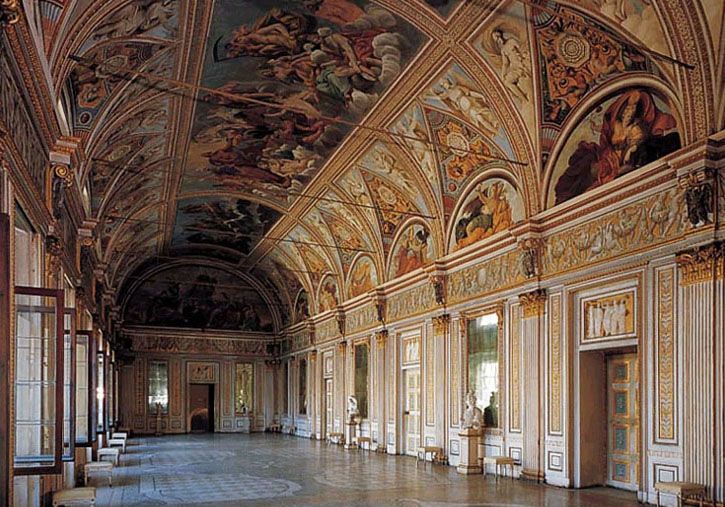
The Ducal Palace is the heavyweight stop. Built between the 14th and 17th centuries, it served as the Gonzaga family’s royal residence when Mantua was the capital of their duchy. It is not one compact palace with a single grand entrance. Corridors, galleries, inner courts, and gardens connect many buildings.
The scale is hard to grasp from one façade. The complex contains about 1,000 rooms and covers roughly 34,000 square meters. A three-hour tour can introduce its key sections, but you should not expect to inspect the entire museum at a relaxed pace.
Admission costs €13 and is not included in the tour price. The guide provides assistance with booking Ducal Palace admission, which is useful because the visit needs to fit the tour schedule. Groups entering the castle and palace are limited to 25 people. Your private party can be smaller, but larger groups need extra guides and advance arrangements.
The palace is now described as Italy’s largest museum. That label matters less than what you actually see: a long sequence of rooms and art spaces where architecture, court ceremony, and painting overlap. The Gonzagas hired major artists and used the palace to show their rank, taste, and political reach.
Mantegna’s Wedding Room
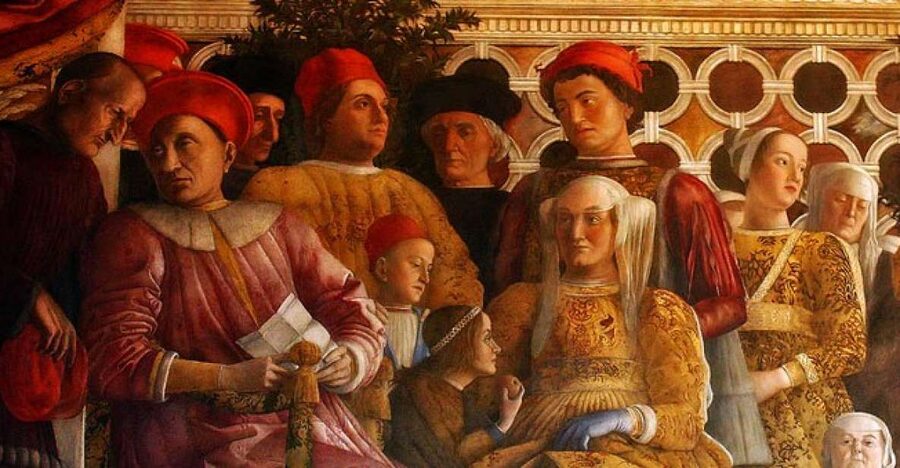
The Camera degli Sposi, or Wedding Room, is the artistic prize of the Ducal Palace. Andrea Mantegna painted its famous frescoes, including the illusionistic ceiling that makes the room feel more open than it really is.
This is the one room I would prioritize if your palace time is limited. Ask Manuela to explain what you are looking at before you enter, since the details are easier to appreciate when you understand how the painted architecture works.
There is an important catch on the first Sunday of each month. Ducal Palace admission is free that day, but tickets cannot be booked in advance. Only 1,500 people per day can enter the room painted by Mantegna, so free admission does not guarantee access to this key highlight.
If the Wedding Room matters most to you, choose another day if possible. Paying the €13 entry fee may offer a better chance of arranging the palace visit around your schedule, though exact access still depends on palace rules and availability.
More Mantua trips:
- Palazzo Te Mantova – Tour with Guide Tiziana Portioli
★ 5.0 · 66 reviews - Palazzo Ducale Mantova – by Local Guide Tiziana Portioli
★ 5.0 · 62 reviews - Mantova Centro Storico – Tour a piedi con Guida Tiziana Portioli
★ 5.0 · 61 reviews - Mantua Lakes and Vallazza Oasis: a timeless boat trip
★ 4.5 · 45 reviews
Piazza Castello, Santa Barbara, and the palace churches
The route continues around the palace area, including Piazza Castello, Piazza Santa Barbara, and Piazza Lega Lombarda. These spaces show that the Gonzaga residence was also a working court, not just a private home.
The Basilica of Santa Barbara is connected with the palace and court. Church interiors often reward a slower look, but timing matters here. Churches close at noon and reopen at 3 p.m. During religious services, visitors cannot enter.
Dress with this stop in mind. Shoulders must be covered, and shorts are not allowed in churches. A wide scarf or sarong is a practical solution if you are wearing clothing that would otherwise prevent entry.
The tour’s church stops are valuable for the way they complete the palace story. The Gonzagas expressed authority through religion as well as art and government. Still, if you take the tour close to midday, some church interiors may be unavailable.
Piazza Broletto and Mantua’s medieval center
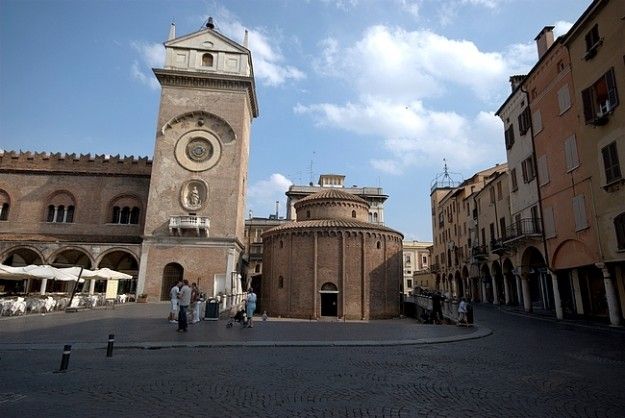
At Piazza Broletto, you will see the medieval Palazzo del Podestà, Palazzo del Massaro, and the Arengario. This part of the route shifts away from the palace court and toward municipal Mantua.
The buildings here help explain how the city functioned before and alongside Gonzaga rule. The square is not simply a photo stop. It shows the older civic framework that the ruling family later adapted and overshadowed.
The guide also points out architectural details in the surrounding lanes. Mantua rewards looking up and across rather than rushing from one famous façade to another. A private guide can adjust the pace when a doorway, arch, or painted detail catches your eye.
That flexibility is one of the stronger reasons to choose this tour instead of a large scheduled group. You can ask about the Gonzagas, Verdi, church architecture, or the city’s water system without waiting for a whole busload of people to move on.
Piazza delle Erbe and the Clock Tower
Piazza delle Erbe brings you into one of Mantua’s most recognizable urban spaces. It is surrounded by the Palazzo della Ragione, the Clock Tower, and the Church of San Lorenzo.
The Palazzo della Ragione reflects Mantua’s medieval civic life, while the Clock Tower adds a later mechanical and visual marker to the square. The Church of San Lorenzo is another reminder that religious buildings are woven into the commercial and political center of town.
Nearby, the Merchant’s House has a distinctive façade worth seeing as part of the square’s architectural mix. The route gives you several different kinds of Mantua in a short distance: government, trade, religion, and timekeeping.
This is also a good section for photographs, but do not let the camera distract you from the layout. The value of a guide here is not only naming buildings. It is showing how the square’s parts relate to one another.
Piazza Mantegna and Sant’Andrea
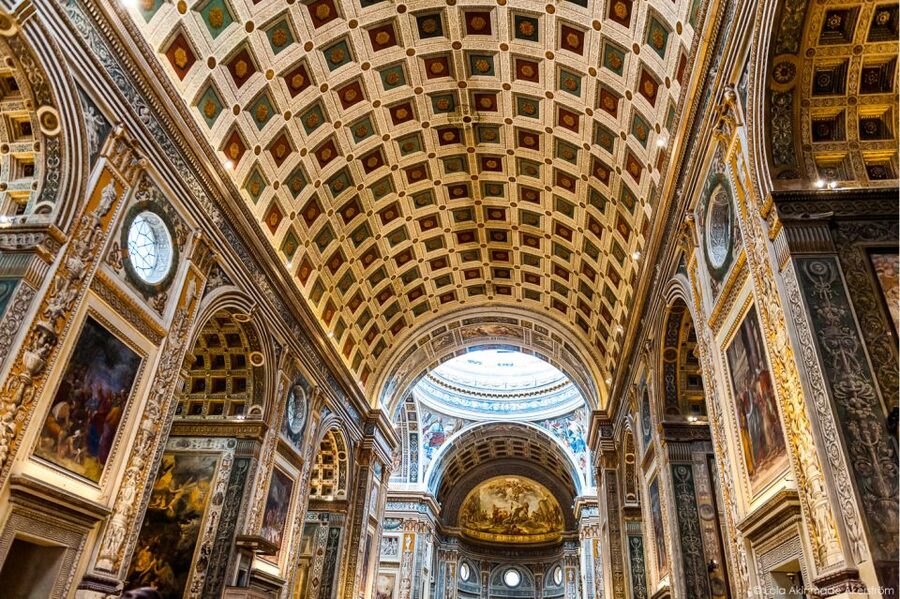
The final major area includes Piazza Mantegna and Piazza Leon Battista Alberti. Piazza Mantegna is dominated by the Basilica of Sant’Andrea, designed by Leon Battista Alberti.
Sant’Andrea is one of Mantua’s most important buildings. Its broad façade and strong geometry reflect Alberti’s approach to Renaissance architecture. The church is a useful counterpoint to the crowded palace complex. At the Ducal Palace, rooms and corridors accumulate over centuries. Here, the architectural idea is more direct and controlled.
Piazza Leon Battista Alberti includes the former cloister of the Sant’Andrea Monastery. This stop adds another piece to the city’s religious and architectural story without requiring a separate excursion.
Again, church hours may affect what you see inside. If your tour begins in the morning, the schedule may work better for church access before noon. If it begins later, you may need to wait until the 3 p.m. reopening.
The optional Bibiena Theatre
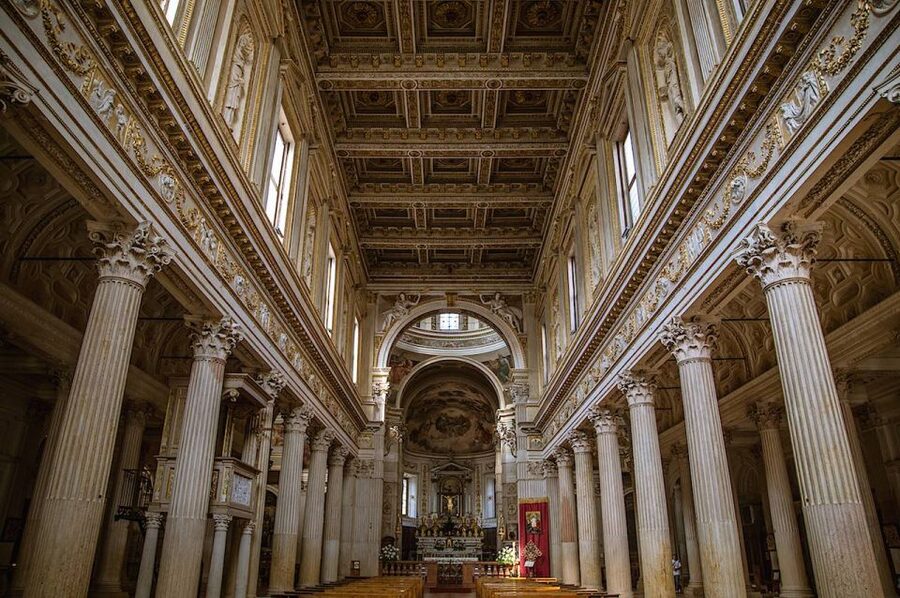
The Bibiena Theatre is not included in the tour, but you can visit it for an additional €2. Mozart played there when he was 13 years old, giving the small theatre an appealing musical connection.
At only €2, this is an easy add-on for music lovers and anyone interested in historic performance spaces. It is not essential to the main route, so do not feel that you are missing the core experience if you skip it.
Ask about timing before adding the theatre. The tour lasts three hours, and the palace already needs a substantial part of that window. The theatre works best as a planned extra rather than a last-minute detour.
How much value do you get for $124.61?
The listed price is $124.61 for a private group of up to five people. That means the value improves sharply when four or five people share the booking. For a full group of five, the guide portion works out to about $25 per person before palace admission.
For one or two people, the price is harder to justify if you only want a quick orientation walk. Mantua’s center is compact, and independent visitors can see many façades without a guide. The private format earns its keep through interpretation, questions, and a more focused palace visit.
Add the €13 Ducal Palace entrance fee for each person who enters. The optional Bibiena Theatre costs €2. The city-center walking portions do not require entrance tickets, so you can still have a substantial experience even if you decide not to enter the palace.
The strongest value comes from combining the walking tour and palace. The guide explains the city first, then gives the Gonzaga residence a proper setting. Without that context, the palace’s size can become tiring. With it, the courts, galleries, and paintings form a clearer story.
Guide style and group experience
Manuela Roversi is the named experience provider, and the tour is designed for a private group. That format should suit you if you prefer to ask questions, move at your own pace, or spend longer on one artwork.
One especially useful detail is that Manuela has shown patience with late arrivals. On one occasion, she waited 15 minutes and used the opening palace discussion to explain the building’s background before moving on. Do not treat that as a guarantee, but it suggests that communication and reasonable flexibility are part of the experience.
The tour has a 4.9 rating from 47 reviews, with repeated praise for Manuela’s clear explanations and ability to bring Mantua’s art and history to life. The useful point is not the number alone. It is that the guide’s interpretation appears to be the main strength, particularly for visitors who want more than a list of dates and names.
You can book the guide in English, Italian, Spanish, or German. Confirm your preferred language when arranging the tour.
Who should book this Mantua tour?
I would choose this experience if you have limited time in Mantua and want the city center and Ducal Palace connected in one visit. It also suits art lovers who want to understand why Mantegna’s Wedding Room matters before seeing it.
Families and small groups may appreciate the private setup. You are not locked into the pace of a large party, and the price makes more sense when several people share it.
Independent history-minded visitors may find enough free information to explore the squares alone. If you dislike guided walks or want a full day inside the palace, this three-hour format may feel too structured and too short.
Plan around church hours, cover your shoulders, and avoid shorts if you want to enter the churches. If Mantegna’s room is your priority, think carefully before choosing the first Sunday of the month, when free admission brings more uncertainty and advance booking is not possible.
Should you book it?
Book this tour if you want Mantua explained through its Gonzaga court, Renaissance art, medieval squares, and unusual water setting. The private format and Manuela’s praised guiding style make it a strong choice for a small group, especially when you include the Ducal Palace.
Skip it if you only want a quick walk through the center or plan to spend many hours exploring the museum on your own. For most first-time visitors with three hours to spare, though, the combination of city orientation and palace context offers a sensible way to meet Mantua.
FAQ
How long is the Mantova city tour?
The guided walking tour lasts three hours. Check availability for the starting times offered on your chosen date.
Where does the tour begin?
It begins at Rigoletto’s House, Piazza Sordello 23, Mantova, near the entrance to the inner courtyard.
Where does the tour end?
The activity ends back at the meeting point at Rigoletto’s House.
Is the Ducal Palace entrance fee included?
No. Ducal Palace admission costs €13 and is separate from the tour price. The guide provides assistance with booking admission.
Is the tour private?
Yes. It is a private group experience for up to five people.
Which languages are available?
The live guide is available in English, Italian, Spanish, and German.
Do I need an entrance ticket for the city-center walk?
No entrance ticket is needed for the city-center walking portion. The optional Bibiena Theatre visit costs €2.
What should I wear to enter the churches?
Your shoulders must be covered, and shorts are not allowed. A wide sarong can help cover your shoulders when needed.
Can I cancel the booking?
You can cancel up to 24 hours in advance for a full refund. The reserve-now, pay-later option lets you hold a place without paying immediately.
Just added around Mantua
- Mantova: Private Walking Tour★ 4.3 · 3 reviews
- Private Tour Lazing Between the Giants★ 4.5 · 4 reviews
- Mantua: Self-Guided Audio Tour to the City of Lakes★ 4.0 · 4 reviews
- AT THE COURT OF THE GONZAGA:Journey of discovery of the Ducal Palace★ 4.7 · 6 reviews
- Half-day Guided tour of Mantua City Centre and Ducal Palace★ 5.0 · 6 reviews
- MANTOVA: OZIANDO TRA I GIGANTI: Visit to Palazzo Te★ 4.9 · 7 reviews
- Mantua: Town Highlights and Monuments Walking Tour★ 4.7 · 10 reviews
- Discovery Private Tour of the Gonzaga Palace★ 4.5 · 11 reviews
City Tours, compared.
City Sightseeing Hop-On Hop-Off Bus with Audio Guide
Read our review →
Guided Duomo, Last Supper and City Centre Tour
Read our review →
Venice Day Trip from Milan with Guided City Tour
Read our review →
Best of City Walking Tour with Last Supper Tickets
Read our review →
eBike City Tour Guided by an iPad and a Tour Leader
Read our review →
Browse the lists this tour appears in