
Reviewed · CITY TOURS
Half-day Guided tour of Mantua City Centre and Ducal Palace
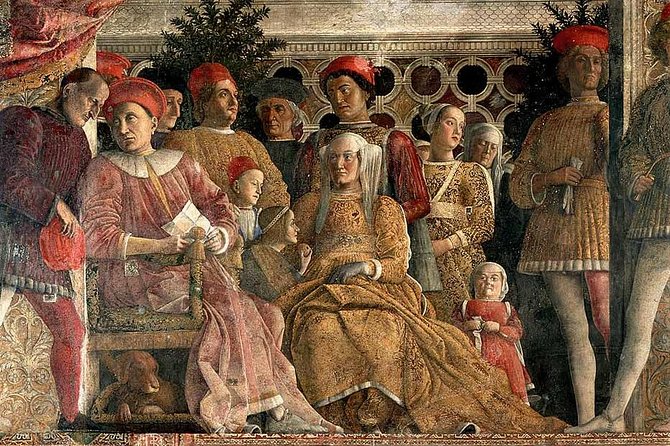
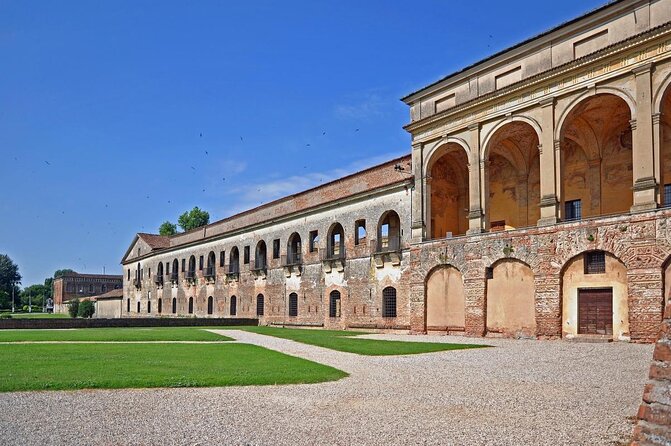
Mantua’s greatest surprise is tucked inside the enormous Ducal Palace: Andrea Mantegna’s Camera Picta, or Bridal Chamber, where painted walls create the illusion of an open loggia above the countryside. This private three-hour walk connects that Renaissance masterpiece with Mantua’s medieval squares and Sant’Andrea Basilica, giving you both the grand monuments and the smaller city details.
I like the private format, which lets guide Manuela Roversi adjust her explanations and answer questions rather than rush a fixed group along. I also like the clear route through the old center, from Piazza Sordello to Piazza delle Erbe, with the tour ending near Sant’Andrea. The main catch is cost: the $131.06 group price does not include the €18-per-person palace ticket, and palace entry should be arranged early in busy periods.
In This Review
- Key points at a glance
- Why this three-hour Mantua walk works
- The Ducal Palace and Gonzaga power
- Mantegna’s Camera Picta in Castello San Giorgio
- Piazza Sordello and the city’s grandest setting
- Piazza Broletto and medieval civic life
- Piazza delle Erbe and the old market quarter
- Sant’Andrea Basilica and Alberti’s bold design
- What Manuela adds to the experience
- Price, tickets, and practical value
- Who should book this Mantua tour?
- FAQ
- How long does the tour last?
- What language is the tour offered in?
- Is this a private tour?
- What is included in the tour price?
- Is the Ducal Palace admission ticket included?
- How much does the palace ticket cost?
- Where does the tour begin?
- Where does the tour end?
- Should I book the palace ticket in advance?
- Can I cancel for a full refund?
Key points at a glance
- Mantegna’s Camera Picta: See the famous fresco cycle inside Castello San Giorgio, where painted architecture creates an open-air illusion.
- Private group of up to five: You get a guide focused only on your party, useful for families and groups with different interests.
- Manuela Roversi’s art focus: Her expertise in Mantua’s art and architecture is central to the experience, especially inside the palace.
- A compact historic-center route: Walk from Piazza Sordello through Piazza Broletto and Piazza delle Erbe without needing city transport.
- Sant’Andrea Basilica: Finish at Leon Battista Alberti’s major Renaissance church, with its barrel-vaulted interior and Mantegna’s tomb.
- Plan palace admission carefully: The €18 ticket is extra, and the supplied details contain conflicting notes about whether the castle portion is included.
Why this three-hour Mantua walk works
Mantua is easy to underestimate. It is not a city where one famous square tells the whole story. The old center gathers Romanesque, medieval, and Renaissance buildings close together, but the details are easy to miss without someone explaining how the Gonzaga family shaped the city.
This tour gives you a sensible first look. You begin at Rigoletto’s House in Piazza Sordello, enter the Ducal Palace area, then work through the principal squares before finishing at Piazza delle Erbe. The route is short enough for a half-day, yet it covers the art and architecture that make Mantua worth a special stop.
I would choose this experience if you want context rather than a simple list of buildings. Manuela’s explanations are especially useful for understanding how painted space, court life, church design, and political power connect. Her strong art-history background also helps when you reach Mantegna’s work, where a few well-chosen details make a big difference.
The format is private for only your group, with a maximum of five people, and the tour is offered in English. That small size matters inside rooms where you want to hear clearly and ask questions. It can also help if you are traveling with teenagers, since the guide can shift from technical art points to stories and visual details.
A few more Mantua trips worth weighing up
- Milan’s Must See: Half-Day Tour of Last Supper, Duomo & La Scala
★ 4.0 · 4,193 reviews - Peschiera: Half-Day Lake Garda Cruise with Lunch
★ 4.6 · 652 reviews - Half-Day Lake Como Discovery Tour from Milan – Semi private tour
★ 5.0 · 29 reviews
The Ducal Palace and Gonzaga power
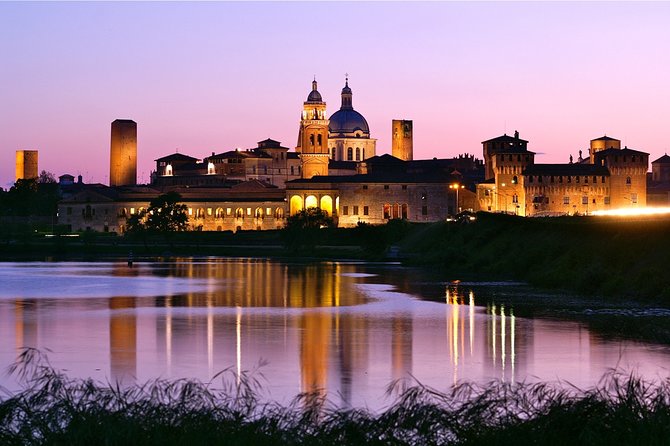
The first major stop is Palazzo Ducale di Mantova, the vast palace complex built by the Gonzagas. It is not one tidy palace with a single grand entrance. The complex covers about 35,000 square meters and includes buildings, galleries, courtyards, gardens, and a castle.
That scale is part of the point. The Gonzagas were one of Italy’s leading Renaissance families, and their home reflects a court that grew over time. Instead of seeing one finished structure, you move through a collection of spaces shaped by different building campaigns and artistic tastes.
Allow about an hour here. The palace is famous for Mantegna’s frescoes, but the experience is broader than one room. You will encounter painted decoration, formal architecture, inner courts, and the way Gonzaga power was presented through art.
This is where a private guide earns her fee. Palace interiors can feel like a procession of rooms unless somebody gives you a framework. Manuela can help you notice relationships between architecture and decoration, rather than leaving you to admire isolated ceilings and walls.
The admission cost needs careful attention. The tour price is $131.06 per group of up to five, but the palace ticket is listed separately at €18 per person. That makes the tour a better deal for a full group than for one or two people, though you still need to add admission for everyone entering.
There is a small inconsistency in the supplied ticket information. The Castello San Giorgio stop says admission is included, while the fee details say the Ducal Palace and San Giorgio castle ticket costs €18 per person and is not included. I would email Manuela after booking and confirm exactly which ticket you need before arrival. In high season, advance booking is strongly advised because limited entry can leave you outside the castle.
Mantegna’s Camera Picta in Castello San Giorgio
Castello San Giorgio contains the artistic high point of the visit, the Camera Picta, also called the Camera degli Sposi or Bridal Chamber. Andrea Mantegna created the room in the 15th century, and it is one of the clearest examples of Renaissance painting turning a small interior into an imagined outdoor setting.
Give this stop about 30 minutes. The frescoes make you feel as if you are beneath an open portico looking out toward the countryside. Painted architectural features extend the real room, while figures and details draw your eye upward and outward.
The effect is clever, but it is not just a visual trick. Mantegna’s work shows how Renaissance artists used perspective to reshape the viewer’s sense of space. A guide can point out how the room’s decoration serves both art and court image, helping you see why this chamber is more important than a pretty painted interior.
This is also the portion most likely to make the tour worthwhile for art lovers. You can read about the Camera Picta beforehand, but the room’s illusion is easier to appreciate when someone directs your attention to the painted structure and the countryside view it appears to open onto.
The timing here is compact. Thirty minutes is enough for an informed introduction, but you should not expect a long, unhurried museum visit with every corner of the palace explained at length. The tour has several other stops, so Manuela must balance close looking with the wider story of Mantua.
Piazza Sordello and the city’s grandest setting
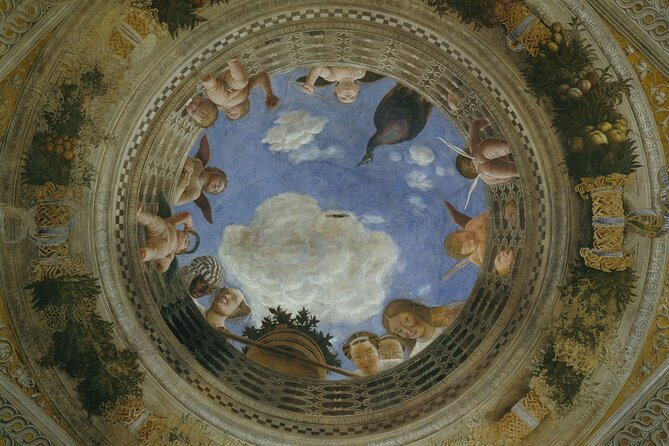
After or around the palace visit, the route takes you through Piazza Sordello. This broad square is surrounded by some of Mantua’s most important buildings, including the Ducal Palace, the cathedral, and the bishop’s seat.
It is a useful place to pause and understand the city’s political and religious center. The size of the square gives the palace room to make an impression, while the surrounding buildings show how closely court, church, and civic authority were tied together.
The meeting point is Rigoletto’s House at Piazza Sordello 23. Starting here keeps the practical side simple: you meet in the historic center and begin near the palace rather than spending time on a transfer from the railway station or another part of Mantua.
The square itself is a free outdoor stop, and you spend about 20 minutes here. That short visit suits the purpose. You are not coming for a long lecture in one plaza, but for a clear explanation of how the buildings around it fit together.
More Mantua trips:
- Palazzo Te Mantova – Tour with Guide Tiziana Portioli
★ 5.0 · 66 reviews - Palazzo Ducale Mantova – by Local Guide Tiziana Portioli
★ 5.0 · 62 reviews - Mantova Centro Storico – Tour a piedi con Guida Tiziana Portioli
★ 5.0 · 61 reviews - Mantova City Center and Ducal Palace: 3-Hour Guided Tour
★ 4.9 · 47 reviews
Piazza Broletto and medieval civic life
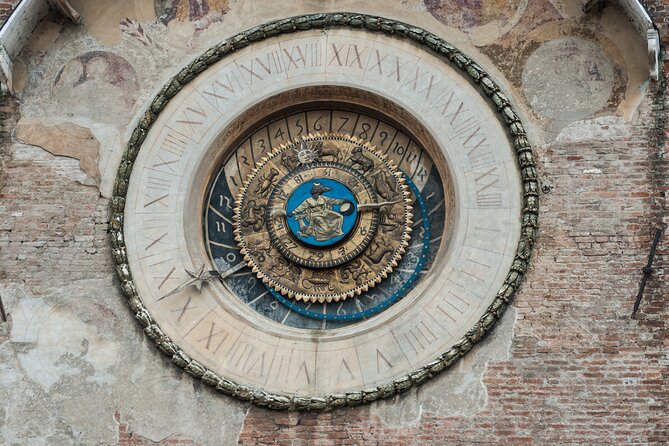
Piazza Broletto offers a different view of Mantua. This was the medieval political square, with communal buildings such as the old town hall and the Massaro’s seat.
The stop lasts about 10 minutes, so expect a focused explanation rather than an extended visit. The square helps fill in the period before the Gonzagas turned Mantua into a major Renaissance court. It also shows that the city’s public life developed around civic institutions as well as palaces and churches.
One detail here is hard to forget. Beneath the large arch are four iron rings associated with torture. It is a stark reminder that medieval public spaces were used for punishment as well as government and trade.
I appreciate this kind of brief stop because it breaks up the parade of grand architecture. Mantua is not only frescoes and elegant facades. Small, unsettling details can make the old center feel more real.
Piazza delle Erbe and the old market quarter
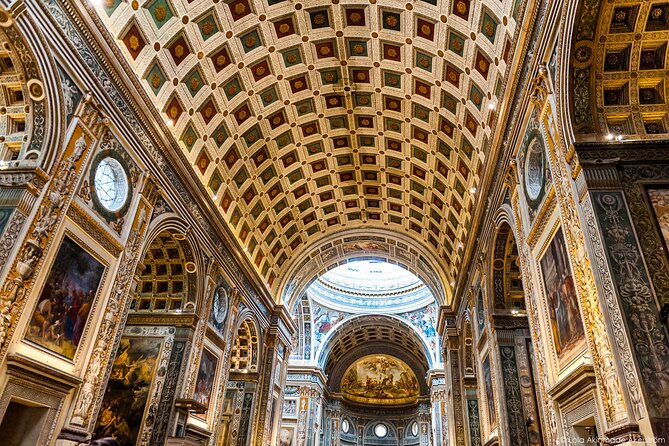
Piazza delle Erbe was named for the medieval fruit and vegetable market. Its buildings include the rear facade of the medieval town hall and the Palazzo di Giustizia, or courthouse.
The square also contains a 15th-century astrolabe and the Romanesque church of San Lorenzo. These details reward a slower look, but the scheduled 10 minutes means you will likely get the key points rather than a full church visit.
The astrolabe adds a useful reminder that medieval and Renaissance cities were organized around practical knowledge as well as religious belief and trade. The market name, courthouse, town hall, church, and astronomical instrument all sit within the same compact urban setting.
The tour ends here, close to Sant’Andrea Basilica. That is convenient if you want to continue exploring Mantua on foot afterward, since you finish in one of the city’s central public squares rather than being returned to a distant meeting point.
Sant’Andrea Basilica and Alberti’s bold design
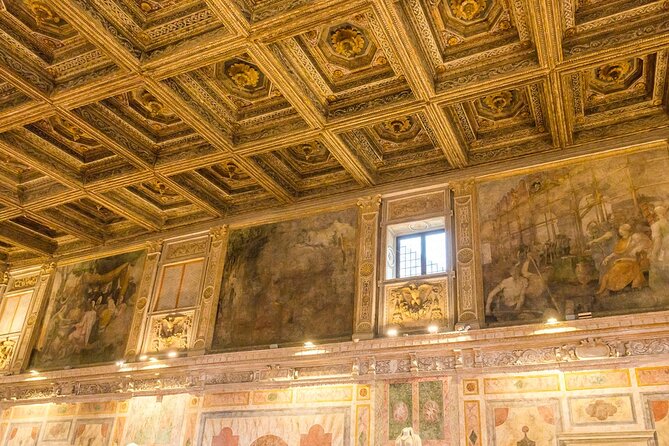
The final listed stop is the Basilica di Sant’Andrea, one of the major 15th-century Renaissance buildings in northern Italy. Leon Battista Alberti planned it, and the exterior uses classical architectural forms on a grand scale.
Inside, the church shifts to a single nave covered by a barrel vault. The walls are painted with trompe-l’oeil decoration, using illusion to suggest architectural depth and structure. After Mantegna’s painted open portico, this creates a fitting final comparison: both artists use painted space to change how you read a real room.
The first chapel on the left contains Andrea Mantegna’s tomb. That gives the tour a satisfying link back to the Ducal Palace and Camera Picta. You begin with the Gonzaga court and Mantegna’s art, then finish with the painter’s burial place inside Alberti’s church.
Only about 10 minutes are assigned to Sant’Andrea. That is enough to identify the main design features and Mantegna’s tomb, but it is not enough for a detailed church study. If the basilica matters greatly to you, you may want to return independently after the tour and spend more time looking at the nave, chapel, and illusionistic wall painting.
What Manuela adds to the experience
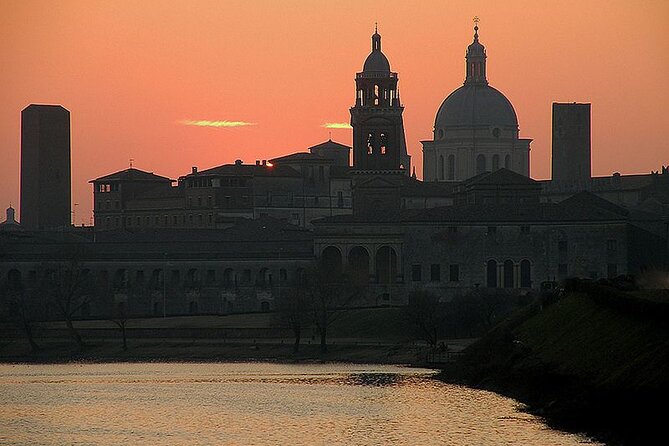
The guide is Manuela Roversi of Alliet’ARTI Tours. The strongest praise centers on her enthusiasm for Mantua, art-historical expertise, and ability to make the past understandable and engaging.
That combination is important here. Mantua’s buildings are impressive, but a guide who only names dates and architects would leave much of the experience flat. Manuela’s value is in connecting the visual evidence to the people and institutions behind it.
Her approach also appears suited to mixed-age groups. If you are visiting with teenagers, you may appreciate a guide who can keep the conversation moving and explain difficult art without making every stop feel like a classroom. The private setup gives her room to answer questions from both specialists and first-time art visitors.
You should still set realistic expectations. This is a three-hour introduction, not an exhaustive study of every palace gallery or church chapel. The route covers six stops, and the palace alone is enormous. If your priority is detailed museum time, a longer or separate palace visit may suit you better.
Price, tickets, and practical value
At $131.06 per group of up to five, the price works best when shared. A full group brings the per-person cost down sharply, while a solo visitor pays the entire group rate. You also need to add the €18 admission fee per person for the Ducal Palace and castle according to the fee information supplied.
For the right group, the price buys more than a walk between landmarks. It buys a private English-speaking guide, a planned route, and specialist interpretation inside one of Italy’s major Renaissance palace complexes. That is useful in Mantua, where the palace’s size and the city’s layered architecture can be hard to organize on your own.
The value is weaker if you only want a quick orientation or already have strong art-history knowledge. In that case, the outdoor squares are free, and you could visit them independently. The tour makes the most sense when you want the palace and Mantegna explained properly.
Book the palace entry early in the busy season. The supplied instructions warn that quota-controlled tickets may sell out, and the tour price does not guarantee palace access. After booking, contact Manuela for the ticket arrangements and confirm the castle admission detail because the published information is not perfectly consistent.
The tour is near public transportation, and most people can take part. No private transfer is included, so plan to arrive at Rigoletto’s House in Piazza Sordello on your own. Since the end point is Piazza delle Erbe, you can continue with your own Mantua plans after the final explanation.
Free cancellation is available if you cancel at least 24 hours before the start time. Changes or cancellations made inside that window are not accepted for a refund.
Who should book this Mantua tour?
I would book this tour if you have a half-day in Mantua and want the city’s main art and architecture put into order. It is particularly well suited to couples, families, and small groups of up to five who value a private guide and want to focus on Mantegna, the Gonzagas, and Renaissance design.
It is also a good fit for first-time visitors who do not want to work out the palace route alone. Manuela’s art background should help you get more from the Camera Picta than you would from a quick walk-through.
I would hesitate if your schedule is tight enough that you cannot secure palace entry, or if you want several hours inside the Ducal Palace without moving on. Confirm the €18 ticket arrangements before you go, then book with confidence if the palace, Mantegna, and historic center are your priorities.
FAQ
How long does the tour last?
The tour lasts approximately three hours.
What language is the tour offered in?
The tour is offered in English.
Is this a private tour?
Yes. Only your group participates, with a maximum of five people.
What is included in the tour price?
The price includes a professional guide and a private tour.
Is the Ducal Palace admission ticket included?
The fee information states that the Ducal Palace admission ticket costs €18 per person and is not included. The supplied details also contain a conflicting note about Castello San Giorgio admission, so confirm the exact ticket arrangement with the guide after booking.
How much does the palace ticket cost?
The listed fee is €18 per person for the Ducal Palace and San Giorgio castle ticket. The fee section also lists €18 per person for Palazzo Ducale di Mantova.
Where does the tour begin?
The tour begins at Rigoletto’s House, Piazza Sordello 23, 46100 Mantova, Italy.
Where does the tour end?
The tour ends in Piazza delle Erbe, close to Sant’Andrea Basilica.
Should I book the palace ticket in advance?
Yes. Advance booking is highly recommended because entry is subject to quotas, particularly during high tourist season.
Can I cancel for a full refund?
Yes, if you cancel at least 24 hours before the experience’s start time. Cancellations made less than 24 hours beforehand are not refunded.
Just added around Mantua
- Mantova: Private Walking Tour★ 4.3 · 3 reviews
- Private Tour Lazing Between the Giants★ 4.5 · 4 reviews
- Mantua: Self-Guided Audio Tour to the City of Lakes★ 4.0 · 4 reviews
- AT THE COURT OF THE GONZAGA:Journey of discovery of the Ducal Palace★ 4.7 · 6 reviews
- MANTOVA: OZIANDO TRA I GIGANTI: Visit to Palazzo Te★ 4.9 · 7 reviews
- Mantua: Town Highlights and Monuments Walking Tour★ 4.7 · 10 reviews
- Discovery Private Tour of the Gonzaga Palace★ 4.5 · 11 reviews
- MANTOVAGANDO: Tour of the Historic Center of Mantua★ 4.5 · 24 reviews
City Tours, compared.
City Sightseeing Hop-On Hop-Off Bus with Audio Guide
Read our review →
Guided Duomo, Last Supper and City Centre Tour
Read our review →
Venice Day Trip from Milan with Guided City Tour
Read our review →
Best of City Walking Tour with Last Supper Tickets
Read our review →
eBike City Tour Guided by an iPad and a Tour Leader
Read our review →
Browse the lists this tour appears in