
Reviewed · MANTUA TOURS
Mantova Centro Storico – Tour a piedi con Guida Tiziana Portioli
Mantua’s old town is a compact lesson in Italian history, where a round Romanesque church, a grand Renaissance basilica, medieval civic buildings, and the Gonzaga court all sit within an easy walk. This private tour with Tiziana Portioli gives you a guide to connect those pieces instead of leaving you to admire them one at a time.
I like the private format, which keeps the pace suited to your group of up to six. I also like the focus on context: Tiziana links buildings, art, local people, and political history in clear English. The main consideration is time. At about 90 minutes, this is a brisk introduction, and entrance fees for places such as the Ducal Palace and Rotonda di San Lorenzo are extra.
In This Review
- Key points to know before booking
- Why this short walk works in Mantua
- The Rotonda di San Lorenzo and Mantua’s oldest church
- Sant’Andrea, Alberti, and the grand Renaissance turn
- Mantua Cathedral and the city’s religious center
- Piazza delle Erbe, where old Mantua feels lived in
- The Ducal Palace and the Gonzaga court
- Piazza Broletto and medieval public life
- Tiziana’s guiding style and what the ratings mean
- Price, group size, and practical value
- Who should book this Mantua walk?
- Should you book it?
- FAQ
- How long does the Mantua walking tour last?
- Is the tour private?
- Is the tour offered in English?
- Where does the tour begin and end?
- Are entrance tickets included?
- Are reservations needed for the Ducal Palace?
- Can I cancel for a full refund?
Key points to know before booking
- A small private group: You explore with only your own party, up to six people.
- Strong English guiding: Tiziana is praised for clear English, friendly delivery, and precise explanations.
- Six central stops: The route covers major churches, squares, the cathedral, and the Gonzaga court.
- A useful history lesson: You move from Roman and medieval Mantua to its Renaissance high point.
- Mostly an exterior and orientation walk: The tour service is included, but several major interiors require separate tickets.
- A good first look at Mantua: The 90-minute format helps you get your bearings before exploring on your own.
Why this short walk works in Mantua
Mantua can feel confusing at first because its important sights are spread across several connected squares rather than gathered around one obvious main street. A guide helps you see how Piazza Sordello, Piazza Broletto, Piazza delle Erbe, and Piazza Mantegna fit together.
The city’s past is unusually layered. You can look down into a church built in the late 11th century, then turn toward a Renaissance basilica designed by Leon Battista Alberti. A few minutes later, the Gonzaga family’s enormous palace complex brings you into the world of court life, art, music, and power.
I find this kind of walk most useful early in a stay. You get the broad picture first, then you can return to the buildings that caught your attention. The tour begins at the Ducal Palace on Piazza Sordello and ends at Piazza delle Erbe, giving you a natural starting point for lunch, a café stop, or more independent sightseeing.
The experience is private, so you do not need to match the pace of a large group. That matters in a historic center where narrow streets, uneven paving, and sudden points of interest can slow you down. The stated duration is approximately one hour and 30 minutes, though the exact rhythm can depend on how much discussion your group wants.
More Mantua trips:
- Palazzo Te Mantova – Tour with Guide Tiziana Portioli
★ 5.0 · 66 reviews - Palazzo Ducale Mantova – by Local Guide Tiziana Portioli
★ 5.0 · 62 reviews - Mantova City Center and Ducal Palace: 3-Hour Guided Tour
★ 4.9 · 47 reviews
The Rotonda di San Lorenzo and Mantua’s oldest church
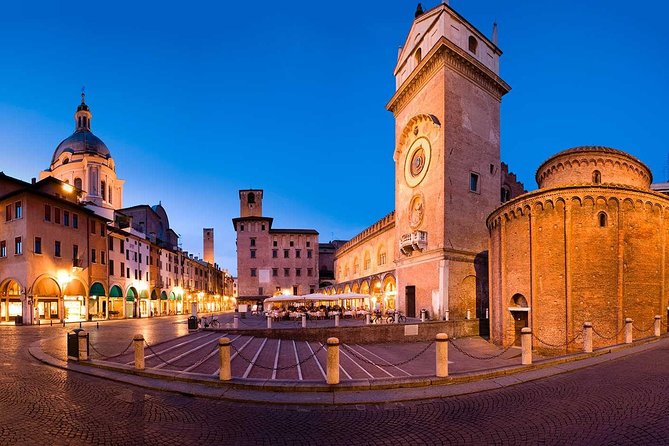
The Rotonda di San Lorenzo is a striking place to begin understanding Mantua. It is considered the city’s oldest church and now sits below the level of Piazza delle Erbe, a reminder that the modern city has gradually built up around an older one.
The church was built during the rule of the Canossa family in the late 11th century. Its round plan was inspired by the Church of the Holy Sepulchre in Jerusalem, and it was dedicated to Saint Lawrence. That central design makes it different from the larger, more formal churches you see later in the walk.
Inside, you might find traces of its early character, including the matronaeum, a gallery traditionally associated with female worshippers, and fragments of Byzantine-style frescoes dating from the 11th and 12th centuries. A later fresco fragment in the apse shows the Martyrdom of Saint Lawrence.
Look closely at the building materials. The main construction uses brick, in keeping with local Lombard practice, while some columns and marble details came from ancient buildings. Tiziana can help you read those details as evidence of reuse and changing building traditions, rather than simply pointing out that the church is old.
Admission to the Rotonda di San Lorenzo is not included and costs €1 per person. The stop itself is listed as about five minutes, so you should not expect a long guided visit inside. Still, even a short explanation can make the church far more meaningful than a quick photograph from the square.
Sant’Andrea, Alberti, and the grand Renaissance turn
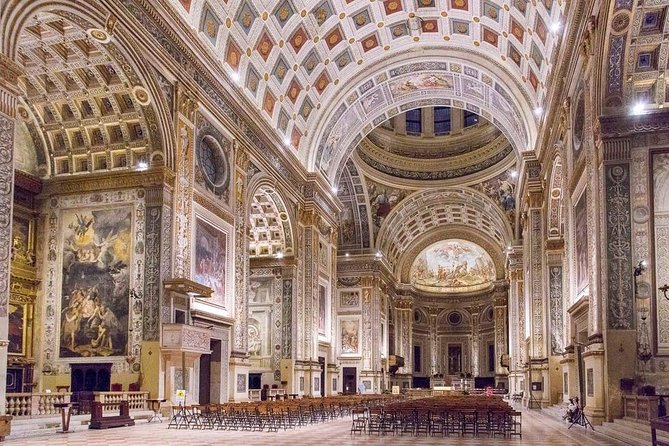
From the smaller Rotonda, the Basilica of Sant’Andrea brings a sharp change in scale. Its broad façade and position on Piazza Mantegna give it a commanding presence, and its design marks one of northern Italy’s major Renaissance moments.
Ludovico III Gonzaga commissioned the basilica, and construction began in 1472 following plans by Leon Battista Alberti. The site had previously held a Benedictine monastery, and the monastery’s 1414 bell tower remains. The building took 328 years to finish, so what you see today reflects a long process rather than a single, untouched design.
That long construction period is worth keeping in mind. Later additions and changes altered Alberti’s original plan, but the basilica is still regarded as one of his most complete works. I like this stop because it gives you a clear way to understand the Gonzaga family’s ambitions. They were not only ruling Mantua. They were shaping its public image through architecture.
The tour allows about 20 minutes here, with free admission listed for the basilica. That gives Tiziana time to explain the building and point out what to notice, but your visit will still be selective. If you want a slow look at every chapel, artwork, and architectural detail, you may need to return later.
Mantua Cathedral and the city’s religious center
The Duomo, or Cathedral of Saint Peter, adds another layer to the city’s religious and civic story. It is Mantua’s cathedral and the seat of the Bishop of Mantua, making it more than another historic church on the route.
A 20-minute stop gives you a chance to understand its role within the city. The cathedral belongs near the Ducal Palace and Piazza Sordello, where religious authority and Gonzaga power occupied the same central zone.
The information provided for this tour does not promise a separate entrance charge for the cathedral, and admission is listed as free in the itinerary. Even so, you should allow for the possibility that the guide’s time here is focused on orientation rather than a full interior art tour.
This is one reason the walk works best as an introduction. Tiziana’s job is to help you see relationships between places. You are not paying for a long specialist visit to one church. You are getting a connected route through the city center.
A different sort of day out, same corner of Lombardy:
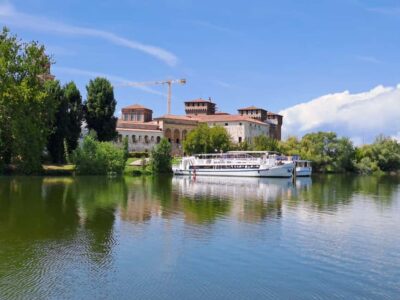
- Mantua Lakes and Vallazza Oasis: a timeless boat trip
★ 4.5 · 45 reviews - Mantovagando
★ 4.5 · 40 reviews - From the magic of the lakes to the ingenuity of Leonardo: sailing through waters and locks
★ 4.6 · 30 reviews - Mantova: Digital guide made with a Local for your Tour
★ 4.3 · 27 reviews
Piazza delle Erbe, where old Mantua feels lived in
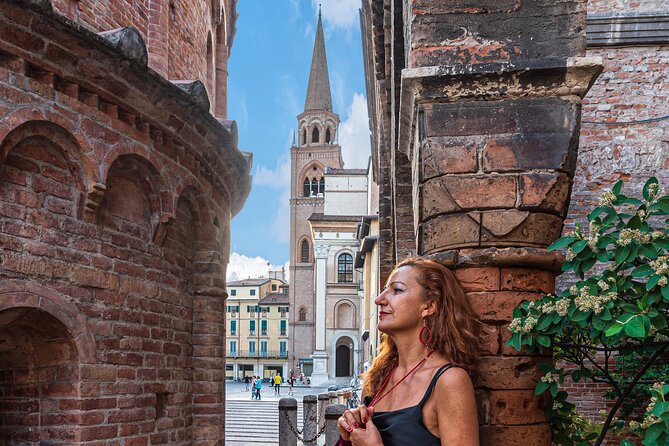
Piazza delle Erbe may feel more like the everyday heart of Mantua than the formal Piazza Sordello. It has cafés, small eateries, arcades, and a mix of buildings that show how the historic center still functions as part of local life.
The square also brings together two very different sights: the Rotonda di San Lorenzo and the rear arcade of Sant’Andrea. That combination is typical of Mantua. Monumental architecture is not isolated behind a museum entrance. It shares space with food, coffee, shopping, and ordinary city routines.
The tour spends about 20 minutes here. That is enough time to get a sense of the square’s layout and hear why it matters, but you will want to linger afterward if you enjoy people-watching or want to stop for a drink.
I especially like having Piazza delle Erbe as the end point. Once the walk is over, you are already in one of the city’s best areas for a break. You can compare the churches and palaces you have just seen with the practical, social life of the square.
The Ducal Palace and the Gonzaga court
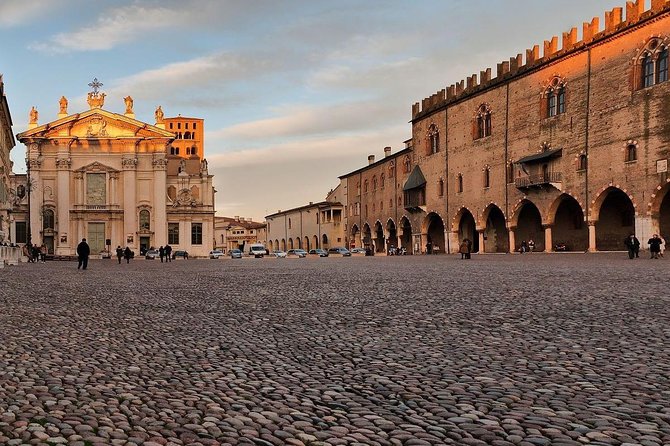
The Palazzo Ducale is the biggest stop in terms of history and scale. It is not one palace in the simple sense, but a connected group of buildings built from the 14th through the 17th centuries. Corridors, galleries, courtyards, and gardens link roughly 500 rooms across an area of about 34,000 square meters.
The Gonzaga family lived here from 1328 until 1707, when the dynasty ended. That long period explains why the complex feels more like a small court district than a single residence. It also explains why a short walk can only introduce you to the palace rather than cover it fully.
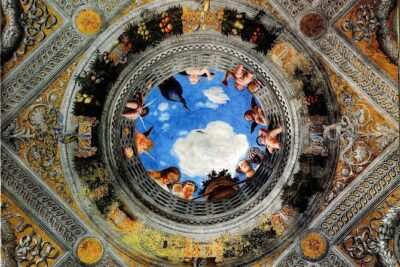
The palace is best known for Andrea Mantegna’s frescoes in the Camera degli Sposi, or Wedding Room. It also contains many other important painted and architectural details. A hidden room discovered in 1998 is thought to have been used for performances of Claudio Monteverdi’s music in the late 16th century, an unusual reminder that the Gonzaga court supported music as well as visual art.
The itinerary allows around 20 minutes for this stop, and the palace entrance is not included. Admission is €15 per person, with free entry for people under 18. A €1.50 reservation fee applies, and from March through June and from September through October, reservations are necessary.
That extra cost changes the value calculation. The tour price covers Tiziana’s private guiding, not museum admission. If you want to see the Camera degli Sposi and explore the palace properly, plan extra time and money. The 20-minute tour stop is best treated as an introduction or a chance to decide what deserves a return visit.
One useful point comes from the way Tiziana guides. Her explanations connect works of art to the city’s story, rather than treating each painting as a separate object. If your group is especially interested in the Ducal Palace, ask in advance about spending more time there. One past booking turned into roughly two hours focused on the palace, but the advertised walking experience itself is approximately 90 minutes, so you should confirm any longer arrangement before relying on it.
Piazza Broletto and medieval public life
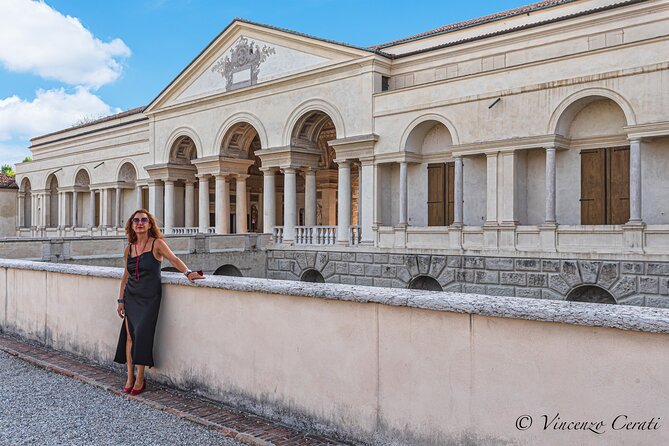
Piazza Broletto shows Mantua before the Gonzaga court became the main force in the city. In the municipal period, this square was a center of public life.
The Palazzo Broletto was built in 1227 by Laudarengo Martinengo, the city’s mayor. On its rear façade is a 13th-century statue of Virgil seated in a chair, known locally as la vecia. The square also includes the Torre del Broletto, or Torre del Podestà, with Casa Tortelli attached to its corner.
At the center, a 19th-century dolphin fountain provides a later touch. On the south side, Palazzo del Massaro dates from the 14th century and contains important 15th-century frescoes connected with the school of Pisanello.
The stop is listed as five minutes, so this is a quick look rather than a full examination of every façade. Still, it adds useful balance to the tour. Without it, Mantua could seem like a city built only for the Gonzaga rulers. Piazza Broletto helps you see the earlier civic structures that shaped public life.
Tiziana’s guiding style and what the ratings mean
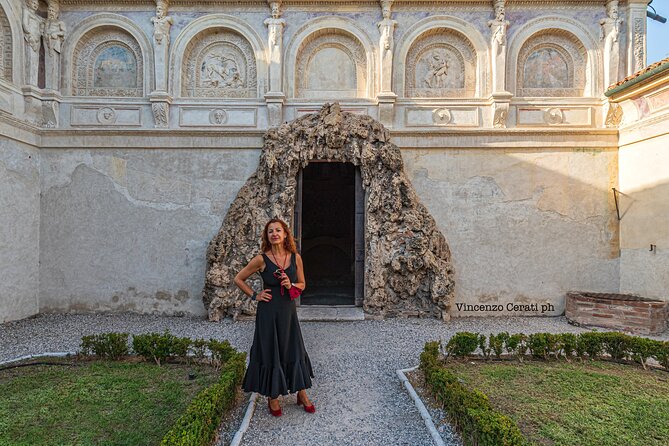
The strongest pattern in the available feedback is Tiziana’s delivery. She is repeatedly described as punctual, friendly, clear in English, and able to explain complicated material in a simple way.
That matters in Mantua because the city’s story can become a blur of family names, dates, artistic movements, and church projects. Tiziana’s best quality appears to be her ability to connect those facts. She explains local architecture, the history of the people who lived here, and the artworks that still show their influence.
The feedback also points to a lively style rather than a dry lecture. One group found that she mixed historical facts with lighter details and extra information. Another appreciated how she tied the city’s story to the works inside the palace. That approach suits you if you want more than a list of construction dates.
Families also seem well served. A parent described children becoming interested in the stories, which suggests that Tiziana can adjust her explanations for mixed-age groups. You should still tell her if children are joining you, since the tour covers churches, political history, and art in a relatively short period.
The tour has a 4.9 rating from 61 ratings, with 100 percent recommending it. Those figures point to a very dependable experience, especially for guide quality. They do not remove the practical limits of a short route or the extra admission costs, but they do make the guiding service the clear strength.
Price, group size, and practical value
The price is $217.23 per group of up to six people. For one person or a couple, that is a significant cost for a 90-minute walk. For a full group of six, it works out to roughly $36 per person before entrance fees, which is much better value.
The private format is the key. You are paying for personal attention, a flexible conversation, and a guide who can answer questions without managing a large crowd. If you are traveling with family or friends, that can be more useful than a cheaper shared walk.
The tour includes the professional guide and private service. It does not include the Ducal Palace ticket, the Rotonda ticket, or optional admission to Palazzo Te. Theatre Bibiena admission, when relevant, is €2 per person. Palazzo Te costs €15 per person, though it is not one of the six listed stops.
The meeting point is Ducale Palace, Piazza Sordello 40. The tour ends at Piazza Erbe. It operates in all weather, so wear suitable clothing and shoes. The meeting area is near public transportation, and service animals are allowed.
Confirmation is issued within 48 hours of booking, subject to availability. Free cancellation is available up to 24 hours before the start time. If you cancel later, the payment is not refunded, and changes made inside that 24-hour window are not accepted.
Who should book this Mantua walk?
I would choose this tour if you want a strong first orientation and prefer a guide who explains how places fit together. It is especially suitable for a group of friends or family members who can share the private price.
It also suits you if art and architecture matter, but you do not want to spend your first hours in Mantua reading signs and maps. The route gives you enough background to make later visits to the Ducal Palace, Sant’Andrea, or other sights more rewarding.
You may want something else if your main goal is a long museum visit. The palace stop is short in the advertised route, and entrance is extra. You should also consider a different plan if you prefer a slow food-focused walk, since local cafés and eateries are noted around Piazza delle Erbe but are not part of the guided service.
For the best use of your time, treat this as the city’s opening chapter. Take notes on the sights you want to revisit, then return to the palace or churches at your own pace.
Should you book it?
Book this walk if you value clear English guiding, a private setting, and a connected explanation of Mantua’s Roman, medieval, religious, and Gonzaga-era past. Tiziana’s friendly and engaging manner is the main reason to choose it.
The value is strongest for groups of four to six. Couples may find the total price harder to justify unless they especially want private guiding. Remember to budget separately for the Ducal Palace and Rotonda di San Lorenzo, and do not expect 90 minutes to cover every room in a palace with 500 rooms.
For a first visit to Mantua, I think the tour makes a smart introduction. It gives you the framework, then leaves you in Piazza delle Erbe, right where you can continue exploring on your own.
FAQ
How long does the Mantua walking tour last?
The tour lasts approximately one hour and 30 minutes. The listed stops range from five to 20 minutes each.
Is the tour private?
Yes. Only your group participates, with a maximum group size of six people.
Is the tour offered in English?
Yes. The experience is offered in English, and Tiziana Portioli provides the professional guiding service.
Where does the tour begin and end?
The tour begins at Ducale Palace, Piazza Sordello 40, in Mantua. It ends at Piazza Erbe.
Are entrance tickets included?
No. The guided tour service is included, but entrance fees are separate. The Ducal Palace costs €15 per person, with free entry for people under 18. The Rotonda di San Lorenzo costs €1 per person.
Are reservations needed for the Ducal Palace?
From March through June and from September through October, reservations are necessary. The reservation fee is €1.50 per person.
Can I cancel for a full refund?
Yes. You can cancel at least 24 hours before the experience start time for a full refund. Cancellations or changes made less than 24 hours before the start time are not refunded or accepted.
Just added around Mantua
- Mantova: Private Walking Tour★ 4.3 · 3 reviews
- Private Tour Lazing Between the Giants★ 4.5 · 4 reviews
- Mantua: Self-Guided Audio Tour to the City of Lakes★ 4.0 · 4 reviews
- AT THE COURT OF THE GONZAGA:Journey of discovery of the Ducal Palace★ 4.7 · 6 reviews
- Half-day Guided tour of Mantua City Centre and Ducal Palace★ 5.0 · 6 reviews
- MANTOVA: OZIANDO TRA I GIGANTI: Visit to Palazzo Te★ 4.9 · 7 reviews
- Mantua: Town Highlights and Monuments Walking Tour★ 4.7 · 10 reviews
- Discovery Private Tour of the Gonzaga Palace★ 4.5 · 11 reviews
Mantua Tours, compared.
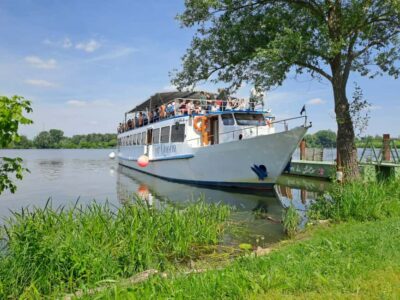
Mantua Lakes and Vallazza Oasis: a timeless boat trip
Read our review →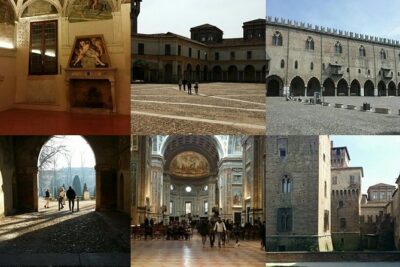
From the magic of the lakes to the ingenuity of Leonardo: sailing through waters and locks
Read our review →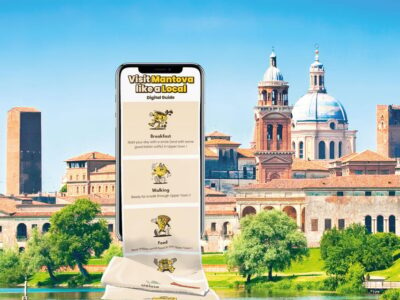
Mantova Walking Tour with Audio and Written Guide by a Local
Read our review →Browse the lists this tour appears in