
Reviewed · HISTORICAL TOURS
Brescia the Unexpected: History, Local Stories & a drink
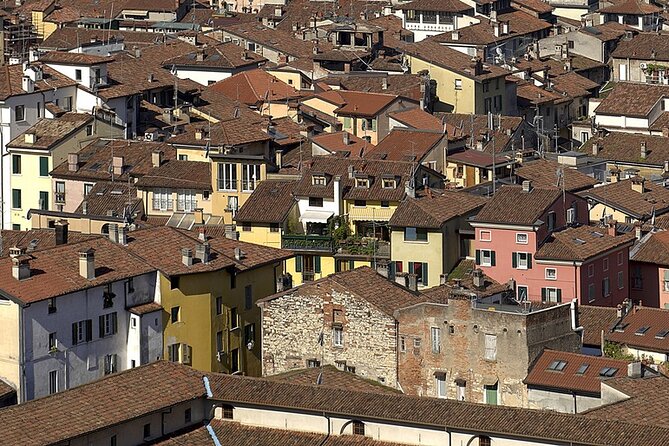
Brescia packs a surprising amount into a compact city center. In about three hours, you climb to the castle panorama, step into Roman ruins, look up at a painted church ceiling, and follow the city’s story through medieval, Venetian, and 20th-century streets.
I like two things especially: the tour connects major sights with the smaller stories that make Brescia feel human, and the final drink in a local old bar gives the walk a relaxed finish. Davide and Chiara also bring a personal feel, with clear meeting instructions, lively storytelling, and suggestions for places to eat afterward.
The main consideration is timing. The Queriniana Library and Bishop’s Palace are not available on Saturday afternoons, Sundays, or Mondays, and the tour covers a lot of ground. If you want a slow museum visit, this is not that kind of outing.
In This Review
- Key points to know before booking
- Why Brescia makes a good walking-tour city
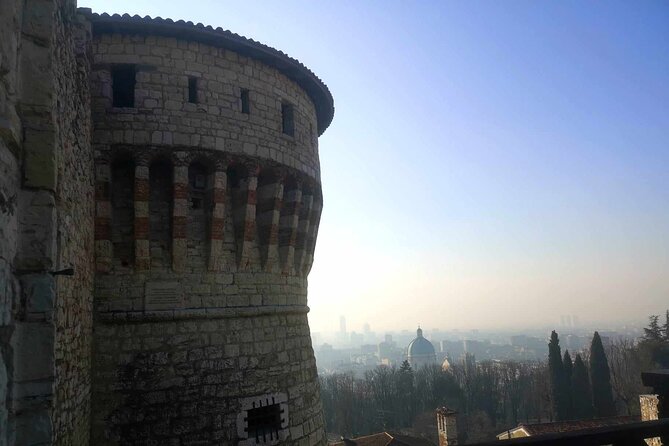
- Starting above Brescia at Castello di Brescia
- Looking up inside the Chiesa del Santissimo Corpo di Cristo
- Roman Brescia at the Capitolium and Forum
- A quiet stop at the Queriniana Library and Bishop’s Palace
- Three different faces of Brescia in its squares
- Piazza Paolo VI
- Piazza della Loggia
- Piazza della Vittoria
- Entering the Carmine district through Via San Faustino
- Finishing with a local drink and the story of the pirlo
- The guides, group size, and overall pace
- Is $102.12 a fair price?
- Who should book Brescia the Unexpected?
- FAQ
- How long does the Brescia tour last?
- Where does the tour start?
- Does the tour end at the same place?
- Is a drink included?
- Is the Queriniana Library visit available every day?
- How many people can join the tour?
- Should you book this Brescia walking tour?
Key points to know before booking
- Castle views first: Start above the city for a wide look toward Brescia and the northern mountains.
- Roman, medieval, and modern Brescia: The route moves from the Capitolium and Forum to domes, Venetian architecture, and Rationalist design.
- A guide-led walk with real local color: Davide and Chiara add stories about family rivalries, workers’ struggles, politics, language, and daily life.
- Small group size: The tour accepts a maximum of 12 people, which leaves room for questions and conversation.
- A Brescia drink at the end: Adults receive an alcoholic drink in a local bar, while under-18 participants receive a nonalcoholic drink.
- Plan around the library stop: The Queriniana visit is unavailable Saturday afternoon, Sunday, and Monday.
Why Brescia makes a good walking-tour city
Brescia is easy to underestimate. Many people use it as a rail stop or pass through on the way to Lake Garda, but the city center holds Roman remains, medieval towers, Renaissance civic buildings, imposing churches, and a bold 20th-century square.
This tour works because it does not treat those sights as isolated monuments. You move through the city in historical layers. One moment you are looking at the remains of a Roman temple, and shortly afterward you are hearing how noble families fought for power around a medieval square. Later, the route reaches the Carmine district, where the city’s working-class and rebellious side comes into view.
That range is the main reason I would consider booking. You are not spending three hours on one narrow theme. You get an introduction to the city’s architecture, politics, religion, social history, and local habits, all on foot.
The maximum group size is 12. That is small enough for a guide to keep an eye on the group and answer questions without making the walk feel like a large procession. One especially useful touch is the map orientation at the beginning, which helps you understand where the route sits within the city.
A few more Brescia trips worth weighing up
- Brescia: the unexpected. History, local stories and a drink
★ 4.8 · 13 reviews - Historic Milan Tour with Skip-the-Line Last Supper Ticket
★ 4.5 · 1,976 reviews - Milan: Fresh Pasta and Tiramisù Class in A Historical Home
★ 4.9 · 195 reviews
Starting above Brescia at Castello di Brescia
The meeting point is Via del Castello, 13, at the base or approach to Castello di Brescia. The castle occupies the city’s highest spot, enclosed by ancient walls, with construction beginning in the eighth century.
The opening 25 minutes provide an immediate sense of place. You walk through and into the walls toward the highest viewpoint, where the city center spreads below and the northern mountains frame the distance. This is a smart way to begin because you first see Brescia as a whole before tracing its streets on foot.
I like starting here for another reason: it gives you orientation without relying only on a map. After the panorama, the later stops make more sense. You can picture how the historic center sits below the castle and understand the relationship between the hilltop fortress and the city.
The castle visit is listed as free admission, but it is not a fully separate castle tour. Expect a short walk through the fortifications and time at the viewpoint rather than an extended examination of every structure. Wear shoes suited to city walking and uneven historic surfaces.
Looking up inside the Chiesa del Santissimo Corpo di Cristo
The next stop is the Chiesa del Santissimo Corpo di Cristo, sometimes called Brescia’s Sistine Chapel. The key feature is the painted ceiling, which rewards you for looking up rather than simply moving through the church.
The planned visit lasts about 20 minutes. That is enough time to enter, admire the ceiling, and hear the guide explain why the church matters. If church interiors appeal to you, this may be one of the most memorable stops because the visual effect is concentrated and immediate.
The nickname sets a high expectation, so I would keep it in perspective. This is not a full Vatican-style visit, and you should not expect a long art-history lecture. The appeal is the chance to see an ornate, less obvious church as part of a broader city walk.
The guide’s role matters here. Davide is described as a strong storyteller who connects facts with details that keep the pace lively. That approach suits a brief church visit, where a few well-chosen explanations can do more than a long list of dates.
Roman Brescia at the Capitolium and Forum
At Tempio Capitolino e Piazza del Foro, Brescia’s Roman past appears in the middle of the modern city. The 20-minute stop gives you a direct look at an ancient Roman temple and the forum area around it.
This is one of the tour’s strongest contrasts. You do not need to travel to a distant archaeological park to see Roman Brescia. The remains sit within the city route, close to medieval and later buildings. That makes the city’s long timeline easy to grasp.
I appreciate guided explanations at sites like this because exposed ruins can otherwise seem harder to read. You might see columns, stone blocks, or a partial structure without knowing how the pieces fit together. A guide can place the temple within the city’s Roman center and then connect it to the streets you continue walking afterward.
The stop is free according to the tour details. The visit is also fairly short, so treat it as a focused introduction rather than a full archaeological museum experience.
More Brescia and Franciacorta trips:
- Canyoning “Gumpenfever” – beginner Canyoningtour for everyone
★ 5.0 · 391 reviews - Milan: Franciacorta Winery and Bergamo Day Trip with Lunch
★ 4.8 · 85 reviews - Wine Tour and Tasting of Lugana Wines in Desenzano
★ 5.0 · 58 reviews - Brescia: Digital Guide made by a Local for your walking tour
★ 4.7 · 46 reviews
A quiet stop at the Queriniana Library and Bishop’s Palace
The Queriniana Library and the Bishop’s Palace offer a different kind of experience. This is an 18th-century site open to the public without charge, but it is easy to miss if you walk through Brescia without a guide.
The planned stop lasts 20 minutes. That makes it less about reading every display or exploring every room and more about noticing a building that many people would pass by. The value is partly in the setting and partly in the explanation of why this institution matters to the city.
You need to plan carefully around this stop. It is not available on Saturday afternoons, Sundays, or Mondays. The tour still operates around the city on those days, but this particular interior visit will not be part of the experience.
That limitation is worth weighing before you book. If the library is high on your list, choose another day. If your schedule only allows Monday, the rest of the route still covers a strong mix of outdoor sights and churches, but you will miss this portion.
Three different faces of Brescia in its squares
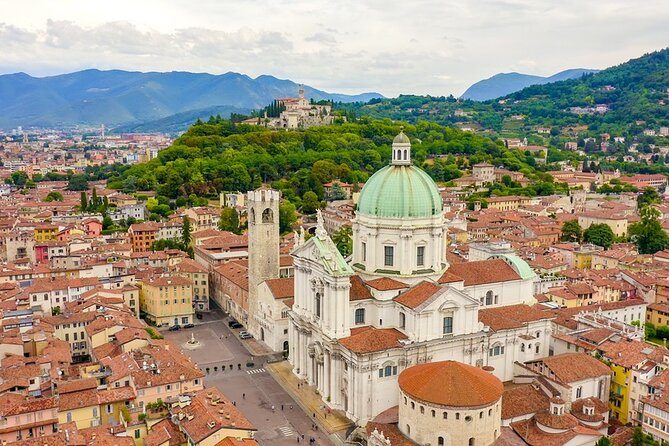
Piazza Paolo VI, Piazza della Loggia, and Piazza della Vittoria show three very different sides of the city. Each stop lasts about 20 minutes, so the guide can give you a clear explanation without turning the walk into a long lecture.
Piazza Paolo VI
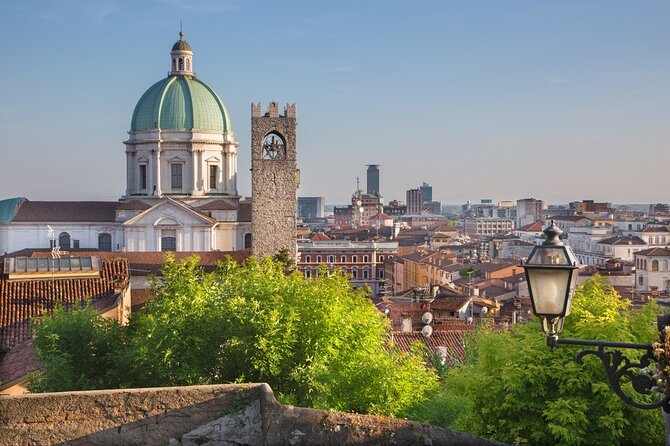
Piazza Paolo VI brings together the Old and New Domes, the medieval Tower of Pegol, and stories of conflict between Brescia’s noble families. The square is a useful place to understand how religion, civic power, and family influence once overlapped.
The two domes give the square its visual anchor, while the tower adds a medieval note. The guide’s local stories help keep the stop from becoming a simple architecture checklist. You hear about the struggles between powerful families and the pressures that shaped the city.
Piazza della Loggia
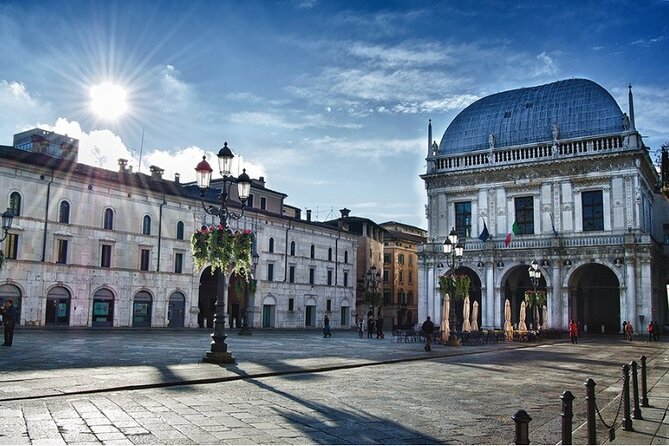
Piazza della Loggia is Brescia’s political center, with the Loggia serving as the city’s major political building since the late 14th century. Its Venetian appearance makes it one of the most graceful squares on the route.
This is a good place to pause and consider how public space works in an Italian city. The square has hosted events and witnessed political change for centuries. The guide can give you the local context that a photograph cannot provide.
The 20-minute visit is enough to appreciate the Renaissance design and hear the main stories. If you want detailed architectural analysis, you may wish for more time, but the tour is designed to keep moving through the city.
Piazza della Vittoria
Piazza della Vittoria is the sharp change of mood. Architect Piacentini designed this monumental square to glorify Mussolini’s regime, and its Rationalist architecture reflects that political purpose.
The tour does not ignore the uncomfortable part of the square’s story. You hear about the regime that commissioned it, its tragic ending, and the anecdotes that connect the space to Brescia’s past and present.
I like this inclusion because it keeps the tour from presenting history as a parade of beautiful buildings. A city walk should also explain the difficult chapters. Piazza della Vittoria gives you a chance to see how architecture can serve political power, even when the square later becomes part of ordinary city life.
Entering the Carmine district through Via San Faustino
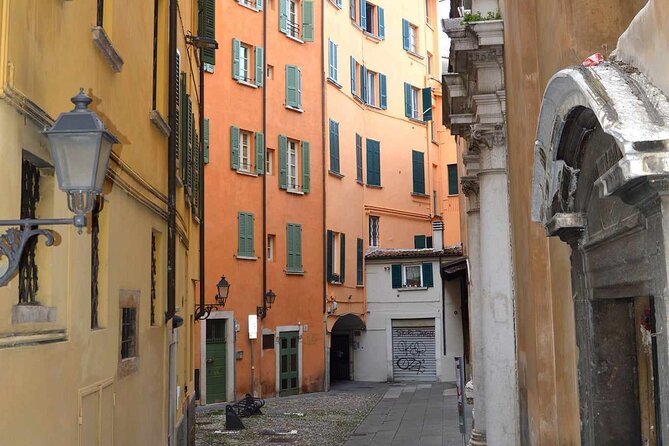
The final walking section follows Via San Faustino into the Carmine district, with about 35 minutes devoted to this area. It is the longest stop and arguably the most socially revealing part of the tour.
Carmine was once considered a sketchy neighborhood. Today, it retains what the tour describes as a genuine, rebellious, creative, and self-confident side of Brescia. Its narrow alleys are tied to rebellions, worker rights, and anti-establishment movements.
This is where the tour moves beyond monuments. You hear about the people who pushed for better living and working conditions, not only the officials and wealthy families who built grand squares. That change in viewpoint makes the route feel more complete.
I would pay close attention here if you want to understand local character. The guide explains how Brescians see themselves, including the city’s stubborn and cocky streak. The tone is likely conversational rather than formal, which suits streets shaped by neighborhood life and social struggle.
Because this is a walking tour, you should be ready to remain on your feet for most of the three hours. The guide has been described as attentive to people with different mobility levels and careful not to leave anyone behind. Still, the castle approach, historic streets, and total distance mean you should consider your own comfort before booking.
Finishing with a local drink and the story of the pirlo
The tour ends at a different location from the castle meeting point, in a local old bar in the city center. Each participant over 18 receives an alcoholic drink, and anyone under 18 receives a nonalcoholic drink.
The drink is more than a quick extra. Brescia is associated with the pirlo, a local cocktail that the guide explains during the stop. You may also receive snacks with the drink, making this a pleasant bridge between sightseeing and lunch.
I like this ending because it gives you time to ask final questions and shift from guide-led sightseeing to your own plans. The guide has also pointed out restaurants and cafes for afterward, with suggestions for different dishes and cuisines.
Do not treat the drink as a full meal. It is a social finish with snacks, not a substitute for lunch or dinner. If you do not drink alcohol, the included nonalcoholic option keeps the final stop available to you.
The guides, group size, and overall pace
Davide is the guide most directly associated with the experience, while Chiara is also part of Umbrella Tours. The strongest feature of their guiding style is storytelling. You get history, but also language details, local habits, political anecdotes, and personal explanations of Brescia.
That matters in a city where the main sights are spread among ordinary streets. A guide can point out how old, older, newer, and not-so-new buildings sit together around the center. You get a better sense of how Brescia developed instead of seeing only polished monuments.
The maximum group size is 12. The tour is offered in English and uses a mobile ticket. It is near public transportation, service animals are allowed, and most people can participate.
The average booking time is 42 days in advance. That does not prove every departure sells out, but it does suggest you should not leave it until the last minute if the tour fits your schedule.
Is $102.12 a fair price?
At $102.12 per person, this is not the cheapest way to walk through Brescia. The value depends on how much you want from the three hours.
You are paying for a guide-led route through eight stops, local explanations, a small group capped at 12, and a drink at the end. Admission is listed as free at each stop, so the price is mainly for the guide’s time, route planning, storytelling, and local access rather than entrance tickets.
I think the price makes more sense if Brescia is new to you and you want context quickly. In one morning or afternoon, you cover the castle, a painted church, Roman remains, three major squares, the library area, and Carmine. Doing that alone is possible, but you would need to research the connections in advance and still might walk past details without noticing them.
The value is weaker if you prefer to set your own pace, spend a long time inside one church, or avoid organized walks. You can see many of the outdoor sights independently and save the cost, but you will lose the steady historical thread and the local bar stop.
Free cancellation is available up to 24 hours before the start time. Changes or cancellations within 24 hours are not refunded, so keep that deadline in mind.
Who should book Brescia the Unexpected?
I would recommend this tour if you have a first visit to Brescia, only a few hours in the city, or a strong interest in how Roman, medieval, Renaissance, and modern Italy overlap. It also suits solo visitors who want company without joining a large group, since the maximum is 12.
Families can benefit from the varied route. Children who tire of formal museums may respond better to the castle walls, open squares, Roman ruins, and stories of rival families and rebellious neighborhoods. The under-18 drink option also means the final stop is not limited to adults.
History fans will appreciate the range, though you should understand the format. This is a brisk city orientation, not a specialist archaeology or art tour. You will get a useful introduction to each place, then keep moving.
I would hesitate only if the Queriniana Library is essential and your available day is Sunday, Monday, or Saturday afternoon. I would also think twice if you have difficulty with extended walking or want an unhurried schedule.
FAQ
How long does the Brescia tour last?
The tour lasts approximately three hours.
Where does the tour start?
It starts at Via del Castello, 13, 25121 Brescia BS, Italy.
Does the tour end at the same place?
No. The activity ends at a different location from the starting point.
Is a drink included?
Yes. Participants over 18 receive an alcoholic drink in a local old bar. Participants under 18 receive a nonalcoholic drink.
Is the Queriniana Library visit available every day?
No. The Queriniana Library and Bishop’s Palace are not available on Saturday afternoons, Sundays, or Mondays.
How many people can join the tour?
The maximum group size is 12 people. The tour is offered in English and uses a mobile ticket.
Should you book this Brescia walking tour?
Book it if you want Brescia explained as a living city rather than a string of disconnected sights. The castle view, Roman temple, painted church, grand squares, and Carmine district give you a strong range, while Davide or Chiara add the local stories that make the route memorable.
The best plan is to choose a day when the Queriniana Library is open, arrive ready for several hours of walking, and leave time afterward for lunch or another drink. At $102.12, it is a considered purchase, but the combination of small-group guiding, broad coverage, local history, and the pirlo finish gives it solid value for a first visit.
Just added around Brescia
- Museo Diocesano di Brescia: Entrance ticket★ 5.0 · 3 reviews
- Private Full-Day Tour by Boat in Lake Garda★ 5.0 · 4 reviews
- Beautiful Brescia – Guided Walking Tour★ 5.0 · 4 reviews
- Sirmione Sunset Tour★ 5.0 · 5 reviews
- Private Cooking Class at a Cesarina’s Home in Desenzano del Garda★ 5.0 · 6 reviews
- Brescia Hidden Legends: Self-Guided Puzzle Quest★ 4.5 · 6 reviews
- Milan: Brescia & Franciacorta with Wine Tasting Small Group★ 4.2 · 6 reviews
- Sato Code Escape Room across Iseo★ 4.5 · 7 reviews
Historical Tours, compared.
Historic Milan Tour with Skip-the-Line Last Supper Ticket
Read our review →
Fresh Pasta and Tiramisù Class in A Historical Home
Read our review →
Step Into History: Leonardo Vinci’s Last Supper Tour
Read our review →
Como city and its History Exclusive Walking Tour (1 h from Milan)
Read our review →
Natural History Museum Entry Ticket & Audio Guide
Read our review →
MANTOVAGANDO: Tour of the Historic Center of Mantua
Read our review →Browse the lists this tour appears in