
Reviewed · HISTORICAL TOURS
Brescia: the unexpected. History, local stories and a drink
Brescia is the kind of Italian city that rewards a closer look. This three-hour walk links its castle, Roman ruins, medieval streets, Fascist-era planning, and everyday bars without treating history like a school lesson. I especially like the start at Brescia Castle, where you get a broad view before walking downhill into the historic center, and the finish with a Pirlo, Brescia’s local aperitif. The main consideration is simple: you will be on foot for three hours, beginning near the castle and covering several city districts.
I also like the way the guides, including Davide and Chiara, use small stories to make long stretches of history easier to follow. The price is $100 per person, which is fair if you want a guide, a structured introduction to the city, and a drink with local conversation, though it is more than a basic sightseeing walk.
In This Review
- Key points to know before booking
- Why Brescia makes a strong walking-tour subject
- Starting at Brescia Castle
- San Cristo and the first medieval layer
- Roman Brescia at Piazza del Foro
- The Queriniana Library and Piazza Paolo VI
- Piazza della Vittoria and Brescia’s modern chapter
- Piazza della Loggia and the civic heart
- Contrada del Carmine and the walk toward aperitivo
- Ending with a Pirlo in a local bar
- How the guides shape the experience
- Is $100 a fair price?
- Who should book this Brescia walking tour?
- Should you book it?
- FAQ
- How long does the Brescia walking tour last?
- Where does the tour begin?
- Where does the tour finish?
- What language is the tour conducted in?
- Is a drink included?
- What is the local drink served at the end?
- Which sights are included?
- Is the tour suitable for young children?
- Can I cancel the booking?
Key points to know before booking
- Start above the city: Meet at the public parking entrance by Brescia Castle, then begin with views from the hill.
- History arrives in layers: Roman ruins, medieval churches, grand squares, Fascist-era architecture, and present-day life all appear during one walk.
- The Roman center is a highlight: Piazza del Foro and the Roman Basilica help you understand Brescia’s ancient layout.
- Guides set the tone: Davide and Chiara are praised for clear explanations, patience, flexibility, and lively local stories.
- The ending is genuinely local: Your included drink is a Pirlo or alcohol-free alternative, served with local snacks.
- Allow time for walking: The route includes several 10 to 20 minute walks between stops and finishes at Piazza del Mercato.
Why Brescia makes a strong walking-tour subject
Many visitors pass through Lombardy with their attention fixed on Milan, Lake Como, or Bergamo. Brescia offers a different sort of reward. Its past is not arranged in one polished showpiece. It appears in fragments: a Roman site beside modern streets, a medieval square opening into a broad twentieth-century avenue, and an old church tucked into the city’s daily rhythm.
That mixture gives the tour its purpose. You are not simply checking off monuments. You are learning how Brescia changed over time and how those periods still sit beside one another.
The city is also presented as confident and practical rather than theatrical. That local character matters. A guide who can explain not only what a building is, but how people use the surrounding streets today, gives you a better sense of place.
The experience is conducted in English and led by a licensed local guide with training in history, art history, culinary tradition, and languages. The tone is intended to be relaxed and conversational. That suits Brescia well, since the route contains enough serious history to become heavy if every stop receives a long lecture.
A few more Brescia trips worth weighing up
- Brescia the Unexpected: History, Local Stories & a drink
★ 5.0 · 31 reviews - Historic Milan Tour with Skip-the-Line Last Supper Ticket
★ 4.5 · 1,976 reviews - Milan: Fresh Pasta and Tiramisù Class in A Historical Home
★ 4.9 · 195 reviews
Starting at Brescia Castle
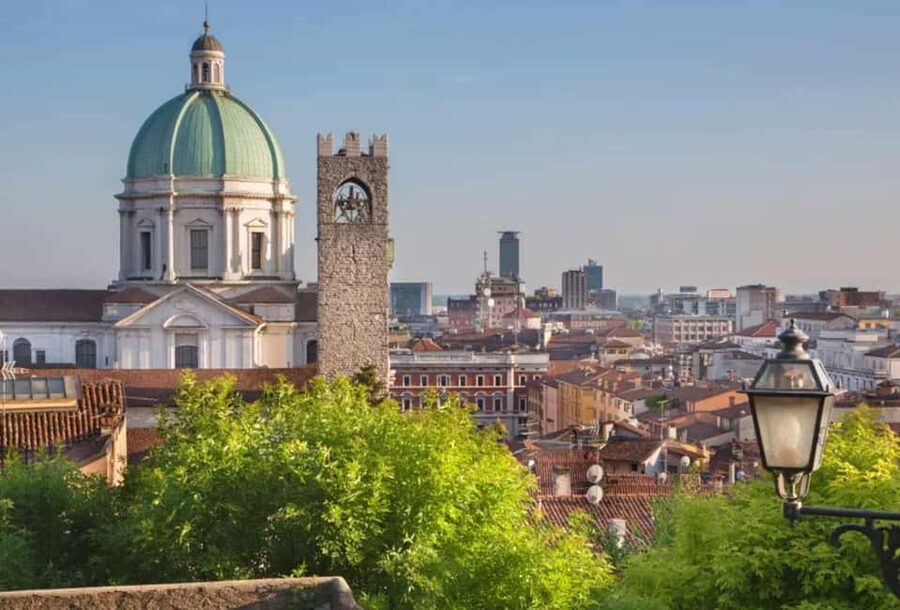
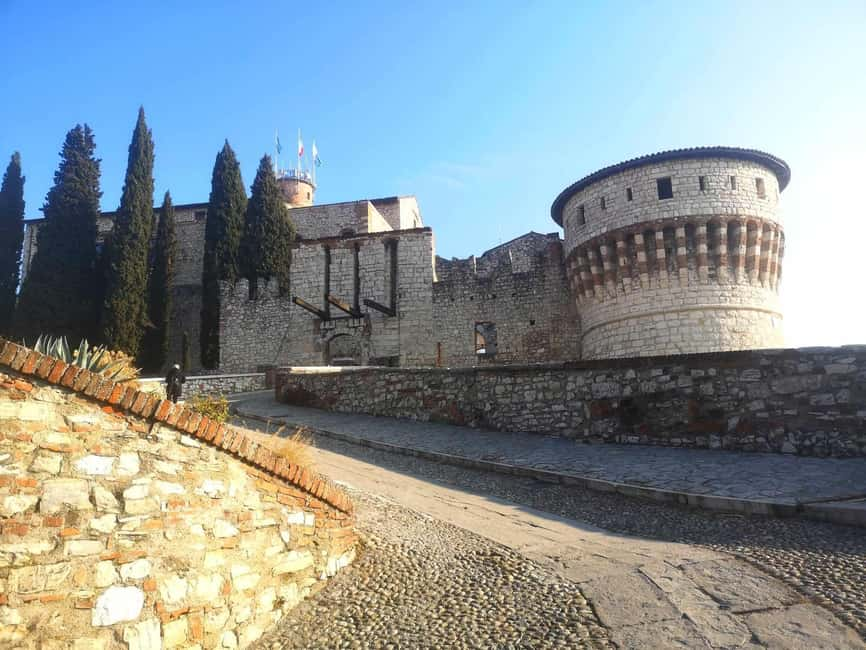
The meeting point is the entrance to the public parking lot next to the roundabout at the beginning of the way up to the castle entrance bridge. This is useful to know because you are not meeting in the lower historic center. Give yourself time to find the parking entrance and orient yourself before the start.
The castle area provides the opening frame for the entire tour. From here, you look over the city and see the setting that helped Brescia develop across many centuries. The castle itself receives about 20 minutes, including a guided visit, a photo stop, and scenic views along the way.
I like beginning here because it gives you context before the monuments start coming quickly. You can understand the relationship between the elevated fortress area and the streets below, then follow the route down into the historic center.
The start does mean you should be comfortable walking from the castle area toward town. The tour does not begin with a flat café-side meeting point, and the route keeps moving after the castle. Wear shoes suited to city walking.
San Cristo and the first medieval layer
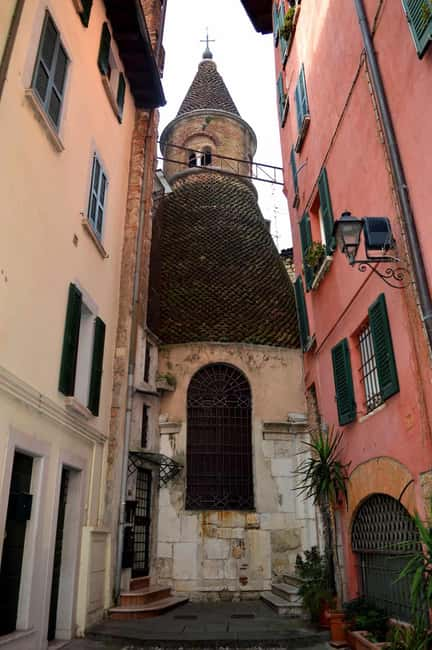
After roughly 10 minutes on foot, the group reaches Chiesa di San Cristo. The visit lasts about 10 minutes and includes a guided explanation and time for photos.
This stop shifts the mood from fortress views to religious and artistic history. It also gives the guide a chance to show how Brescia’s medieval identity was shaped by churches and local institutions, rather than only by military power or famous rulers.
The short visit is a good fit for a three-hour route. You get a focused introduction without spending so long inside one site that later parts of the city are rushed. If you prefer extended time for quiet viewing, you may find the schedule brisk, but the guide can help you understand what you are seeing before moving on.
Roman Brescia at Piazza del Foro
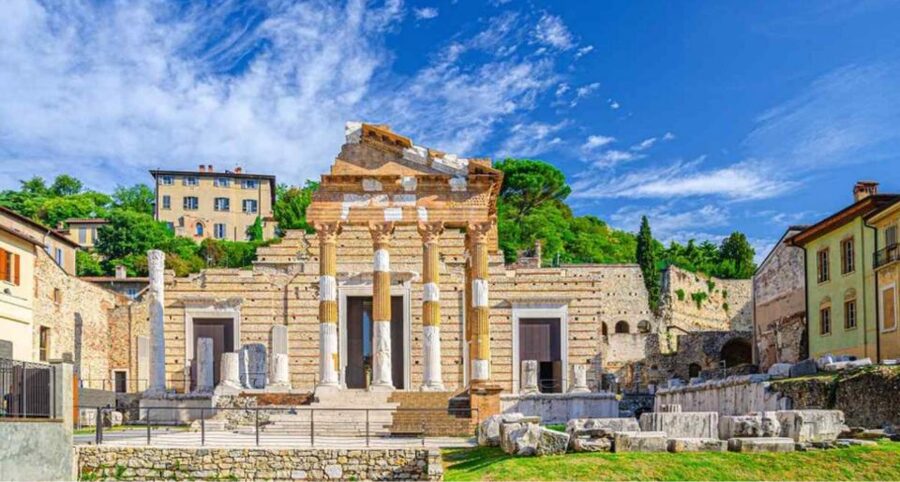
Piazza del Foro is one of the most important stops on the route. The group spends about 10 minutes here, with a guided talk, photos, and a walk through the surrounding area.
This is where the Roman story becomes easier to picture. The remains are not isolated in a distant archaeological park. They are part of the current city, surrounded by streets and buildings that continue to serve ordinary daily life.
The nearby Roman Basilica receives a shorter visit of about five minutes. That may sound brief, but it works as part of the larger Roman sequence. The forum and basilica are presented together, allowing you to connect public space, civic life, and the city’s ancient plan.
The Roman sites are UNESCO-listed, which adds importance, but the practical value of this part of the walk is that the guide explains the remains in relation to Brescia itself. You are not left to study stones without a story.
More Brescia and Franciacorta trips:
- Canyoning “Gumpenfever” – beginner Canyoningtour for everyone
★ 5.0 · 391 reviews - Milan: Franciacorta Winery and Bergamo Day Trip with Lunch
★ 4.8 · 85 reviews - Wine Tour and Tasting of Lugana Wines in Desenzano
★ 5.0 · 58 reviews - Brescia: Digital Guide made by a Local for your walking tour
★ 4.7 · 46 reviews
The Queriniana Library and Piazza Paolo VI
The route continues to the Biblioteca Queriniana, where the guided visit lasts about 10 minutes. The library adds another layer to the city’s cultural life and keeps the tour from becoming a simple parade of outdoor monuments.
A stop here is especially useful if you enjoy the institutions behind a city’s identity. Brescia’s story is not only about walls and ruins. It also includes the preservation of books, learning, religious life, and civic memory.
From there, the walk reaches Piazza Paolo VI for another 10-minute visit and guided explanation. This square gives you a chance to see how the historic center works as a public space. The tour keeps balancing specific buildings with the broader shape of Brescia, which is one reason the route feels more useful than a list of isolated facts.
Guide Chiara is praised for making explanations clear, answering questions, and keeping the pace engaging. Davide is noted for using small details to bring the city’s long past to life. If you enjoy asking questions, this is the part of the tour where a conversational guide can add real value.
Piazza della Vittoria and Brescia’s modern chapter
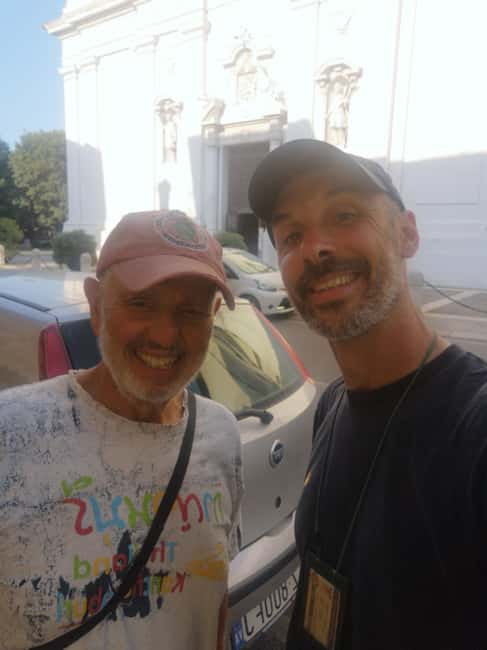
Piazza della Vittoria introduces a very different period. The route includes a 10-minute stop with photos, a guided visit, and views along the way.
This is where the walk can connect earlier centuries with the more recent city. Brescia’s story includes the Fascist era and the changes it brought to urban design. The contrast with Roman and medieval spaces helps you see that the city was repeatedly reshaped, not frozen in one historic period.
I appreciate that the route includes this modern chapter. A tour focused only on old churches and ruins can make a city seem like a museum. Piazza della Vittoria helps correct that impression and shows how political history affected streets and public spaces.
The guide’s job here is important. Architecture from the twentieth century can be less immediately familiar than a Roman ruin, so clear explanation matters more than a long list of dates. The experience is designed to keep that information approachable.
Piazza della Loggia and the civic heart
Piazza della Loggia receives about 15 minutes. You will have time for photos, a guided visit, and views of one of the central public spaces.
This is one of the route’s strongest moments because it brings together architecture, civic life, and the scale of the city center. After the castle, churches, Roman remains, and modern planning, the square gives you another place to think about how Brescia presents itself publicly.
The stop also shows why a local guide is useful. A quick photograph tells you what the square looks like. A guide can place it within Brescia’s broader political and social story, then point out details you might otherwise pass without noticing.
The route continues to Piazzetta Tito Speri for about five minutes. It is a short stop, but it keeps the walk connected as you move toward the Carmine district. These brief transitions are part of the experience. You are seeing how one part of central Brescia leads into another rather than being moved between monuments by transport.
Contrada del Carmine and the walk toward aperitivo
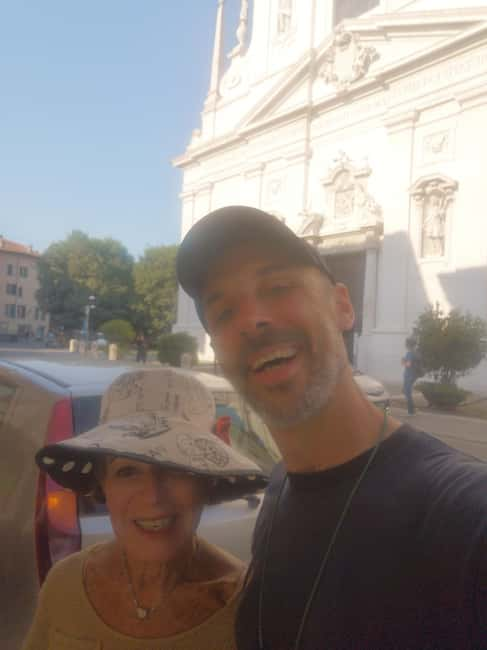
The group then spends about 20 minutes walking through Contrada del Carmine, with a guided visit, scenic views, and photo opportunities. This section brings the tour closer to everyday neighborhood life.
The value here is less about one major sight and more about the route’s change in texture. You are moving away from the most formal squares and into a district where streets and local businesses become part of the story.
That also prepares you for the final stop. The experience does not end at a monument with a quick goodbye. It moves into a bar at Contrada del Carmine, 8, for about 30 minutes.
Ending with a Pirlo in a local bar
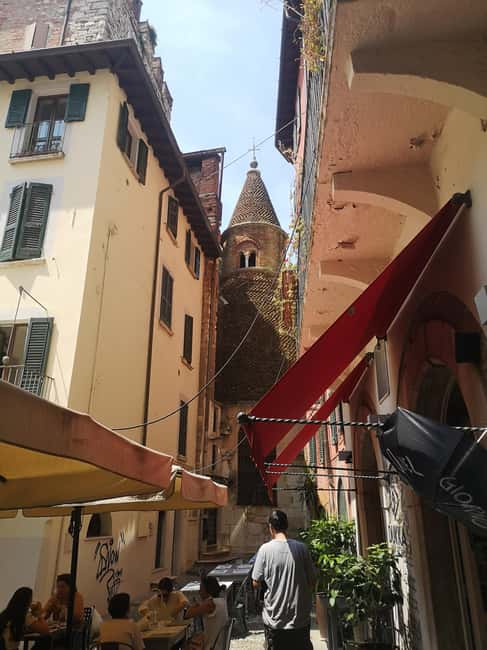
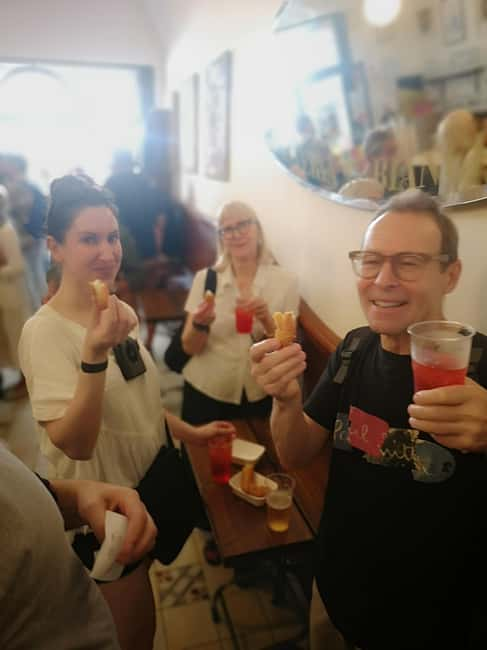
The included drink is the tour’s most distinctly Bresciano detail. You can choose a Pirlo or an alcohol-free drink, and the stop includes local snacks. The information provided also lists beer, wine, and spirits at the bar, but your included benefit is one drink per participant.
A Pirlo is the local aperitif associated with Brescia. The drink gives the guide and group a natural setting for a final conversation about the city. This is when you can ask where to eat, which sights deserve more time, or what to see if you are staying another day.
I like this ending because it turns the tour from a formal lesson into a practical introduction to local life. It also gives the guide space to offer recommendations based on your interests. The final destination is Piazza del Mercato, so you finish in a central part of the city rather than back at the castle.
The drink is not a replacement for a full meal. Think of it as a social pause with a local snack, not dinner. If you do not drink alcohol, the alcohol-free option means you can still take part in the tradition.
How the guides shape the experience
The strongest praise for this experience centers on the guides’ manner, not only their subject knowledge. Davide is described as attentive, flexible, and good at using short stories and details rather than overwhelming you with facts. Chiara is noted for clear explanations, patience, passion, and a professional but friendly approach.
That difference matters in Brescia. The city has enough history to create information overload. A guide who can connect Roman times, the medieval period, the Fascist era, and current life without turning the walk into a lecture makes the three hours far more useful.
The tour is designed for a small group, which should make it easier to ask questions and hear the explanations. The exact group size is not provided, so do not assume a private tour. Still, the format is clearly aimed at interaction rather than a large crowd moving silently from stop to stop.
One guide has also shown flexibility in adapting the walk to individual needs. That does not guarantee a custom itinerary, but it suggests you should speak up early if you have a particular interest in art, food, Roman history, or modern Brescia.
Is $100 a fair price?
At $100 per person, this is not a bargain-priced orientation walk. You are paying for three hours with a licensed local guide, access to a carefully connected route, and one drink or alcohol-free drink with local snacks.
The value is strongest if you are new to Brescia and want the city explained in one sitting. You will cover the castle, Roman remains, churches, libraries, major squares, a neighborhood walk, and an aperitif. Recreating that route alone would cost less, but you would need to research the stops, plan the order, and find the connections between them.
The price is less compelling if you prefer wandering alone or already understand Brescia’s history. You also may not want to pay for a guided route if your main goal is to spend a long time inside one church, library, or archaeological site.
Free cancellation up to 24 hours before the start and reserve-now, pay-later booking make the commitment easier, but the core question is whether you value interpretation. If you do, the Pirlo and local advice strengthen the package.
Who should book this Brescia walking tour?
I would choose this experience for a first visit to Brescia, especially if you want a clear introduction before exploring on your own. It suits curious adults who enjoy history but prefer stories, connections, and conversation over a dense academic lecture.
It is also a good choice if you are tired of Italy’s busiest tourist routes. The tour focuses on a city that is often missed, and it treats local life as part of the attraction rather than an interruption between famous sights.
The route is not suitable for children under six or people over 95 according to the stated conditions. Since the tour begins near the castle and includes several walking sections, you should also consider your comfort with a three-hour city walk.
Should you book it?
Book this tour if you want Brescia explained as a living city, not just a collection of ruins. The best reasons are the castle-to-center route, the clear links between Roman, medieval, and modern history, and the relaxed ending over a Pirlo.
Skip it if you want a short, self-guided look at one monument or prefer to set your own pace entirely. For everyone else, $100 buys a well-shaped introduction, a local drink, and useful advice for the rest of your stay. I would schedule it early in your visit so you can return to the places that catch your interest.
FAQ
How long does the Brescia walking tour last?
The experience lasts three hours, including the walking route, guided stops, and the final drink with local snacks.
Where does the tour begin?
You meet at the entrance to the public parking lot of Brescia Castle, next to the roundabout at the beginning of the way up to the castle entrance bridge.
Where does the tour finish?
The final bar stop is at Contrada del Carmine, 8, and the tour finishes at Piazza del Mercato.
What language is the tour conducted in?
The tour is conducted in English.
Is a drink included?
Yes. One drink or alcohol-free drink per participant is included. The final stop also includes local snacks.
What is the local drink served at the end?
The tour ends with a typical Bresciano aperitif called a Pirlo. Beer, wine, spirits, and an alcohol-free drink are also listed for the bar stop.
Which sights are included?
The route includes Brescia Castle, Chiesa di San Cristo, Piazza del Foro, the Roman Basilica, Biblioteca Queriniana, Piazza Paolo VI, Piazza della Vittoria, Piazza della Loggia, Piazzetta Tito Speri, and Contrada del Carmine.
Is the tour suitable for young children?
The activity is not suitable for children under six years old.
Can I cancel the booking?
You can cancel up to 24 hours in advance for a full refund. Reserve-now, pay-later booking is also available.
Just added around Brescia
- Museo Diocesano di Brescia: Entrance ticket★ 5.0 · 3 reviews
- Private Full-Day Tour by Boat in Lake Garda★ 5.0 · 4 reviews
- Beautiful Brescia – Guided Walking Tour★ 5.0 · 4 reviews
- Sirmione Sunset Tour★ 5.0 · 5 reviews
- Private Cooking Class at a Cesarina’s Home in Desenzano del Garda★ 5.0 · 6 reviews
- Brescia Hidden Legends: Self-Guided Puzzle Quest★ 4.5 · 6 reviews
- Milan: Brescia & Franciacorta with Wine Tasting Small Group★ 4.2 · 6 reviews
- Sato Code Escape Room across Iseo★ 4.5 · 7 reviews
Historical Tours, compared.
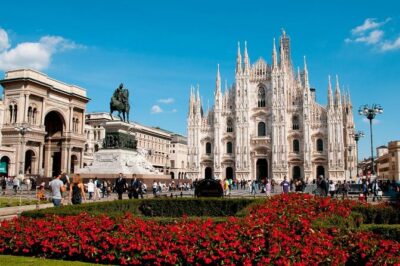
Historic Milan Tour with Skip-the-Line Last Supper Ticket
Read our review →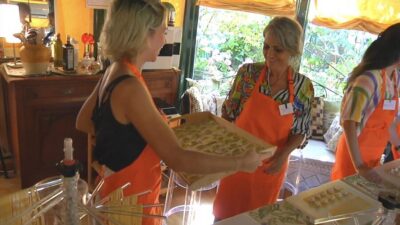
Fresh Pasta and Tiramisù Class in A Historical Home
Read our review →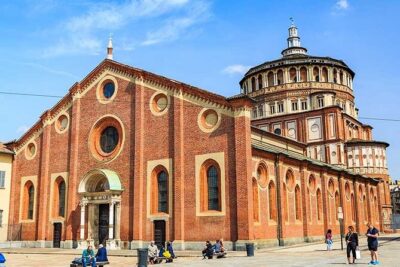
Step Into History: Leonardo Vinci’s Last Supper Tour
Read our review →
Como city and its History Exclusive Walking Tour (1 h from Milan)
Read our review →
Brescia the Unexpected: History, Local Stories & a drink
Read our review →
Natural History Museum Entry Ticket & Audio Guide
Read our review →Browse the lists this tour appears in