
Reviewed · WALKING TOURS
Mantova Walking Tour with Audio and Written Guide by a Local
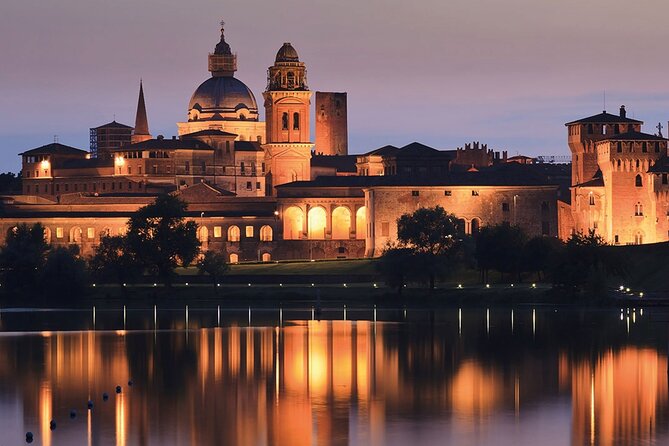
Mantua’s great strength is how much Gonzaga power and Renaissance art fit into a walkable historic center. This self-guided route takes you from Palazzo Te to the medieval squares, Romanesque churches, Bibiena Theater, and the enormous Palazzo Ducale, with audio and written commentary in five languages.
I like the freedom to start early, move quickly through familiar sights, or linger at the places that catch your eye. I also like the price: at $7.83, you get a useful city framework and local restaurant advice without paying for a full private guide. The catch is that entrance fees are separate, and you need a smartphone with an internet connection to use the guide.
In This Review
- Key points before you book
- Why this Mantua walk works well
- Palazzo Te and the art of Federico Gonzaga
- The Rio, Pescherie, and Piazza delle Erbe
- The Clock Tower and the Rotonda di San Lorenzo
- Basilica Sant’Andrea and Mantua’s sacred relic
- Bibiena Theater, an 18th-century surprise
- Piazza Sordello and the Cathedral
- Palazzo Ducale and the Gonzaga court
- Finishing at Piazza Virgiliana
- Price, phone use, and practical value
- Who should choose this experience?
- Should you book the Mantua Walking Tour?
- FAQ
- How long does the Mantova Walking Tour take?
- Is the tour guided by a person?
- Which languages are available?
- Are entrance tickets included?
- What do I need to use the digital guide?
- Where does the walk begin and end?
Key points before you book
- Self-guided and flexible: Set your own pace and circle back when museums open.
- Five-language commentary: Audio and written material are available in English, Spanish, Italian, German, and French.
- Four optional paid sights: Palazzo Te, the Clock Tower, Bibiena Theater, and Palazzo Ducale cost extra.
- A strong Gonzaga focus: The route connects the family’s grand palace complex with their artistic and political legacy.
- Useful local advice: Your digital guide includes suggestions for authentic restaurants in Mantua.
- A long city walk: Plan roughly five to six hours if you visit the main paid sights and follow the full route.
Why this Mantua walk works well
This is not a guided group stroll with a person leading you from one stop to the next. It is a digital companion for exploring Mantua independently. You receive instructions for activating the guide through your booking voucher, then use your phone speaker or headphones as you move around the city.
That format suits Mantua particularly well. The city’s main sights are spread across several connected areas, and the best experience often comes from pausing in a square, entering a church, then taking a slow look at the surrounding buildings. A fixed tour can make that feel rushed. Here, you can listen to a short section, stop the audio, take photographs, and continue when ready.
The route takes about five to six hours, depending on your pace and on how long you spend inside Palazzo Te and Palazzo Ducale. The sightseeing times supplied for the ten stops add up to roughly four hours, before allowing for walking, pauses, and any waiting for opening times.
A useful feature is the ability to split the visit. You can begin with the outdoor sights when the city is quiet, then return to the major museums once they open. That is especially practical for an early arrival in Mantua. The guide is not tied to a live departure time in the way a traditional group tour is, so you have more control over your day.
A few more Mantua trips worth weighing up
- Mantua: Town Highlights and Monuments Walking Tour
★ 4.7 · 10 reviews - Mantova: Private Walking Tour
★ 4.3 · 3 reviews - Milan: Guided Walking Tour & Last Supper Visit with Ticket
★ 4.7 · 5,409 reviews
Palazzo Te and the art of Federico Gonzaga
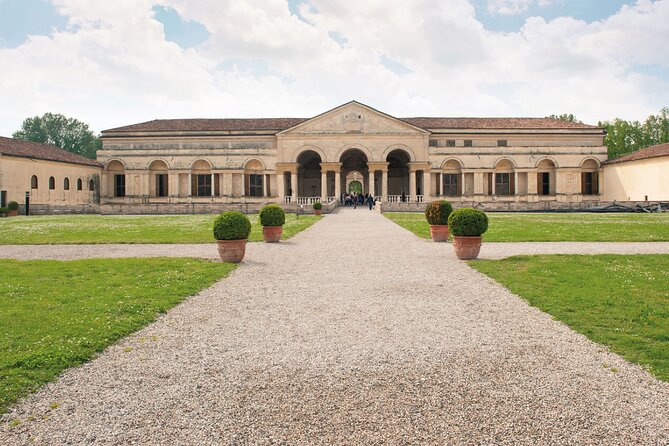
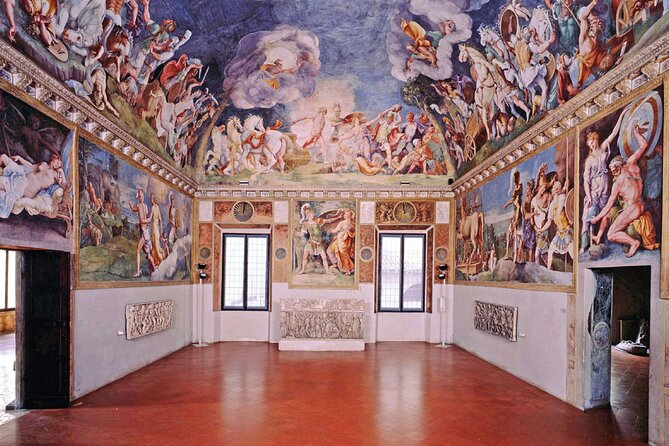
The route begins with Palazzo Te, one of Mantua’s essential sights. Federico II Gonzaga commissioned this country residence, and its design is often described as one of the high points of Italian Mannerism.
Allow about 90 minutes inside. That is the longest suggested stop on the route, and it deserves the time. The building is known for its unusual architecture and major artistic importance, so the audio commentary can help you read the rooms rather than simply walk through them.
The admission fee is €15 and is not included. At this low tour price, that is not surprising, but you should add it to your budget if Palazzo Te is a priority. If you plan to see all four paid sights, admission comes to €35 per person, before the cost of the digital guide.
One practical point matters here: Palazzo Te appears first in the sightseeing sequence, while the stated meeting point is at Palazzo Ducale in Piazza Sordello. Since this is a self-guided product, read the activation instructions in your voucher carefully and confirm the intended starting instructions before setting off.
The Rio, Pescherie, and Piazza delle Erbe
After the grand scale of Palazzo Te, the route turns to smaller details of Mantua’s urban life. The Pescherie di Giulio Romano stretch along the Rio near Piazza delle Erbe. These historic fish markets were linked to the Beccherie, the area associated with animal slaughter.
The stop takes only 15 minutes and costs nothing to enter. It is the kind of place that can be missed if you rush between major palaces, yet it helps explain how the city functioned. The waterway, market structures, arcades, and nearby streets give you a more everyday view of historic Mantua.
Piazza delle Erbe follows with a 10-minute stop. This is one of the city center’s most attractive squares, surrounded by arcades and loggias. The setting is compact, so you do not need a long visit, but the audio guide can give meaning to the buildings around you.
I would use this part of the route to slow down. Look above the ground-floor shops and arcades, then compare the square’s public life with the grand court culture you saw at Palazzo Te. The contrast is one of the pleasures of this walk.
The Clock Tower and the Rotonda di San Lorenzo

Torre dell’Orologio gives you a small but memorable piece of Renaissance science. Its clock was made by Bartolomeo Manfredi and displayed the phases of the moon, zodiac signs, sunrise and sunset, and the supposed influence of the stars at different times of day.
The visit takes around 25 minutes. Admission is €3 and is extra. This is a modest charge, but check your interest in clockwork and astronomy before adding it to your plan. If you are trying to keep costs low, the surrounding square and exterior can still be appreciated without buying the ticket.
Next comes the Rotonda di San Lorenzo, a free 20-minute stop. This round church is an important example of Lombard Romanesque architecture. Its form was built around the idea of the Holy Sepulcher, giving the building a symbolic connection to the tomb of Christ.
The audio commentary is useful here because the church’s meaning is not always obvious from its simple shape. You can take in the structure quickly, but a little background makes the stop more rewarding.
A different sort of day out, same corner of Lombardy:
- Palazzo Te Mantova – Tour with Guide Tiziana Portioli
★ 5.0 · 66 reviews - Palazzo Ducale Mantova – by Local Guide Tiziana Portioli
★ 5.0 · 62 reviews - Mantova Centro Storico – Tour a piedi con Guida Tiziana Portioli
★ 5.0 · 61 reviews - Mantova City Center and Ducal Palace: 3-Hour Guided Tour
★ 4.9 · 47 reviews
Basilica Sant’Andrea and Mantua’s sacred relic
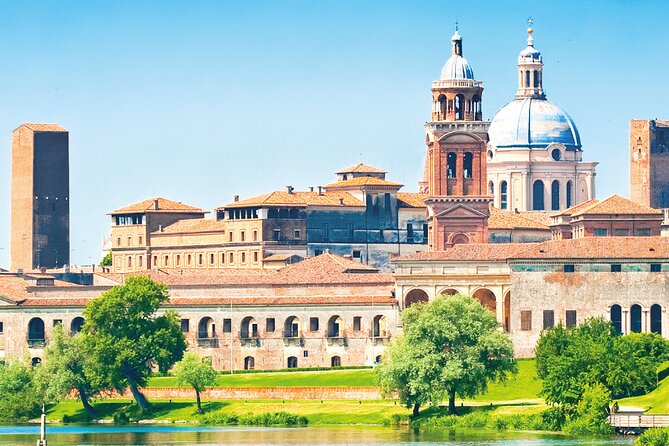
The Basilica di Sant’Andrea is one of Mantua’s major religious landmarks. It is associated with the Precious Blood of Christ, collected at the foot of the Cross by Saint Longinus and preserved in the so-called Sacred Vases.
The suggested visit is 20 minutes, and admission is free. The basilica also helps connect Mantua’s religious importance with its political story. The Gonzaga family shaped the city for centuries, and major churches were part of the public image of their rule.
Give yourself enough quiet time inside to look at the scale of the building. This is not simply another stop to check off. It is one of the places where the route shifts from court architecture and public squares to Mantua’s continuing role as a Catholic center.
Because church access can be affected by services or local arrangements, keep your timing flexible. The digital format makes that easier than a fixed group itinerary.
Bibiena Theater, an 18th-century surprise
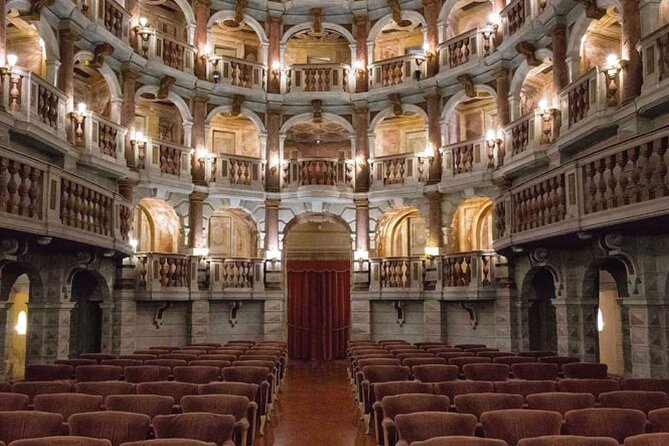
The Scientific Bibiena Theater, also called the Teatro Accademico, is a smaller sight with a strong payoff. Built in the 18th century, it is known for its refined interior and excellent acoustics.
The suggested visit is 25 minutes. Admission is €2, not included. This is the least expensive of the paid stops, and it may be easy to add if the theater is open during your visit.
The theater’s name reflects its original academic purpose. Its compact size makes it feel different from the grand palace interiors. You are looking at a place designed for lectures, performances, and intellectual life, not just court ceremony.
I would not skip it simply because the ticket is separate. At €2, it is a good-value addition, especially if you enjoy historic theaters. Still, the guide cannot guarantee that every interior will be open at the moment you arrive, so use the audio route as a framework rather than a rigid schedule.
Piazza Sordello and the Cathedral
Piazza Sordello is described as Mantua’s largest and most important square. For centuries, it was the center of the city’s political, religious, and social life, with ceremonies, festivals, and markets taking place here.
The suggested stop is only 10 minutes, but the square is also the stated starting point at Piazza Sordello 40, beside Palazzo Ducale. Its size helps you understand the power of the Gonzaga court. This was not an isolated palace hidden from city life. It faced a major public space where civic and religious events unfolded.
The Duomo, or Cathedral of San Pietro, takes about 20 minutes and is free to enter. Its origins reach back to the early Christian period, with first structures built around the fifth century. That long timeline makes the cathedral a useful reminder that Mantua’s story began well before the Gonzaga era.
The cathedral is close to the major palace complex, so you can see both in one concentrated section of the walk. Listen to the guide before entering, then take a moment to notice how the cathedral relates to the surrounding square.
Palazzo Ducale and the Gonzaga court
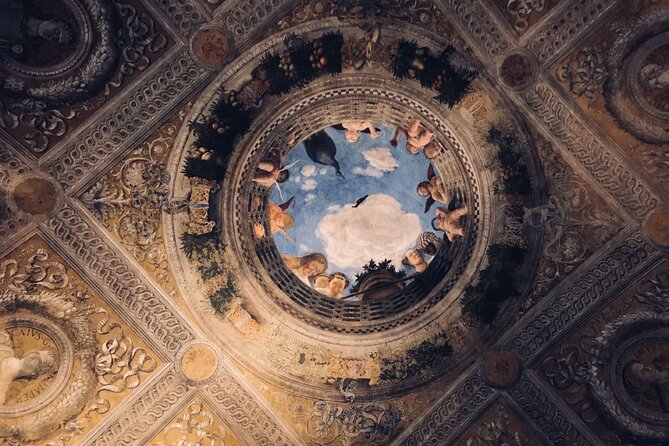
Palazzo Ducale is the grand finale and perhaps the most important paid sight on the route. It represents the power of the Gonzaga family, who ruled Mantua from 1328 to 1707.
The palace complex contains more than 500 rooms and covers about 34,000 square meters. It includes San Giorgio Castle, Corte Nuova, and Corte Vecchia. Those numbers tell you something important: this is not a quick 20-minute palace visit.
Allow about 90 minutes, and expect that you may need more time if you want to explore at a relaxed pace. Admission is €15 and is extra. If you visit both Palazzo Ducale and Palazzo Te, you will spend €30 on admissions alone, but those are the two stops that best explain Mantua’s courtly identity.
The digital guide is particularly valuable here because a vast palace can become confusing without a clear order. Use the written text if you want to scan ahead, and switch to audio when you are standing in front of a room or architectural feature that needs context.
Finishing at Piazza Virgiliana
The tour ends at Piazza Virgiliana, a public park where you can rest after the walk. The listed opening hours run from midnight to 11:30 p.m. daily during the stated operating period, so the park provides a flexible end point.
Finishing in a park is a sensible choice. After several hours of palaces, churches, squares, and city streets, you may want a bench and a pause rather than another monument. The end point also gives you a clear place to stop using the guide.
The route begins at Ducale Palace and ends at Piazza Virgiliana, but the supplied sightseeing order places Palazzo Te first. Treat the route as a practical sequence rather than a live escort service. Check the directions and activation details on your voucher before you begin.
Price, phone use, and practical value
At $7.83 per person, this is inexpensive for a five to six-hour city plan. You are paying for the structure, commentary, translations, and local food suggestions, not for admission to Mantua’s museums.
The extra fees are easy to calculate:
- Palazzo Te: €15
- Torre dell’Orologio: €3
- Scientific Bibiena Theater: €2
- Palazzo Ducale: €15
You can visit the free churches, squares, and market buildings without paying anything beyond the guide price. Or you can add one or two interiors based on your interests. That flexibility keeps the experience useful for both budget-conscious visitors and people who want a fuller museum day.
You need a smartphone with internet access to activate and use the digital guide. Audio works through your phone’s speaker or through headphones. I would bring headphones if you have them, since they make it easier to hear the commentary in open squares and busy public areas.
The listed maximum is 104 participants, but this is not a conventional escorted group moving together. You explore independently, which means the large maximum matters less than it would on a bus or walking tour. The guide is available in English, Spanish, Italian, German, and French.
Confirmation arrives at booking, service animals are allowed, and the route is near public transportation. Most people can take part, but you should still expect several hours on foot. Free cancellation is available up to 24 hours before the start time. Within 24 hours, the payment is not refunded, and changes are not accepted.
Who should choose this experience?
I would choose this tour if you want a clear introduction to Mantua without committing to a guide’s fixed pace. It is especially useful for a day trip, an early arrival, or a first visit when you need help deciding which palace, church, and square deserves your time.
It also suits independent visitors who like to read as well as listen. The written guide gives you another way to take in the information, while the audio makes it easier to keep walking without holding a book or searching for facts on your phone.
It is less suitable if you want a personal guide who can answer questions, adjust the route in real time, or explain unexpected details on the street. You also need to be comfortable managing your own phone, internet connection, entrances, and timing.
Should you book the Mantua Walking Tour?
Book it if you want low-cost structure with plenty of freedom. The strongest features are the logical range of sights, the ability to move at your own pace, and the useful option of starting with outdoor attractions before returning to the paid museums.
Budget separately for admissions, especially if you plan to visit both Gonzaga palaces. If you prefer a live human guide, this is not the right format. But for an independent day in Mantua, the guide gives you a practical route, solid historical context, five language options, and enough flexibility to make the city your own.
FAQ
How long does the Mantova Walking Tour take?
The experience lasts approximately five to six hours. The time depends on your walking pace, how long you spend at each sight, and which paid attractions you enter.
Is the tour guided by a person?
No. It is a self-guided experience using digital audio and written material on your smartphone.
Which languages are available?
The audio guide and written guide are available in English, Spanish, Italian, German, and French.
Are entrance tickets included?
No. Palazzo Te, the Clock Tower, Bibiena Theater, and Palazzo Ducale require separate tickets if you choose to enter them. The other listed stops are free.
What do I need to use the digital guide?
You need a smartphone with an internet connection. Activation details are provided in your booking voucher. You can listen through your phone speaker or headphones.
Where does the walk begin and end?
The stated start point is Ducale Palace at Piazza Sordello 40 in Mantua. The walk ends at Piazza Virgiliana, a public park where you can relax after the route.
More Audio Tours in Mantua
- Mantua: Self-Guided Audio Tour to the City of Lakes
★ 4.0 · 4 reviews - Milan: City Sightseeing Hop-On Hop-Off Bus with Audio Guide
★ 4.0 · 6,256 reviews - Milan: Sforza Castle Entry Ticket with Digital Audio Guide
★ 4.0 · 2,675 reviews - Milan: Museum of the 900 Entry Ticket with Audio Guide
★ 4.4 · 72 reviews
Just added around Mantua
- Mantova: Private Walking Tour★ 4.3 · 3 reviews
- Private Tour Lazing Between the Giants★ 4.5 · 4 reviews
- Mantua: Self-Guided Audio Tour to the City of Lakes★ 4.0 · 4 reviews
- AT THE COURT OF THE GONZAGA:Journey of discovery of the Ducal Palace★ 4.7 · 6 reviews
- Half-day Guided tour of Mantua City Centre and Ducal Palace★ 5.0 · 6 reviews
- MANTOVA: OZIANDO TRA I GIGANTI: Visit to Palazzo Te★ 4.9 · 7 reviews
- Mantua: Town Highlights and Monuments Walking Tour★ 4.7 · 10 reviews
- Discovery Private Tour of the Gonzaga Palace★ 4.5 · 11 reviews
Walking Tours, compared.
Guided Walking Tour & Last Supper Visit with Ticket
Read our review →
Guided Walking Tour with Last Supper Skip-the-Line
Read our review →
Guided Street Food Walking Tour with Food Tasting
Read our review →
Guided Walking Tour with Duomo and the Last Supper
Read our review →
Best of City Walking Tour with Last Supper Tickets
Read our review →
Milan Highlights and Hidden Gems Private Guided Walking Tour
Read our review →
Browse the lists this tour appears in